


When the hot season hits, the last thing anyone wants is a broken air conditioner or a home that can’t stay cool. I’ve seen it happen so many times, people wait until the first heatwave to check their system, only to find out it’s struggling. A little preparation now can save you money, stress, and a whole lot of sweat later. That’s why I’ve created this simple 5-point home comfort checklist to help you make sure your cooling system is ready to handle the summer heat with ease.
Richmond Air’s AC Tune-Up Checklist
An AC tune-up checklist is a step-by-step guide to inspect and maintain your cooling system before summer begins. It helps you make sure everything, from your air filters to refrigerant levels, is working properly so your home stays comfortable and your energy bills stay low. This kind of tune-up can also extend the life of your system and prevent surprise repairs.
1. Check and Replace Air Filters
I can’t stress this enough: air filters are the lungs of your home’s cooling system. When they’re clogged with dust, pollen, or pet hair, your AC has to work twice as hard just to push out cool air. That means higher energy bills, weaker airflow, and sometimes even system damage if left unchecked.
Most manufacturers recommend replacing your filter every 30 to 90 days, depending on use and household conditions. If you have pets, allergies, or live in a dusty area, monthly changes are your best bet. A clean filter not only helps your air conditioner breathe better but also improves your indoor air quality, which is a big deal for anyone who spends a lot of time indoors.
I still remember one summer when I forgot to change my filter for months. I noticed my AC unit was making this faint whistling sound, and my living room never felt as cool as before. When I finally checked, the filter was so clogged that barely any air could pass through. After swapping it for a new one, the difference was immediate—the airflow was stronger, the air smelled fresher, and my utility bill dropped noticeably the next month.
If you’re not sure which type of filter to buy, look for the MERV rating (Minimum Efficiency Reporting Value). A MERV 8 filter works great for most homes, while higher ratings like MERV 11 or 13 offer finer filtration for allergies or smoke.
So, before the summer heat sets in, take a few minutes to check your filter. It’s one of the simplest yet most powerful ways to keep your home cool and your AC system healthy.
2. Inspect the Thermostat
A thermostat is like the brain of your entire cooling system. If it isn’t set right or isn’t functioning properly, your AC might run longer than needed, short-cycle, or fail to cool efficiently. That means wasted energy, uneven temperatures, and frustration on hot days.
Understanding How Your Thermostat Affects Comfort
Your thermostat doesn’t just turn your AC on and off—it constantly measures indoor temperature and sends signals to your cooling system. If that reading is off even by a few degrees, your energy usage can spike. For example, if your thermostat is in direct sunlight or near a hot appliance like an oven, it may “think” your home is warmer than it actually is and make your AC work overtime.
It’s a simple fix: make sure your thermostat is installed on an interior wall, away from windows, doors, or heat sources. If your thermostat is old or manual, this is a great time to upgrade to a programmable or smart thermostat.
Benefits of Upgrading to a Smart Thermostat
According to the U.S. Department of Energy, homeowners can save around 10% each year on heating and cooling costs by simply adjusting their thermostat 7–10°F for eight hours a day. A smart thermostat can learn your cooling habits and automatically adjust temperatures throughout the day. For instance, it can raise the temperature slightly when you’re at work and cool things down just before you return home. This isn’t just convenient; it can lower your energy bills by up to 10–15% each year, according to the U.S. Department of Energy (source: energy.gov).
Some smart thermostats even monitor humidity levels, track energy usage, and send maintenance reminders when your system might need attention. Think of it as a personal assistant for your AC—it helps you stay comfortable without wasting money.
Calibrating and Testing Your Thermostat
Even the best thermostat needs occasional calibration. Over time, sensors can drift and display inaccurate readings. To test it, place a reliable room thermometer next to your thermostat for about 15 minutes. If there’s more than a 2-degree difference, your thermostat may need recalibration or replacement.
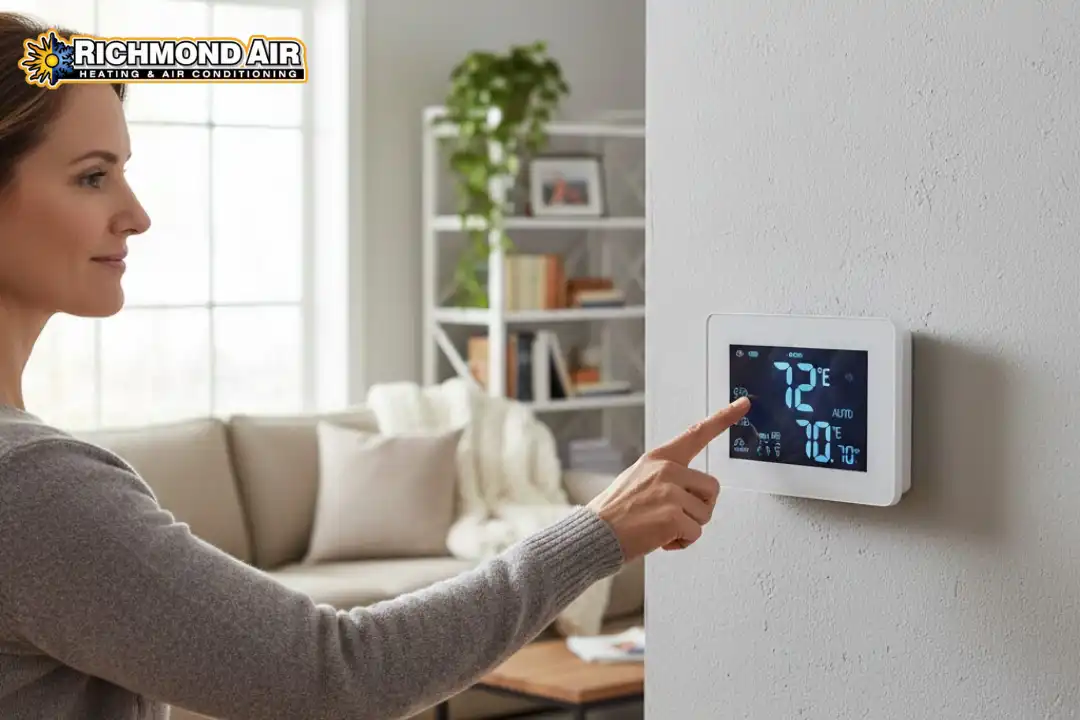
If your AC seems to run continuously or fails to start when it should, it might not be the system; it might be your thermostat’s wiring or batteries. Replace batteries once a year and check for loose connections or corrosion. Many homeowners overlook this step, but it can solve a surprising number of cooling issues.
Setting Optimal Temperature Ranges
Setting your thermostat to 78°F (26°C) when you’re home and higher when you’re away is the sweet spot recommended by the Department of Energy for both comfort and savings. You can adjust slightly based on your personal comfort level, but remember, every degree you lower adds roughly 3–5% to your cooling costs.
During summer nights, consider raising it a bit, your body naturally cools during sleep, and you’ll barely notice the difference. Ceiling fans can help circulate air more effectively, allowing you to set the temperature a couple of degrees higher without feeling warmer.
Regular Maintenance and Battery Checks
It sounds simple, but a quick check once every few months can prevent bigger problems later. Dust buildup around the thermostat can affect sensors. Gently clean it using a soft brush or dry cloth. Replace batteries yearly—even if they still seem fine, to avoid system interruptions during extreme heat.
By keeping your thermostat accurate and efficient, you give your AC system the best chance to work smart, not hard.
Why This Step Matters
I often tell homeowners this: “If your thermostat isn’t happy, your AC won’t be either.” It’s a small device with a big impact. Regular checks, smart upgrades, and mindful placement can save you hundreds of dollars every summer while keeping your home cool and comfortable.
A properly working thermostat ensures your AC only runs when needed, maintains steady comfort, and reduces system wear. So before the heat waves roll in, take a few minutes to check that your thermostat is doing its job right. It’s the heartbeat of your home’s summer comfort.
3. Clean the Outdoor Condenser Unit
Your outdoor condenser unit is the powerhouse of your AC system. It’s what releases all the heat your system removes from inside your home. But when it’s covered in dirt, leaves, or grass clippings, it can’t breathe properly, and that means your AC has to work harder to do its job. Keeping it clean is one of the most important things you can do before summer starts.
Why Cleaning the Condenser Matters
When debris builds up around the condenser coils, it blocks airflow and traps heat inside. This forces your compressor to run longer and harder, which can lead to higher energy bills, overheating, or even early system failure. Cleaning your unit improves cooling efficiency, reduces strain, and helps your AC last longer.
Step-by-Step: How to Clean It Safely
Here’s a simple process you can follow:
- Turn off the power — Safety first. Shut off the power at the disconnect box near the condenser or at your main breaker.
- Remove debris — Clear away leaves, twigs, and dirt from around the unit. Keep at least 2 feet of open space around it.
- Gently rinse the coils — Use a garden hose with a light spray to wash away dirt. Avoid high pressure, which can bend the fins.
- Straighten bent fins — Use a fin comb to realign any bent fins and improve airflow.
- Check the fan blades — Make sure they’re clean and not damaged or loose.
- Inspect the insulation — The refrigerant line should be covered with foam insulation to prevent energy loss. Replace it if it is worn out.
Recommended Maintenance Frequency
| Task | Frequency | Purpose |
| Clear debris & leaves | Monthly | Prevent airflow blockage |
| Rinse condenser coils | Every 3–4 months | Improve cooling performance |
| Check insulation & fan blades | Twice a year | Avoid heat loss & noise |
| Professional service | Once a year | Deep cleaning & inspection |
This schedule helps your system stay in peak condition all year.
Extra Tip: Watch Out for Landscaping
Many people forget that plants and shrubs can grow too close to the condenser unit. Keep at least 24 inches of space clear on all sides. Trim back bushes or branches that might block airflow.
By spending just 15–20 minutes cleaning your outdoor unit each season, you can boost efficiency by up to 15% and reduce the risk of mid-summer breakdowns. It’s quick, easy, and saves money in the long run.
4. Check Refrigerant Levels
Your air conditioner’s refrigerant is what actually cools the air inside your home. Without the right amount, your system can’t remove heat effectively — and that means longer cooling cycles, higher energy bills, and uneven temperatures. Checking refrigerant levels is a key part of every AC tune-up checklist.
Why Refrigerant Levels Matter
Refrigerant moves through a closed loop between the indoor evaporator coil and the outdoor condenser unit, absorbing heat from inside and releasing it outside. When the level is too low, your system struggles to cool and might even freeze up. Too much refrigerant is also a problem because it creates excessive pressure, which can damage the compressor.
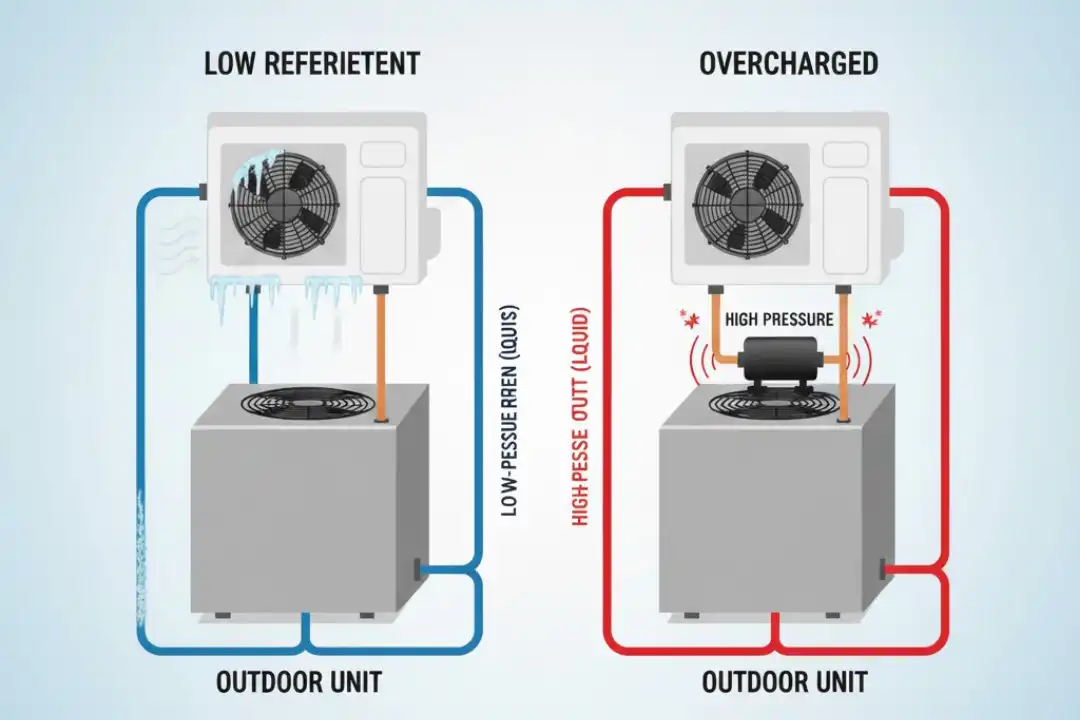
An incorrect refrigerant charge doesn’t just affect comfort — it directly impacts efficiency. The U.S. Department of Energy reports that improper refrigerant levels can increase energy use by up to 20%. That’s money wasted every month.
Common Signs of Low Refrigerant
Here’s how to spot potential refrigerant problems before calling a technician:
- Warm air from vents – The AC runs, but the air isn’t cold.
- Hissing or bubbling sounds – Possible refrigerant leak.
- Ice on the coils or refrigerant line – A sign of poor airflow or low levels.
- High energy bills – Your system is working harder than usual.
- Longer cooling cycles – It takes much longer to reach your set temperature.
If you notice any of these, don’t try to “top off” refrigerant yourself. Handling refrigerants requires certification, and leaks need to be properly located and repaired before refilling.
How Technicians Measure and Refill Refrigerant
When a licensed HVAC technician checks your system, they’ll:
- Connect pressure gauges to measure the current refrigerant charge.
- Inspect for visible leaks around valves and coils.
- Use an electronic leak detector if needed.
- Recharge the system with the correct refrigerant type and amount per manufacturer specs.
Most residential systems use R-410A, but older units may still rely on R-22, which is being phased out for environmental reasons. If your system uses R-22, it might be time to discuss upgrading to a more efficient model that uses an eco-friendly refrigerant.
Keep an Eye on Performance
After service, pay attention to how quickly your home cools and whether the air feels more consistent. A properly charged system runs smoothly, keeps humidity balanced, and delivers steady comfort even on the hottest days.
A refrigerant check may seem technical, but it’s one of the smartest ways to protect your investment and prevent mid-summer breakdowns.
5. Inspect Electrical Connections
Your AC system depends on a network of electrical components to power the compressor, fan motor, and control board. If even one connection is loose, corroded, or damaged, your unit can short-circuit or fail to start altogether. Checking these electrical connections ensures safe operation and prevents costly repairs during the peak of summer.
Why Electrical Connections Need Attention
Over time, vibration and heat cause wires to loosen. When that happens, electricity doesn’t flow smoothly, which can lead to overheating or blown fuses. Damaged wiring also increases the risk of voltage drops, when your AC doesn’t get enough power to start or run efficiently. This strain shortens the lifespan of key components, especially the compressor, which is one of the most expensive parts to replace.
A quick inspection during your AC tune-up checklist can uncover early signs of wear before they become dangerous. Things like scorch marks, discolouration, or burnt odours near the electrical panel or outdoor unit are all red flags that something isn’t right.
How to Inspect Safely
Always turn off the power to your system before inspecting. Remove the access panel on the outdoor unit carefully and visually check for loose or frayed wires. You can tighten screw terminals gently using an insulated screwdriver, but don’t attempt to replace or rewire components unless you’re trained — it’s best left to a certified HVAC technician.

A technician will typically check voltage readings and amp draws to confirm each component is operating within safe limits. They’ll also test capacitors, which store and release electricity to help motors start and run efficiently. Weak capacitors are one of the most common causes of AC breakdowns during summer, and they often show no visible signs before failing.
Signs of Electrical Issues
Flickering lights when the AC turns on, tripped circuit breakers, or unusual clicking sounds can all indicate electrical trouble. These symptoms shouldn’t be ignored because they can lead to sudden system failure or even fire hazards if left unchecked.
Why This Step Matters
By keeping your electrical system in check, you not only protect your AC but also your home’s entire electrical safety. A thorough inspection ensures that your air conditioner runs efficiently, avoids unexpected power issues, and stays ready for the long, hot months ahead. Preventing electrical faults early means fewer emergencies and peace of mind knowing your system is safe and reliable.
Final Thoughts
A little attention before summer goes a long way. Following this AC tune-up checklist helps you stay cool, lower your bills, and avoid last-minute repair calls when the heat hits. Think of it like giving your system a health check, clean filters, proper refrigerant, and tight electrical connections all work together to keep your home comfortable and safe.
I’ve seen too many homeowners wait until their air stops working to act. Don’t be that person this year. A quick check now means peace of mind all summer long.
Ready to Get Your AC Summer-Ready?
Don’t wait for the first heatwave to find out your system needs help. Schedule your professional AC tune-up today with the experts at Richmond Air.
Frequently Asked Questions (FAQs)
How often should I perform an AC tune-up?
It’s best to schedule a full AC tune-up once a year, ideally before summer starts. This gives technicians time to clean, inspect, and repair your system so it runs efficiently during the hottest months. Regular tune-ups also help catch small issues early before they turn into major repairs.
Can I do an AC tune-up myself?
You can handle basic maintenance like cleaning air filters, clearing debris from around the outdoor condenser unit, and checking your thermostat settings. But tasks such as checking refrigerant levels, tightening electrical connections, or testing capacitors should always be done by a licensed HVAC professional for safety and accuracy.
What happens if I skip a tune-up?
Skipping an AC tune-up might save time now but can lead to bigger problems later. Without regular maintenance, your cooling system becomes less efficient, uses more energy, and faces a higher risk of breakdowns. You might also void your manufacturer’s warranty if routine service isn’t documented.
How long does a professional AC tune-up take?
A typical AC inspection and tune-up takes about 60 to 90 minutes. It depends on your system’s age, size, and condition. Older or heavily used systems might take a little longer if extra cleaning or part replacement is needed.
Is a refrigerant top-up included in a tune-up?
Not usually. A tune-up includes checking refrigerant pressure but not automatically refilling it. If levels are low, that usually means there’s a leak, which must be located and repaired before recharging. A technician will let you know if extra refrigerant is needed and explain the cost.
