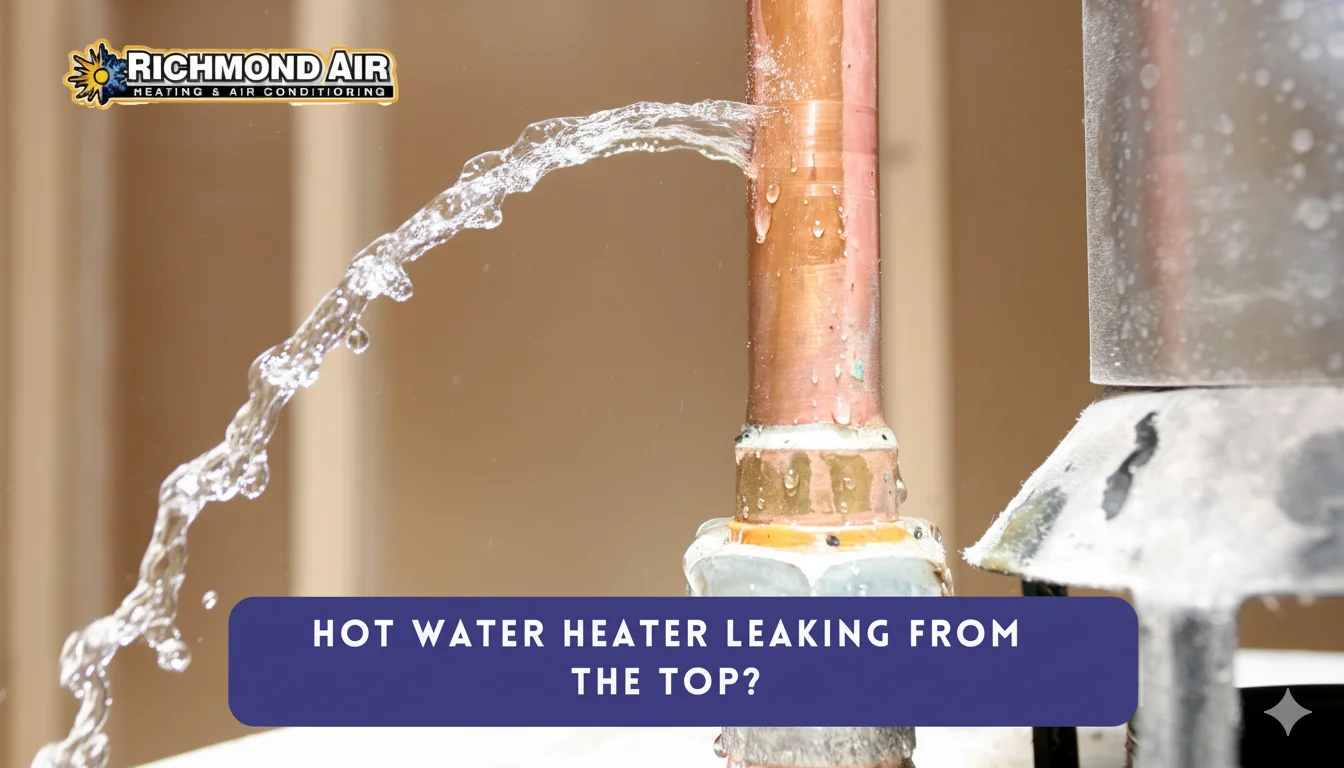
A leaking water heater can ruin your day real fast. My friend once called me in a panic. There was water pooling on top of her heater, and she didn’t know if it was safe to even touch it. I’ve seen this happen more than once, and let me tell you, it’s usually something you can catch early and fix before it turns into a bigger mess. If you’re standing in front of your tank right now, wondering what’s going on, you’re in the right place. I’ll walk you through this like I would for a close friend.
Common Reasons Your Water Heater Is Leaking From the Top
When you spot water on the top of your water heater, don’t panic; it’s a sign something’s off, but it usually points to a manageable issue. The key is to understand what’s up there and why it might leak. Let’s break down the most common causes so you know exactly where to look.
- Loose Hot or Cold Water Inlet Connections
At the very top of your tank, you’ll find the cold water inlet and the hot water outlet pipes. These connections handle constant water pressure, and over time, they can loosen slightly. Even a small gap in the thread seal can lead to a slow, steady leak. It’s often as simple as a wrench turn to snug things back into place, but only if you’re sure that’s the issue. - Faulty Temperature & Pressure Relief (T&P) Valve
This valve is a critical safety feature that prevents your tank from exploding under pressure. It’s usually mounted at the top or side of the unit. If you see moisture around the valve or its discharge pipe, it could mean it’s failing or there’s too much pressure building up inside the tank. This isn’t a part you want to ignore. - Leaking Anode Rod Port
Most people don’t even know the anode rod exists. It’s a metal rod designed to prevent rust inside your tank, and it’s inserted through a port at the top. If the threads or seal around the rod go bad, water will start seeping out slowly. I’ve seen tanks where corrosion around the anode rod was so bad it looked like salt buildup, by the time the leak showed up, rust had already started inside the tank. According to a report by NIST, corrosion is the primary mode of failure in many gas‑fired water heaters, especially as the anode rod deteriorates. - Corroded Fittings or Gaskets
Over time, even high-quality fittings can corrode, especially in areas with hard water. Gaskets shrink and crack as they age. If the leak isn’t coming from a connection or valve, check every fitting for signs of rust or mineral buildup. These small signs often lead you straight to the leak. - Condensation That Looks Like a Leak
This one threw me off once. A buddy of mine had just installed a new heater in his workshop. A few days later, he called, thinking it was already leaking from the top. Turned out it was condensation, cold water entering a warm space caused moisture to form on the top of the tank. It can drip down and mimic a leak. If the water doesn’t pool or keeps disappearing quickly, wipe it and see if it returns. That’s your clue.
Each of these problems shows up slightly differently, but spotting them early makes all the difference. In the next section, I’ll show you exactly how to find the leak source with just a few simple tools.
How to Find the Exact Leak Source on Your Water Heater
Before you grab a wrench or call a plumber, the first thing you need to do is confirm exactly where the water is coming from. Just because it’s wet on top doesn’t mean that’s the actual source; it might have traveled from another part and pooled up there. Misdiagnosing it could lead to unnecessary repairs or worse, ignoring a deeper issue.
Start With a Full Visual Inspection
Begin by turning off the power to the unit. If you have an electric water heater, shut off the breaker. For gas heaters, turn the gas valve to the “pilot” or “off” position. Once it’s safe, take a flashlight and give the entire top of the tank a careful look. You’re looking for signs like tiny droplets forming, water trails running down the sides, or even corrosion stains around fittings.
Dry everything off with a cloth so you can see what starts to get wet again. This step is essential. If you skip it, you won’t know what’s new moisture and what’s left over from the earlier leak. Once dry, wait a few minutes and observe carefully.
Check All Top Connections and Valves
Look closely at where the cold water pipe enters the heater and where the hot water line exits. These are usually threaded connections and can sometimes leak slowly. You may notice a faint hissing or hear a tiny bubbling sound if water is escaping under pressure. Sometimes a leak from here can run down and settle at the top rim, making it look like it’s leaking from the tank itself.
Move your attention to the temperature and pressure relief valve. This is usually on the top or side, but if yours is top-mounted, look around its base and along the discharge pipe. Even a tiny leak will leave a trail if it’s been happening for a while. If the valve is warm or damp, there’s a good chance it’s the culprit.
Inspect the Anode Rod Port and Fittings
The anode rod is another common source of top-side leaks, and it’s easy to overlook. It’s usually located under a hexagonal bolt on the top of the tank. If there’s rust or white crust forming around it, you might have a slow leak. The threads on the rod can loosen, or the sealant tape may wear out over time. If the tank is older, this is often where the trouble begins.
Don’t forget to also look for corrosion around any other top-mounted fittings. Even if the leak is tiny, you’ll often see discoloration or rust forming where the water escapes. Sometimes, a failed gasket will leak when the tank is heating and under pressure, but appear dry once it cools down.
Use a Tissue or Paper Towel Test
If you still can’t spot where the leak is coming from, try using dry tissue or a paper towel. Gently wrap it around one fitting or valve at a time, then wait and see if it gets wet. This method is surprisingly effective for finding slow or invisible leaks. It also helps avoid placing your hand near hot or live parts of the tank.
Once you identify the leak point, you can move forward with either a simple fix or know exactly what to tell your plumber. Getting this part right saves time, money, and a lot of guesswork. In the next section, I’ll walk you through safe and easy fixes you can try on your own, no plumbing license needed.
What to Do Immediately (Safety First)
When you spot a leak on your water heater, especially from the top, your first move isn’t to grab tools; it’s to stay safe. Water and electricity don’t mix, and gas heaters come with their own risks. These steps will help you stay in control and prevent further damage while you figure out the next move.
Turn Off the Power or Gas
- Electric Heater: Go to your breaker panel and turn off the switch that controls your water heater
- Gas Heater: Locate the gas control knob and set it to “pilot” or “off”. This prevents the burner from igniting while the tank is compromised.
Shut Off the Cold Water Supply
- Find the cold water shut-off valve at the top of the tank (usually on the right side).
- Turn it clockwise until it’s fully closed. This stops new water from entering and keeps the leak from getting worse.
- If you can’t find the valve or it’s stuck, shut off the main water supply to the house.
Don’t Touch Wet or Rusty Electrical Parts
- If you see moisture near wires, avoid touching them entirely.
- Water heaters have thermostats and heating elements near the top, so wait until everything is dry before checking anything electrical.
Use Towels or a Bucket to Control Water Spread
- Place a towel or a bucket under the dripping spot.
- If water is seeping along the pipes, you can gently dry them and use tape to temporarily direct the drip into a container.
- This buys you time while you diagnose the issue or wait for a plumber.
Document the Leak for Insurance or Warranty
- Take photos showing the water pooling, the leak source, and any rust or corrosion.
- This helps if you need to file a home warranty or insurance claim, or even speak to a manufacturer if your tank is under warranty.
Here’s a simple table to help you act quickly:
| Action | Why It Matters |
| Shut off power/gas | Prevents fire or electrical shock |
| Turn off the water supply | Stops more water from leaking |
| Don’t touch wet parts | Avoids electrocution or short circuits |
| Control water with towels | Prevents flooring or wall damage |
| Take photos | Proof for warranty or claim support |
Once you’ve done these steps, you can safely move on to repairs or confidently call in help knowing the situation is under control.
DIY Fixes You Can Try Before Calling a Pro
If you’ve found the leak source and it’s something minor, you might be able to fix it yourself. A lot of small leaks come from loose fittings or worn-out parts that can be handled with basic tools. That said, always work carefully, especially around gas or electric connections. Here’s what you can safely try on your own.
Tighten Loose Pipe Connections
- Use a wrench to snug up the hot and cold water inlet/outlet connections on top of the tank.
- Don’t overtighten; just a firm turn is usually enough.
- If the threads are corroded, you may need to remove the fitting and reapply plumber’s tape before reconnecting.
Replace the T&P Valve (If It’s the Source)
- If the temperature and pressure relief valve is leaking from the base or the discharge pipe, it may be faulty.
- Turn off power, water, and relieve tank pressure before unscrewing it.
- Wrap the new valve’s threads with Teflon tape, screw it in, and tighten carefully.
Seal a Leaky Anode Rod Port
- If water is seeping from the anode rod bolt, try tightening it first.
- If that doesn’t help, remove it and apply fresh thread sealant or Teflon tape, then reinstall it.
- If the rod is heavily corroded, it’s best to replace it while you’re at it.
Address Condensation Issues
- Sometimes what looks like a leak is actually condensation.
- If your heater is in a humid or cold location, you can wrap foam insulation around the pipes to reduce moisture buildup.
- Also, make sure your water heater has enough ventilation.
Know When to Stop and Wait
- If you notice rust around fittings or water coming from inside the tank seam, don’t try to patch it.
- Internal leaks mean the tank is likely failing, and patching won’t hold.
- In that case, it’s time to call a licensed professional or consider a full replacement.
These quick fixes can save you time and even a service fee if the problem is minor. But if the leak keeps coming back or you’re unsure about any step, it’s safer to bring in a pro. In the next section, I’ll help you decide exactly when that’s the best move.
When It’s Time to Call a Professional Plumber

Sometimes, despite your best efforts, a leak just isn’t something you should, or can, handle on your own. Knowing when to stop and call a professional could be the difference between a quick repair and a full-blown flood in your utility room. Let’s talk about the signs that tell you it’s time to hand things over to someone with the tools, training, and experience to fix it right.
The Leak Comes from Inside the Tank
If water is seeping from the seams of the tank itself or dripping through the insulation around the body of the unit, that’s usually a sign of internal tank failure. Unfortunately, this means the glass lining inside the tank has cracked, and no DIY fix can patch that. At this point, a plumber can confirm the issue and walk you through replacement options. A leaking tank is beyond repair, and continuing to use it is risky.
You’ve Already Tried Tightening or Sealing with No Luck
If you’ve tightened the fittings, replaced a valve, or applied thread sealant, and the leak keeps returning, it could mean the part is damaged deeper inside. A pro can safely dismantle fittings, inspect internal threads, and replace faulty components without damaging the tank. This is especially true with older heaters, where rust or scale may be hiding the full problem.
The Unit Is More Than 10 Years Old
Most residential water heaters last about 8 to 12 years. If yours is around or beyond that range, and it’s leaking from anywhere, even the top, repairs may only delay the inevitable. Plumbers often recommend replacing older units rather than sinking money into short-term fixes. A professional can help you figure out if a repair makes sense or if you’re better off upgrading.
You See Electrical or Gas Issues
If water is anywhere near electrical parts like the thermostat or heating elements, don’t take chances. And if you smell gas or suspect an issue with your gas valve or burner assembly, shut everything down and call for help immediately. These situations are serious and can quickly become dangerous if not handled correctly.
Knowing your limits doesn’t make you any less handy; it just means you’re smart about your home’s safety. Up next, I’ll share how to keep your heater running smoothly to prevent this from happening again.
How to Prevent Future Leaks at the Top
Once you’ve fixed the issue, or had a pro fix it, it’s worth taking a few steps to make sure you don’t run into the same problem again. The most effective way to prevent future leaks is simple: regular maintenance. Just like changing the oil in a car, your water heater needs some love every now and then to stay in good shape.
Flush your water heater at least once a year to remove sediment that builds up inside the tank. Sediment makes the tank work harder and causes heat stress that can wear down seals and fittings over time. Also, check the anode rod every 3 to 5 years. This small part plays a big role in preventing rust inside the tank, and replacing it when it’s worn can add years to your water heater’s life.
Make it a habit to visually inspect your water heater every few months. Look for early signs of moisture, rust, or corrosion around the top connections. If something looks off, even a tiny bit, act early before it becomes a full leak.
That said, even the best maintenance can’t stop wear and tear forever. Which brings me to the most important point: don’t hesitate to call a professional if anything looks suspicious. What might seem like a small drip could be a warning sign of a much bigger problem.
Need Help? Trust a Professional to Handle It Right
I’ve seen too many people try to save a few bucks and end up paying double when a small leak turned into a full tank rupture. A licensed plumber knows how to check the pressure inside your system, test the T&P valve, reseal threads properly, and even tell if your unit is still under manufacturer warranty. They also have tools you and I don’t, like thermal cameras and pressure gauges, to really diagnose the root issue.
If your water heater is older, if the leak keeps coming back, or if you’re even slightly unsure about the fix, get it looked at. In the long run, it’ll save you time, stress, and possibly even a flooded floor.
Final Thoughts
A leak from the top of your water heater might seem small, but it’s often your system’s way of warning you. Whether it’s a loose-fitting or a failing valve, the sooner you catch it, the easier and cheaper it is to fix. I always tell my friends: don’t guess when it comes to water and pressure. If you’ve done the basics and the leak still lingers, calling in a professional is the smartest move. It gives you peace of mind and keeps your home safe.
Need a Pro to Check Your Water Heater?
If your water heater’s still leaking or you’re not sure what’s causing it, don’t wait for it to get worse. My go-to recommendation in the area is Richmond Air. They’ve helped folks I know with honest, fast, and expert repairs.
Contact Richmond Air today to schedule your water heater service. They’re local, experienced, and ready to help you get things back to normal.
FAQs About Hot Water Heater Leaking From the Top
Can I still use hot water if my water heater is leaking from the top?
It’s best not to. Even a small leak at the top could mean pressure problems or failing parts. Using hot water adds more pressure, which could make the leak worse. Shut off power and water, then inspect or call a professional before using it again.
Will my homeowner’s insurance cover a leaking water heater?
It depends. Insurance usually covers sudden damage, like water from a burst tank damaging floors or walls. But if it’s a slow leak caused by neglect or wear and tear, it may not be covered. Always check with your insurance company and keep records of maintenance.
How much does it cost to repair a top leak?
If it’s a simple fix like tightening a connection or replacing a valve, you might spend $50–$150 on parts or a quick service call. If the leak is from the tank itself, you may be looking at $800–$1,500 for a full replacement, depending on the type of unit.
Is a top leak less serious than a bottom leak?
Not always. A leak from the top can still lead to rust, electrical damage, and pressure issues. Bottom leaks often mean internal tank failure, which is more serious, but top leaks can still be dangerous if ignored.
How long should a water heater last before leaking?
Most units last 8 to 12 years. If yours is leaking and it’s within that range or older, it may be nearing the end of its life. Regular maintenance can extend this life, but age eventually catches up.