
It is the middle of a hot Richmond summer, and your AC is blowing warm air. That feeling is the worst. You walk to the vent expecting cool relief and get a wave of hot air instead. I have been there, and trust me, you want to fix this fast.
AC blowing warm air in Richmond, VA, is one of the most common calls HVAC techs get every summer. The good news? Most causes are fixable. You just need to know what to look for.
Why Is My AC Blowing Warm Air Instead of Cold?
Your air conditioner does one job. It pulls heat from inside your home and pushes it outside. When something breaks that process, warm air comes out of your vents instead of cold air.
The reason could be something small, like a wrong thermostat setting. Or it could be something bigger, like a refrigerant leak or a broken compressor. The trick is figuring out which one you are dealing with.
Honestly, the first time this happened to me, I panicked and thought I needed a whole new unit. But the fix turned out to be a dirty air filter. So before you stress, check the simple stuff first.
Common Signs Your AC Has a Cooling Problem
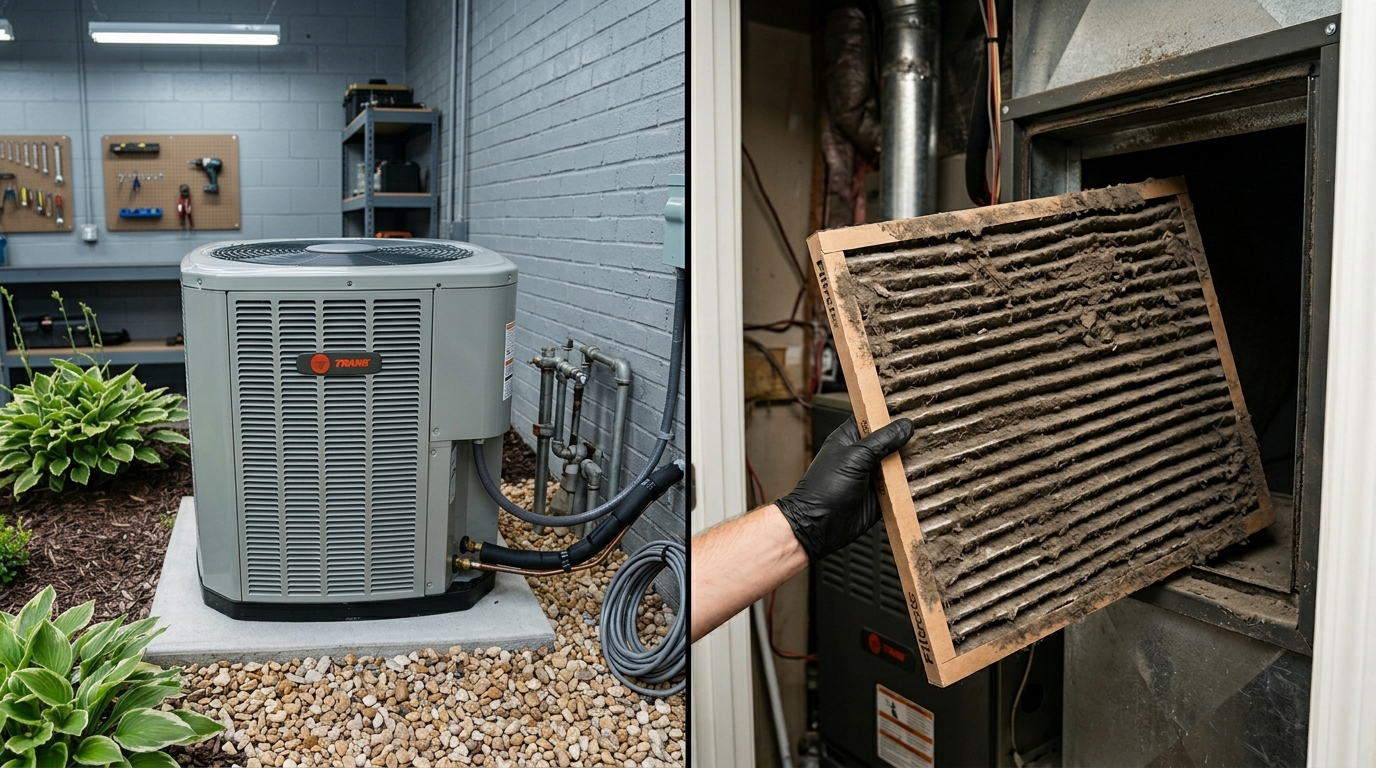
Here are the warning signs that tell you something is wrong with your cooling system:
Your AC unit is running, but the air from the vents feels warm or room temperature. You notice your energy bills going up even though you have not changed your habits. The outdoor condenser unit is making strange sounds like hissing, grinding, or banging. You see ice buildup on the refrigerant lines or the indoor evaporator coil. Your home has hot and cold spots and never reaches the temperature you set.
If you are seeing any of these, your system is telling you something. Pay attention. Acting early saves money.
The Wrong Thermostat Setting (The Easiest Fix)
This one sounds too simple, but it is the number one reason for AC blowing warm air calls. Check your thermostat right now. Make sure it is set to COOL and not HEAT or FAN ONLY.
When the fan is set to ON instead of AUTO, the blower motor runs all the time. Even when the system is not actively cooling, air still moves through the vents. That air feels warm because it was never cooled. Switch the fan to AUTO and see if that fixes it.
Also, check the battery in your thermostat. A low battery can cause the thermostat to send wrong signals to your AC. A dead thermostat cannot control your system properly. Replace the batteries first before calling anyone.
A Clogged Air Filter Is Choking Your AC
A dirty air filter is one of the biggest reasons your air conditioning system starts blowing warm air. When the filter gets packed with dust and debris, air cannot flow through properly. Without enough airflow, the evaporator coil freezes up. A frozen coil cannot absorb heat from your home. So what comes out of the vents? Warm air.
According to the ENERGY STAR program by the U.S. Department of Energy, you should check and replace your air filter every 30 to 60 days during the cooling season. If you hold the filter up to a light and cannot see through it, replace it today.
This is the first thing I tell anyone who calls me panicking about their AC. Nine times out of ten, just changing the filter makes a big difference.
Low Refrigerant Levels and Refrigerant Leaks
Refrigerant is the liquid that makes your AC system work. It absorbs heat from inside your home and releases it outside. Without enough refrigerant, your system simply cannot cool the air. Period.
Here is what most people do not know: refrigerant does not get used up like gas in a car. If your levels are low, it almost always means there is a refrigerant leak somewhere. You cannot just top it off and walk away. The leak needs to be found and sealed first.
Signs of a refrigerant leak include warm air from your vents, a hissing or bubbling sound near the refrigerant lines, ice buildup on your indoor coils, and a sudden spike in your energy bills. If you see greasy or dark stains near your outdoor unit, that can also point to a leak.
Do not try to handle refrigerant yourself. It is a controlled substance, and only a licensed HVAC technician can legally handle it. Trying to add refrigerant without fixing the leak first just wastes money and time.
A Frozen Evaporator Coil Can Stop Cooling Completely
This one surprises people. If your evaporator coil freezes over, your AC will blow warm air or barely any air at all. It sounds strange because you think ice equals cold. But a frozen coil cannot do its job.
If you see ice on your refrigerant lines or the indoor unit, turn your AC OFF right away. Set the fan to ON so the air can help melt the ice. Give it two to four hours. Then check your air filter and make sure all your vents are open.
If the coil freezes again after you restart the system, the root cause is likely low refrigerant or a serious airflow problem. You need a pro at that point. Running your AC with a frozen coil can destroy the compressor, which is the most expensive part to replace.
Compressor Problems: When the Heart of Your AC Fails
The compressor is the engine of your air conditioning system. It pressurizes the refrigerant and keeps it moving through the entire refrigeration cycle. When the compressor starts to fail, the whole system stops cooling.
Signs of compressor trouble include warm air blowing from your vents even when the system runs, strange noises like buzzing or clanking from the outdoor unit, and the circuit breaker tripping repeatedly. If your system runs constantly but never reaches the temperature you set, a struggling compressor is often the reason.
Compressor replacement is expensive. According to Carrier’s HVAC guidance, the cost to fix an AC blowing warm air can range from around $150 for simple repairs all the way to over $3,000 for compressor work. If your system is 10 to 15 years old and the compressor has failed, replacing the whole unit might actually make more financial sense.
Dirty Condenser Coils Block Heat from Escaping
Your outdoor unit has a condenser coil that releases heat from your home into the outside air. If that coil is covered in dirt, grass clippings, or leaves, it cannot do that job. The heat gets trapped, and your system ends up blowing warm air inside.
Make sure at least two feet of clear space surrounds your outdoor unit. Gently rinse the coil with a garden hose (never a pressure washer) to remove buildup. Do not bend the aluminum fins. This simple step can make a real difference in how well your system cools.
Duct Leaks Are Wasting Your Cool Air
Here is something most Richmond homeowners do not think about. Even if your AC system is working perfectly, you might still get warm air from the vents. Why? Because the cooled air is leaking out before it reaches you.
According to the U.S. Department of Energy, the average home loses 20 to 30 percent of conditioned air through duct leaks. That means your system could be working great, and you are still losing almost a third of your cool air into the attic or crawl space.
Signs of duct leaks include rooms that are always warmer than others, a system that runs constantly, and energy bills that keep climbing. A qualified HVAC technician can test your ductwork and seal the leaks. It is a worthy investment in Richmond, VA, where summers are hot, and your system runs hard.
Electrical Issues and Tripped Breakers
Sometimes your AC blows warm air because part of the system has simply lost power. Your home has two separate circuit breakers for your AC. One controls the indoor air handler, and one controls the outdoor condenser.
If the outdoor unit loses power, the blower inside will still push air through the vents. But since the condenser is off, the air never gets cooled. Go check your breaker panel. If a breaker has tripped, reset it once. If it trips again right away, stop. That signals a deeper electrical problem, and you need a licensed tech.
Faulty capacitors are another common culprit. The capacitor helps start and run your compressor and fan motors. When it fails, the outdoor unit may hum but not start. This is a fast and affordable fix for a trained technician.
When Should You Call an HVAC Professional in Richmond, VA?
Most Richmond homeowners can handle basic checks themselves. Switch the thermostat to COOL. Change the filter. Check the breaker. Clear space around the outdoor unit. These steps cost you nothing and fix the problem more often than you think.
But call a licensed HVAC professional right away if your system is blowing warm air and basic steps did not help. Also, call if you hear hissing near the refrigerant lines, see ice buildup on your indoor unit, notice your outdoor unit is completely silent when the system should be running, or your energy bills have jumped for no clear reason.
Waiting too long can turn a small repair into a big one. A small refrigerant leak caught early might cost $200 to $600 to fix. Let it go until the compressor fails, and you could be looking at $1,500 to $3,000 or more. The math is simple. Act fast.
How to Prevent Your AC From Blowing Warm Air Again
The best way to avoid this problem in the future is a simple preventive maintenance routine. Schedule a professional AC tune-up once a year before summer hits in Richmond. A good tech will check refrigerant levels, clean the evaporator and condenser coils, inspect electrical connections, test the capacitors, flush the drain line, and check the thermostat calibration.
Change your air filter every 30 to 60 days during peak cooling season. Keep the area around your outdoor unit clear. And listen to your system. Unusual sounds or a rise in your energy bill is your AC telling you something is wrong. The sooner you respond, the cheaper the fix.
Conclusion
AC blowing warm air in Richmond, VA is stressful, especially when temperatures climb. But most causes are fixable, and many are affordable when caught early. Start with the easy checks. Thermostat settings. Air filter. Breaker panel. If those do not solve it, the problem is likely refrigerant, compressor, or ductwork related, and you need a certified HVAC technician to get it right.
I would love to hear your experience. Have you fixed a warm air issue yourself, or did you need a pro? Drop your thoughts below. And if this guide helped you, share it with someone who might need it this summer.
Frequently Asked Questions
Why is my AC running but blowing warm air in Richmond, VA?
The most common reasons are a wrong thermostat setting, a clogged air filter, low refrigerant from a leak, a failing compressor, or a loss of power to the outdoor unit. Start by checking your thermostat and air filter. If those look fine, call a licensed HVAC technician for a full diagnosis.
Can I add refrigerant to my AC myself?
No. Refrigerant is a controlled substance, and only licensed HVAC technicians can handle it legally. More importantly, adding refrigerant without fixing the underlying leak first will not solve the problem. The leak must be found, sealed, and only then can the system be properly recharged.
How long does it take to fix an AC blowing warm air?
It depends on the cause. A thermostat fix or filter change takes minutes. A refrigerant recharge with leak repair might take a few hours. A compressor replacement can take most of a day. Most HVAC companies in Richmond offer same-day or next-day service for urgent cooling issues.
Should I turn off my AC if it is blowing warm air?
Yes, in most cases you should. Running your AC when something is wrong can cause more damage, especially to the compressor. If you suspect a refrigerant problem or see ice on your lines, turn the system off immediately and call a professional.
How much does it cost to fix an AC blowing warm air in Richmond, VA?
Costs vary based on the problem. Simple fixes like a thermostat replacement or breaker reset can cost little to nothing. Refrigerant recharge runs about $200 to $600. Capacitor replacement is usually under $300. Compressor replacement can run $1,500 to $3,000 or more. Getting a professional diagnosis early saves money in the long run.