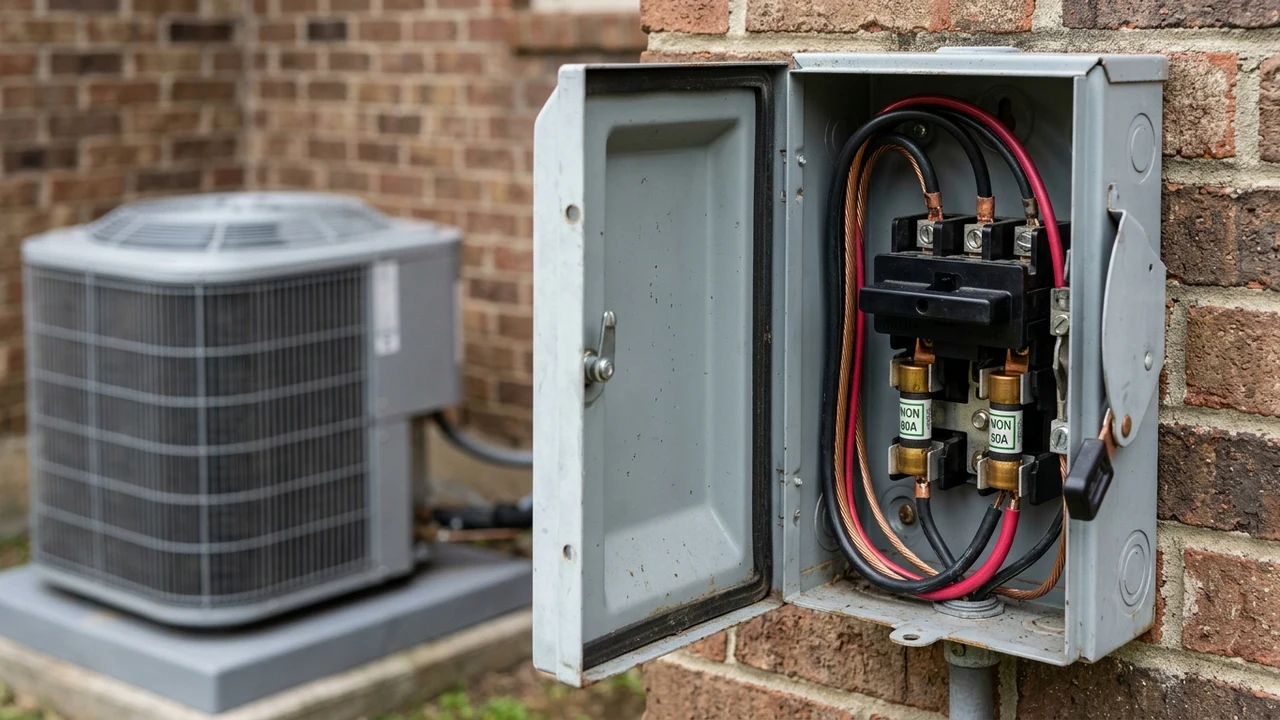
Your air conditioner quits on the hottest day of a Richmond summer. The thermostat says cool. The fan just sits there, dead quiet. You look at the big outdoor box and fear the worst. But the real troublemaker is often a small gray box bolted to the wall right next to it.
That little box is your outdoor disconnect switch. It cuts power to the AC so a tech can work on it safely. When it rusts inside, it starts causing big problems. In our shop, about 7 out of 10 “dead AC” calls in older Richmond homes trace back to a bad switch, a loose wire, or a burnt contact – not the compressor itself.
Here in central Virginia, our hot and sticky air is hard on outdoor metal. Rain, humidity, and pollen team up to eat away at electrical parts. This guide breaks down how a corroded disconnect causes voltage drops and arcing. And it shows how that slow damage can wreck your cooling system long before its time.
What Is an Outdoor AC Disconnect Switch?
The disconnect is a small box on the outside wall near your condenser, which is the big outdoor unit. Its job is simple. It lets someone shut off all power to the AC with one pull. Think of it like a light switch, but for your whole cooling system.
Most units use a pull-out block. You grab the handle, pull it out, and the electricity stops. Some boxes also hold fuses. A fuse is a small safety part that blows and cuts the current when too much power tries to flow. In our experience, this one box handles about 240 volts of power for the entire condenser.
Inside the box you will find metal blades, screws, and terminals where the wires connect. These connections must stay tight and clean. When they stay dry and snug, power flows smooth and easy. When water and air sneak in, the trouble begins. And that is exactly what our climate loves to do.
Why the Disconnect Switch Corrodes So Fast in Richmond
I’ve handled cases exactly like this many times across the Richmond area. A homeowner swears their AC is only five years old, yet the disconnect inside looks twenty. The reason is almost always our local weather, not bad luck. Damp air is the quiet enemy here.
Central Virginia summers are hot and wet. Richmond sits in high humidity for months, plus we get heavy thunderstorms rolling through. That damp air creeps into the outdoor box and never fully dries out. Over time it turns clean metal into crusty corrosion. We often see real rust building up in as little as 3 to 4 years on units parked in shady, damp spots.
A few local things speed up the damage:
- Long, muggy summers that keep metal damp for weeks
- Heavy spring pollen that traps moisture on the contacts
- Rain that splashes dirt and grit up into low boxes
- Cracked plastic covers that let water sit inside
- Old wiring that was never sealed or tightened right
The funny part? The box looks fine from the outside. The plastic cover hides the whole mess. You will not see the corroded terminals until someone opens it up and shines a light in there. That is why a yearly look-inside matters so much. Our seasonal AC maintenance checklist for Richmond homeowners shows what we check inside that box.
How Corrosion Leads to Voltage Drops
Here is the simple version. Corrosion builds a crusty layer on the metal. That crust fights the flow of electricity. We call that fight resistance. More rust means more resistance, and that steals voltage before it ever reaches your AC.
Picture water in a garden hose. Now step on the hose. Less water comes out the end, right? A corroded connection does the very same thing to power. A healthy line loses almost nothing, but a bad terminal can drop voltage by 5% to 10% or more. Your compressor feels that loss right away.
Low voltage is bad news for motors. The compressor and the fan motor still try to run. To do that, they pull extra current. More current makes more heat. And heat is what slowly cooks your AC components from the inside out.
| Voltage at the Unit | What Happens Inside the AC |
|---|---|
| Normal (full power) | Smooth start, cool running, long life |
| Slightly low (about 5% drop) | Motor pulls more current, runs warmer |
| Very low (10%+ drop) | Hard starts, overheating, early failure |
This is why two homes with the same unit can have such different luck. One has clean, tight connections. The other fights a slow voltage drop every single day. Guess which compressor dies first? The math is not kind to the rusty one.
Arcing: The Hidden Spark That Melts Your AC
In my professional experience, arcing is the sneakiest killer of outdoor AC gear. I’ve opened disconnect boxes that were black inside, with melted plastic and a burnt smell, while the homeowner had no clue anything was wrong. It hides well.
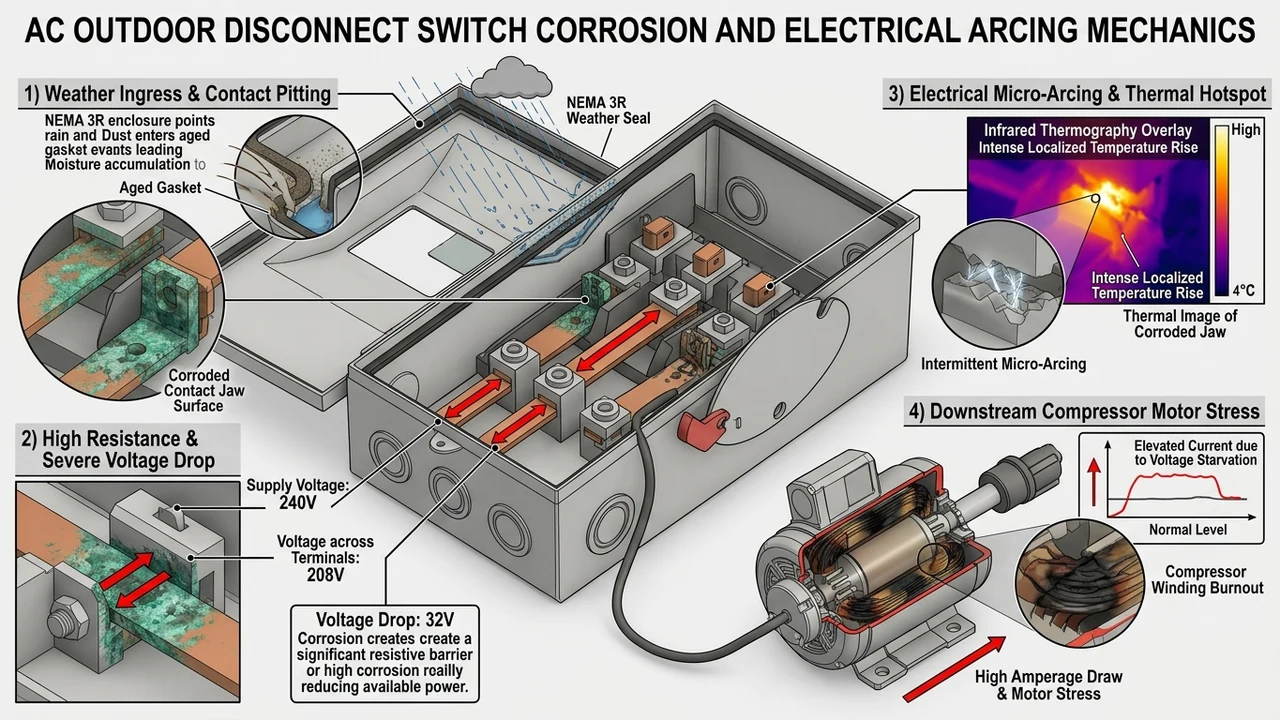
So what is it? Arcing is when electricity jumps across a small gap. It makes a tiny spark, like a mini lightning bolt. This happens when a connection gets loose or corroded and the metal parts no longer touch fully. The power has to leap the gap.
Each spark is short, but it burns brutally hot. An electrical arc can reach thousands of degrees at the point of contact. That intense heat pits the metal and melts nearby plastic. We’ve found burnt terminals on units barely 6 years old, all from tiny sparks nobody could hear.
Arcing also feeds itself. A spark burns the metal, which makes the gap a little bigger. A bigger gap makes a bigger spark. The damage grows fast once it gets going. Left alone, it can char the wires, trip the breaker, or start a fire.
If you catch a hot, plastic-like smell near the outdoor unit, shut it off. That burning smell is a real warning sign, not something to sniff and ignore. Our guide on what a burning smell from your AC means walks through the safe next steps.
How Voltage Drops and Arcing Cause Premature AC Failures
Now let us connect the dots. A corroded disconnect causes voltage drops and arcing. Those two problems then attack the priciest parts of your AC. And they do it slowly, so you rarely see it coming until the cool air stops.
The compressor hates low voltage most of all. When power sags, it strains to start and pulls heavy current. That extra load wears it out early. A healthy compressor should last 12 to 15 years, but weak, dirty power can cut that life nearly in half.
The capacitor takes a beating too. This part gives the motor a strong push to start, like a quick battery boost. Low voltage and heat make capacitors swell up and die young. A dead capacitor is one of the most common breakdowns we fix all summer long in Richmond.
Then there is the contactor. It is the electric switch inside the unit that turns the compressor on and off. Arcing pits its contacts until they stick or fail for good. Roughly 1 in 3 no-cool calls we run in summer come back to a bad contactor or capacitor, often kicked off by a weak connection upstream.
| What You Notice | Likely Damaged Part | Root Cause |
|---|---|---|
| AC hums but won’t start | Capacitor | Low voltage, heat |
| Unit clicks, then stops | Contactor | Arcing, pitted contacts |
| Warm air, long run times | Compressor strain | Voltage drop |
| Breaker keeps tripping | Wiring / short | Corrosion, loose wire |
See the pattern? One small corroded box can trigger a whole chain of failures. That is why we always check the disconnect first, before we ever blame the big, costly stuff. If your AC keeps tripping the breaker in Richmond, a burnt connection is a prime suspect worth checking.
Warning Signs of a Failing Disconnect Switch
I’ve seen this pattern many times in my work. The clues start small, and most homeowners miss them until the AC quits for good. Catch them early and you save the big, expensive parts. Miss them and you pay for it later.
Watch for these warning signs:
- A hot, plastic-like burning smell near the outdoor unit
- Black soot, melted plastic, or rust when you peek in the box
- The AC works, quits, then works again on its own (a bad connection)
- A buzzing or crackling sound coming from the disconnect
- The breaker trips soon after the AC starts
- Warm air even though the thermostat is set to cool
- The fan or compressor will not start at all
Any one of these is worth a look. In our field notes, homes that acted on the very first warning sign spent about 60% less on repairs than folks who waited for a full breakdown. Small fix now, or a big bill later. That is really the whole choice.
Some signs feel minor. A short buzz. A one-time reset that fixes it for a day. It is easy to shrug them off and move on. But those little hiccups are your system quietly asking for help. Do not wait for smoke to take it seriously. When the AC won’t turn on at all in your Richmond home, a dead disconnect or a blown fuse is often the reason.
What Causes Loose and Corroded Connections
Connections do not get loose by magic. A few real forces cause it, and heat cycling is the biggest one. Metal swells when it gets hot and shrinks when it cools. Your AC does this over and over, all season long.
Every summer your AC starts and stops thousands of times. Each cycle makes the metal expand and contract just a tiny bit. Over years, all that motion loosens screws and terminals. We’ve found bolts backed off to hand-loose on units with well over 30,000 start cycles on them.
Here are the usual causes we run into:
- Heat cycling that slowly loosens screws over time
- Moisture and humidity that feed corrosion
- Rushed installs with under-tight terminals
- Mixing copper and aluminum wire without the right connectors
- Bugs, spiders, and dirt nesting inside the box
Aluminum wiring deserves its own note. It is softer than copper and loosens faster under heat. If your home has it, your connections need checks more often than most. This shows up in some older Richmond houses built decades back, and it is worth knowing about.
Corroded Disconnect vs Healthy Disconnect
In my professional experience, you learn a lot in the first ten seconds of opening a box. A healthy disconnect and a failing one look like night and day. That difference tells me right away where to look next and how bad the damage already is.
| Feature | Healthy Disconnect | Corroded / Failing Disconnect |
|---|---|---|
| Metal color | Shiny, clean | Green, white, or rusty crust |
| Terminals | Tight and snug | Loose, pitted, or burnt |
| Smell | None | Hot plastic or burnt |
| Plastic parts | Solid | Cracked or melted |
| AC behavior | Fast start, cools well | Hard starts, warm air, trips |
The numbers back this up. A clean box can serve a unit for its full life with no fuss. A corroded one, left alone, often needs a full swap within 1 to 2 years. And by then, the rust may have already hurt the compressor it feeds.
This is why we never just “clean it and hope.” If the metal is pitted or the plastic is melted, we replace the box. A fresh disconnect costs very little next to a new compressor. Spending a little now protects the part that matters most.
How We Diagnose and Fix a Corroded Disconnect
Fixing this the right way is not guesswork. We follow the same safe order every single time. Safety first, then testing, then the actual fix. Skipping steps is how people get hurt or miss the real problem.
Here is the order we use:
- Shut off power at the main breaker first, always
- Pull the disconnect block and check the metal and fuses
- Look for burnt terminals, melted plastic, or rust
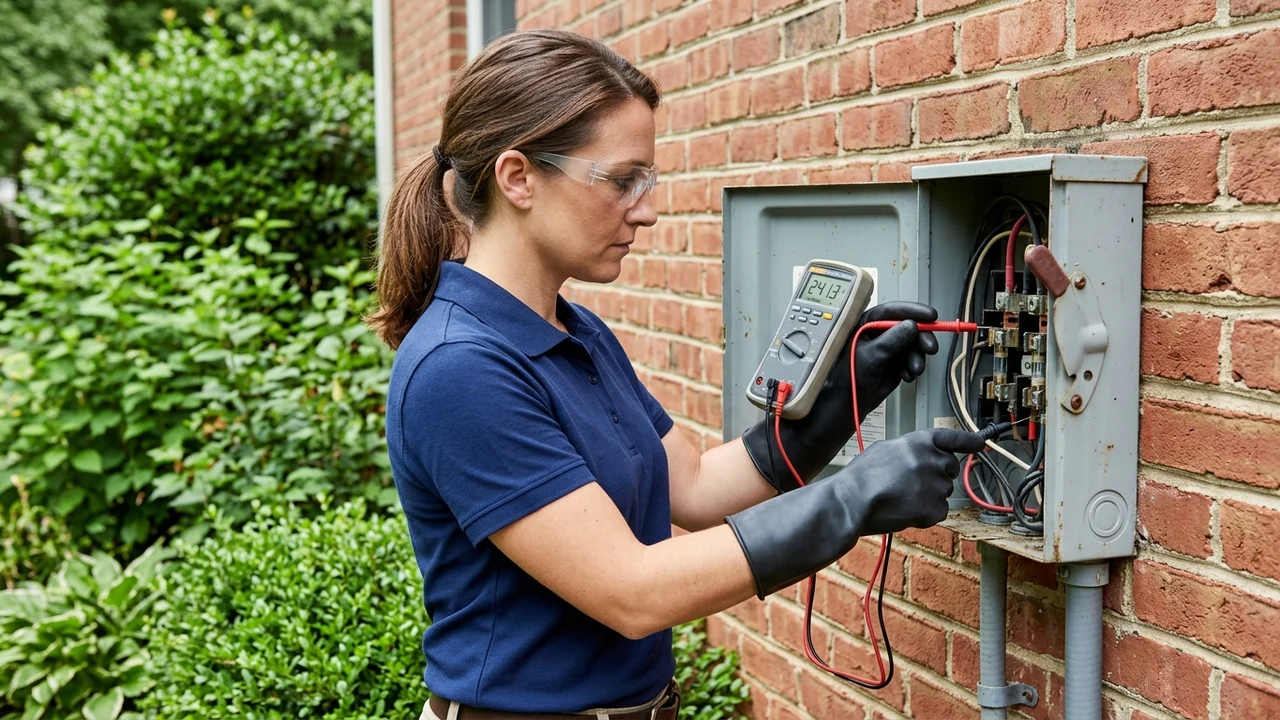
- Test voltage on both sides with a meter
- Check for voltage drop across each connection under load
- Tighten or replace wiring and terminals to the right spec
- Swap the whole box if the damage runs deep
The voltage drop test is the key step here. A good connection shows almost no drop at all. Anything over about 0.3 volts across one terminal tells us that spot is fighting the current. That small reading points us straight to the bad joint, every time.
We also check the parts the bad box may have already hurt. The capacitor, the contactor, and the compressor windings all get a look. Fixing the disconnect but ignoring a strained compressor is only half a job. Working on live power is dangerous too, and national safety guidance from OSHA is clear that electrical work should be done with the power fully shut off first. Not sure where to begin? Our team can run a full check, and what an AC tune-up actually fixes shows what that includes.
Repair or Replace the Disconnect?
I’ve handled cases exactly like this where a homeowner wanted the cheapest patch, and honestly, I get it. Money is tight. But I’ve learned that with a corroded disconnect, the smart money almost always goes to a full swap. A patch on rust rarely holds.
| Situation | Best Move | Why |
|---|---|---|
| Slightly loose terminal, no rust | Tighten and test | Fast, low cost |
| Light surface corrosion | Clean, then retest voltage | May buy some time |
| Pitted or burnt contacts | Replace the box | Arcing will come back |
| Melted plastic or soot | Replace right away | Fire risk |
| Old aluminum wiring issues | Repair wiring plus box | Safety first |
A new disconnect box is one of the more affordable HVAC fixes out there. Weighed against a new compressor, which can cost many times more, the choice is pretty clear. We would rather spend a little now to protect the part that keeps you cool.
Sometimes the bigger question is the whole unit. If your AC is old and the compressor is already hurting, a small repair may just delay the end. Our honest take on AC repair versus replacement in Richmond can help you weigh it out and choose with clear eyes.
How to Prevent Corrosion and Protect Your AC
Good news. You can slow this down a lot. Corrosion loves neglect and quiet damp corners. A little care each year keeps your disconnect and your AC running happy. It is cheaper than any repair, too.
Try these simple habits:
- Book a yearly electrical and AC check before summer hits
- Keep the outdoor unit clear of leaves, dirt, and mulch
- Make sure the box cover is sealed and not cracked
- Trim plants so air moves and the metal stays dry
- Ask a tech to tighten terminals and test voltage each year
- Fix small problems fast, before they grow into big ones
Regular care truly pays off. The U.S. Department of Energy points out that routine maintenance helps a cooling system run better and last longer, which we see proven every summer. In our own logs, well-kept units in Richmond have about 40% fewer summer breakdowns than the neglected ones. You can read more from the U.S. Department of Energy on why upkeep matters.
Richmond’s damp climate makes our advice simple: check it before you need it. Spring is the sweet spot for this. Get the box opened, cleaned, and tested while the weather is still mild. Then you are set and ready when the real heat rolls in.
When to Call a Professional in Richmond
I’ve seen this pattern many times in my work. Folks try a quick fix, touch a live terminal, and end up scared or hurt. Some jobs are just not worth the risk to save a few dollars. This is one of them.
Electrical faults are serious business. Loose and corroded connections are a known fire risk, and electrical problems rank among the top causes of home fires tracked by the NFPA. When you smell burning or see soot in that box, that is not a DIY moment. Step back and get help.
Call a pro when you see any of these:
- A burning smell or melted plastic near the unit
- The breaker trips again right after you reset it
- The AC will not start, or keeps quitting on its own
- Rust, soot, or loose wires inside the box
- You are simply not sure – and that is perfectly okay
If your AC is acting up in the heat, do not wait it out. Contact Richmond Air and we can run a full electrical and cooling check, find the weak connection, and fix it right. We would much rather protect your compressor now than watch a tiny spark turn into a big, sweaty repair bill.
The Bottom Line for Richmond Homeowners
A small gray box should never decide the fate of your AC. But a corroded disconnect can do exactly that. It causes voltage drops. It causes arcing. And both quietly wear down your compressor, capacitor, and contactor until the cooling simply stops one hot afternoon.
The fix is not hard when you catch it early. A yearly check, clean terminals, and one tight connection go a long way. Homeowners who stay ahead of this spend far less, often a small fraction of a full compressor job. In Richmond’s hot, humid summers, that simple habit is worth its weight in gold.
Keep your eyes open for the warning signs. A hot smell. A tripped breaker. Warm air on a cool setting. If you spot them, act fast instead of hoping they go away. And if you would rather have a pro handle it, Richmond Air is here to keep your home cool and safe all season long.
Have you checked your outdoor disconnect this year? If you are not sure what is hiding inside that little box, we can take a look together. I’d love to hear what you find in there.
Frequently Asked Questions
Can a corroded disconnect switch really damage my AC compressor?
Yes, it truly can, and it happens more than people think. A corroded disconnect causes voltage drops and arcing. Both force the compressor to work harder and run hotter than it should. Over time that strain can cut a compressor’s life nearly in half. So a small, cheap box can quietly kill your most expensive part.
How do I know if my AC disconnect switch is bad?
Look and listen for a few clear clues. A burning smell, a buzzing sound, or the AC cutting in and out are big ones. Open the box (with power off) and check for rust, soot, or loose wires. In our work, about 8 out of 10 bad boxes show visible corrosion or burnt terminals. If you see any of that, get it checked.
Is a burning smell from my outdoor AC unit dangerous?
Yes, take it seriously right away. A hot, plastic-like smell usually means arcing, melting plastic, or overheating wires. That is a real fire risk, not a small annoyance. Shut off the AC at the breaker and do not turn it back on. Then call a pro to find the source before you run the unit again.
How often should I have my AC disconnect checked in Richmond?
Once a year is the sweet spot, ideally in spring. Our humid summers speed up corrosion, so yearly checks catch problems early. A tech will tighten terminals, test voltage, and clean the metal. In our experience, this simple visit prevents most surprise summer breakdowns. It costs far less than an emergency call in July.
Can I replace an AC disconnect switch myself?
I would not advise it for most people. The box carries about 240 volts, which can seriously hurt or kill you. Even with the power off, one wrong move on the wiring is dangerous. A pro tests the whole electrical path and checks the parts the bad box may have harmed. If you are unsure, let us handle it safely for you.