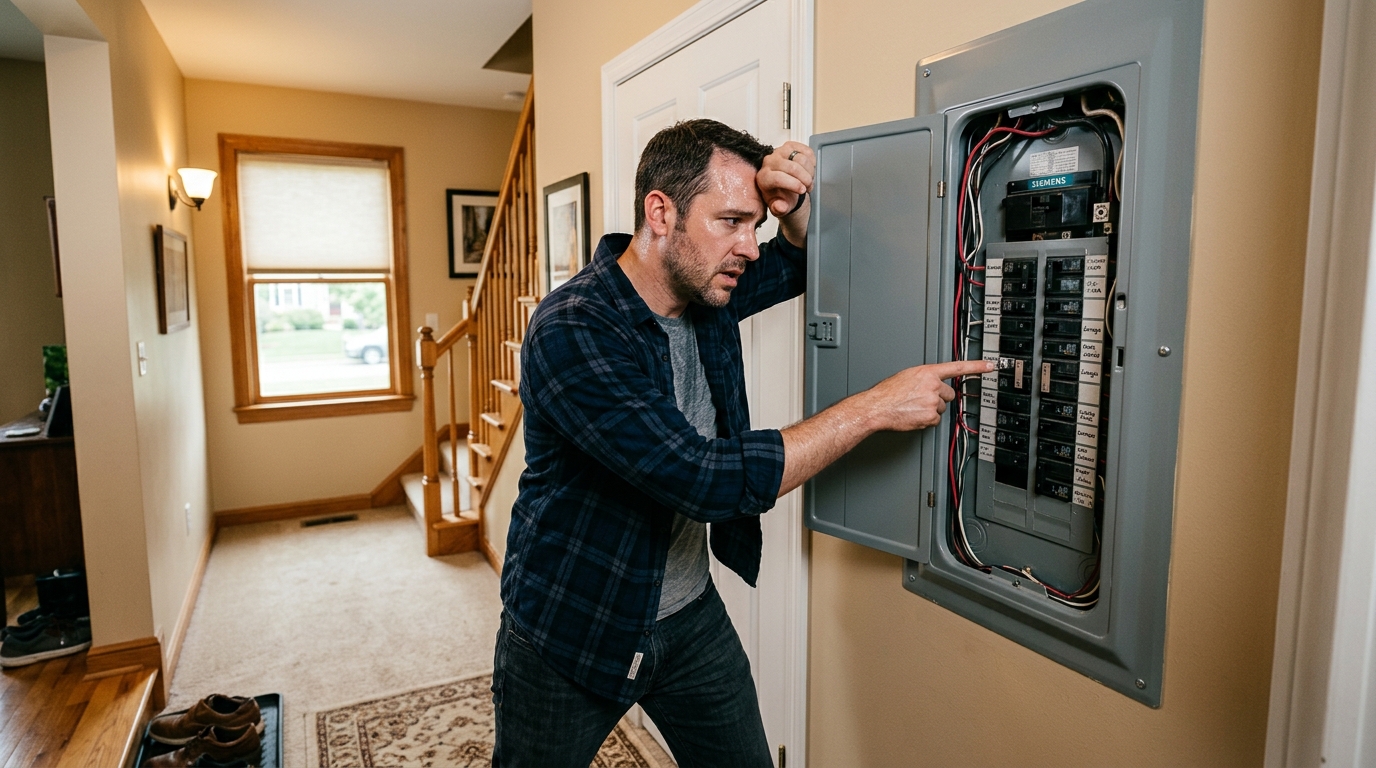
If your AC is tripping the breaker in Richmond, VA, you are not alone. On a hot July afternoon, the last thing you want is for your air conditioner to shut off and refuse to turn back on. This is one of the most common summer calls HVAC techs get all across the Richmond area, and it almost always means something needs attention.
What Does a Circuit Breaker Actually Do?
Think of your circuit breaker like a bodyguard for your home’s wiring. When too much electricity flows through a wire, it can get hot enough to start a fire. The breaker feels that danger and trips, meaning it shuts itself off to protect you.
Your air conditioner uses a lot of power. It runs on its own dedicated circuit, usually a 240-volt line. So when your AC trips the breaker, the breaker is doing its job. Something made the system draw too much current, and the breaker cut the power to stop damage or danger.
The problem is not the breaker itself most of the time. The breaker is just telling you something is wrong. And you need to listen.
Why Richmond Summers Make This Problem Worse
Richmond, Virginia, gets seriously hot in summer. Temperatures can climb into the high 90s with thick humidity that makes it feel even hotter. When it is that hot outside, your AC system works much harder than normal. It runs longer, it pulls more power, and all that extra stress builds up on the parts inside.
An HVAC system that would run fine in April might start tripping the circuit breaker in July just because of how hard it is pushing to keep your home cool. The heat season in Richmond is long, and your system feels every hour of it.
Top Reasons Your AC Keeps Tripping the Breaker
Dirty Air Filter and Dirty Condenser Coils
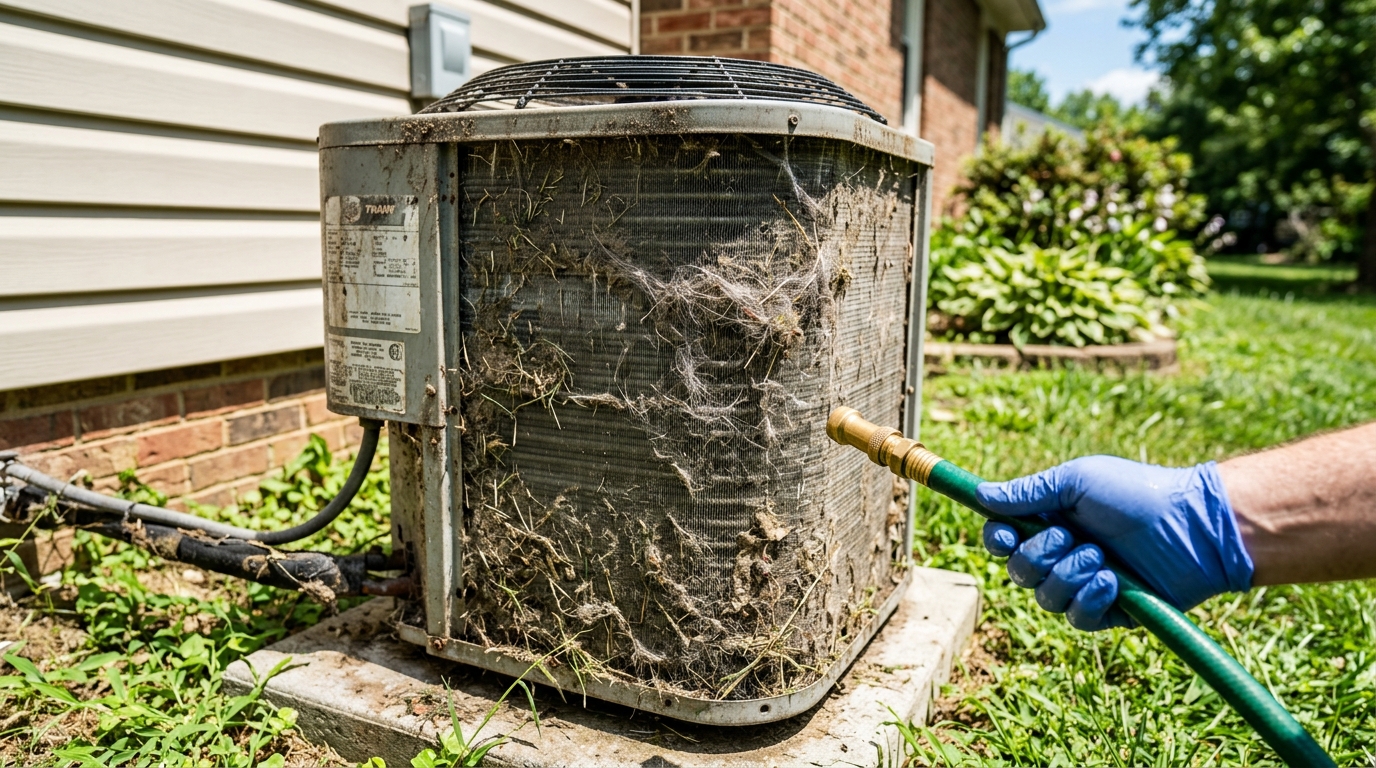
Honestly, this is the number one cause I see people miss. A dirty air filter blocks airflow into your system. When air cannot move freely, your AC has to work much harder just to pull enough air through. That extra effort uses more electricity. More electricity means more heat inside the unit. Eventually, the system overheats, and the breaker trips to stop a fire.
The same thing happens with dirty condenser coils. These coils sit in your outdoor unit and push heat from your house to the outside air. When they are covered in dirt and dust, they cannot do that job well. Your system runs and runs and runs trying to get the house cool, and the overworked parts pull too much power.
Replacing a clogged filter with a clean one and hosing off the outdoor coils can sometimes fix this problem right away. According to the U.S. Department of Energy, dirty filters reduce airflow and cause system inefficiency, and can even lead to premature failure of key parts.
Source: U.S. Department of Energy — Air Conditioner Maintenance
Bad Capacitor or Weak Compressor
A capacitor is a small part that gives your AC the electrical boost it needs to start up. Think of it like a battery that fires a starter motor. When a capacitor goes bad, your system struggles to start. It reaches for more and more electricity, trying to get going, and that big spike in current draw trips the breaker instantly.
I once had a neighbor here in Richmond call me over because her AC tripped the breaker every time she turned it on. Turned out her start capacitor had dried out from the summer heat. A technician swapped it in under an hour. The problem was completely gone.
A weak compressor has the same effect. The compressor is the heart of your AC, it pumps refrigerant through the whole system. When it starts to fail, it struggles to start and pulls too much power. Your technician may suggest a hard start kit to reduce the startup load, or the compressor may need replacement.
Quick tip: If your AC trips the breaker right when it turns on, that almost always points to a capacitor or compressor problem — not the filter. That is a job for a professional.
More Causes You Should Not Ignore
Loose Wiring and Short Circuits
Your AC unit vibrates every time it runs. Over months and years, those tiny vibrations can shake loose the wiring connections inside the unit or inside the electrical panel. A loose wire can cause a short circuit — where electricity jumps to a place it should not go. The breaker trips fast to stop that from becoming a fire.
A ground fault works similarly. That is when a live wire touches the ground wire by accident. Both conditions are dangerous if left alone. Loose wiring is not something you should try to fix yourself unless you have electrical training.
A Faulty or Worn-Out Breaker
To be fair, sometimes the breaker itself is the problem. Breakers are not built to last forever. After many years of trips and resets, a breaker can wear out and start tripping even when the electrical load is totally normal.
A worn breaker might feel warm to the touch. It might make a humming sound. It might trip even when you are not running much. If your HVAC technician checks everything and finds no problem with the AC unit itself, your electrician may recommend breaker replacement. This is a straightforward fix but must be done by a licensed professional — high-voltage electricity is no place for guesswork.
Never repeatedly reset a tripping breaker. Resetting it once to see if it holds is fine. But if it trips again right away, stop. Forcing a breaker to stay on when there is an electrical problem can damage your AC, your wiring, and your home.
Safe Steps to Try at Home First
Check and Change Your Air Filter
This is the first and safest thing you can do yourself. Locate your filter — it is usually in a slot near the indoor air handler or in a return air grille on the wall or ceiling. Pull it out and hold it up to the light. If you cannot see light through it, it is time to change it.
Most homes in Richmond should change their filter every one to two months during the cooling season. If you have pets or dusty conditions, do it more often. A clean filter costs just a few dollars and can save you hundreds in repairs.
Give Your AC System a Rest
If your breaker tripped on a very hot day and you have already changed the filter, try this. Turn the system off at the thermostat. Wait at least 30 minutes. This lets the compressor and other parts cool down. Then reset the breaker carefully — one time, and turn the AC back on.
If it holds and cools normally, the problem may have been that your system overheated during an especially long run cycle. Keep an eye on it over the next few hours. If it trips again, that means something deeper is wrong and it is time to call someone.
Also check: Make sure all your air vents inside the house are open. Closing too many vents forces your system to work harder and can lead to restricted airflow — another common cause of tripping.
When to Call a Professional in Richmond VA
Signs You Need Emergency AC Repair
Some situations are not DIY-friendly. If you see or smell any of the following, turn your AC off and call a technician right away:
A burning smell near your indoor unit or electrical panel is a serious warning. So is a buzzing or popping sound coming from the panel. If the breaker trips the moment you turn the system on, or if it trips again within a few minutes of being reset, something is drawing way too much power.
Ice forming on your outdoor unit during summer, no cool air even when the system runs, or a compressor that never kicks on — these all point to a professional repair job. According to a 2024 guide by the U.S. Department of Energy, when your AC fails to cool your home adequately, it is time to hire a qualified technician.
Source: U.S. Department of Energy — Common Air Conditioner Problems
What a Certified HVAC Technician Will Do
A NATE-certified technician will check your filter and airflow first. Then they will test your capacitor, check the compressor starting current, and look for loose or damaged wiring connections throughout the unit. They will measure the voltage and amperage at the outdoor unit while it runs.
If the refrigerant level is low from a leak, they will find it. Low refrigerant makes the system run longer to cool your house, which can overheat parts and cause trips over time. They will also check the condition of your breaker and your electrical panel to make sure nothing is worn or undersized for your system.
Richmond homeowners should look for companies with NATE-certified technicians, clear upfront pricing, and strong local reviews. Emergency same-day service is important in summer heat, especially if you have young children, older adults, or anyone with a medical condition at home.
Conclusion
An AC tripping the breaker in Richmond VA is your system’s way of waving a red flag. It is not something to ignore or keep resetting without understanding the cause. Start with the simple checks — your air filter, your vents, and giving the system a rest. Those cost nothing.
But if the problem keeps happening, do not wait. A bad capacitor, a failing compressor, loose wiring, or a worn-out breaker will only get worse. And in a Richmond summer, a broken AC is not just uncomfortable — it can be a real health risk for your family.
Call a licensed HVAC technician who knows Richmond’s climate, gets there fast, and gives you straight answers. Your cool air is worth it. Have you dealt with a tripping circuit breaker before? I would love to hear what fixed it for you — drop your experience below.
Frequently Asked Questions
Why does my AC trip the breaker only on hot days?
On very hot days your AC system runs longer and works harder to keep your home cool. That extra effort pulls more electricity. If any part is already weak — like a failing capacitor, dirty condenser coils, or low refrigerant — the added strain pushes the system over the limit and the circuit breaker trips to protect your wiring. Richmond summers are especially tough on AC systems because of both the heat and the high humidity.
Is it safe to keep resetting my AC breaker?
Resetting the breaker one time to see if it holds is okay. But if it trips again quickly, stop resetting it. Forcing the breaker to stay on when there is an electrical problem can damage your compressor, burn out your wiring, or even start a fire. Get a licensed HVAC technician or electrician to find the root cause before you reset it again.
How much does it cost to fix an AC that keeps tripping the breaker in Richmond VA?
The cost depends on the cause. Replacing a dirty air filter yourself costs just a few dollars. A new capacitor typically runs $150 to $300 with labor. A compressor replacement is more expensive, usually $1,000 to $2,500 depending on the unit size. A faulty breaker replacement is often $100 to $250. Always ask for upfront pricing before work begins.
Can a dirty air filter really cause the breaker to trip?
Yes, absolutely. A clogged air filter blocks airflow through the system. Your AC strains to pull air through the blockage, runs hotter than normal, and draws more electricity than the circuit can safely handle. The circuit breaker then trips. Changing your filter every one to two months during the cooling season in Richmond is one of the easiest ways to prevent this.
What if my AC breaker trips but the AC seems to work fine otherwise?
If your AC cools normally between trips, the problem may be something that only shows up under high load — like a weak capacitor, slightly low refrigerant, or a worn breaker that is close to the end of its life. It might also be that your outdoor unit is partially blocked, causing it to work harder than usual. Have a NATE-certified technician run a full diagnostic before the problem gets worse or causes permanent damage to the compressor.