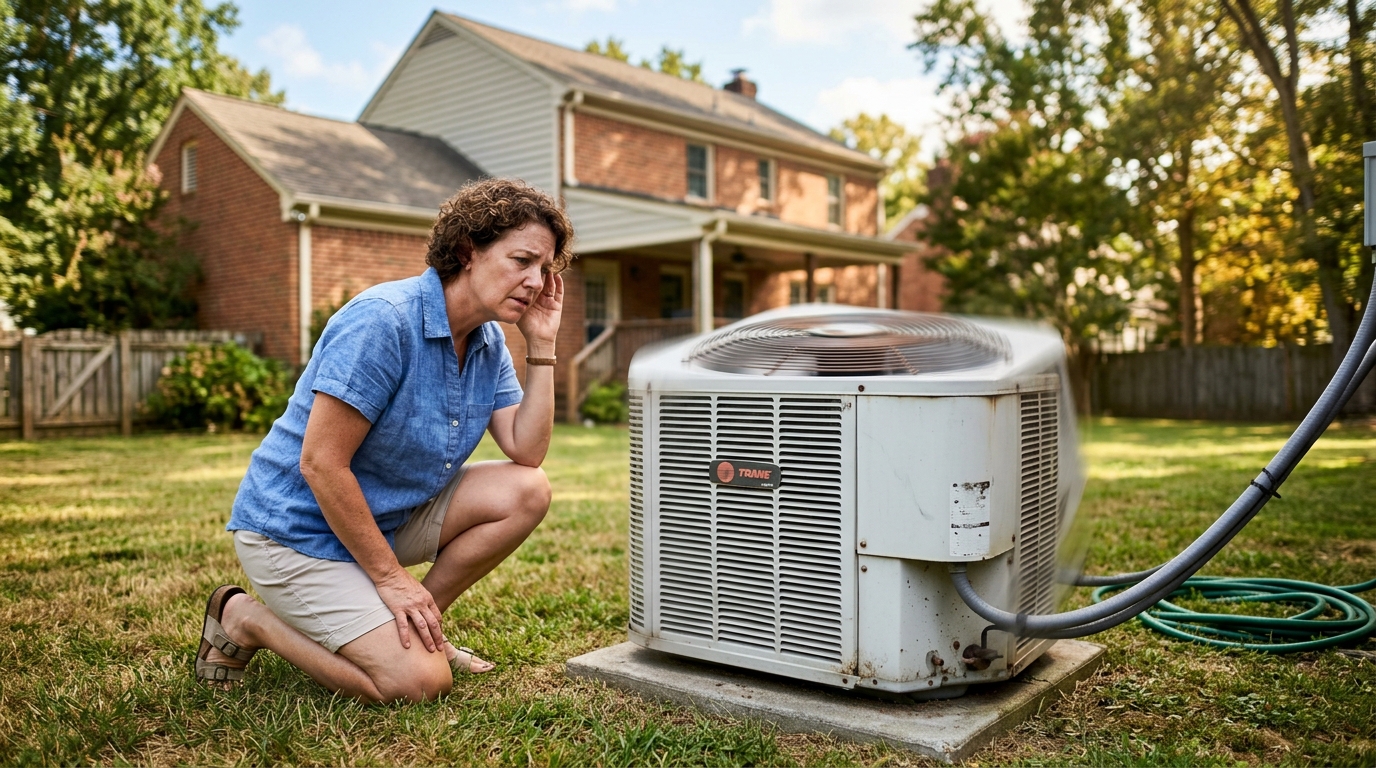
If your AC is making a loud noise in Richmond, VA, you’re probably in the middle of a hot, sticky Virginia summer, and the last thing you want is a broken cooling system. I get it. One evening, I heard this sudden loud banging from my outdoor unit and just froze. My first thought was, “Is my whole AC about to die?” Turns out, it wasn’t that bad, but only because I caught it early.
Strange sounds from your air conditioner are its way of telling you something is wrong. The faster you find out what that sound means, the better your chances of fixing it before it turns into a big, expensive problem.
Why Noise Is the First Sign Something Is Wrong
Your AC has many moving parts: the compressor, the fan motor, the blower, the condenser, and more. When something starts to wear out or break, it usually makes noise before it fully stops working.
Think of it like a car. Before a tire goes flat, it often makes a thumping sound. Your HVAC system works the same way. The noise gives you time to act if you listen.
In Richmond, VA, where summers can push temperatures into the 90s and humidity makes it feel even hotter, your AC runs hard. That constant use speeds up wear on parts. Catching problems early means staying cool and saving money.
Is My AC Supposed to Make Some Noise?
Yes, a little. A normal AC unit makes a soft hum when it runs. You might hear a gentle click when it turns on or off. That’s fine. A typical central AC runs at around 40 to 60 decibels, roughly the sound of a quiet conversation or a running refrigerator. That level is totally normal.
But when the noise gets loud, banging, screeching, buzzing, or grinding, that’s your signal to pay attention. Those sounds usually mean a mechanical or electrical issue is happening inside your unit.
Source: Today’s Homeowner Air Conditioner Noise Measurement (2026)
The Most Common AC Noises and What They Mean

Not all loud sounds mean the same thing. Here is a simple breakdown of the most common ones Richmond homeowners hear and what is likely causing them.
Banging or Knocking Sound
A loud banging noise coming from your outdoor AC unit is one of the most alarming sounds you can hear. Honestly, the first time I heard it, I thought something had hit my unit from outside. But most of the time, the problem is inside.
The most likely cause is a loose or broken part inside your compressor. Over time, things like pistons, connecting rods, or other small parts can come loose. When they do, they knock against the metal housing of the compressor, and that makes a very loud banging sound.
Another cause is a misaligned blower assembly. If the blower fan is off-center, its blades can hit the inside of the housing with each spin.
Important: If you hear loud banging from your AC, turn it off right away. Leaving it on can cause more parts to break and turn a repair into a full replacement.
This is not a fix-it-yourself situation. Compressors are sealed units and cannot be easily opened or repaired at home. You will need a licensed HVAC technician in Richmond, VA, to inspect it.
Buzzing or Electrical Sound
A buzzing sound from your AC almost always points to an electrical problem. The most common causes are a failing capacitor, frayed or loose electrical wires, or an out-of-balance fan blade.
The capacitor is a small but important part. It helps start and run your compressor and fan motors. When it starts to fail, your AC may buzz, click, or struggle to start. Left alone, a bad capacitor can damage your compressor, and compressor damage is expensive. According to Angi, AC compressor replacement costs around $1,200 on average.
Electrical problems are never something to ignore or try to fix yourself. Electricity in an HVAC system can be dangerous, and handling it without training can lead to serious injury or even a fire hazard. Always call a certified AC repair technician in Richmond, VA, for buzzing or electrical sounds.
Source: Angi 11 Reasons Your AC Unit Is Making Loud Noise and How to Fix It
More Sounds You Should Know About
Beyond banging and buzzing, there are a few other noises that homeowners in Richmond, VA, commonly run into. Each one tells a slightly different story about what is going on inside your unit.
Screeching or Squealing: Your Motor Is Asking for Help
A high-pitched screeching or squealing noise usually means one thing: your fan motor or compressor motor is in trouble. This sound often shows up when your AC first starts up in the morning or after a long break.
The cause could be worn-out bearings in the motor, a slipping belt on the blower, or a motor that is just starting to fail. The blower fan inside your home, the part that pulls warm air in from your house, can also make this sound when its motor starts to go bad.
Here is the part most people miss: once this noise starts, the motor is not going to heal itself. Every day you run the AC with a failing motor, you are wearing it down faster. If it gives out completely, your whole system stops working right in the middle of a Richmond summer heat wave.
Turn off the unit and call a professional. Squealing almost always requires professional repair and cannot safely be fixed without the right tools and parts.
Hissing Sounds and Refrigerant Leaks
A hissing sound from your AC, especially a slow, steady one, usually means you have a refrigerant leak. Refrigerant is the chemical your AC uses to pull heat out of your home and release it outside through the outdoor unit.
A small hiss right after your AC shuts off can be normal. That is just the pressure in the refrigerant lines equalizing. But if the hissing is loud, long, or happens while the unit is running, that is a different story.
Refrigerant leaks are serious for two reasons. First, your AC loses its ability to cool your home properly. Second, refrigerants are toxic. You cannot smell it, but breathing it in over time is bad for your health. Do not try to top off refrigerant yourself; it requires special certification to handle legally.
Call a licensed HVAC professional in Richmond, VA, immediately. They will find the leak, fix it, and safely refill the refrigerant.
AC Making Loud Noise After It Turns Off in Richmond, VA
A lot of homeowners in Richmond, VA, notice that their AC makes noise not just while running but also after it shuts off. This confuses people because they think: “It’s off, so why is it still making sounds?” Good question. Let me break it down.
Sounds That Are Actually Normal After Shutdown
When your AC turns off, a few things happen inside. The refrigerant pressure in the lines shifts. The metal ductwork that was cold while the AC ran now starts to warm back up, and metal expands when it warms. That expansion causes gentle ticking or popping sounds.
A faint hiss right after shutdown is also normal; that is just the refrigerant pressure equalizing. Electrical parts settling can also make soft clicking noises.
These are all normal. They stop within a minute or two. If you notice these sounds but your home is cooling well and nothing seems off, you likely have nothing to worry about.
When Post-Shutdown Noises Mean a Real Problem
Now here is where it gets important. If the noises after shutdown are loud, last a long time, or keep getting worse, that is a red flag.
Loud banging after shutdown could mean your compressor springs are broken or your fan blade is hitting something metal as it slows down. Loud hissing that goes on for a while could be a real refrigerant leak. Persistent rattling could mean a loose part is moving around inside the unit.
The honest rule of thumb: if it sounds like something you’d be worried about hearing from your car engine, treat it the same way. Get it looked at by a licensed Richmond, VA HVAC technician before the next time you need to run the system.
Should You Repair or Replace Your AC in Richmond, VA?
Once you find out what is causing your AC to make a loud noise, you face the big question: fix it or replace it? This is a question I think about a lot when I write about HVAC topics. And honestly, there is no single right answer but there is a smart way to think about it.
The 50% Rule: A Simple Way to Decide
Here is a useful guide that many HVAC professionals in Richmond, VA, use: the 50% rule. If the cost of the repair is 50% or more of the price of a brand-new unit, it often makes more financial sense to just replace the system.
For example, if a new AC costs $4,000 and the repair would cost $2,200, that is more than 50%. Replacing it would give you a fresh system with a full warranty, better energy efficiency, and no more worrying about what breaks next.
Age matters too. AC units over 10 to 15 years old are generally less efficient and more likely to keep breaking down. If your unit is older and already needs a big repair, replacing it is usually the smarter long-term choice.
Quick Things You Can Check Before Calling a Pro
Before you call a technician, there are a few safe things you can check yourself with no tools needed.
First, look around your outdoor condenser unit. Are there sticks, leaves, or debris inside or around it? Debris caught in the fan is one of the most common causes of rattling noises, and it is an easy fix. Turn the unit off, carefully remove any visible debris, then turn it back on and listen.
Second, check your air filter. A clogged or collapsed air filter can cause your indoor unit to struggle, and that struggle can sound like banging or thumping as the filter hits the return grille.
Third, walk around and look at all the panels on your outdoor unit. If a panel is loose, tightening it with a screwdriver might stop a rattling noise right away.
Safety note: Always turn off your AC unit at the thermostat AND the breaker before touching anything on the outdoor unit. Never open the unit’s electrical panel yourself.
If none of these quick checks solve the problem or if you hear grinding, screeching, or loud buzzing, stop and call a certified AC repair professional in Richmond, VA. Experts recommend having your HVAC system serviced at least twice a year, once in spring and once in fall, to catch problems before they become noise or worse.
Source: Angi Experts recommend HVAC service twice a year
Conclusion
An AC making a loud noise in Richmond VA, is never something to just live with. Whether it is a banging compressor, a buzzing capacitor, a screeching fan motor, or a hissing refrigerant leak, every strange sound has a cause, and most causes get worse the longer you wait.
The good news is that catching it early almost always means a cheaper, faster fix. Check for debris, look at your filter, and listen carefully to what your system is telling you. If the sound keeps coming back or sounds serious, reach out to a licensed HVAC technician in Richmond, VA, right away.
Your home comfort is worth protecting. I’d love to hear what noise you’re dealing with. Drop your experience in the comments or reach out to a local pro today.
Frequently Asked Questions
Why is my AC making a loud banging noise in Richmond, VA?
A loud banging noise from your AC usually means a part has come loose inside your compressor, like a piston or connecting rod. It can also mean your blower fan is misaligned and hitting the housing. Turn off your unit right away and call a certified HVAC technician. Do not keep running it, or the damage can get much worse.
Is it safe to run my AC if it is making a loud noise?
It depends on the sound. A soft hum or gentle tick is usually fine. But if you hear banging, grinding, or loud screeching, you should turn off the unit right away. Running an AC with serious mechanical or electrical problems can cause bigger damage, and in some cases, it can be a safety risk if there is an electrical issue.
What does a buzzing AC mean in Richmond, VA?
Buzzing from your AC almost always points to an electrical problem. The most common cause is a failing capacitor, a part that helps start your motors. Loose or frayed wires can also cause buzzing. This is not a DIY fix. Electrical issues inside an HVAC system can be dangerous, so always call a professional for diagnosis and repair.
Why does my AC make noise after it turns off?
Some post-shutdown noise is totally normal: gentle ticking from the ductwork expanding, a faint hiss from refrigerant pressure equalizing, or soft clicks from electrical parts settling. These sounds should stop within a minute or two. If you hear loud banging, long hissing, or rattling that keeps going after shutdown, that is a sign of a problem worth having a technician check.
Should I repair or replace my noisy AC in Richmond, VA?
Use the 50% rule as your guide: if the repair cost is 50% or more of what a new unit would cost, replacement usually makes more sense. Also consider the age of your unit. AC systems older than 10 to 15 years are more likely to keep breaking down. A new, high-efficiency system will save you money on energy bills and give you peace of mind through many Richmond summers to come.