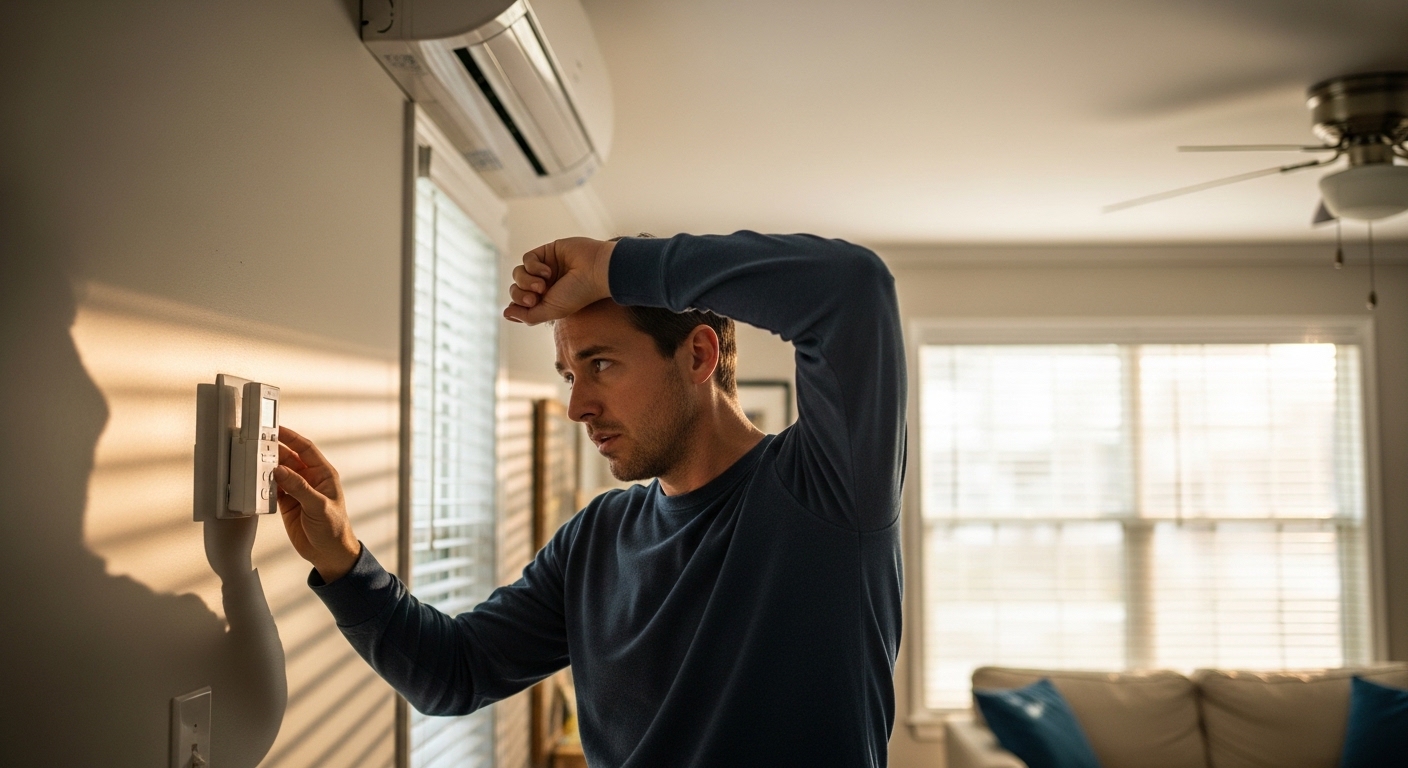
It is the middle of a hot Richmond summer. You go inside, and your home feels just as hot as outside. You check your AC, and it is running. But the cool air? Nowhere to be found. Sound familiar? You are not alone. Richmond, VA, summers are no joke. According to Climate Central, average summer temperatures in Richmond between 1970 and 2024 have risen by 2.7°F, making a working air conditioner more important than ever.
If your AC is not cooling your home, there is always a reason. And most of the time, it is something you can fix fast or at least understand. Let me walk you through the 10 most common causes, what they mean, and what you can do about each one.
1. Wrong Thermostat Setting: The Most Overlooked Fix
Why Your Thermostat Might Be the Problem
Honestly, this one catches more homeowners off guard than you would think. Before you call a technician, go check your thermostat settings first. Make sure it is set to “cool” mode, not “heat” or just “fan.” Also, make sure the set temperature is lower than the current room temperature.
I once heard from a neighbor who spent three days sweating at home before realizing his thermostat had been accidentally switched to “fan only” by one of his kids. Three days of suffering for a two-second fix.
How to Fix It
Set your thermostat to “cool,” drop the temperature to at least 3 to 5 degrees below your current room temperature, and switch the fan setting to “auto” instead of “on.” If you have a smart thermostat, check that the schedule and programming are correct, too. This simple step can save you a service call.
2. Dirty Air Filter: The Silent Cooling Killer
What a Clogged Filter Does to Your System
Your air filter catches all the dust, pet hair, and debris from the air in your home. But when it gets too dirty, it blocks the airflow. When airflow is restricted, your evaporator coils cannot absorb heat properly. The result? Warm air is coming out of your vents even though the system is running.
A dirty filter makes your system work much harder than it should. It can even cause your AC unit to freeze up. And a frozen system does not cool anything at all.
How Often Should You Change Your Filter?
For most Richmond homes, you should check your filter once a month. Replace it every 1 to 3 months, depending on how often you run the system and whether you have pets. If you pull it out and it looks gray and thick with dust, change it right away. This is one of the easiest and cheapest things you can do to keep your AC running efficiently.
3. Low Refrigerant or a Refrigerant Leak
What Refrigerant Actually Does
Refrigerant is a special chemical that makes your air conditioner cold. It moves through your system, absorbing heat from inside your home and pushing it outside. When refrigerant levels are low, or when there is a refrigerant leak, your system simply cannot cool the air the way it should.
Low refrigerant does not just make your AC less effective. It can cause your evaporator coils to ice over completely, which makes things even worse.
Signs You Have a Refrigerant Leak
You might notice your AC blowing slightly cool but never truly cold air. You might hear a hissing sound near the unit. Or you might see ice forming on the copper lines near your indoor unit. These are all signs to stop running the system and call an HVAC technician right away.
Refrigerant handling requires a licensed professional. It is not something you can top up yourself, and a leak needs to be repaired before the system is recharged with more refrigerant.
4. Dirty Condenser or Evaporator Coils
Why Dirty Coils Stop Your AC from Cooling
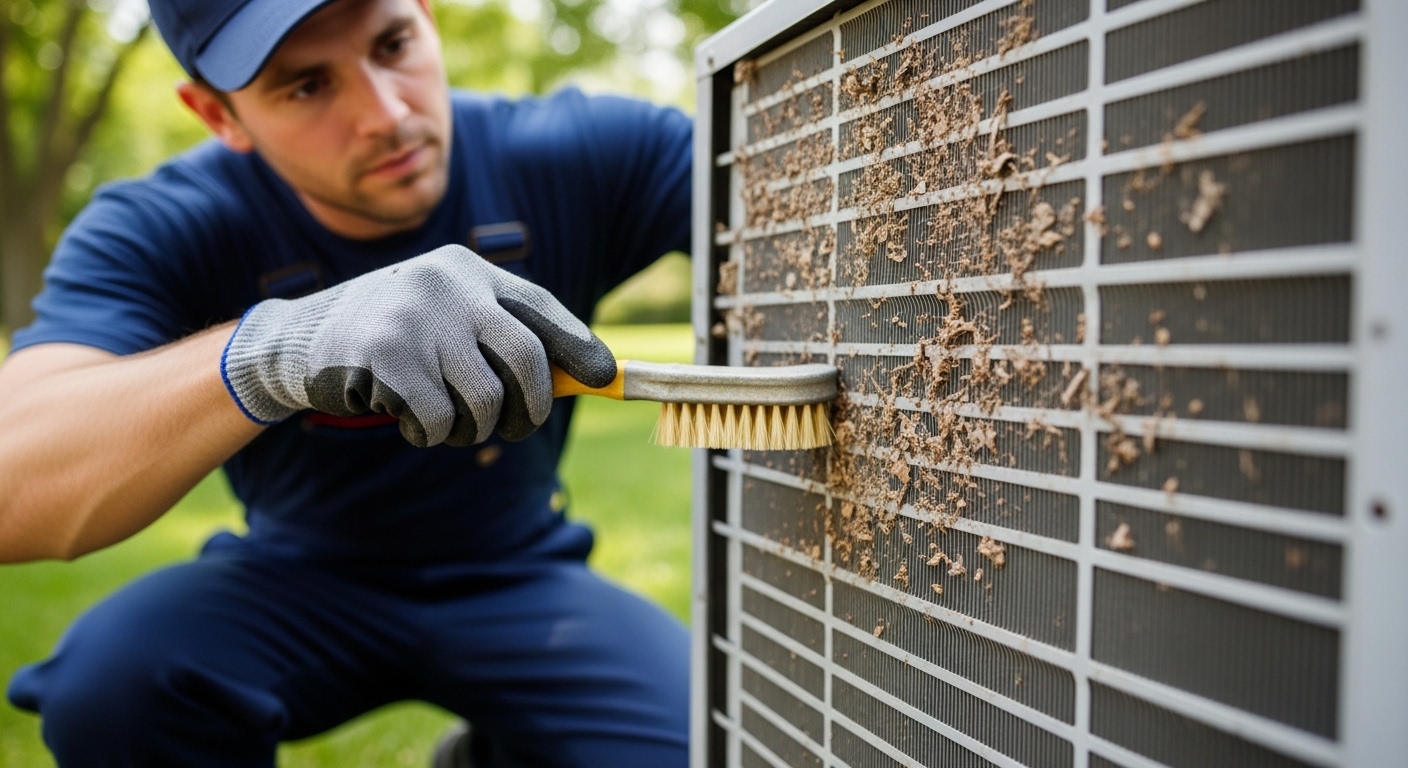
Your AC has two sets of coils. The evaporator coils sit inside your home and absorb heat from the indoor air. The condenser coils sit in your outdoor unit and release that heat outside. When either set of coils is covered in dirt, dust, or grime, the heat cannot transfer properly.
Think of it like trying to warm your hands through a thick winter glove. The glove blocks the heat. A layer of dirt on your coils does the same thing, and your home stays warm as a result.
Richmond summers bring humidity, pollen, and dust. All of that builds up fast on outdoor condenser coils, especially.
How to Keep Your Coils Clean
You can gently rinse outdoor condenser coils with a garden hose on a soft setting. Do not use a pressure washer. Remove any leaves, grass, or debris around the outdoor unit. For indoor evaporator coils, it is best to let a professional handle the cleaning since accessing them requires opening the air handler.
Quick Tip: Keep at least 2 feet of clearance around your outdoor condenser unit. Bushes, fences, or stored items that block airflow can make coils dirty faster and reduce cooling ability.
5. Blocked or Leaking Ductwork
How Duct Leaks Waste Your Cool Air
Your duct system is like a series of roads that carry cool air from your AC to every room in your home. If those roads have holes or cracks, the cool air escapes before it ever reaches you. Studies show that in many homes, up to 20 to 30 percent of cooled air can be lost through duct leaks.
That means your AC is working hard and using electricity to cool your attic or crawlspace instead of your living room. Frustrating and expensive.
How to Spot Duct Problems in Your Richmond Home
If some rooms in your home feel much warmer than others, leaky or blocked ducts could be the reason. You might also notice weak airflow from certain vents. A professional can do a duct inspection and seal any leaks with mastic sealant or foil tape to restore proper airflow throughout your home.
6. Faulty Compressor: The Heart of Your AC System
What the Compressor Does
The compressor is one of the most important parts of your entire cooling system. It pressurizes the refrigerant so it can absorb and release heat properly. Without a working compressor, your AC system simply cannot cool your home at all.
A damaged compressor is one of the more serious and expensive repairs in the HVAC world. Signs include your outdoor unit running but not making the usual humming sound, strange clicking or rattling noises, or the unit tripping the circuit breaker repeatedly.
Can You Repair a Bad Compressor?
Sometimes, a bad start capacitor or wiring issue can mimic a failed compressor. A licensed technician will be able to tell the difference. If the compressor itself is truly damaged, repair can be costly. At that point, you may want to consider whether it makes more sense to replace the entire unit, especially if your system is over 10 to 15 years old.
7. AC Unit Is Too Small for Your Home
Why Unit Size Matters So Much
This is a problem I see a lot in older Richmond homes. If your AC system is not sized correctly for the square footage of your home, it will run and run but never actually cool things down. A small unit gets overwhelmed by the heat load of a larger space.
Richmond summers regularly hit 90 degrees Fahrenheit with high humidity. A properly sized system handles that. An undersized one fights it and loses every time.
How to Know If Your System Is Undersized
If your AC runs almost all day without turning off and your home never reaches your set temperature, undersizing could be the issue. An HVAC professional can do a Manual J load calculation to find the right size for your home based on square footage, ceiling height, insulation, and window placement. Getting the right size is not just about comfort. It also reduces your energy bills significantly.
8. Frozen Evaporator Coils
Why Coils Freeze Up
Frozen evaporator coils might sound like good news for cooling, but they are actually a big problem. When coils freeze, the ice acts as a barrier. Air cannot pass through properly, and the system stops cooling your home.
Coils freeze for a few reasons. A dirty air filter is the most common cause. Low refrigerant levels are another. Running your AC when outdoor temperatures drop below around 60 degrees at night can also cause freezing.
What to Do When Coils Are Frozen
Turn your system off and let it thaw completely. This can take a few hours. Switch the fan to “on” without cooling to help speed up the thaw. Once it is fully thawed, replace your air filter, then turn the system back on. If it freezes again, you likely have a refrigerant problem and need a professional to take a look.
Source note: According to the U.S. Department of Energy, regular maintenance, including filter changes and coil cleaning, can improve your AC’s efficiency by 5 to 15 percent.
9. Tripped Circuit Breaker or Electrical Issue
When Your AC Loses Power
Sometimes the reason your AC is not cooling is simply an electrical one. A tripped circuit breaker can shut off part of your system while another part keeps running. For example, the indoor fan might still blow air, but if the outdoor unit loses power, no cooling happens at all.
Go check your electrical panel and look for any tripped breakers. They will be in the middle position instead of fully on or off. Reset them by flipping them off first, then back on.
When to Call a Professional for Electrical Problems
If your breaker trips again quickly after resetting, do not keep resetting it. A breaker that keeps tripping is telling you there is a bigger problem, possibly a short circuit, an overloaded circuit, or a faulty component in your AC. Call a licensed HVAC technician before the problem gets worse or becomes a safety hazard.
10. Old or Aging AC System
When Your AC Is Simply Getting Too Old
Like any machine, an air conditioner loses efficiency as it ages. If your system is more than 10 to 15 years old, it may just not be able to keep up with Richmond summers the way it used to. Older systems also tend to use older refrigerants that are no longer being made, which makes repairs more expensive and harder to do.
According to Energy Star, replacing an AC older than 10 years with a high-SEER rated model can save up to 20 percent on your cooling costs. Over the course of a hot Virginia summer, that adds up to real money.
Should You Repair or Replace?
A good rule of thumb is the 50 percent rule. If the cost of repair is more than 50 percent of the price of a new unit, replacement is usually the smarter investment. Also, think about how old your system is, how often it needs repairs, and whether it uses R-22 refrigerant, which has been phased out. A newer high-efficiency AC system offers better indoor air quality, quieter operation, better humidity control, and lower monthly bills.
Conclusion
Living in Richmond, VA, means you rely on your air conditioner all summer long. When it stops cooling properly, it is not just uncomfortable. It can feel like a small emergency. The good news is that most of the reasons behind a struggling AC are fixable when caught early.
Start with the simple stuff: check your thermostat settings, swap out a dirty air filter, and clear debris from around your outdoor unit. If those steps do not fix it, the problem could be refrigerant, dirty coils, duct leaks, or a failing compressor. An aging system might just need to be replaced with a newer, more energy-efficient model.
Whatever the issue, the worst thing you can do is ignore it. A small problem today can turn into a big, expensive one by next week. Schedule a professional AC inspection or AC tune-up before the hottest months hit. Your future self will thank you.
Have you dealt with any of these AC problems before? I would love to hear what worked for you in the comments below.
Frequently Asked Questions
Why is my AC running but not cooling my Richmond home?
The most common reasons your AC is running but not cooling are a dirty air filter, low refrigerant, frozen evaporator coils, or a problem with the compressor. Start by checking your filter and thermostat settings. If those look fine, call a licensed HVAC technician in Richmond to inspect the system for refrigerant leaks or mechanical issues.
How often should I replace my AC air filter in Richmond, VA?
In Richmond, where summers bring heat, humidity, and pollen, you should check your air filter every month and replace it every 1 to 3 months. If you have pets or anyone in your home has allergies, replace it every 30 to 45 days. A clean filter is the single easiest way to keep your AC cooling efficiently all summer.
Can a dirty condenser unit cause my AC to stop cooling?
Yes. A dirty condenser unit is one of the top reasons for poor cooling in Richmond homes. When the outdoor coils are covered in dirt, leaves, or debris, the system cannot release heat properly. This forces your AC to work harder and cool less. Clean around your outdoor unit regularly and rinse the coils gently with a hose to keep airflow clear.
What are the signs I need a new AC system instead of a repair?
Consider replacing your AC unit if it is 10 to 15 years old, needs repairs that cost more than 50 percent of a new unit, uses the outdated R-22 refrigerant, or breaks down repeatedly each summer. A new high-efficiency system with a better SEER rating will save you money on energy bills and cool your home much more reliably.
How can I improve my AC cooling without buying a new system?
There are several ways to get more out of your existing system. Change your air filter regularly, seal any gaps around windows and doors, close blinds during peak sun hours, and schedule an annual AC tune-up to clean coils and check refrigerant levels. You can also have a professional inspect your ductwork for leaks and seal them to stop cool air from escaping before it reaches your rooms.