Living in Church Hill, Richmond is something special. The old brick row houses, the tree-lined streets, the history everywhere you look. But here is what most people don’t tell you before you move in: those beautiful historic homes can be really tough to keep comfortable.
The summers here get hot and muggy. The winters bring cold snaps that come out of nowhere. And if your HVAC system is not set up right for this kind of weather, you are going to feel it every single month of the year. That is why having the right heating and cooling plan for your Church Hill home matters more than most people realize.
Why Church Hill Homes Have Unique HVAC Challenges
Church Hill is one of Richmond’s oldest neighborhoods. Many of its homes were built before modern HVAC systems even existed. We are talking about Colonial, Greek Revival, Italianate, and Queen Anne style homes that have thick walls, original windows, and old ductwork or sometimes no ductwork at all.
Many of these historic properties have not gone through renovations like upgrades to their HVAC systems, and original systems can present real challenges for homeowners. I once helped a neighbor in a 1920s Church Hill townhouse figure out why one room was freezing cold while the kitchen stayed warm. The problem? Old, leaky ductwork that had never been sealed. A simple fix, but it had been making the whole system work twice as hard for years.
Historic homes in Church Hill often need specialized solutions, while newer builds may benefit from zoning and energy-efficient HVAC design. So whether your home is a pre-Civil War gem or a newer build from the 80s or 90s, the heating and cooling needs are going to be different.
Richmond’s Climate: What Your HVAC System Is Up Against
Here is the honest truth about living in Richmond, Virginia. The weather is not easy on your home.
Richmond has a humid subtropical climate, with summer highs reaching around 90.9°F (32.7°C) in July and winter lows dropping to about 29.7°F (-1.3°C) in January. According to Weather U.S, the average humidity in Richmond sits at about 70% throughout the year, with August seeing the highest levels at 77%.
That combination of heat and moisture in summer, and cold damp air in winter, puts a lot of stress on any HVAC system. Your air conditioner is not just cooling the air. It is also pulling out moisture so your home does not feel like a swamp. And in winter, your furnace or heat pump needs to work hard on those cold nights. This is why proper HVAC installation, regular maintenance, and the right system sizing are so important for Church Hill, Richmond homeowners.
HVAC Services That Keep Church Hill Homes Running Smoothly
When people ask me what the most important thing is for home comfort, my answer is always the same: the right services from people who understand your home.
A full range of HVAC services for Church Hill homes includes AC repair, AC installation, AC maintenance, heater and furnace repair, ductless heating systems, heat pump repair, and indoor air quality solutions like air purifiers, humidifiers, dehumidifiers, and ventilation upgrades. The best HVAC companies serving Church Hill also offer water heater installation and duct cleaning, which makes a big difference for indoor air quality.
Trusted local providers offer heat pump service, ductless mini split solutions, air filter services, and preventive maintenance plans to help protect your investment and reduce energy costs. Honestly, the preventive plan is the one most homeowners skip and then regret. Catching a small problem in spring is a lot cheaper than replacing a whole system in July when every technician in town is booked solid.
Heating Solutions for Cold Richmond Winters
Let’s talk about winter. People sometimes assume Richmond winters are mild. And they can be. But those January cold snaps can be brutal, and if your heating system is not ready, you will know it fast.
The most common heating options for Church Hill homes include gas furnaces, heat pumps, and boiler systems. Older historic homes sometimes still have boiler heating, which needs special care and expertise to maintain. Newer homes and renovated spaces often do better with modern heat pumps, which are gaining popularity because they both heat and cool in one system.
According to the U.S. Department of Energy’s ENERGY STAR program, replacing an oil heating system with a heat pump can save homeowners an average of about $950 a year on energy bills. Replacing electric resistance heaters with heat pumps saves an average of about $460 a year. For a Church Hill homeowner paying high utility bills through a cold winter, that kind of saving is worth paying attention to.
Furnace repair, heat pump installation, ductless heating systems and regular HVAC maintenance before the cold season are all smart moves. Don’t wait until your system breaks down at 11 PM in January to think about it.
Cooling Solutions for Hot and Humid Richmond Summers
Summer in Church Hill is no joke. When the humidity is high and the temperature is pushing 91°F, your air conditioner is the most important appliance in your house.
For Richmond homeowners, heat pumps are gaining popularity because they both heat and cool homes efficiently. Ductless mini-split systems are perfect for homes without existing ductwork or for adding climate control to specific rooms. This is huge for Church Hill, because many older homes were never built with central duct systems. A ductless mini-split can be a game changer.
AC installation, AC repair, AC maintenance, and seasonal tune-ups before summer hits are the best ways to protect yourself. Also, think about your air filter. Replacing it every one to three months is one of the easiest and cheapest things you can do to keep your system running well and your indoor air clean.
Humidity control is especially important in Richmond’s climate, where too much moisture can create comfort problems and even promote mold growth. Proper humidity control also helps your heating and cooling systems run more efficiently.
Indoor Air Quality: The Hidden Part of Home Comfort
Most people think about HVAC as just heating and cooling. But the air inside your home is something you breathe every single day. That matters.
In Richmond, high pollen counts in spring and summer make indoor air quality solutions and duct cleaning more than a luxury. For families managing allergies, they are a necessity.
Indoor air quality solutions include air purifiers, air filtration systems, whole-home humidifiers, dehumidifiers, and ventilation upgrades. If anyone in your home has asthma, allergies, or breathing issues, this is worth taking seriously. I have seen people spend months dealing with allergy symptoms before realizing their ductwork was full of dust and debris. After a professional duct cleaning, the difference was immediate.
According to the U.S. EPA’s ENERGY STAR program, smart thermostats can save homeowners around 8% on heating and cooling bills, or about $50 per year on average. Savings can be greater depending on climate, home size, and HVAC equipment. Pairing a smart thermostat with good air quality solutions gives you better comfort and lower bills at the same time.
Seasonal HVAC Maintenance: Why It Cannot Be Skipped
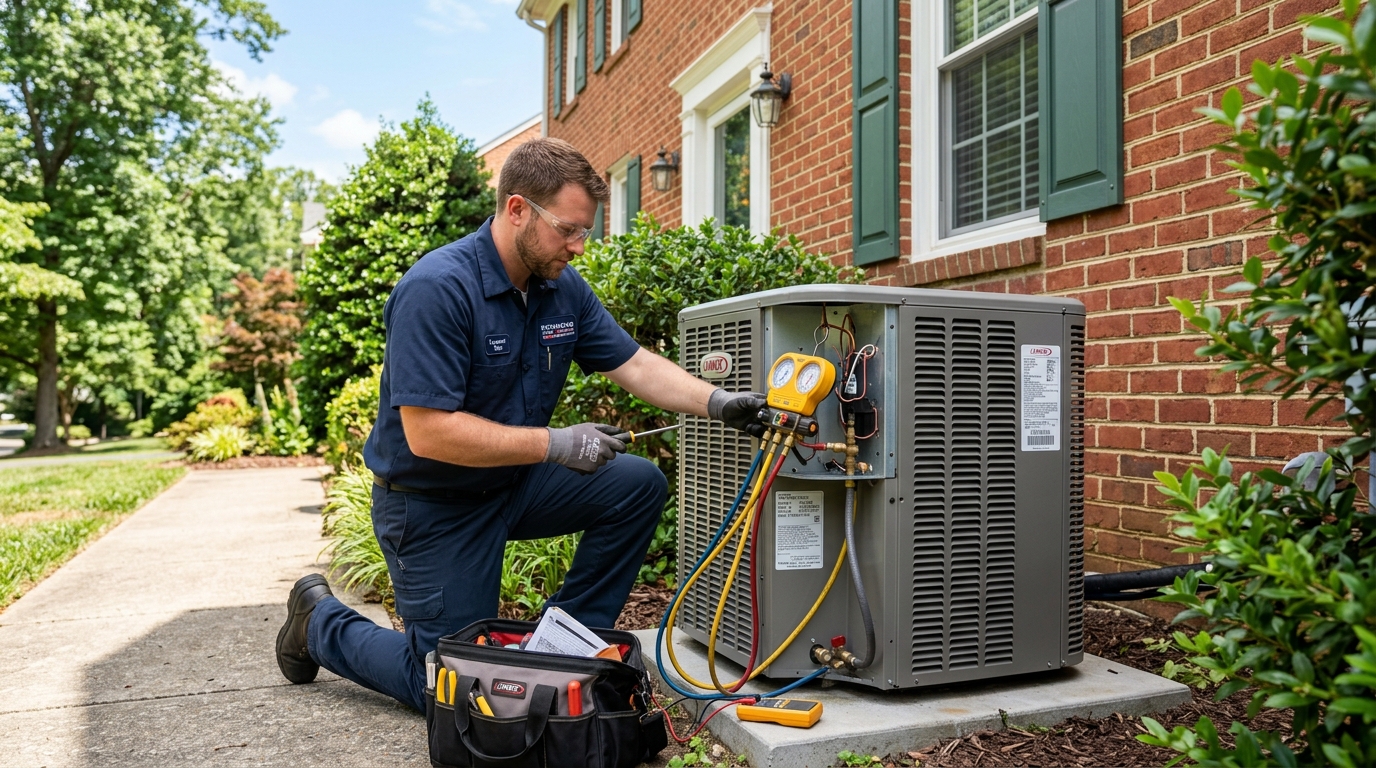
Here is something I have learned the hard way. The best time to fix an HVAC problem is before it becomes an emergency.
Seasonal HVAC maintenance means having a licensed technician check your system in spring before summer heat arrives, and again in fall before winter. They will check refrigerant levels, clean coils, inspect ductwork, test thermostats, and make sure everything is running at peak energy efficiency. This extends the life of your system and prevents big, expensive breakdowns.
Essential maintenance tips for Richmond homeowners include scheduling bi-annual professional inspections and tune-ups and replacing air filters every one to three months depending on usage and air quality.
For Church Hill homeowners with historic properties, regular maintenance also means having a technician who understands older systems. Experienced technicians offer knowledge and skill in retrofitting for customers who want to preserve and maintain older systems while still getting energy efficiency and comfort. That balance between keeping the character of a historic home and getting modern comfort is something the right HVAC team can help you find.
Choosing the Right HVAC System for Your Church Hill Home
Not every home needs the same system. And this is where a lot of homeowners make mistakes. They buy what their neighbor bought, or they go with whatever is cheapest, and then wonder why their energy bills are still high.
The right HVAC system for your Church Hill home depends on: the age of your home, whether you have existing ductwork, the size of your space, your budget, and your energy efficiency goals. Options include central air conditioning and heating systems (typically $5,000 to $12,000), heat pumps, ductless mini-splits, and boiler systems for older properties.
For Church Hill homes, NATE-certified technicians ensure every repair or installation is done right the first time, from full HVAC installation to duct cleaning, indoor air quality improvements, and water heater replacement.
A proper load calculation by a licensed tech tells you exactly what size system your home needs. Too small, and it runs constantly. Too big, and it short-cycles and wastes energy. Getting this right from the start saves you money for years.
Conclusion
Keep Your Church Hill, Richmond Home Comfortable Year-Round with Expert HVAC Solutions and you will not just feel better at home. You will also save money, breathe cleaner air, and protect your property for the long term.
Whether you live in a beautiful pre-Civil War townhouse or a newer build on the east end of Church Hill, the right heating, cooling, and indoor air quality setup makes all the difference. Work with licensed HVAC professionals who know Richmond’s climate and the unique needs of historic and modern homes in your neighborhood. Schedule your seasonal maintenance before the heat or cold hits. Upgrade to an energy-efficient system when the time is right. And do not ignore small problems before they turn into big ones.
Your home is worth it. And so is your comfort.
Frequently Asked Questions
What makes HVAC in Church Hill, Richmond different from other neighborhoods?
Church Hill has a mix of very old historic homes and newer builds, which means HVAC needs vary a lot from house to house. Many older homes were not built with modern ductwork or insulation, so they need special solutions like ductless mini-splits, retrofitting, or upgraded air sealing. Local HVAC technicians who know the neighborhood can make sure your system fits your specific home.
How often should I service my HVAC system in Richmond, Virginia?
Most HVAC experts recommend a bi-annual inspection: once in spring before summer cooling season starts and once in fall before winter heating season begins. You should also replace your air filter every one to three months depending on how dusty your home is and whether you have pets or allergies.
Can I use a heat pump in a Church Hill historic home?
Yes, and many homeowners are making the switch. Heat pumps work for both heating and cooling, which makes them very efficient. For homes without ductwork, a ductless mini-split heat pump is a great option. A qualified HVAC technician can assess your home and tell you what will work best without changing the look or structure of your historic property.
How can I lower my energy bills in my Church Hill home?
The best ways to lower energy bills include upgrading to an ENERGY STAR certified HVAC system, installing a smart thermostat, sealing ductwork to stop air leaks, improving home insulation, and keeping up with regular HVAC maintenance. Even small steps like changing your air filter on time can make a noticeable difference on your monthly bill.
What indoor air quality solutions are best for Richmond homes?
Given Richmond’s high humidity and pollen levels, the most useful indoor air quality solutions include a whole-home dehumidifier to control moisture, HEPA air purifiers or filtration systems for allergens, and professional duct cleaning to remove dust and debris buildup. If anyone in your home has asthma or seasonal allergies, these upgrades can make a real difference in how you feel day to day.