If you live in an older home in Richmond, you already know the struggle. You run your AC all day, yet some rooms still feel like a sauna. Your energy bills keep going up. And your old system just keeps groaning along. Honestly, it is not your fault. Older homes in Richmond were built before modern cooling was even a thought. But the good news? You can fix most of these problems without buying a brand-new system.
Why Older Richmond Homes Struggle With Cooling
Richmond summers are no joke. According to Weather Atlas, July highs in Richmond can reach around 90.9°F (32.7°C), and the city sees average humidity levels around 70% through the year. That combination of heat and humidity puts a serious load on any air conditioning system, let alone one in a 50-year-old home.
Older Richmond homes were built with thick walls and no proper duct systems or attic insulation. Many were designed for natural airflow, not central AC. So when you install or run a modern cooling system in these homes, it has to work twice as hard. The indoor air quality suffers, energy costs go up, and the system wears out faster.
I have talked with Richmond homeowners who spent over $300 a month in summer on cooling, only to still feel uncomfortable. The problem was almost always the same: the home itself was losing cool air as fast as the AC made it.
How to Tell If Your AC Is Not Working Efficiently
Before you fix anything, you need to know what is wrong. Here are some clear signs your system is not running well:
Your energy bills keep going up even though you have not changed your habits. Some rooms feel hotter than others. Your AC runs for very long cycles and never really stops. You notice strange smells or sounds from the unit. Ice builds up on the condenser coil or evaporator coil.
If your unit is more than 10 to 15 years old, it may just not be able to keep up anymore. Technology has changed a lot. Newer systems cool better and use far less power. But before you replace anything, try the fixes below. They can make a huge difference.
Seal Air Leaks Around Windows and Doors
This is the first thing I always tell people: check your windows and doors. In older Richmond homes, gaps and cracks are everywhere. Cool air leaks out. Hot, humid air sneaks in. Your AC then runs longer to make up for the loss. It is like trying to fill a bucket with a hole in it.
Walk around your home on a hot day and hold your hand near the window frames and door edges. If you feel warm air coming in, you have a leak. Use caulk for fixed gaps around window frames and weatherstripping for doors. These products cost very little and can make a big difference fast.
Sealing air leaks also helps with humidity control, which is a big deal in Richmond. Less outside air means less moisture getting in, which means your AC does not have to fight humidity on top of heat.
Add or Upgrade Attic Insulation
Most people skip this one, and that is a big mistake. Your attic is where most of your cool air goes. In summer, attic temperatures in Richmond homes can reach 130°F or higher. Without good attic insulation, that heat pushes right through your ceiling into your living space.
Check your attic insulation. If it looks thin or you can see the floor joists clearly, you need more. The U.S. Department of Energy recommends sealing any air leaks in your attic before adding new insulation. If you insulate over leaks, you are just locking in the problem.
Adding proper insulation to your attic, walls, and floors is one of the best long-term ways to reduce cooling costs in an older home. It keeps the cool air where it belongs.
Clean or Replace Air Filters Every Month
This one is simple but most people forget it. A dirty air filter blocks airflow. When airflow is blocked, your system has to run longer and harder. It uses more energy and puts stress on the whole unit.
I will be honest, I once ignored my filter for about three months during a busy summer. My electricity bill shot up and I could not figure out why. Turns out the filter was so clogged it looked like a gray blanket. The moment I replaced it, the system started cooling faster, and my next bill was noticeably lower.
Check your filter every month. If it looks dark and packed with dust, change it. This small habit can improve your AC efficiency more than you expect.
Install a Programmable or Smart Thermostat
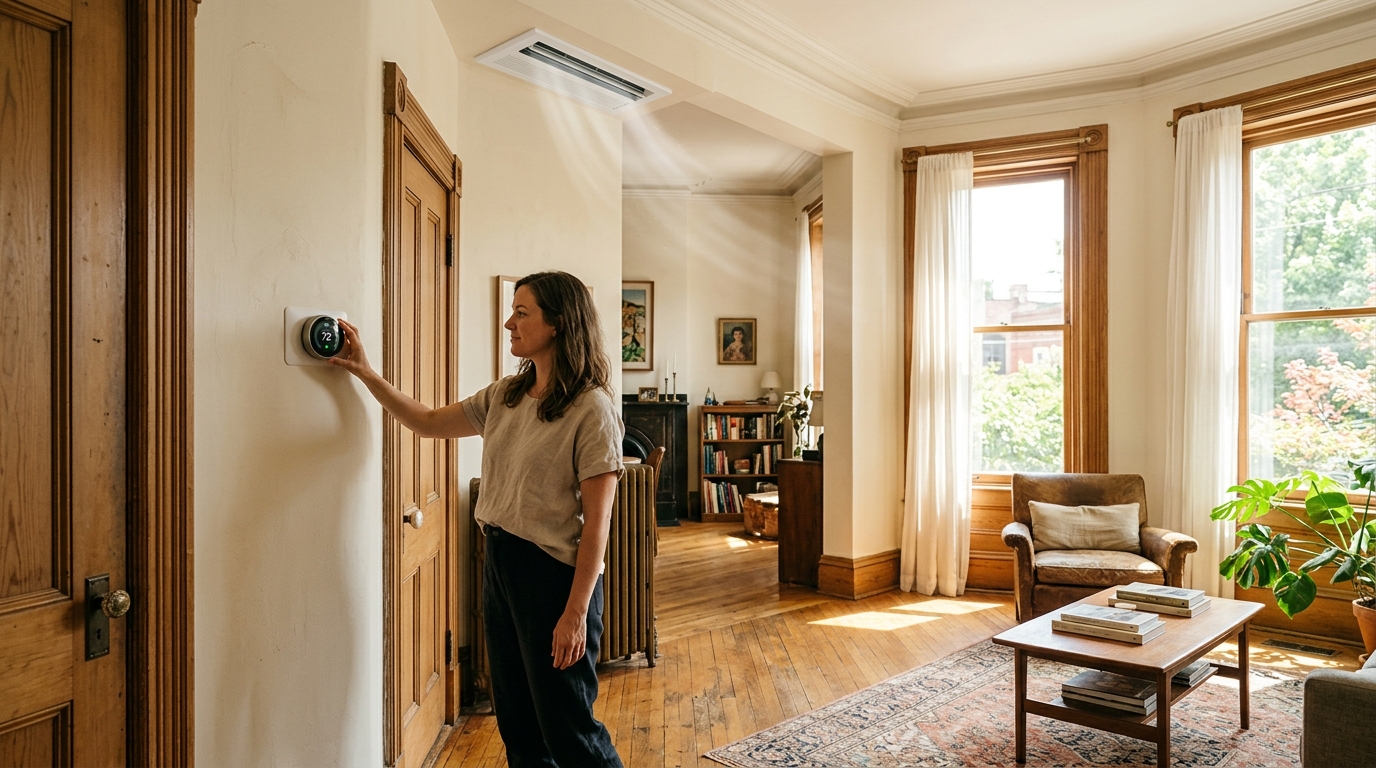
If you still have an old manual thermostat, you are wasting energy every single day. A programmable thermostat lets you set different temperatures for different times. You can have the AC cool your home right before you get back, and turn it up while you are away.
According to the U.S. Department of Energy, adjusting your thermostat by 5 to 8 degrees when you are not home can reduce your energy use and trim your cooling bills noticeably.
A smart thermostat takes this further. You can control it from your phone. It learns your habits. It adjusts on its own. For older Richmond homes where cooling costs already run high, this upgrade pays for itself fast. Set it to 78°F when you are home and higher when you are away. Each degree below 78°F can increase energy use by about 8%, according to Southern California Edison’s energy tips.
Check and Seal Your Ductwork
This is a big one for older Richmond homes. Many of them have ductwork that was added later and was never properly sealed. Leaky ducts can waste 20 to 30% of your cooled air before it even reaches your rooms, according to the U.S. Energy Star program.
Feel around your air ducts in the attic or basement while the AC is running. If you feel cool air in places where there should not be any, you have a leak. Use UL 181-rated duct tape or mastic sealant to fix visible leaks. For a full inspection, call a professional.
Also, check that supply vents and return vents are not blocked by furniture or rugs. Blocked vents make the system work much harder and cause uneven cooling in your home.
Consider Ductless Mini-Splits for Rooms Without Good Airflow
Here is something most guides do not talk about enough. Some rooms in older Richmond homes just cannot get proper cooling, no matter what you do. The ductwork does not reach them well. The layout is awkward. The walls are thick.
In cases like this, a ductless mini-split system is worth thinking about. These units have an outdoor unit connected to one or more indoor air handlers. They do not need ducts. They allow zoning, which means you can set different temperatures in different rooms. According to the 2024 ENERGY STAR Quick Reference Guide, ENERGY STAR-certified mini-splits can cut cooling costs by up to 30% compared to standard room air conditioners.
For historic Richmond homes where adding new ductwork would mean tearing up walls, mini-splits are often the smartest solution.
Use Window Treatments and Ceiling Fans to Help Your AC
This tip costs almost nothing and works well. When direct sunlight hits your windows, it adds a huge amount of heat to your home. Simply closing curtains or blinds during the hottest part of the day (usually early afternoon) can reduce the amount of heat entering your home noticeably.
Blackout curtains and reflective window film are even better. They block more sunlight and keep rooms cooler for longer. Your AC does not have to run as often.
Pair this with ceiling fans running counterclockwise in summer, and you will feel cooler even at a higher thermostat setting. Fans move air across your skin, which makes you feel cooler without actually lowering the temperature. This means your AC does less work.
Also, try to avoid using your oven or dryer during the hottest afternoon hours. These appliances push heat into your home and make your AC fight harder. Run them in the early morning or evening instead.
Schedule Annual AC Maintenance With a Technician
I know it feels like an extra expense. But skipping maintenance is like skipping oil changes in your car. Things break faster. Efficiency drops. Repair costs go up.
A qualified HVAC technician can clean the condenser coil, check refrigerant levels, test the capacitor and contactor, inspect the drain line, and make sure everything is running at the right pressure. In Richmond’s humid climate, the drain line can clog with algae and cause water damage. Flushing it with a cup of chlorine bleach and a gallon of water once a season is a simple thing you can do yourself.
Getting a spring AC tune-up before Richmond’s summer arrives means your system is ready when you actually need it. A well-maintained unit runs more efficiently and lasts longer. Simple as that.
Conclusion
Learning how to improve AC efficiency in older Richmond homes is not about one big fix. It is about doing several small things that add up to real savings and real comfort. Seal your air leaks. Add insulation to your attic. Replace your air filter every month. Get a smart thermostat. Check your ductwork. Use fans and window treatments to help your AC out.
Richmond summers are hot and humid, and your older home was not built for them. But with the right steps, you can make a huge difference without spending a fortune. Start with the free or low-cost fixes first. Then move on to bigger upgrades as your budget allows.
I would love to hear which tip helped you most. Drop a comment or reach out. Have you tried any of these in your Richmond home already?
Frequently Asked Questions
How much can I save by improving AC efficiency in my older Richmond home?
According to the U.S. Department of Energy, a whole-home approach to energy efficiency can cut your energy costs by up to 30%. Sealing ducts alone can reduce heating and cooling costs by up to 20%. Small steps like changing your air filter and sealing leaks add up fast.
What is the best temperature to set my thermostat in summer in Richmond?
Setting your thermostat to 78°F when you are home is a good starting point. For every degree you go below 78°F, your energy use goes up by about 8%. When you are away from home, raise it by 5 to 8 degrees to save energy. A programmable or smart thermostat makes this easy to manage automatically.
Are ductless mini-splits a good option for older Richmond homes?
Yes. Ductless mini-split systems are a great fit for older Richmond homes that have poor or no existing ductwork. They allow zoning, meaning each room can be set to a different temperature. They are also highly efficient. According to the ENERGY STAR 2024 Quick Reference Guide, certified mini-splits can cut cooling costs by up to 30% compared to standard room air conditioners.
How often should I change my AC filter in a Richmond home?
Check your air filter every single month, especially during summer when the system runs a lot. If it looks grey and full of dust, replace it. A clogged filter reduces airflow, makes your system work harder, and drives up your energy bills. Most filters for older systems need replacing every 1 to 2 months during heavy use.
Should I replace my old AC unit or just try to improve its efficiency?
If your unit is under 10 years old, try the efficiency fixes first. Seal air leaks, upgrade insulation, clean the filter, and get a tune-up. If your system is 15 years or older, shows signs of frequent breakdowns, or your bills keep going up despite good maintenance, it may be time to consider a newer high-efficiency unit. A licensed HVAC technician can help you weigh the cost of repair versus replacement.