

Choosing the right air conditioner size is one of the most important steps to keep your home comfortable and energy-efficient. Many homeowners wonder, “How many tons of air conditioning do I need?” because getting it wrong can lead to oversizing, high energy use, or poor cooling. Let’s break it down in simple terms so you can feel confident about selecting the right AC tonnage for your square footage and unique space.
How many tons of air conditioning do I need
Table of Contents
ToggleA good rule of thumb is that you need about 1 ton (or 12,000 BTU) of cooling for every 400 to 500 square feet of space. For example, a 2,000 square foot home typically needs around 4 to 5 tons of air conditioning. However, factors like climate, insulation, and window size can change this, so a Manual J calculation gives the most accurate result.
UNDERSTANDING AC TONNAGE
What Does AC Tonnage Mean?
AC tonnage simply refers to your air conditioner’s cooling capacity, or how much heat it can remove from your home in an hour. One ton equals 12,000 BTUs per hour, which means a 1-ton unit can remove 12,000 BTUs of heat in an hour. The term comes from the amount of ice (in tons) that would melt to produce the same cooling effect, so when you hear tons, think of it as the power level your air conditioner has to keep your space comfortable.
Difference Between Tons, BTUs, and Cooling Capacity
It’s easy to get confused between tons, BTUs, and cooling capacity, but they all measure how well your air conditioner can cool your space. A BTU (British Thermal Unit) measures the amount of heat your air conditioner removes each hour. A ton is just a bigger unit: 1 ton equals 12,000 BTUs per hour. So, when you see air conditioner tonnage, it’s just another way to express its cooling capacity, the higher the tons or BTUs, the more cooling power your unit provides.
When I replaced my AC last summer, the installer explained that my old 3-ton unit was really a 36,000 BTU system. That quick conversion helped me understand why my home felt cooler so much faster once the new cooling capacity matched my space properly.
HOW TO CALCULATE THE RIGHT AC TONNAGE
Figuring out how many tons of air conditioning you need starts with your square footage. A simple formula is: take your home’s square feet, multiply by 25 BTU, then divide by 12,000 (since 1 ton equals 12,000 BTU). This gives a rough idea of the cooling capacity or AC tonnage that can adequately cool your space.
For example, if your home is 1,500 square feet, the math looks like this:
👉 1,500 × 25 BTU = 37,500 BTU
👉 37,500 BTU ÷ 12,000 = about 3 tons
But square footage isn’t the only thing that matters. Other important factors include:
-
Local climate (hotter areas may need more cooling)
-
Insulation levels in your home
-
Room height (higher ceilings = more space to cool)
-
Shading from trees or buildings
-
Window size and placement
If you want to be sure, getting a Manual J load calculation is the gold standard. This detailed process looks at your home’s characteristics, including architecture, landscaping, and floor plan, to recommend the perfect AC size.
👉 Quick reference table:
| Square Footage | Approximate AC Tonnage |
|---|---|
| 600 – 1,000 | 1.5 tons |
| 1,000 – 1,500 | 2 tons |
| 1,500 – 2,000 | 3 tons |
| 2,000 – 2,500 | 4 tons |
| 2,500 – 3,300 | 5 tons |
Keep in mind: oversizing your unit can cause it to short cycle, which means it cools too fast, doesn’t dehumidify well, and can lead to higher energy use. A properly sized unit runs longer, cools better, and is more energy efficient.
FACTORS BEYOND SQUARE FOOTAGE THAT IMPACT SIZING
While square footage is a starting point, other key details can change the AC tonnage your home actually needs. Let’s explore these so you can avoid mistakes like oversizing or choosing a system that struggles to adequately cool your space.
The U.S. Department of Energy recommends estimating about 20 to 25 BTUs per square foot for cooling, but this can vary based on your home’s design and local climate.
- Local climate: If you live in a hotter zone, like zone 3 or zone 4, your home may need extra cooling capacity. Humid areas demand more work from your air conditioner to dehumidify as well as cool.
- Insulation: A well-insulated house holds in the cool air better. Poor insulation means your air conditioner works harder and may require a slightly higher tonnage to keep things comfortable.
- Shading and landscaping: Homes with good shading from trees or neighboring buildings often need less cooling power. Natural landscaping can actually help reduce heat gain through windows.
- Window size and placement: Larger or poorly sealed windows let in more heat, increasing your BTU needs. Similarly, homes with many sun-facing windows might need an extra look at cooling capacity.
- Room height and architecture: A second story or rooms with higher ceilings add to the space your AC tonnage must cover. Open floor plans or large, connected spaces can mean the cool air has to travel farther.
When I upgraded my own air conditioning system, I almost went with what my neighbor used, same square footage, so I assumed the same tons would work. But my house had bigger windows and no shade in the backyard. A Manual J calculation showed I needed a higher BTU rating than I expected. It saved me from choosing a system that would have struggled on hot days!
WHY MANUAL J LOAD CALCULATIONS ARE ESSENTIAL FOR ACCURACY
If you really want the right AC tonnage, a Manual J load calculation is the most accurate method. This detailed analysis follows the ACCA Manual J standard (that’s the Air Conditioning Contractors of America), and it looks at every factor that affects your home’s cooling capacity needs — not just square footage.
A Manual J calculation takes into account your home’s:
-
Insulation levels
-
Window size and type
-
Shading and landscaping
-
Room height and overall architecture
-
Local climate zone (whether you’re in zone 3, zone 4, etc.)
The beauty of this method is that it prevents oversizing, which can cause your system to short cycle — meaning it turns on and off too quickly. This leads to noisy operation, poor dehumidifying, uneven comfort, and can even promote mold growth because the air stays damp. Plus, an oversized air conditioner wastes energy and shortens the compressor’s life.
A client of mine once installed a bigger air conditioning unit thinking “bigger is better.” Within months, they noticed loud cycling sounds and uneven temperatures. When we did a Manual J load calculation, we discovered the unit was too large by a full ton! Switching to a properly sized system made a huge difference in comfort, and energy bills.
SIZING GUIDES AND CHARTS
AC TONNAGE SIZE CHART BY SQUARE FOOTAGE
A quick way to estimate your AC tonnage is by using a size chart that matches your home’s square footage to common cooling capacity ranges. But remember, your local climate zone (like zone 1 through zone 5) can shift these numbers. Warmer, humid areas typically need a bit more BTU power to adequately cool your space.
👉 Here’s a helpful chart:
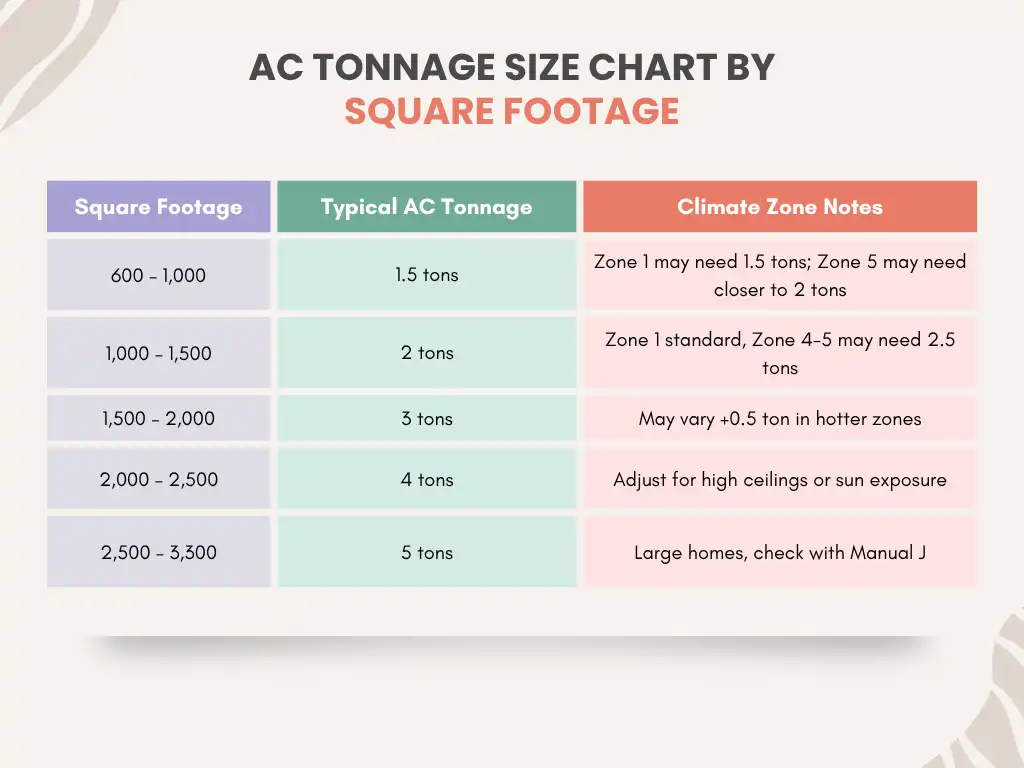
These ranges are useful, but they don’t replace a proper Manual J calculation. Details like shading, window size, and insulation make a big difference, especially in mixed climates like zone 3 or zone 4.
If you’re unsure, a trusted HVAC dealer or energy audit can help match your home to the right air conditioner size without the risk of oversizing.
BTU AND TONNAGE CONVERSION CHART FOR QUICK REFERENCE
When figuring out AC tonnage, it helps to understand how BTU and tons relate. One ton of cooling capacity equals 12,000 BTU per hour. So, if you know your BTU needs, you can easily calculate the right tons for your system.
👉 Here’s a helpful chart::
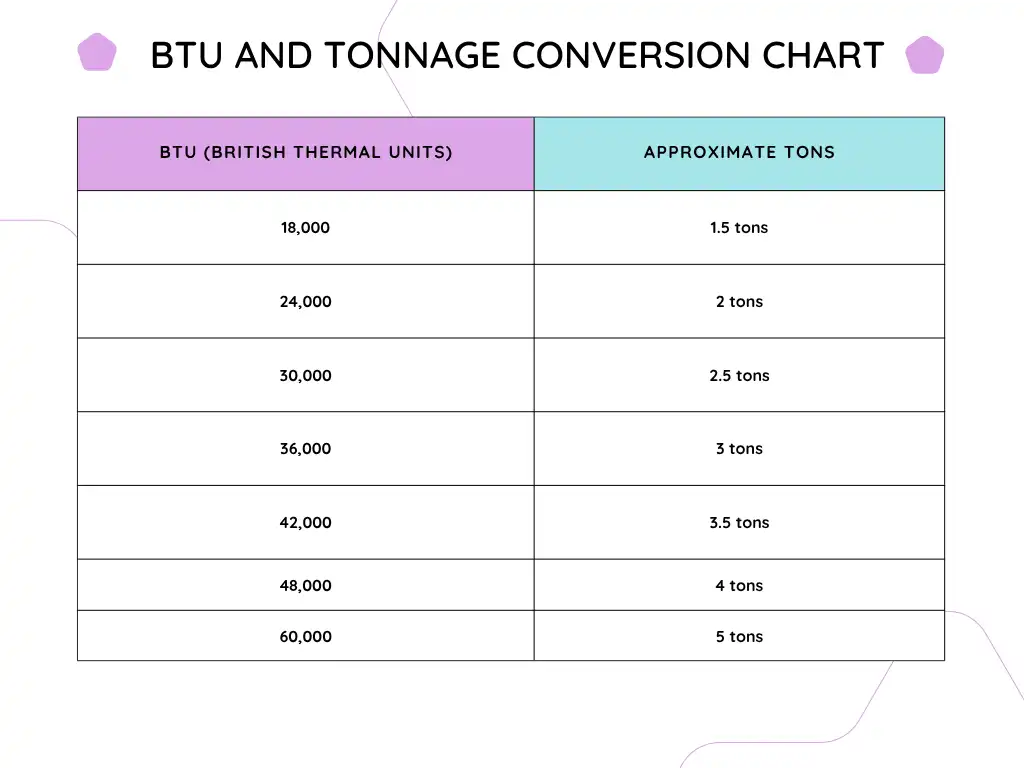
Another useful trick is decoding the model numbers on your outdoor unit. For example, if your AC’s model is GSX140241K, look for the two digits before the last character. That 24 tells you it’s 24,000 BTU, or 2 tons.
WHY CLIMATE ZONE AND LOCAL WEATHER MATTER WHEN SIZING YOUR AC
Your climate zone and local weather patterns play a huge role in choosing the right AC tonnage. For example, Richmond, VA falls into zone 3, which means you’ll need a system that can handle both warm, humid summers and the occasional heatwave. Homes in hotter climate zones, like zone 4 or zone 5, typically require more BTU or a slightly larger air conditioner size to adequately cool the space.
Even if two houses have the same square footage, the one in a warmer, sunnier area will usually need more cooling capacity. That’s because local weather, including how much direct sun your home gets and how humid it gets during summer, affects how hard your air conditioner has to work.
I worked with a homeowner right here in Richmond who thought they needed a 3-ton AC based on square footage alone. But after factoring in their large west-facing windows (which let in tons of afternoon sun) and minimal shading, they actually needed closer to 3.5 tons to stay comfortable on hot days.
COMMON MISTAKES WHEN CHOOSING AC TONNAGE
THE PITFALLS OF OVERSIZING OR UNDERSIZING YOUR AIR CONDITIONER
Choosing the wrong AC tonnage, whether it’s too big or too small, can create more problems than you might expect. An oversized unit will short cycle, meaning it turns on and off too quickly. This doesn’t give the system time to dehumidify the air, leaving your home feeling clammy even though the temperature is cool. Plus, it can lead to higher energy use, wear down the compressor, and shorten your system’s life.
On the flip side, an undersized air conditioner struggles to adequately cool your space. It runs non-stop trying to keep up, which wastes energy and still leaves you uncomfortable on the hottest days. Both situations can lead to uneven room temperatures, noisy operation, and even mold growth in humid areas like Richmond, VA.
Here’s what can happen if your system is the wrong size:
-
Energy waste and higher utility bills
-
Excess noise from frequent short cycling
-
Poor indoor air quality due to lack of proper dehumidifying
-
Faster breakdowns and costly repairs
If you’re not sure what size you need, a Manual J calculation is the best way to avoid these common pitfalls. A properly sized system keeps your home comfortable, efficient, and healthy year-round.
SIGNS YOUR AC MIGHT BE THE WRONG SIZE
Not sure if your air conditioner is the right fit for your home? There are clear signs that point to a system that’s either oversized or undersized. Catching these early can save you from higher energy use, uneven cooling, or costly repairs down the road.
💡 Here’s a simple checklist to help you spot trouble:
-
The unit turns on and off frequently (short cycling) — a sign of oversizing
-
Your home feels cold but still humid — poor dehumidifying from a system that’s too large
-
Some rooms are too warm while others are chilly — uneven cooling capacity
-
The system runs constantly and struggles on hot days — could mean it’s undersized
-
You notice higher-than-normal utility bills without better comfort
If you see these signs, it’s smart to get a professional HVAC dealer or contractor to check your system. A Manual J load calculation can confirm if your AC size is right or if it needs adjusting.
SPECIAL SIZING CONSIDERATIONS
When it comes to AC tonnage, your home’s design and use play a bigger role than most people realize. Let’s look at two key factors that can impact your cooling capacity needs beyond just square footage.
Variables to Consider for Commercial AC Tonnage
In commercial spaces, factors like how many people use the building, the amount of equipment generating heat, and the layout of offices or open areas all affect air conditioner size. A larger unit might be needed for places like a restaurant or busy retail store, while a simple office could get by with less tonnage.
Sizing for Multi-Story Homes vs. Single-Level Homes
A home’s architecture makes a big difference in how much cooling capacity you’ll need. A multi-story home often requires more BTU because heat rises, and the upper floors tend to get warmer. Plus, air conditioning systems have to work harder to move cool air evenly across different levels.
In contrast, a single-level home or ranch-style house with an open design might distribute cool air more easily, needing slightly less tonnage than a multi-story home with the same square footage.
How Renovations, Additions, or Open Floor Plans Affect Tonnage Needs
If you’ve recently added a room, built an extension, or opened up walls to create a large living space, your old AC size might not cut it anymore. These changes increase the square footage and can alter how cool air flows through your home.
An open floor plan often means the air needs to travel farther without obstruction, sometimes requiring more cooling capacity. And any addition can push your system beyond its original BTU design, leading to uneven temperatures or extra strain on the unit.
When your home layout changes, it’s always wise to reassess your air conditioning tonnage — ideally with a professional load calculation — to ensure you stay comfortable year-round.
Final Thoughts
Choosing the right AC tonnage is key to keeping your home comfortable, energy-efficient, and healthy. By understanding factors like square footage, climate zone, and architecture, you can avoid the common pitfalls of oversizing or undersizing. Always consider a Manual J calculation to make sure your system is perfectly matched to your space and needs.
FAQs
How Many Tons of AC Do I Need for Common Home Sizes?
Here’s a quick guide to help you estimate the right AC tonnage based on square footage:
-
1,500 sq ft → around 3 tons
-
2,000 sq ft → about 4 tons
-
2,500 sq ft → typically 4.5 to 5 tons, depending on climate zone, insulation, and shading
Remember, these are general guidelines. If your home has high ceilings, large windows, or sits in a hotter climate zone like zone 4, you may need a little more cooling capacity.
Is Bigger Always Better When It Comes to AC Tonnage?
No, in fact, choosing a larger unit than you need can cause serious issues. An oversized air conditioner will short cycle, turning on and off too quickly. This means it won’t dehumidify properly, and your home could feel damp or clammy even when cool. Plus, you’ll face higher energy use, more wear on the compressor, and uneven comfort throughout your house. The key is to size your system just right, not too big, not too small.
Can I Use an Online AC Size Calculator?
Yes, an online AC size calculator can give you a rough idea of your cooling capacity needs based on square footage. Many calculators use simple formulas, like multiplying your square feet by 25 BTU and dividing by 12,000 to get the approximate tons.
However, these tools don’t factor in important details like insulation, shading, or local climate. For the most accurate sizing, a Manual J load calculation from a professional is the way to go.
How Do I Decode My Current AC Unit’s Tonnage?
You can often find your unit’s BTU or tonnage by looking at the model number on the outdoor unit. For example, in a model like GSX140241K, the 24 means the unit is 24,000 BTU, or 2 tons (since 12,000 BTU = 1 ton).
💬 Tip from experience: I once helped a homeowner who thought they had a 3-ton system, but the model number showed it was actually 2.5 tons. Decoding the model helped us figure out why their home wasn’t staying cool enough in the summer.
