

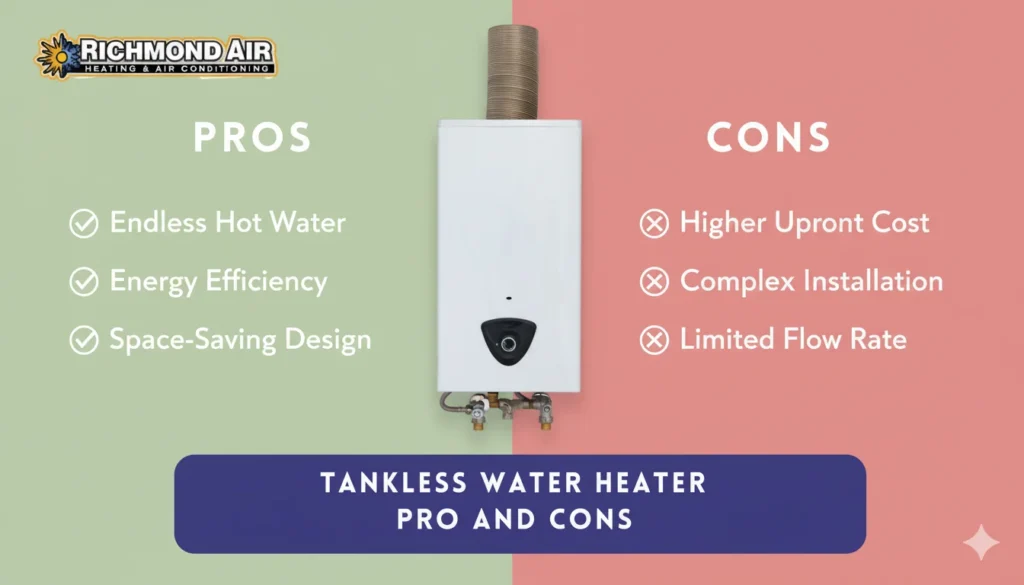
If you’ve ever found yourself in the middle of a hot shower only to be hit with icy water, you’ve probably thought about switching to a tankless water heater. These systems promise endless hot water, energy savings, and a compact design. But like any upgrade in your home, they come with both benefits and trade-offs. I’ve helped friends and family make this decision before, and I want to share what really matters so you can feel confident about whether a tankless system is right for you.
Tankless Water Heater Pros and Cons
How a Tankless Water Heater Works
A tankless water heater, often referred to as an on-demand water heater, operates significantly differently from the traditional storage tank most of us grew up with. Instead of keeping gallons of water hot all day long, it heats water only when you turn on a faucet or start your shower.
Here’s the step-by-step process:
- Water Flow Detection – As soon as you open a hot water tap, cold water flows through the unit.
- Heating Element Activation – A powerful gas burner or electric heating coil kicks in instantly.
- On-Demand Heating – The water passes through a heat exchanger, where it’s rapidly warmed to the set temperature.
- Continuous Supply – Because there’s no tank to run out, you can enjoy a steady stream of hot water as long as the system is sized correctly for your home.
Most gas-powered models can deliver 2–5 gallons of hot water per minute (GPM), while electric models generally provide less. That’s why choosing the right size is critical, especially if you often run multiple appliances at once.
When I first switched from a tank to a tankless system in my own home, I noticed the difference immediately. My old tank heater would struggle if the dishwasher was running while someone took a shower. With the new tankless unit, the hot water never “ran out,” but I did learn quickly that if two showers and the washer were running at the same time, the water flow wasn’t as strong. That’s when I realized how important it is to match the unit’s flow rate to the household’s demand.
The technology is simple once you understand it: no standby heat loss, no wasted space, and no giant metal tank rusting away in the corner. But the efficiency and performance you get depend heavily on proper installation and correct sizing.
The Pros of Tankless Water Heaters
Energy Efficiency and Lower Bills
One of the strongest selling points of a tankless water heater is its ability to save energy. Unlike a traditional tank that keeps water hot around the clock, a tankless unit only uses power when you actually need hot water. This means no more wasted energy from “standby loss.” Studies and real-world use show energy savings between 24 and 40 percent compared to standard models, which can make a noticeable difference on monthly utility bills. For households that use moderate amounts of hot water daily, these savings can add up over the years and offset some of the upfront cost. According to the U.S. Department of Energy, homes using 41 gallons or less of hot water per day can achieve 24-34% more energy efficiency with a demand (tankless) water heater vs conventional storage tank heaters.
Endless Hot Water Supply
Another advantage is the experience of having hot water that doesn’t seem to run out. Traditional tank heaters store a limited amount of hot water, usually 40 to 50 gallons. Once that’s gone, you’re left waiting for the tank to refill and heat up again. Tankless systems solve this problem by heating water as it passes through the unit. As long as the system is sized correctly, you can take back-to-back showers, run your dishwasher, and still have hot water available. For families with teenagers or multiple bathrooms, this is often a game-changer.
Long Lifespan
Durability is another area where tankless heaters shine. Most tank models last about 10 to 15 years before they need replacing. A well-maintained tankless water heater, on the other hand, can last 20 years or more. That longer lifespan not only reduces the hassle of replacing units more often but also means you get more value from your investment over time. With proper maintenance, such as annual flushing to reduce mineral buildup, many homeowners find that their tankless system is still going strong even after two decades.
Space-Saving Design
For many households, space is limited, and this is where tankless heaters really stand out. Instead of a bulky metal tank taking up a corner of your basement or utility closet, a tankless system is a compact box that mounts on the wall. The size difference is dramatic. This frees up valuable floor space, which can be used for storage or simply to make a room feel less cluttered. For people living in smaller homes, apartments, or condos, the ability to reclaim this space is often just as important as the efficiency benefits.
Cleaner and Fresher Water
A lesser-known advantage is that tankless heaters often provide cleaner water. Traditional tanks store water for long periods, which can lead to sediment buildup, rust, or even bacterial growth over time. Since tankless units don’t store water, they minimize these risks. The water is heated fresh as it flows through, so what comes out of the tap is often clearer and better tasting. This is particularly appealing for households in areas with water quality concerns.
Environmental Benefits
Choosing a tankless water heater can also reduce your environmental footprint. Because they use less energy, they naturally lower carbon emissions when compared with inefficient tank heaters. Some models are designed with high-efficiency technology that takes this even further, making them appealing for eco-conscious households looking for ways to make their home greener without compromising comfort.
Long-Term Value
When you put all of these benefits together, lower energy use, endless hot water, longer lifespan, and space savings, the long-term value of a tankless system becomes clear. While the upfront investment is higher than a traditional tank, the combination of monthly savings, reduced replacement frequency, and improved daily comfort often makes the extra cost worthwhile. For many homeowners, the real payoff is not just in dollars saved but in the improved convenience and peace of mind knowing that hot water is always available when they need it.
The Cons of Tankless Water Heaters
Higher Upfront Investment
One of the main drawbacks of a tankless water heater is the initial investment. While storage tank heaters are generally more affordable to purchase and install, tankless units often require more money upfront. The long-term savings can balance this out, but for many homeowners, that first payment feels steep.
- Equipment costs are higher than tanks
- Installation may require specialized work
- Some homes need upgrades to accommodate the system
Complex Installation
A tankless water heater isn’t always a plug-and-play replacement. Depending on the type you choose, you might need new venting for gas units or upgraded electrical wiring for electric models. This complexity means you’ll need an experienced installer, which can add to the overall expense.
- Requires professional installation
- Can involve structural or system changes in the home
- It may take more time compared to tank installations
Flow Limitations
Tankless heaters provide hot water on demand, but their output is limited by design. If several appliances are running at once, say, a shower and dishwasher, you may notice weaker performance. Choosing the right size unit is critical, and in larger households, sometimes more than one unit is needed.
- Limited hot water flow during high demand
- Output varies between gas and electric models
- Larger homes may need multiple systems
Dependence on Power
Most tankless water heaters rely on electricity, even gas-powered models with electronic controls. During a power outage, these systems typically stop working. For households in areas with frequent outages, this can be frustrating.
- Hot water is unavailable during outages
- Gas models may still require electric ignition
- Backup options might be necessary in some cases
Maintenance Needs
Tankless systems are more sensitive to water quality than traditional tanks. In areas with hard water, mineral buildup can reduce efficiency and shorten the lifespan. Regular flushing and descaling are recommended to keep the unit running at peak performance.
- Annual maintenance is recommended
- Hard water areas require extra care
- Neglecting upkeep can lead to costly repairs
Performance Comparison Table
| Feature | Tankless Water Heater | Traditional Tank Heater |
| Initial Investment | Higher | Lower |
| Lifespan | Longer (around two decades) | Shorter (around a decade) |
| Hot Water Supply | Endless but flow-limited | Limited to tank size |
| Energy Efficiency | More efficient overall | Less efficient |
| Maintenance | Requires regular flushing | Less frequent maintenance needed |
Tankless vs. Traditional Water Heaters
Performance Differences
The most obvious difference between tankless and traditional heaters is how they deliver hot water. A traditional tank stores a fixed amount, usually between 40 to 50 gallons, and keeps it heated at all times. Once the tank is empty, you have to wait for it to refill and reheat. A tankless unit, by contrast, heats water as it flows through the system, giving you an ongoing supply. The trade-off is that tankless systems can be limited by flow rate, especially when several appliances run at once.
- Traditional: consistent but limited supply
- Tankless: endless supply, but limited flow during high demand
Energy Use and Efficiency


Traditional tanks consume energy continuously to keep water hot, leading to energy waste from standby heat loss. Tankless systems avoid this problem by only using energy when hot water is needed. This can translate into noticeable savings over time, especially in homes that don’t use large amounts of hot water every day.
- Tank: energy used constantly, even when idle
- Tankless: energy used only on demand
Lifespan and Durability
Durability is another area where tankless heaters often come out ahead. A well-maintained tank typically lasts about 10 to 15 years, while a tankless model can last closer to 20 years or more with proper care. This longer service life reduces replacement frequency and gives better value over time.
- Tank: shorter lifespan, replacement comes sooner
- Tankless: longer lifespan, better long-term return
Space Requirements
Traditional water heaters are bulky and require floor space, often in basements, garages, or closets. Tankless units are compact and mounted on the wall, freeing up valuable storage or living space. For small homes or apartments, this can be a major benefit.
- Tank: large and space-consuming
- Tankless: compact and wall-mounted
Best Situations for Each
Neither system is universally “better”; it depends on your household’s needs. Tank heaters are reliable and affordable upfront, making them practical for families on a budget or those with predictable water use. Tankless systems, however, are better suited for households that value energy efficiency, have limited space, or want the luxury of continuous hot water.
- Tank: lower upfront cost, steady supply for predictable use
- Tankless: higher efficiency, longer lifespan, space-saving design
Sizing & Household Demand
Why Sizing Matters
Choosing the right size tankless water heater is just as important as deciding to install one in the first place. These systems are designed to heat water as it passes through, which means their ability to meet your needs depends on the flow rate they can handle. If your household uses more hot water at once than the unit is built to deliver, you’ll end up with lukewarm water or weak flow. A properly sized system ensures that everyone in the home can enjoy reliable hot water, even during peak usage.
Understanding Flow Rate
Flow rate is measured in gallons per minute (GPM) and represents how much hot water a unit can produce at a time. For example, a standard shower might use about 2 gallons per minute, while a dishwasher could use around 1.5 gallons. If both are running together, the system needs to provide at least 3.5 gallons per minute to keep up. Gas-powered models typically handle higher flow rates than electric models, which is why larger households often lean toward gas units.
Matching Household Needs
The key to getting sizing right is to calculate how much hot water your home uses at the busiest times of day. For many families, this is the morning rush when multiple showers, sinks, and appliances are all being used within a short time. If your household is small, a single mid-sized unit may be enough. For bigger homes with three or more bathrooms, it’s common to install multiple tankless heaters or use a larger capacity model designed for heavy demand.
Real-Life Example of Demand
Consider a home where two showers are running while someone starts a load of laundry. Each shower uses about 2 gallons per minute, and the washer another 2, which adds up to 6 gallons per minute. A smaller tankless unit might only deliver 4 gallons per minute, leaving the water lukewarm. A properly sized unit or two smaller units working together would handle that situation with ease, giving everyone hot water without compromise.
Balancing Comfort and Cost
Oversizing a system means spending more upfront than necessary, while undersizing results in frustration. The best approach is to have a professional calculate your home’s peak demand and recommend a unit that balances comfort with efficiency. Getting this step right ensures you maximize both the performance and the long-term value of your tankless water heater.
Maintenance & Lifespan Tips
Routine Care
A tankless water heater can last for two decades or more, but it needs regular care to reach that potential. The most common task is flushing the system once a year to remove mineral buildup. This process keeps the heat exchanger clean and prevents efficiency loss. In areas with hard water, it’s even more important because mineral deposits form faster.
Preventing Issues
Maintenance isn’t just about extending lifespan; it also prevents problems. A clogged heat exchanger can cause the system to overheat or shut down unexpectedly. By keeping up with flushing and cleaning, you avoid costly repairs and keep the heater working smoothly. Checking filters and ensuring proper ventilation also helps protect the system over time.
Long-Term Payoff
The payoff for proper maintenance is clear. Instead of replacing a unit every decade, a tankless system can stay in service for nearly twice as long. This reduces the overall cost of ownership and ensures your investment keeps paying off for years.
Who Should Get a Tankless Water Heater
Ideal Situations
Tankless water heaters are best suited for households that want energy savings, unlimited hot water, and extra space. They are particularly attractive for families that use hot water at different times throughout the day, smaller homes where every inch counts, and homeowners who prefer long-term efficiency over short-term savings.
When It May Not Be the Best Fit
These systems may not work as well for large households that need to run multiple showers and appliances simultaneously unless the unit is sized correctly or multiple systems are installed. They are also less appealing for people who want a low-cost installation and aren’t as concerned about efficiency or long-term savings.
Making the Choice
The decision often comes down to lifestyle and budget. If you value convenience and energy efficiency and are willing to make the initial investment, a tankless heater can be an excellent choice. If your main concern is upfront cost and your household has predictable water use, a traditional tank might be more practical.
Final Thoughts
A tankless water heater can be a smart upgrade if you want long-term efficiency, endless hot water, and more space in your home. While the upfront investment is higher, the benefits often outweigh the drawbacks for many households. The key is choosing the right size, keeping up with simple maintenance, and matching the system to your lifestyle. With those steps in place, a tankless water heater can serve you reliably for many years.
Ready to Make the Switch?
If you’re considering a tankless water heater and want expert guidance, the best step is to talk with a professional who understands your home’s unique needs. For trusted advice and installation, reach out to the local team at Richmond Air. They can help you decide if a tankless system is right for you and ensure it’s installed correctly for lasting performance.
FAQs
How long do tankless water heaters last?
On average, a tankless water heater lasts about 20 years with proper maintenance. This is longer than traditional tank heaters, which typically need replacing every 10 to 15 years.
Do tankless water heaters really save money?
Yes, but the savings depend on your household’s hot water use. Because tankless systems only heat water when needed, they can cut energy use by 20–40 percent compared to tanks. Over time, these savings help offset the higher upfront investment.
Can I run out of hot water with a tankless system?
You won’t run out the way you do with a tank, but the flow can be limited. If multiple appliances and showers run at once, the system may struggle to keep up unless it’s properly sized.
Are tankless water heaters hard to maintain?
They require regular care, usually an annual flushing to remove mineral buildup. In areas with hard water, more frequent descaling may be needed. This helps the unit maintain efficiency and reach its full lifespan.
Which is better, a gas or an electric tankless water heater?
Gas models usually handle higher flow rates, making them better for larger households. Electric units are smaller, easier to install, and work well for smaller homes or point-of-use applications. The best choice depends on your household’s demand and available energy source.
