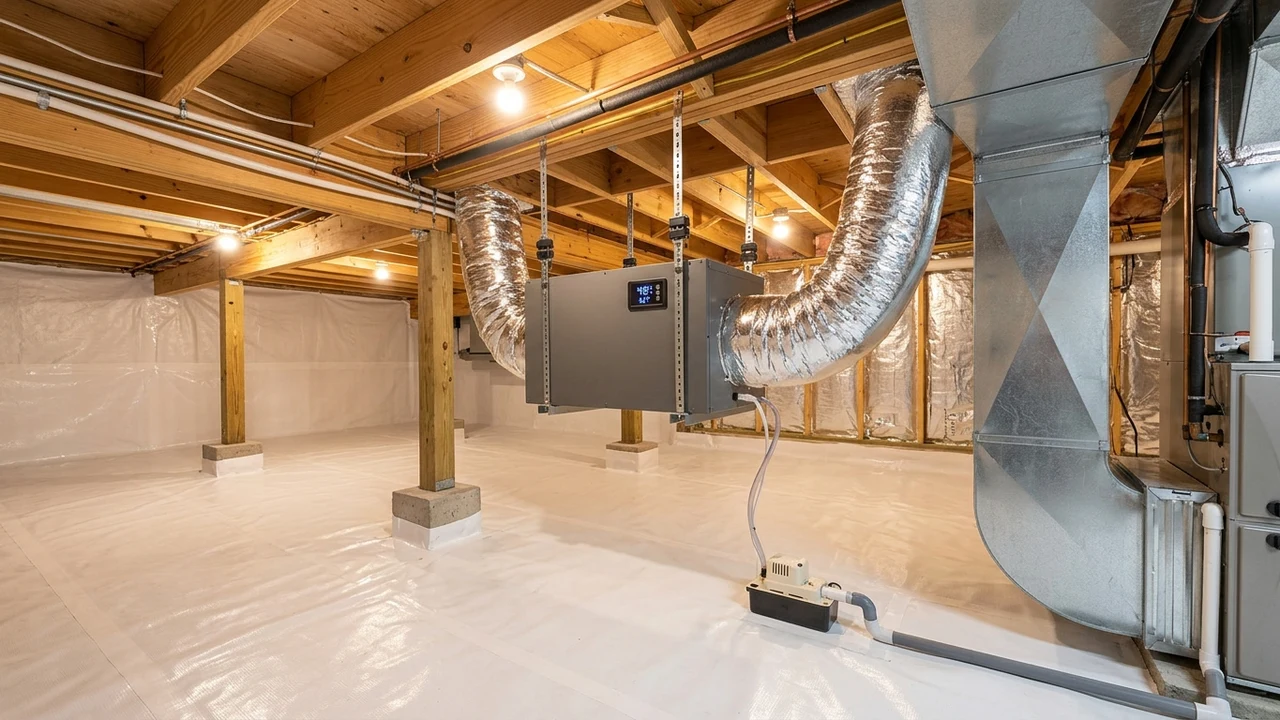
A whole-home dehumidifier pulls water out of the air in every room of your house, no matter the temperature. In Richmond’s James River humidity basin, this beats AC overcooling by keeping your home dry at a normal thermostat setting, trimming your power bill, and stopping mold before it starts. You get real comfort with less strain and far less repair work.
What “AC Overcooling” Really Means in a Richmond Summer
Overcooling is a simple habit with a hidden cost. You feel sticky, so you push the thermostat way down. The AC blasts cold air for a long time. Your house gets chilly, yet the air still feels damp and heavy. Here in Richmond, this happens in almost every home I visit during July and August.
The reason is easy to understand. Your air conditioner is built to cool the air first. Pulling out water is only a side job it does while it runs. So when you drop the temperature to chase the “sticky” feeling, you get a cold room that is still wet. Comfort experts agree the healthy sweet spot is 30% to 50% indoor relative humidity. Above that range, even 70°F feels like a swamp.
This is exactly why so many folks ask why their Richmond home still feels humid even with the AC running. The machine is working hard. The number on the wall looks low. But the air never really dries out, and the power bill climbs every single month.
The James River basin makes our air different
Richmond sits low, in a river-fed basin, and that shapes our weather in a big way. Warm, wet air rolls up the James River and settles over town. Our summers are humid subtropical, which is a fancy way of saying “hot and soaking wet.” On a normal summer morning, outdoor relative humidity near the river often sits close to 85% to 90%.
The dew point matters too. That is the temperature at which water starts to form on cold surfaces, like the drops on a cold soda can. On muggy days here, dew points climb into the low-to-mid 70s°F, which is the range that feels tropical and draining. Add our older housing stock – brick row homes, crawl spaces, and cellars – and moisture has plenty of places to hide.
No matter which Richmond district you call home, this basin air finds a way in. The low, wet ground near the river and the old roads that flood after a big storm only add to it. That local reality is why one-size cooling advice from a dry state simply does not work for us.
Humidity words you should know
Let me keep these plain, so a fifth grader could follow along. A few small terms will help you understand every part that follows.
- Relative humidity: How full the air is with water, shown as a percent. 50% means the air holds half the water it possibly could.
- Dew point: The temperature where water starts to drip out of the air onto cold things. Higher dew point means muggier air.
- Condensation: The water drops you see on a cold window or a cold pipe. It is warm, wet air meeting a cold surface.
- Latent load: The “water work” your system has to do. Removing moisture is a job all by itself, separate from cooling.
- Humidistat: A little control that watches humidity, the way a thermostat watches temperature.
Why a Dehumidifier Beats Overcooling for Your Home
I’ve handled cases exactly like this many times. I once walked into a home near the Fan District where the thermostat read 68°F, the family wore hoodies indoors, and they were still wiping sweat off their necks. In my professional experience, that is almost never a cooling problem. It is a moisture problem wearing a cooling costume.
A whole-home dehumidifier solves the real issue. It dries the air on purpose, then hands the dry air back to your rooms. That lets you raise the thermostat to a normal 74 – 76°F and still feel great. When the air is dry, warmer temperatures feel cool and easy. When the air is wet, even a cold house feels gross.
Here is the side-by-side that I show homeowners on almost every service call:
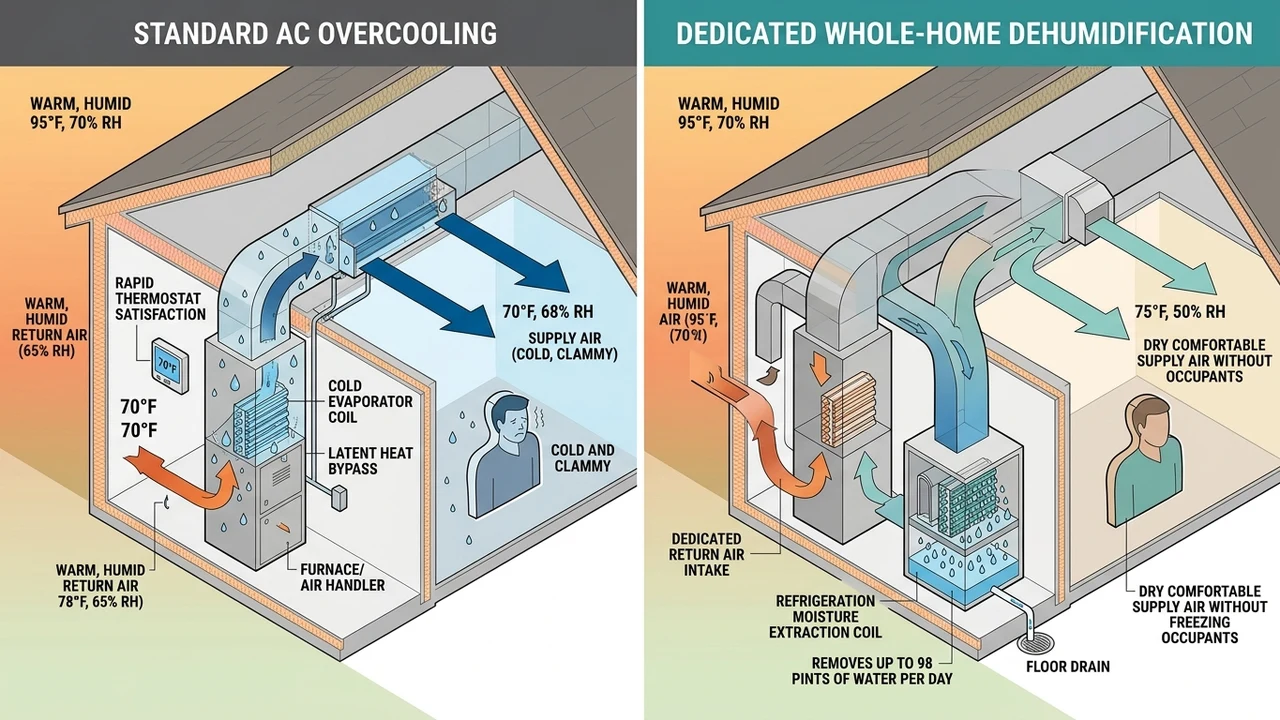
| What happens in your home | AC Overcooling | Whole-Home Dehumidifier |
|---|---|---|
| How the air feels | Cold but still damp and clammy | Dry and comfortable at a normal temperature |
| Thermostat setting | Pushed down to 68°F or lower | Stays around 74 – 76°F |
| Power bill | Higher – the AC runs long and hard | Lower – the AC runs less |
| Humidity control | Weak and hit-or-miss | Steady, set to a target level |
| Wear on your system | More strain, more short cycling | Less strain, longer life |
| Mold and dust mite risk | Still high if air stays above 60% | Low – air held at 30 – 50% |
What you feel and save right away
The first thing people notice is the “heavy” feeling lifts. The air gets light. Your skin stops feeling damp. This shift shows up fast, often within the first day the unit runs.
The second thing is the bill. When you stop overcooling, the AC no longer runs for hours to chase moisture. In the homes we service around Richmond, more often than not the biggest waste came from an AC that runs almost nonstop trying and failing to dry the air. Let the dehumidifier handle water, and the AC gets to rest. Less runtime means less power used.
There is a comfort trick hiding here too. Dry air at 76°F feels better than wet air at 70°F. So you gain comfort and cut cost at the same time. That is a rare win, and it is the whole point of this plan.
The long game: your home, health, and wallet
Steady, low humidity protects the house itself. Wood floors, door frames, and trim swell and warp when the air stays wet. Musty smells creep into closets. Over years, that damage adds up to real money, and it is the slow kind of harm most people never see coming.
Your family’s air gets healthier as well. Dust mites and mold both love damp air, and both feed asthma and allergy flare-ups. Keep the home in that 30% to 50% band and you starve them out. I’ve seen stuffy, sneezy homes turn calm within a couple of weeks of drying the air.
Then there is your equipment. When the AC stops overworking, parts last longer and break less. Fewer breakdowns, fewer emergency calls, and a system that reaches its full life. For a curious reader, that is the quiet payoff you feel for years, not just this summer.
How a Whole-Home Dehumidifier Actually Works
Let me show you how it works, step by simple step. The unit ties into your home’s ductwork, right alongside the heating and cooling system. It pulls room air in, passes it over a cold coil, and squeezes the water out as condensation. That water drains away on its own through a small line. The now-dry air goes back into your rooms.
The key difference is control. A humidistat lets the unit run only when moisture climbs, all on its own – even on a mild day when the AC is off. That matters here, because Richmond gets plenty of warm, rainy, “not hot but soaking” days where the AC barely kicks on but the air is still thick. A good whole-home unit can pull 70 to 100+ pints of water from your air per day.
Portable units cannot keep up with a whole Richmond home. They cover one room, need constant emptying, and hum away in the corner. Here is the honest comparison:
| Feature | Portable Dehumidifier | Whole-Home Dehumidifier |
|---|---|---|
| Area covered | One room or small space | The whole house, through the ducts |
| Emptying water | You dump the tank by hand | Drains on its own to a line |
| Noise | You hear it running in the room | Tucked away, very quiet |
| Capacity | About 20 – 50 pints a day | About 70 – 100+ pints a day |
| Best for | A single damp room | A humid Richmond home, top to bottom |
This is also where good AC care and a dehumidifier team up. A clean, healthy system dries better on its own, which is a big reason summer humidity makes AC service matter so much in Richmond. Pair a well-tuned AC with a dedicated dehumidifier, and you cover both the heat and the water. That is the full solution, not half of one.
Setting One Up: A Simple, Step-by-Step Plan
I’ve handled dozens of these installs across Richmond, from Church Hill row houses to newer builds out toward the West End. In my professional experience, the homes that get the best results all start the same way – with a real moisture check, not a guess. Skip that step, and you end up with the wrong size unit and a soggy house.
Phase 1: Discovery, check, and get ready
Start with facts about your own home. Measure the humidity in a few rooms and see where the water is really coming from. The following steps set you up to win:
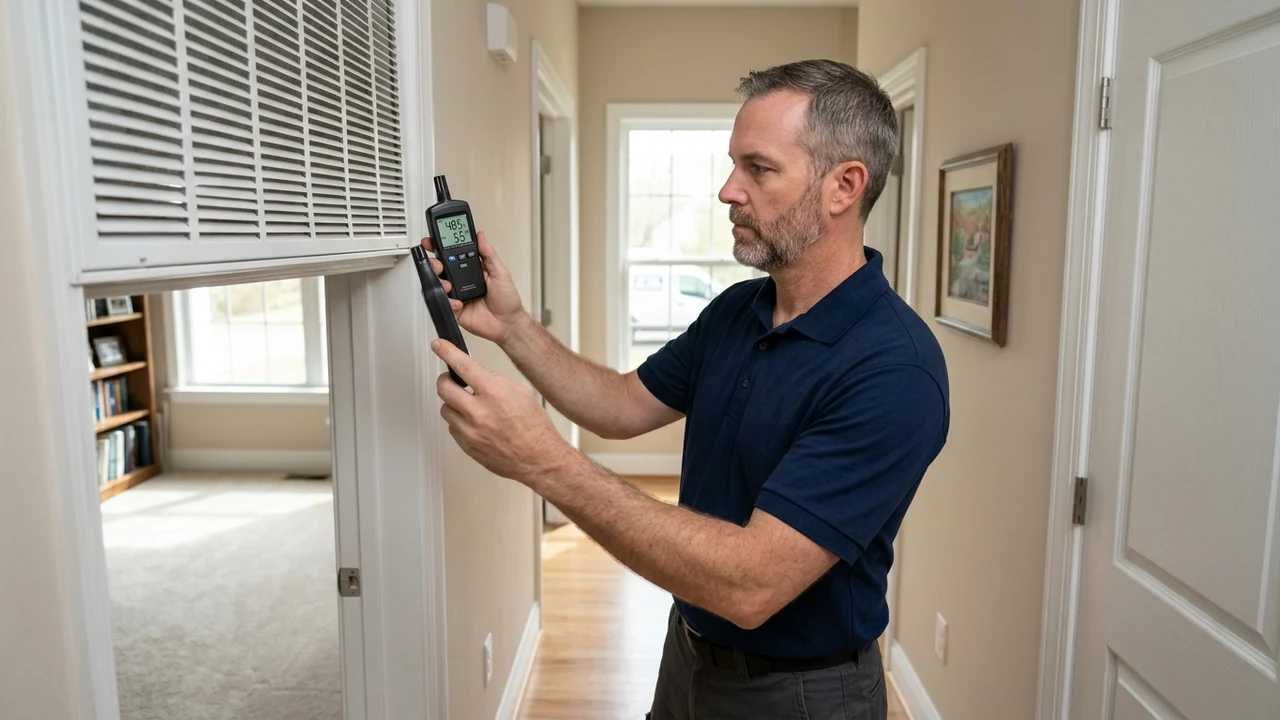
- Measure indoor relative humidity in several rooms with a cheap hygrometer.
- Check the crawl space or basement, since that damp air rises through the whole house.
- Look at the ductwork so the new unit ties in the right way.
- Note trouble spots – sticky bedrooms, musty closets, foggy windows.
- Size the unit to the house, not to a random online chart.
According to ENERGY STAR, the joint U.S. EPA and Department of Energy program, indoor relative humidity should sit between 30% and 50% for comfort and health. That target is your goal number. With that information in hand, you can pick a unit that actually reaches it, instead of one that quits halfway.
Phase 2: Install, dial it in, and fine-tune
Now the real work begins, and this is the part where sizing and setup pay off. A pro connects the unit to the ducts, runs the drain line, and wires the humidistat. Then you set your target – usually right around 50% or a touch lower – and let the system hold it. Test the drain, check the airflow, and confirm the AC and dehumidifier play nice together.
Here is a money bonus most people miss. Once your air is dry, you can raise the thermostat and still feel cool. The U.S. Department of Energy’s Energy Saver program notes you can save as much as 10% a year on heating and cooling by setting your thermostat back 7° – 10°F for 8 hours a day. Dry air makes that setback easy to live with, because you are not fighting sticky air anymore.
If you’re not sure how big a unit your home needs, we can come out, measure the moisture room by room, and size it right the first time. That kind of hands-on check is what our team at Richmond Air does every week. Pair the install with a simple AC maintenance checklist and your whole system stays sharp all season.
Common Mistakes and Myths to Avoid
Honestly, the myths cause more damp Richmond homes than the weather does. People hear the same old advice and repeat it, and it quietly makes things worse. Let me clear the biggest ones so you don’t fall into the same trap.
The U.S. Environmental Protection Agency (EPA) is clear that mold needs moisture, and it warns to keep indoor humidity low – generally below 60% – to hold mold back. That single fact breaks most of these myths on its own. Cold air is not the same as dry air, and chasing the thermostat down does nothing to reach that safe humidity line.
| Common Myth | The Truth |
|---|---|
| “Turning the AC down lower dries the air.” | Colder air is not dry air. You just get a cold, damp house and a big bill. |
| “One portable unit fixes the whole house.” | It only helps one room. The rest of your home stays muggy. |
| “A dehumidifier will wreck my power bill.” | It often lowers the bill, because your AC finally gets to rest. |
| “Brand-new homes don’t get humid.” | Tight, sealed homes can trap moisture just as badly. |
A few more slip-ups I see on service calls:
- Running the AC so cold the coil freezes, which is a fast way to make your AC freeze up in a Richmond summer.
- Ignoring a clogged drain line until water backs up and overflows.
- Setting the humidistat and then forgetting it exists.
If your home still feels damp after you try these fixes, let’s take a look together. We can run a full humidity check and find what is really going on, room by room.
Measuring Success: How to Know It’s Working
In my work following up on installs, the difference shows up in the first week. The thermostat goes up a few degrees, and the house still feels better than it did at full blast. That is the signal I look for, and it is the one you can watch too.
Keep an eye on a handful of simple signs. You do not need fancy gear – a $15 hygrometer and your own senses do most of the job:
- Indoor relative humidity holding in the 30% to 50% range.
- Thermostat resting comfortably at 74 – 76°F instead of pushed to the floor.
- Shorter AC runtimes and no more short cycling (the on-off-on-off stutter).
- No condensation fogging up your windows in the morning.
- That musty basement or closet smell fading away.
Use this quick chart to read your own air like a pro:
| Indoor Humidity | How the air feels | What it can mean |
|---|---|---|
| Below 30% | Too dry – static, dry skin, cracked wood | Add moisture in winter |
| 30% – 50% | Just right – the target range | Comfortable and healthy |
| 50% – 60% | Getting sticky | Time to let the dehumidifier run |
| Above 60% | Heavy, muggy, “clammy” | Mold and dust mites can start |
If the numbers still stay high, the issue may be your cooling side, not your drying side. That is a good moment to learn what a proper AC tune-up actually fixes, since a weak or dirty system drags humidity right back up.
The Bottom Line for Richmond Homeowners
Fighting Richmond’s wet summers with a freezing thermostat is a losing game. You pay more, you feel worse, and the mold risk never really goes away. A dedicated whole-home dehumidifier flips the script. It dries the air, lets you keep a normal temperature, saves power, and protects both your health and your house.
The James River humidity basin is not going to change, so the smart move is to match your home to the climate we actually live in. Dry the air first. Cool it second. That order is the whole secret, and it works in every district, from the East End to the suburbs down the road.
If you’re tired of a sticky house and a sky-high bill, reach out to Richmond Air. We’ll measure your moisture, size the right unit, and build a plan that fits your home and budget. Have you noticed your place still feels damp even with the AC running hard? I’d love to hear what you’re seeing – that clue usually points straight to the fix.
Frequently Asked Questions
How do Amish cool their homes without air conditioning?
The Amish lean on old, smart, low-tech tricks. They open windows on opposite walls to let a breeze flow straight through, a habit called cross-ventilation. They plant shade trees, use thick walls, close up the house during the hot part of the day, and rely on cool basements and cellars. Many also work outdoors early, before the heat peaks. It is not magic – it is shade, airflow, and timing doing the job that a machine would do for the rest of us.
Is it better to use a dehumidifier instead of an air conditioner?
It is not really an either-or choice, and here is the simple truth. An air conditioner cools the air and removes a little water as a side effect. A dehumidifier removes water on purpose without making the room cold. In a humid spot like Richmond, the best setup uses both – the AC handles the heat, and the dehumidifier handles the moisture. When they split the work, your AC runs less and your home feels far better at a normal temperature.
What is the $5,000 rule for AC?
The $5,000 rule is a quick way to decide whether to fix or replace a unit. You take the age of the AC in years and multiply it by the cost of the repair. If the answer is more than $5,000, replacing the unit usually makes more sense. If it is under $5,000, a repair is often the smarter call. For example, a 10-year-old unit with a $400 repair scores 4,000, so you fix it. The same repair on a 15-year-old unit scores 6,000, so you start planning for a new one.
What is the best AC brand?
There is no single “best” brand for everyone, and anyone who promises one is guessing. Several well-known makers build reliable systems, and most quality brands perform about the same when they are cared for. What matters far more is the install. A top brand put in wrong – the wrong size, leaky ducts, a bad charge – will run worse than a mid-tier brand installed right. So focus on correct sizing, a careful install, and regular service, and almost any solid brand will serve your home well.
What humidity level should I keep my Richmond home at?
Aim for the 30% to 50% range, and around 45% to 50% is a comfortable target for our muggy summers. That band keeps the air feeling light, protects your wood floors and trim, and holds back mold and dust mites. In a humid James River climate, reaching that number usually takes a dedicated dehumidifier working with your AC – the thermostat alone will not get you there.