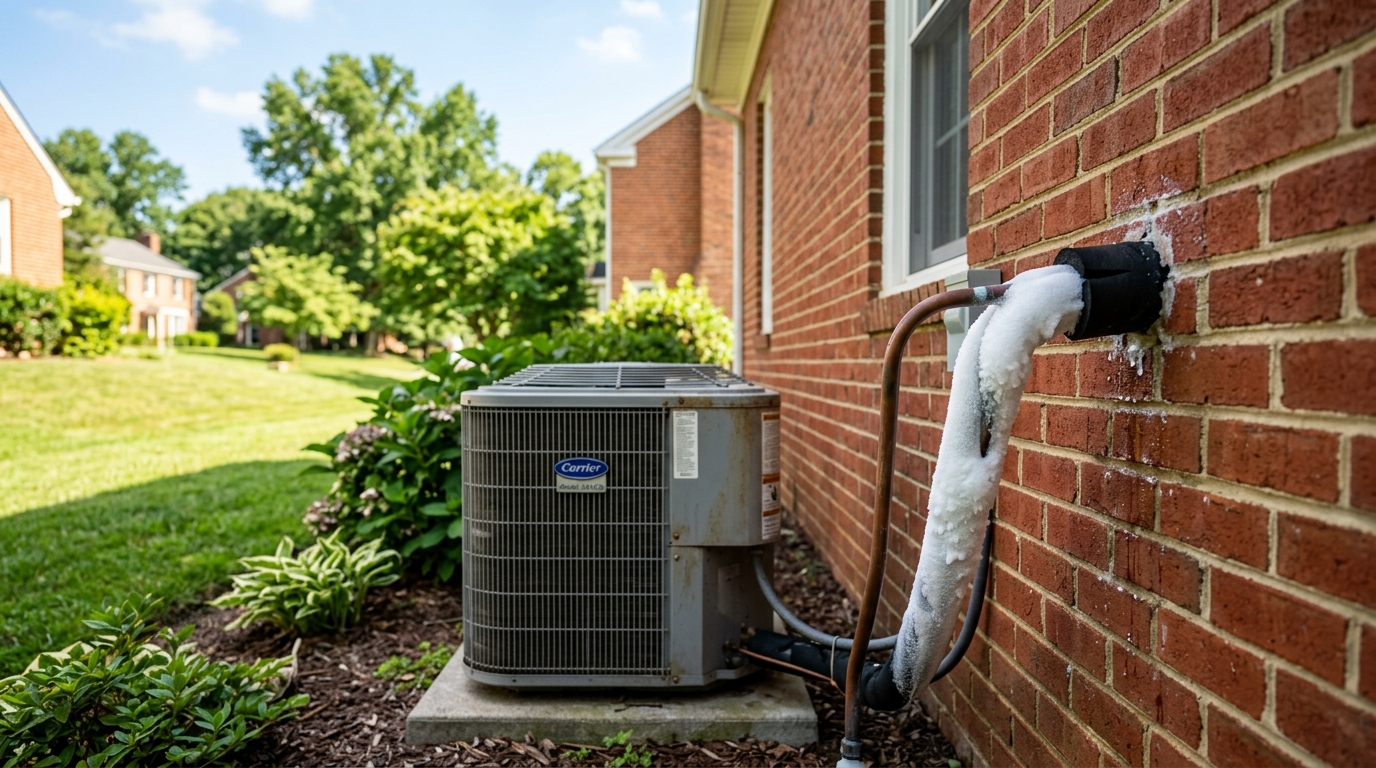
A frozen AC unit in Richmond VA, is one of the worst surprises during a hot July afternoon. Your home feels like an oven. You check the thermostat. It says 68. But the air blowing out feels lukewarm at best.
I have been there. And the first time it happened to me, I had no idea that the problem was a block of ice hiding inside my AC unit. Here is everything you need to know.
How Your AC Works (And Why It Freezes)
Your AC pulls warm air from inside your home and passes it over a part called the evaporator coil. That coil is filled with cold refrigerant. The refrigerant absorbs the heat from the air. Then, cool air gets pushed back into your rooms.
For this to work right, the coil needs a steady flow of warm air passing over it. When that warm air stops flowing properly, the coil gets too cold. Moisture in the air then freezes on the coil. That is your frozen AC unit.
Richmond summers are humid and hot, with humidity levels often topping 70 percent. That extra moisture in the air makes your evaporator coil even more likely to ice over when something goes wrong with your system.
Signs Your AC Unit Is Frozen
You may not even see the ice at first. The evaporator coil is tucked inside your air handler, so it is hidden from view. But your AC will give you some clear clues.
Watch for these signs: weak or no airflow from your vents, warm air coming out when the AC is running, water puddles or dripping near your indoor unit, visible frost or ice on the refrigerant lines outside, or a sudden spike in your energy bills. If you see any of these, your AC unit is likely frozen.
Why Does My AC Keep Freezing Up?
Dirty Air Filters and Blocked Airflow
This is the number one reason a frozen AC unit happens in Richmond VA homes. Your air filter traps dust and dirt before air reaches the coil. But when that filter gets clogged, it blocks the airflow.
No airflow means the coil cannot absorb enough heat. So it just keeps getting colder and colder until ice forms. According to the U.S. Department of Energy, replacing a dirty air filter can improve your AC’s energy efficiency by 5 to 15 percent.
Honestly, this is the easiest fix in the book. Check your filter right now. Hold it up to a light. If you cannot see light through it, replace it. Most filters should be swapped out every one to three months, and even more often during peak summer use in Richmond.
Furniture blocking your return vents is another sneaky culprit. I once moved a couch right in front of a return vent without thinking. A few weeks later, my AC froze solid. Lesson learned. Keep all vents open and clear.
Low Refrigerant or a Refrigerant Leak
Low refrigerant is the second most common cause of a frozen AC unit. Refrigerant is the substance inside your system that actually does the cooling. When levels drop too low, the pressure inside the evaporator coil drops with it. And low pressure means the coil gets dangerously cold.
Here is the thing most people do not know: your AC is a closed system. Refrigerants do not just run out on their own. If it is low, you have a leak somewhere. Common leak spots include the refrigerant lines, the compressor, or the coil itself.
Listen for a hissing sound near your indoor unit or outdoor condenser. An oily residue near the coil is another giveaway. If you spot either of these, do not try to fix it yourself. A licensed HVAC technician must locate the leak, repair it, and then recharge the system. Adding refrigerant without fixing the leak just delays the problem.
More Causes You Might Be Missing
A Broken Blower Fan or Dirty Coils
Your blower fan is the part that pushes air over the evaporator coil. If the fan slows down or stops working, airflow drops. The coil gets too cold. Ice forms. You end up with a frozen AC unit even if your filter is clean.
Dirty evaporator coils cause the same problem from the other direction. When dust and grime coat the coils, heat cannot transfer through them properly. The coil temperature drops below freezing, and ice builds up.
Both of these issues require a professional to diagnose and fix. A Richmond, VA HVAC technician will inspect the blower motor, clean the coils, and check all the connections during a standard tune-up visit.
Your Thermostat Might Be the Culprit
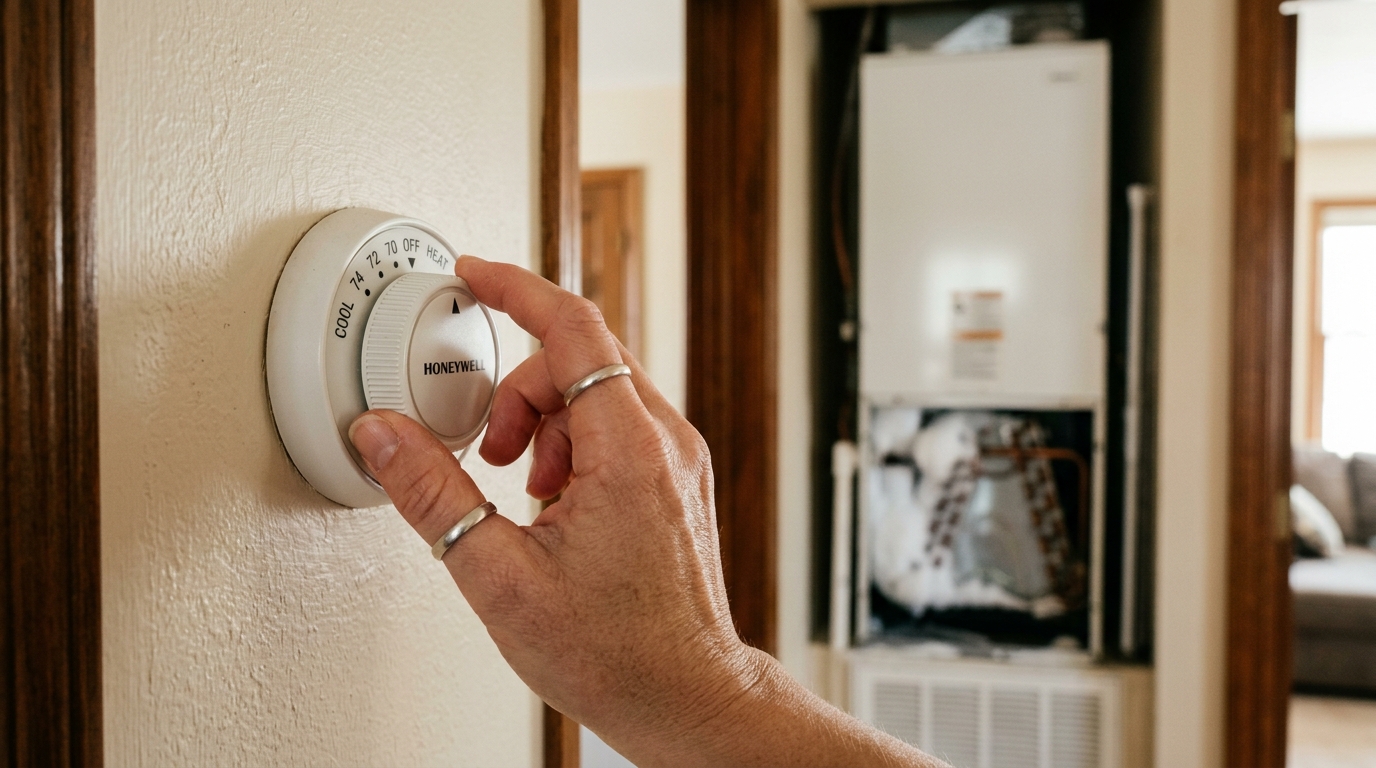
This one surprises a lot of people. If your thermostat is not telling the AC to turn off overnight, the evaporator coil can freeze during cooler nighttime temperatures. There is simply not enough warm air moving through the system to keep the coil from icing over.
A clue that the thermostat is to blame: the ice only shows up in the morning. During the day, everything seems fine. But by sunrise, you have a block of ice on your coil.
Setting your thermostat too low is also a problem. Most HVAC experts suggest keeping indoor temperatures around 70 to 75 degrees Fahrenheit. Going lower puts extra strain on the system and raises the risk of freezing, especially during Richmond’s humid summers.
What to Do Right Now If Your AC Is Frozen
Step-by-Step: How to Thaw a Frozen AC Unit
First things first: do not panic. A frozen AC unit in Richmond VA, can be fixed. Here is what to do right now.
Turn your AC off completely. Switch the thermostat from “cool” to “off.” Do not just bump the temperature up. Fully turning the system off stops the cooling cycle and lets the ice start to melt.
Next, switch the fan setting to “fan only” if your thermostat allows it. This blows warm air over the evaporator coil without running the refrigerant cycle, which speeds up the thawing process. Expect the coil to take anywhere from two to twenty-four hours to fully thaw, depending on how much ice built up.
While you wait, check and replace your air filter if it looks dirty. Clear any furniture or objects blocking your vents. Check that all supply and return vents in every room are open. Place some towels near your indoor air handler to catch dripping water as the ice melts.
Do not chip at the ice with a screwdriver or any sharp tool. According to Trane’s HVAC resource guides, chipping the ice can damage the coil and cause a refrigerant leak. That turns a simple fix into an expensive repair.
Once the coil is fully thawed, turn the AC back on and watch how it performs. If it freezes again, call a professional.
Can You Run Your AC When It’s Frozen?
No. This is a hard rule. Running your AC while the evaporator coil is frozen puts enormous stress on the compressor. The compressor is the most expensive part of your entire AC system. Running a frozen unit can crack the compressor or permanently damage the refrigerant lines.
A cracked compressor can cost anywhere from $1,200 to $2,800 to replace. In many cases, it is cheaper to replace the whole unit. So if you see ice, turn the system off immediately and leave it off until the ice is completely gone.
How to Stop Your AC From Freezing Again
Simple Maintenance Habits That Actually Work
Most frozen AC unit problems in Richmond VA are completely preventable with a few simple habits. These are the ones I now follow myself, and I have not had a frozen unit since.
Change your air filter every one to three months. During peak Richmond summer heat, go closer to every month. Set a reminder on your phone so you do not forget. It takes five minutes and costs just a few dollars.
Keep all your vents open and clear of furniture, rugs, and curtains. Walk through your home and check every vent at least once a season. Also make sure the area around your outdoor condenser is clear of leaves, grass clippings, and debris.
Keep your thermostat set at a moderate temperature. Around 72 to 75 degrees Fahrenheit is a comfortable and safe range for Richmond summers. Avoid setting it below 68, especially at night.
Schedule a professional AC tune-up every spring before the heat kicks in. A technician will clean the evaporator coil, check refrigerant levels, inspect the blower fan, and test the thermostat. One annual visit can catch small problems before they turn into a frozen AC unit and a big repair bill.
When to Call a Richmond VA HVAC Technician
Some frozen AC problems you can handle yourself. Change the filter, clear the vents, let it thaw. Done.
But other problems need a pro. Call a Richmond VA HVAC technician right away if the coil freezes again after thawing, if you hear hissing or see oily residue near your unit, if you suspect a refrigerant leak, if your blower fan is making strange noises, or if your energy bills have gone up sharply without any other explanation.
According to a 2025 report from Carrier’s residential HVAC resources, a frozen AC unit that is ignored can cause permanent damage to the compressor, leading to full system replacement costs ranging from $3,500 to $7,500 or more. Getting a technician out early is almost always the smarter and cheaper choice.
Most Richmond HVAC companies offer same-day or 24/7 emergency service. Do not wait it out. The compressor cannot take the strain of running on a frozen coil for long.
Conclusion
A frozen AC unit in Richmond VA is frustrating, but it is not the end of the world. In most cases, the fix starts with something simple like a dirty air filter or a blocked vent. Turn the system off, let it thaw, and give the basics a check.
But if the problem keeps coming back, trust a licensed HVAC technician to dig deeper. A refrigerant leak, a failing blower fan, or a dirty evaporator coil will keep freezing your system until someone fixes the root cause.
Take care of your AC with regular maintenance and it will take care of you all summer long. If you found this helpful, I would love to hear your thoughts in the comments. Have you dealt with a frozen AC unit in Richmond before? What worked for you?
Frequently Asked Questions
Why is my AC unit frozen in the summer if it is hot outside?
This is a super common question. It seems strange that your AC can freeze when it is 95 degrees outside. But freezing happens inside the unit, not outside. When airflow over the evaporator coil drops, or when refrigerant levels are too low, the coil gets colder than it should. Warm outdoor temperatures have nothing to do with it. The ice forms on the indoor coil where the air from your home passes through.
How long does it take for a frozen AC unit to thaw?
It depends on how much ice built up. A light freeze can thaw in two to four hours. A heavy buildup can take up to twenty-four hours. To speed things up, switch your thermostat fan to “fan only” mode. This blows room-temperature air over the coil without running the cooling cycle. Place towels near the air handler to catch dripping water as it melts.
Can I just turn my frozen AC back on once the ice melts?
You can try, but watch it closely. If it freezes again within a few hours, do not keep running it. That means there is an underlying problem like a refrigerant leak or a failing blower fan that a DIY filter swap will not fix. At that point, call a Richmond VA HVAC technician to inspect the system properly.
How much does it cost to fix a frozen AC unit in Richmond VA?
The cost depends on the cause. Replacing a dirty air filter costs almost nothing. Cleaning the evaporator coil typically runs $100 to $400. Fixing a refrigerant leak and recharging the system can cost $200 to $1,500 depending on the severity. Most AC repairs in Richmond fall in the $150 to $600 range. A damaged compressor, however, can push costs to $1,200 or more, which is why catching the problem early matters so much.
How often should I have my AC serviced to prevent freezing?
Once a year is the minimum, and spring is the best time to do it in Richmond. A professional tune-up includes cleaning the coils, checking refrigerant levels, inspecting the blower fan, and testing the thermostat. In addition to annual service, replace your air filter every one to three months and keep all vents clear year-round. These two simple habits prevent the majority of frozen AC unit problems before they ever start.