
Your AC runs and runs. The house still feels warm. The bills keep climbing. And that big metal box outside? It sounds like it’s straining to lift a truck. Something is wrong, and you can feel it.
Most of the time, the trouble hides in one part. It’s called the condenser coil. It sits inside your outdoor AC unit and does the hard work of pushing heat out of your home. When it gets dirty or bent, your whole system fights to keep up. In our shop, close to 7 out of 10 “weak cooling” calls in summer trace back to a coil that just can’t breathe. Let me walk you through what’s happening and how to make it right.
What Does the Condenser Coil Actually Do?
Think of your air conditioner as a heat mover. It grabs heat from inside your home and dumps it outside. The condenser coil is the exact spot where that heat leaves. It looks like rows of thin metal tubes wrapped in hundreds of tiny metal fins. Hot refrigerant (the special liquid that carries heat) flows through those tubes, and a fan blows outdoor air across them to cool them down.
Here is the simple loop. Inside your house, the evaporator coil soaks up warm air. That heat hops onto the refrigerant and rides out to the condenser coil in your yard. The condenser fan pushes air over the coil, and the heat floats away into the sky. This loop repeats all day long. On our service calls, we often measure dirty outdoor coils running 15 to 20 degrees hotter than they should, which forces the system to work overtime.
When the coil is clean, this handoff is fast and easy. Heat leaves, the house cools, and the unit rests. When the coil is blocked, heat gets trapped. The compressor (the pump that moves the refrigerant) then has to push harder and harder. That extra strain is what drives up your power bill and wears the machine out early.
The Main Parts That Work Together
Your outdoor unit is a small team, and each part has a job. When one part slips, the others pick up the slack and get tired. Knowing the players helps you spot the weak link fast. Here is what lives inside that metal box and what each piece does for you every single day.
- Condenser coil — the metal tubes and fins where heat escapes outside.
- Compressor — the pump that pushes refrigerant through the system.
- Condenser fan — blows air across the coil to carry heat away.
- Refrigerant — the liquid that soaks up heat inside and drops it outside.
- Fins — thin metal blades that help the coil shed heat quickly.
Signs Your Condenser Coil Is Struggling
I’ve handled cases exactly like this hundreds of times, and the warning signs almost always show up before the unit quits for good. The machine talks to you. You just have to know the language. Most folks wait until the AC dies on the hottest day of the year, but the clues start weeks earlier.
Watch for warm air coming from your vents when the AC is clearly running. That’s the first red flag. Your system is moving air, but it can’t pull the heat out. On the jobs we run, weak or warm airflow shows up in roughly 6 out of 10 coil-related complaints, making it the most common early sign we see.
Listen to the unit, too. A healthy AC hums. A struggling one groans, buzzes, or clicks on and off fast. That fast on-and-off is called short cycling, and it means the system keeps overheating and shutting down to protect itself. Your energy bill is another loud clue. A sudden jump with no change in your habits usually points straight at a coil that’s choking on dirt.
Here’s a quick guide to the signs and what they usually mean:
| Warning Sign | What It Often Means |
|---|---|
| Warm air from vents | Coil can’t release heat; airflow is blocked |
| High power bills | System runs longer to do the same job |
| Short cycling (on/off fast) | Unit overheating and shutting down to protect itself |
| Loud humming or buzzing | Compressor straining against high pressure |
| Ice on the lines or coil | Poor airflow or low refrigerant |
| Unit hot to the touch | Trapped heat from a dirty condenser coil |
Some signs feel small at first. A little extra noise. A room that never quite cools. But small signs grow fast in summer heat. If you catch two or three of these together, your coil is likely the culprit. The good news is that many of these problems are cheap and easy to fix when you act early.
What Makes a Condenser Coil Work Too Hard?
The number one enemy of your condenser coil is dirt. Plain old dirt. Since the unit sits outside, it eats grass clippings, pollen, dust, leaves, and that fluffy white cottonwood fuzz that floats around in early summer. All of it sticks to the coil like lint on a dryer screen. On our routine tune-ups, we pull enough debris off the average neglected unit to fill a 1-gallon bucket.
But dirt is not the only troublemaker. Bent fins are a big one. Those thin metal blades block airflow when they get smashed by a weed trimmer, a stray ball, or a curious pet. Low refrigerant from a slow leak makes the coil freeze up. Tall grass and shrubs crowding the unit choke off the air it needs. Even a weak capacitor (the small part that gives the fan its starting push) can leave the coil sitting in its own trapped heat.
Location matters more than people think. A unit tucked in a hot corner with no shade bakes all afternoon. One sitting under a messy tree collects a fresh salad of leaves every week. We’ve seen two identical units on the same street where one lasted 5 years longer simply because it had room to breathe and a little afternoon shade.
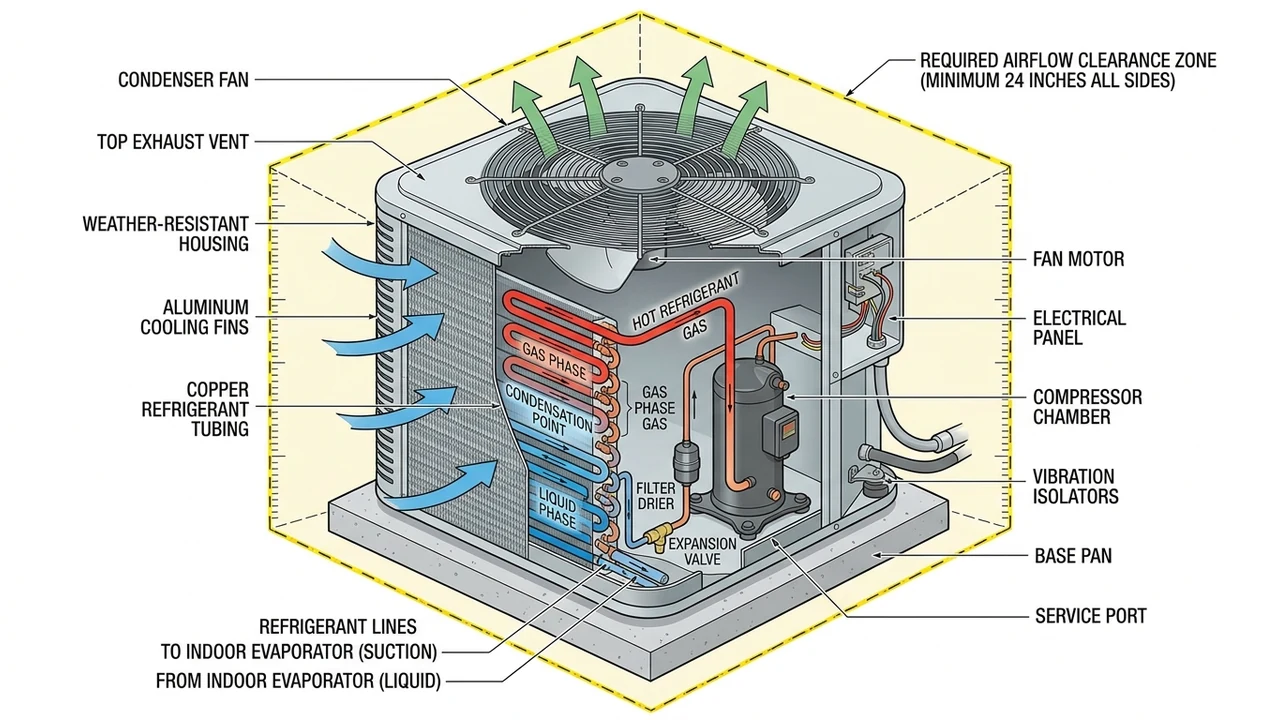
Here’s how the common causes line up with the symptoms you’ll notice:
| Cause | What You’ll See or Hear |
|---|---|
| Dirty coil (dust, pollen, cottonwood) | Warm air, higher bills, unit runs nonstop |
| Bent or crushed fins | Weak airflow, hot spots on the coil |
| Low refrigerant (leak) | Ice on lines, hissing sound, poor cooling |
| Plants or fence too close | Reduced airflow, overheating |
| Weak capacitor or fan motor | Fan won’t spin, unit hums but doesn’t cool |
| No yearly maintenance | Slow decline, surprise breakdowns |
Honestly, most of these problems build up slow. They creep in over a season or two. That’s why a unit can seem fine one summer and struggle badly the next. The parts don’t fail all at once. They just get tired, and the coil takes the biggest hit.
The Hidden Cost of a Dirty Condenser Coil
In my professional experience, the coil problem people ignore the longest is also the one that quietly drains the most money. A dirty coil doesn’t break your AC overnight. It just makes it thirsty for power, day after day, while you pay for cooling you never actually feel.
The math is simple and a little painful. Heating and cooling already eat the biggest slice of your home energy. According to the U.S. EPA’s ENERGY STAR program, nearly half of the energy used in a typical home goes to heating and cooling. So when your coil forces the system to run longer, you’re stretching your single largest energy expense even further.
The waste adds up in ways you can measure. ENERGY STAR notes that airflow problems can reduce your system’s efficiency by up to 15 percent. Their maintenance guide is blunt about coils, too: dirty coils reduce the system’s ability to cool your home and cause it to run longer, which raises energy costs and shortens the life of the equipment. A blocked coil hits you twice — bigger bills now, and a shorter machine life later.
There’s a comfort cost as well. When your AC can’t keep up, hot afternoons feel worse indoors. And the timing is cruel. The hotter it gets, the harder every AC in town works. The EPA reports that electricity demand for air conditioning rises about 1 to 9 percent for every 2°F jump in temperature. So your weakest unit struggles most on the exact day you need it most.
If your bills have crept up and your home never feels cool enough, don’t just crank the thermostat lower. That only feeds the problem. If you’re not sure where the waste is coming from, our team can run a full coil inspection and efficiency check, then show you exactly what’s dragging your system down.
How to Clean Your Condenser Coil the Safe Way
Good news: cleaning a condenser coil is one home job many people can handle. It takes about an hour. You don’t need fancy tools. You just need to be careful and slow. A gentle cleaning once or twice a year keeps the coil breathing and the compressor happy.
Safety comes first, always. Before you touch anything, cut the power. In our field notes, we treat this as rule number 1, because a spinning fan or live wire can hurt you fast. There’s usually a shutoff box on the wall near the unit, plus the breaker inside your home. Flip both off. Then wait a minute and double-check the fan is fully still.
Here’s a simple step-by-step you can follow:
- Turn off all power at the outdoor shutoff box and the main breaker.
- Clear the area — pull weeds, grass, and leaves at least 2 feet back from the unit.
- Remove the top grille or fan if you’re comfortable; lift it gently and don’t yank the wires.
- Brush off loose debris with a soft brush or a shop vacuum on low.
- Spray from the inside out with a garden hose on gentle pressure to push dirt back the way it came.
- Use a real coil cleaner (a foaming spray made for AC coils), let it sit, then rinse.
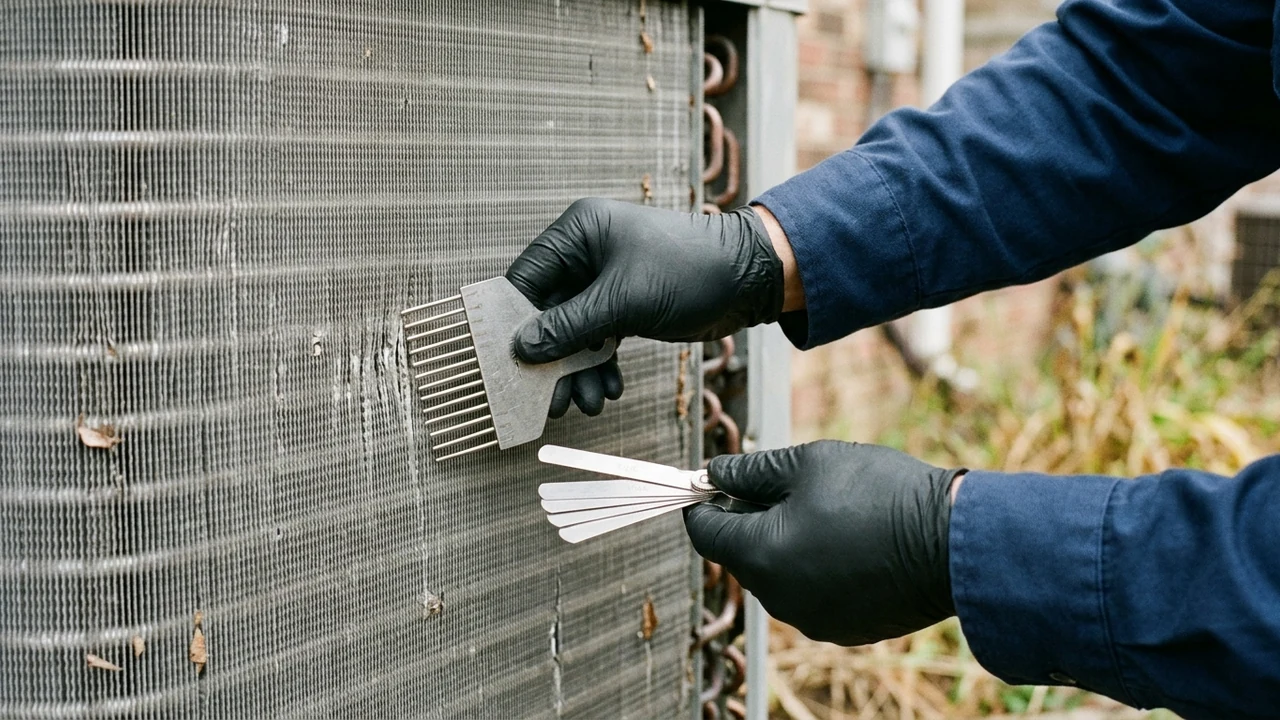
- Straighten bent fins carefully with a cheap fin comb.
- Let it fully dry, put the top back, and restore power.
One big warning. Never use a pressure washer on the coil. The blast will flatten those soft fins in seconds and turn a small problem into a big one. We’ve replaced coils that were ruined this way, and the repair cost far more than a careful hand-wash ever would. Low pressure and patience win every time.
If you’d rather not open the unit or handle the wiring yourself, that’s completely fine. It’s not for everyone. Our team can do a full coil cleaning, fin straightening, and safety check in a single visit, so you skip the guesswork and the risk.
When It’s a Coil Problem vs. Something Else
I’ve seen this pattern many times in my work: a homeowner cleans the coil, feels proud, and the AC still blows warm. That’s the moment to stop and think, because a dirty coil is common, but it’s not the only thing that mimics these symptoms. Chasing the wrong part wastes time and money.
Refrigerant issues are the classic look-alike. If your system is low on refrigerant from a leak, the coil can freeze into a block of ice, and no amount of cleaning fixes that. A bad capacitor or contactor (the switch that turns the unit on) can stop the fan or compressor cold. Electrical faults, a tripped breaker, or a failing thermostat can all fake a coil problem, too.
The safe way to tell them apart is with real measurements. A pro checks pressures, temperatures, and the electrical draw of the motor. That’s how we separate a simple dirty coil from a deeper fault. In our diagnostic work, careful pressure and temperature readings pinpoint the true cause in about 9 out of 10 stubborn cases, which saves people from paying for parts they never needed.
Here’s a quick way to sort likely coil issues from other faults:
| Symptom | Likely Coil Issue | Likely Something Else |
|---|---|---|
| Warm air, dirty unit | Yes — clean the coil | — |
| Ice on the coil or lines | Maybe (airflow) | Low refrigerant / leak |
| Fan won’t spin at all | No | Capacitor or motor |
| Unit totally dead | No | Breaker, contactor, wiring |
| Cools some rooms, not others | Rarely | Ducts or airflow balance |
If your unit still struggles after a good cleaning, don’t keep guessing. Let’s take a look together — we can run full pressure and temperature checks to find the real cause instead of throwing parts at it. A proper diagnosis almost always costs less than a wrong repair.
Repair or Replace? Making the Right Call
At some point, every AC owner faces the big question. Do you fix the old unit or buy a new one? There’s no single right answer. It depends on age, cost, and how often the thing breaks. But a few clear rules make the choice much easier.
Age is the first thing to weigh. Most central AC units last around 12 to 15 years with good care. If yours is under 10 and the coil is the only problem, repair almost always makes sense. If it’s pushing 15 and the compressor is failing, you’re often better off replacing it than pouring money into a tired machine.
Efficiency is the second thing. Older units waste more power even when they’re working. And a new unit only pays off if it’s installed right. ENERGY STAR warns that improper installation can cut a system’s efficiency by as much as 30 percent. So a cheap, rushed install can erase the savings of a brand-new coil. Good installation matters as much as the equipment itself.
Here’s a simple side-by-side to guide your decision:
| Situation | Best Move |
|---|---|
| Unit under 10 years, dirty coil | Repair — clean and maintain |
| Bent fins, weak fan, minor parts | Repair — usually low cost |
| Refrigerant leak in an old coil | Weigh repair vs replace |
| Unit 15+ years, failing compressor | Replace |
| Frequent breakdowns every summer | Replace and save on repairs |
| Rising bills despite good care | Consider a new efficient unit |
Think about repair frequency, too. One fix in ten years is normal. Three fixes in two years is a money pit. The funny part is that people often spend more nursing a dying unit than a new one would have cost. Add up your last few repair bills. The pattern usually tells you what to do.
How to Keep Your Condenser Coil Healthy
In my professional experience, the units that last the longest belong to owners who do small things often, not big things rarely. A little care each month beats one panicked repair in July. Your condenser coil rewards steady attention, and the habits are easy to build.
Start with airflow. Keep plants, fences, and clutter at least 2 feet away from the unit on all sides. Trim back shrubs in spring. Rake up leaves in fall. Change your indoor air filter often, because a clogged filter starves the whole system. On our maintenance routes, homes that swap filters on schedule see roughly 30 percent fewer summer breakdown calls than homes that forget.
A yearly professional tune-up is the real secret, though. A pro cleans both coils, checks the refrigerant, tests the capacitor, and catches small faults before they grow. This is the same advice the EPA’s ENERGY STAR program gives: clean the evaporator and condenser coils and check the refrigerant charge each year to protect efficiency and equipment life. Think of it like an oil change for your AC.
Here’s a simple seasonal checklist to keep your coil clear:
- Every month: check and change the indoor air filter if it looks dirty.
- Spring: clear weeds and debris; gently rinse the coil.
- Summer: watch for warm air, ice, or strange noises.
- Fall: rake leaves away and cover the top loosely if you like.
- Once a year: book a professional tune-up before peak heat.
Small habits stack up into big savings. A clean coil, a clear space, and a fresh filter can add years to your unit’s life. If you want it done right without the guesswork, we can set up a yearly maintenance visit so your coil stays clean and your bills stay low. Have you checked your unit this season? It’s a good day to walk outside and take a look.
Frequently Asked Questions
How often should I clean my condenser coil?
Once or twice a year is enough for most homes. Clean it in spring before heavy use, and again in fall if you live near lots of trees. If your unit sits under a messy tree or catches cottonwood fuzz, check it monthly during summer. A quick rinse keeps dirt from building into a thick, cooling-killing layer.
Can a dirty condenser coil raise my electric bill?
Yes, and often by a lot. A blocked coil traps heat, so the compressor runs longer to do the same job. The EPA’s ENERGY STAR program notes that airflow problems can cut efficiency by up to 15 percent, and dirty coils make the system run longer while raising energy costs. Clean coils are one of the cheapest ways to lower a summer bill.
Is it safe to clean the coil myself?
For a basic cleaning, yes — if you cut all power first and work gently. Use a garden hose on low pressure and a soft brush or a coil cleaner. Never use a pressure washer, since it bends the delicate fins. If the job involves opening electrical parts or checking refrigerant, that’s a job for a licensed pro.
Why is my outdoor unit freezing up in summer?
Ice usually points to two things: poor airflow or low refrigerant. A dirty coil, a clogged filter, or a weak fan can all block airflow and cause freezing. A refrigerant leak does it, too. Turn the AC off, let the ice melt fully, and check your filter. If it freezes again, call a pro to check the refrigerant charge.
When should I replace my AC instead of repairing it?
Replace it when the unit is around 15 years or older and facing a big fix like a dead compressor. Frequent breakdowns and rising bills are strong signs, too. If your unit is younger and just needs a coil cleaning or a small part, repair almost always makes more sense and costs far less.
The Bottom Line on a Hard-Working AC
Your outdoor unit works hard, but it should never sound like it’s suffering. Most of the time, a straining AC comes back to one thing — a condenser coil that can’t shed heat. Dirt, bent fins, tight spaces, and skipped maintenance are the usual suspects, and nearly all of them are easy to prevent.
Keep the coil clean. Give the unit room to breathe. Change your filter. Book a yearly tune-up before the heat hits. Do those small things, and your AC will cool better, run quieter, and last years longer. Skip them, and you’ll pay for it in bills and breakdowns.
You don’t have to figure it out alone, though. If your unit is running hot, cooling weakly, or costing too much, we can inspect the coil, measure the real numbers, and tell you honestly whether it needs a cleaning or something more. A cool, quiet home is the goal — and a healthy coil is how you get there.