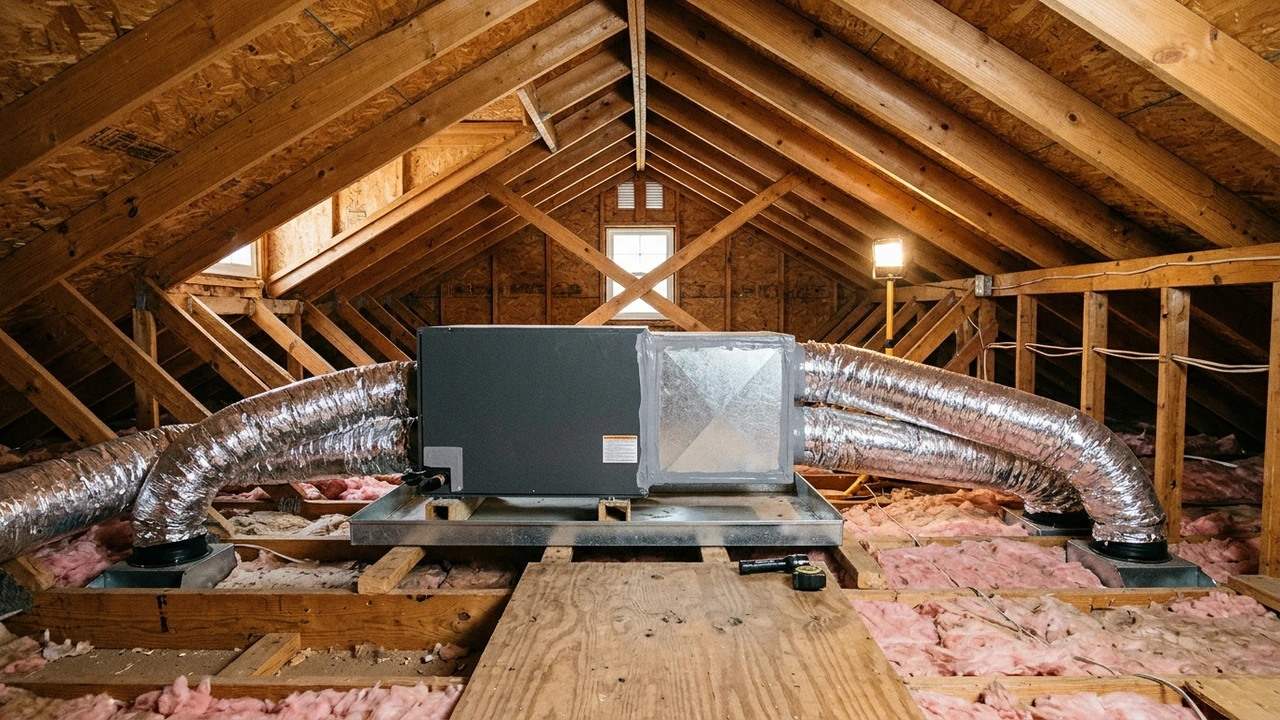
Your air conditioner might be working just fine. The real problem could be hiding right over your head.
Up in the attic, your ducts can lose cold air before it reaches your rooms. In a hot Richmond summer, that lost cooling adds up fast, and your power bill feels it.
Most people blame the AC unit. They call for a repair, pay for parts, and still feel too warm.
But often the weak spot is the duct insulation wrapped around the ductwork in the attic. This guide breaks down R-8 vs R-6 in plain words.
You will learn how a hot unconditioned attic steals cooling, why the thicker layer matters here in Richmond, Virginia, and what you can do about it.
What R-Value Really Means for Your Attic Ducts
Let me keep this simple. R-value is just a number that tells you how well something blocks heat.
Higher number, better blocking. That is the whole idea.
Think of a winter coat. A thin coat keeps you a little warm.
A thick coat keeps you much warmer. R-value works the same way for your ducts.
R-6 is a thinner coat. R-8 is a thicker coat.
The “R” stands for thermal resistance, which is a fancy way of saying “how hard it is for heat to push through.”
Here is the part many Richmond homeowners miss. Your ducts carry cold air across a very hot space.
In summer, that attic air wants to pour into the cold ductwork. The insulation is the only thing standing in the way.
A weak R-value means more heat gets in, and your cool air gets warmer before it reaches you.
So when you compare R-6 and R-8, you are really asking one thing. How much attic heat do I want to keep out of my cold air? For a hot attic, the answer leans toward the thicker layer almost every time.
R-8 vs R-6 Duct Insulation: The Core Difference
I have crawled through a lot of Richmond attics, and I can tell you the gap between these two is bigger than it looks on paper. One extra point of R-value sounds tiny. In a 140-degree attic, that small point does real work all summer long.
The main difference is thickness and blocking power. R-6 duct wrap runs about 2 inches thick.
R-8 runs closer to 3 inches. That extra material slows the attic heat more.
Moving from R-6 to R-8 cuts the heat creeping through the duct wall by about 25%. That is a real, physical gain, not a sales pitch.
Both have the same basic build. A soft fiberglass core does the blocking.
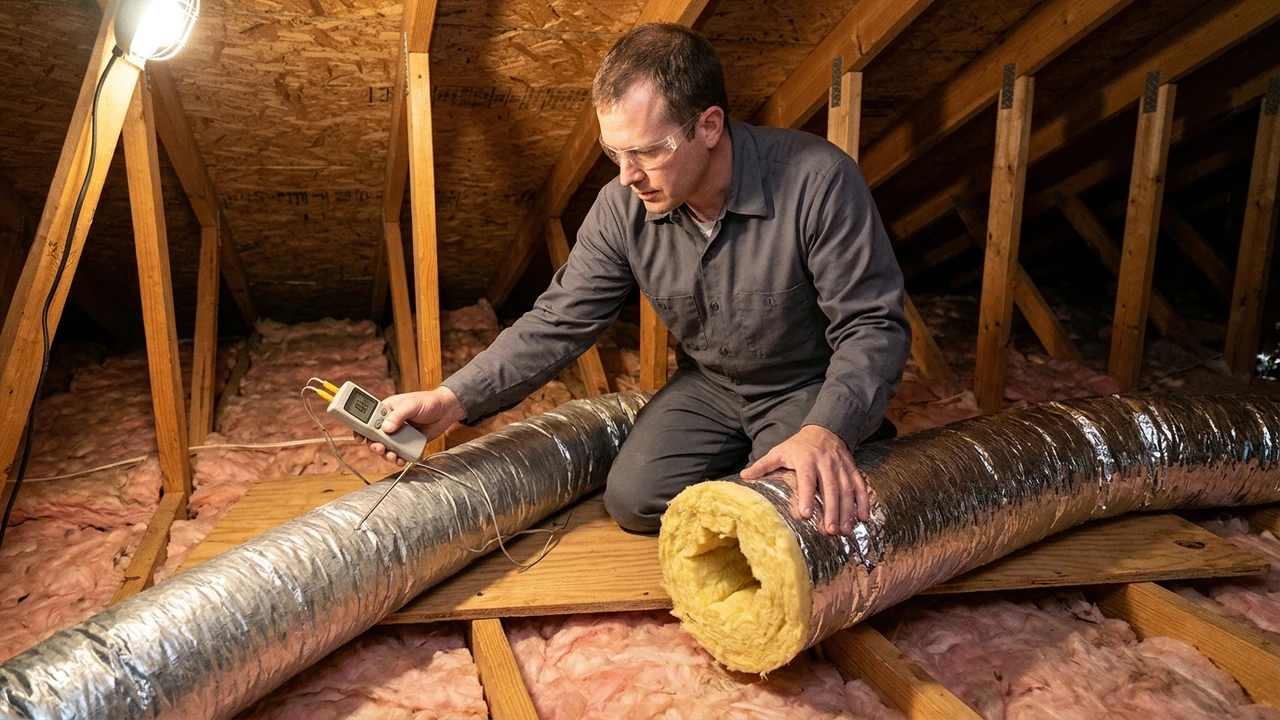
An outer foil or plastic layer adds moisture protection and keeps the core dry. If that outer jacket tears, the performance drops fast, so the physical condition of the wrap matters as much as the R-value printed on it.
Here is a quick side-by-side to make the point clear.
The takeaway is short. For ducts living inside your cool home, R-6 can be fine. For ducts baking in a Richmond attic, R-8 is the smarter pick.
How a Hot Richmond Attic Steals Your AC’s Ton-Capacity
This is the heart of the whole topic, so let me slow down here. Your AC is rated in tons.
That word has nothing to do with weight. One ton of cooling means the system removes 12,000 BTU per hour of heat from your house.
That rating sits on one big promise. It assumes the cold air actually reaches your rooms.
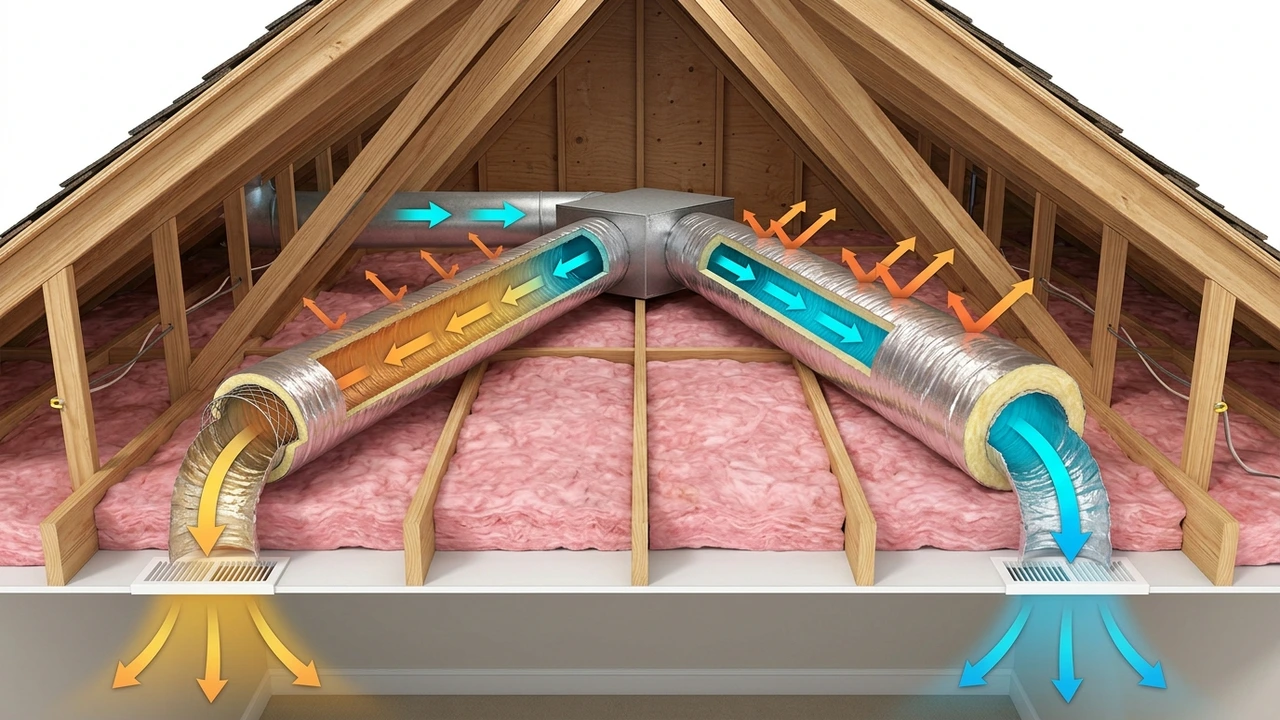
But your air does not teleport. It travels through long metal and flex ducts, often across a brutally hot attic.
Along the way, two thieves show up and start taking your cooling.
The first thief is leaks. Small gaps let cold supply air escape into the attic, where it does you no good.
The second thief is heat gain. Attic heat soaks right through thin insulation and warms the cold air inside the ducts.
Both shrink the real cooling that lands at your registers.
What “Ton-Capacity” Means in Plain English
Picture a bucket with a few small holes. You fill it at the tap, but some water leaks out before you carry it to the garden.
Ton-capacity works the same way. You pay for a full bucket of cooling, but the attic steals part of it on the trip.
Say you own a 3-ton system. If the ducts lose 25% of the cooling to the attic, you only get about 2.25 tons where you live.
You paid for three. You are using a little over two.
That missing cooling is why some rooms stay warm no matter how low you set the thermostat.
The Delta-T Problem Across Your Supply Ducts
Here is a term worth knowing: delta-T. It just means the temperature difference between two things. In this case, it is the gap between your cold supply air and the hot attic around it.
Say your supply air is 55 degrees and your attic hits 130 degrees. That is a 75-degree delta-T.
Heat always moves from hot to cold, and a bigger delta means a stronger push. The attic shoves its heat into your cold ducts hard, all day.
A thicker R-8 wrap fights that push better than R-6, so more cold air survives the trip. If your air conditioner seems to run nonstop through July, weak attic duct insulation is a very common hidden reason.
Why Richmond’s Climate Makes This Worse
In my work across Richmond and the surrounding Virginia homes, I see the same pattern every July. Attics turn into ovens, and thin duct insulation simply cannot keep up. Our climate punishes weak ductwork harder than a dry, cool region would.
Richmond summers are hot and sticky. We sit in a humid zone where afternoon highs often climb into the upper 80s and low 90s, with heavy, damp air on top.
That moisture makes cooling feel even harder, because your system must pull water out of the air too. A duct losing cold air in that moisture load works your AC overtime.
The attic itself is the real trouble spot. On a sunny Richmond afternoon, attic temperatures can reach 130 degrees to 150 degrees, far hotter than the air outside.
Your ducts sit right in that heat. Thin wrap in that space is like wearing a tank top in a sauna and hoping to stay cool.
Housing age plays a part as well. Many homes in areas like Church Hill and the Fan have older ducts with thin, aging insulation.
Richmond’s long, hot season wears systems down year after year, and that summer heat can quietly damage your AC. Upgrading attic duct insulation is one of the quiet fixes that pays off most in our weather.
R-6 Was the Old Standard, Here’s Why R-8 Won
I have handled plenty of cases where a home built years ago still runs the old R-6 wrap in a scorching attic, and the owners wonder why upstairs never cools. The honest answer is that the rules changed for a good reason, and their ductwork got left behind.
Years back, R-6 was a common choice for duct runs, even in unconditioned spaces. Over time, builders and energy experts saw the math did not hold up in hot attics.
The heat gain was simply too high. So the required level for attic ducts was raised.
Today’s energy rules back this up. According to the U.S.
Department of Energy’s Building Energy Codes Program, current code calls for R-8 insulation on supply and return ducts in attics that are 3 inches across and larger, with R-6 allowed only on the smaller ones (https://www.energycodes.gov). Virginia’s energy code follows this same national model, so Richmond builds are held to it too.
The reason R-8 won is plain. Attics are the hottest, harshest space in the house.
A higher R-value there protects more of your cooling, lowers your energy use, and keeps rooms more even. R-6 did not disappear, but its best home is now inside conditioned areas, not the attic.
Real Numbers: How Much Cooling You Lose
I like to put honest numbers on the table, because guesswork helps no one. The losses from weak attic ducts are not small, and they stack up over a full Richmond cooling season.
Leaks alone are a big drain. The U.S.
Department of Energy reports that a typical duct system loses about 20% to 30% of the air moving through it to leaks, holes, and poor connections (https://www.energy.gov/energysaver/duct-sealing). Now add heat gain through thin insulation on top of that, and the picture gets worse.
The hotter the attic, the bigger the delta-T, and the more cooling bleeds away. This table shows how the gap grows as the attic temperature climbs on a Richmond afternoon.
Look at that bottom row. An 85-degree gap is a huge force pushing heat into your cold air every second your AC runs.
On these high-delta days, the thicker R-8 layer earns its keep by holding more of your cooling inside the duct where it belongs. If some rooms in your home never seem to cool evenly, long duct runs through that hot attic are often the weak link.
Signs Your Attic Ducts Are Underinsulated
You do not need fancy tools to spot trouble. Your home gives you clues. Over the years I have learned to read these signs fast, and most homeowners can learn them too.
Watch for these common warning signs:
- Uneven rooms. Some rooms stay warm while others feel fine, even with the AC running hard.
- High bills. Your energy costs jump in summer more than the weather alone explains.
- Long run times. The AC runs and runs but never seems to catch up on hot days.
- Weak airflow upstairs. Rooms farthest from the unit get the least cold air.
- Sweating or damp ducts. You see moisture on the ductwork, a sign heat and humidity are winning.
- Thin or torn wrap. You can see bare metal, crushed fiberglass, or ripped outer jackets in the attic.
Any one of these can point to weak duct insulation. Two or three together make it very likely. The sweating sign is one to take seriously, because trapped moisture can lead to mold and ruin the insulation core over time.
If you spot several of these at once, add an attic duct check to your routine. A quick look during your seasonal AC maintenance checklist can catch small problems before they grow into big, costly ones.
R-8 vs R-6: Is the Upgrade Worth It?
Honestly, this is the question I get most, and my answer depends on where your ducts live. For attic ducts in Richmond, the upgrade to R-8 usually pays off. For ducts inside your cool walls, the push is weaker.
The money side is simple to picture. R-8 costs a bit more than R-6 up front.
But it blocks about 25% more conductive heat gain, so your AC does less work and runs for less time. Over many hot Richmond summers, that saved energy adds up and chips away at the extra cost.
There is comfort value too, not just dollars. Even rooms, steady temperatures, and an AC that does not scream all day are worth a lot. When your ducts stop leaking cooling into the attic, your whole house feels calmer and more reliable.
Use this quick guide to see where you land.
If your attic ductwork is old and failing, do not pour money into patch after patch. It helps to weigh a repair against a full replacement with a pro who can measure the real losses. We can look at your ducts, your attic, and your system together and give you a straight answer.
How We Insulate and Seal Attic Ducts the Right Way
In my professional experience, I have found that the order of work matters as much as the materials. Wrapping thick R-8 over leaky ducts is like putting a warm blanket over a hole in the wall. You must fix the air leaks first, then add the thermal layer.
A good attic duct job is careful and clean. Rushing it leaves gaps, and gaps let the attic win. Here is how a proper upgrade should flow, step by step.
Sealing Comes Before Insulating
First, we hunt down leaks. Every joint, seam, and connection in the ductwork gets checked. Loose spots get sealed with proper mastic or foil tape, never cheap cloth duct tape, which fails in attic heat within a year or two.
Sealing matters because leaks are the bigger thief, costing that 20% to 30% the Department of Energy flagged. Once the air stays inside the duct, the insulation can finally do its job.
Seal first, wrap second. That order is not optional if you want real performance.
Choosing the Right Duct Wrap
Next comes the layer itself. For a hot Richmond attic, we reach for R-8 on the main runs. The fiberglass core does the blocking, and the outer foil jacket guards against moisture so the core stays dry and effective.
We also check that the wrap fits snug with no crushed spots, since crushed fiberglass loses R-value fast. A clean, tight R-8 install can hold its rated thermal protection for many years. A professional AC tune-up is a smart time to have all this inspected, and our team can check exactly what a tune-up covers for your system.
Simple Steps Richmond Homeowners Can Take Today
In my work, I have seen that small, early moves save families the most money. You do not have to fix everything at once. Start with the easy wins, then plan the bigger upgrade.
Here are practical steps you can take right now:
- Look in your attic. On a cool morning, check the duct wrap. Note any thin, torn, or missing insulation.
- Feel for drafts. Run your hand along duct joints while the AC runs. Cold air leaking out means a seal problem.
- Check your bills. Compare this summer to last year. A sharp jump hints at hidden losses.
- Mark the hot rooms. Keep a short list of rooms that never cool well. This helps a tech find the weak ducts.
- Plan the upgrade. If your attic runs R-6 or worse, budget for an R-8 upgrade before next summer.
None of these take long. The attic look alone can tell you a lot in ten minutes. Just be safe up there, watch your step, and never stand on the ceiling drywall between joists.
If the job looks bigger than a quick peek, that is normal. Attic work in Richmond’s heat is tough and sometimes risky. If you want a trained set of eyes on your ductwork, we can run a full check and show you exactly where your cooling is going.
The Bottom Line for Richmond Homeowners
Your AC can only cool what actually reaches your rooms. When thin R-6 wrap sits in a 130-degree to 150-degree Richmond attic, your cold air warms up and your real ton-capacity drops before it gets to you. That is lost comfort and wasted money, every single hot day.
Moving to R-8 on attic ducts blocks about 25% more conductive heat gain, and sealing leaks first saves that 20% to 30% the Department of Energy ties to leaky systems. Together, those two fixes protect the cooling you already pay for. In our climate, that is one of the best returns you can get from your HVAC dollar.
Richmond summers are not getting any milder, so the attic will keep testing your ductwork year after year. If your ducts are old, thin, or leaky, now is the time to act, not during the first heat wave.
If you want help checking your attic ducts or planning an R-8 upgrade, reach out to Richmond Air. We can walk your home, measure the losses, and help your family stay cool for the long haul.
Frequently Asked Questions
Is R-8 duct insulation required in Richmond attics?
For most attic ducts, yes. Current energy code calls for R-8 on supply and return ducts that are 3 inches across and larger in unconditioned attics, with R-6 allowed on smaller ones.
Virginia’s energy code follows this national standard, so new Richmond builds are held to it. Older homes may still have R-6 or less, which is legal from their build year but not ideal for our heat.
Can I just add more insulation over my existing R-6 ducts?
Sometimes, yes. You can add a wrap over sound R-6 to raise the total R-value. But there is a catch worth knowing:
- You must seal all leaks first, or you waste the new layer.
- The old wrap must be dry and in good shape, not moldy or crushed.
- The job gets bulky, so flex ducts need room to keep their shape.
In many cases, replacing worn wrap with fresh R-8 gives cleaner results than stacking layers.
How much cooling do leaky, underinsulated ducts really waste?
More than most people guess. The U.S.
Department of Energy reports a typical duct system loses about 20% to 30% of its air to leaks and poor connections. Add heat gain through thin insulation in a hot attic, and the loss climbs higher.
On a 3-ton system, that can mean losing the equal of nearly a full ton of cooling.
Does R-8 duct insulation lower my power bill?
Usually, yes, though the amount depends on your home. By blocking about 25% more conductive heat gain than R-6, your AC pulls in less attic heat and runs for less time.
Shorter run time means lower energy use across the summer. The savings grow in Richmond because our cooling season is long and hot.
R-6 vs R-8 for a hot attic, which is better?
For an unconditioned attic, R-8 wins clearly. It handles the big delta-T between your cold supply air and the baking attic far better than R-6.
Save R-6 for ducts that run inside your conditioned spaces, where the temperature gap is small. In the attic, give your cooling the thicker coat it needs.