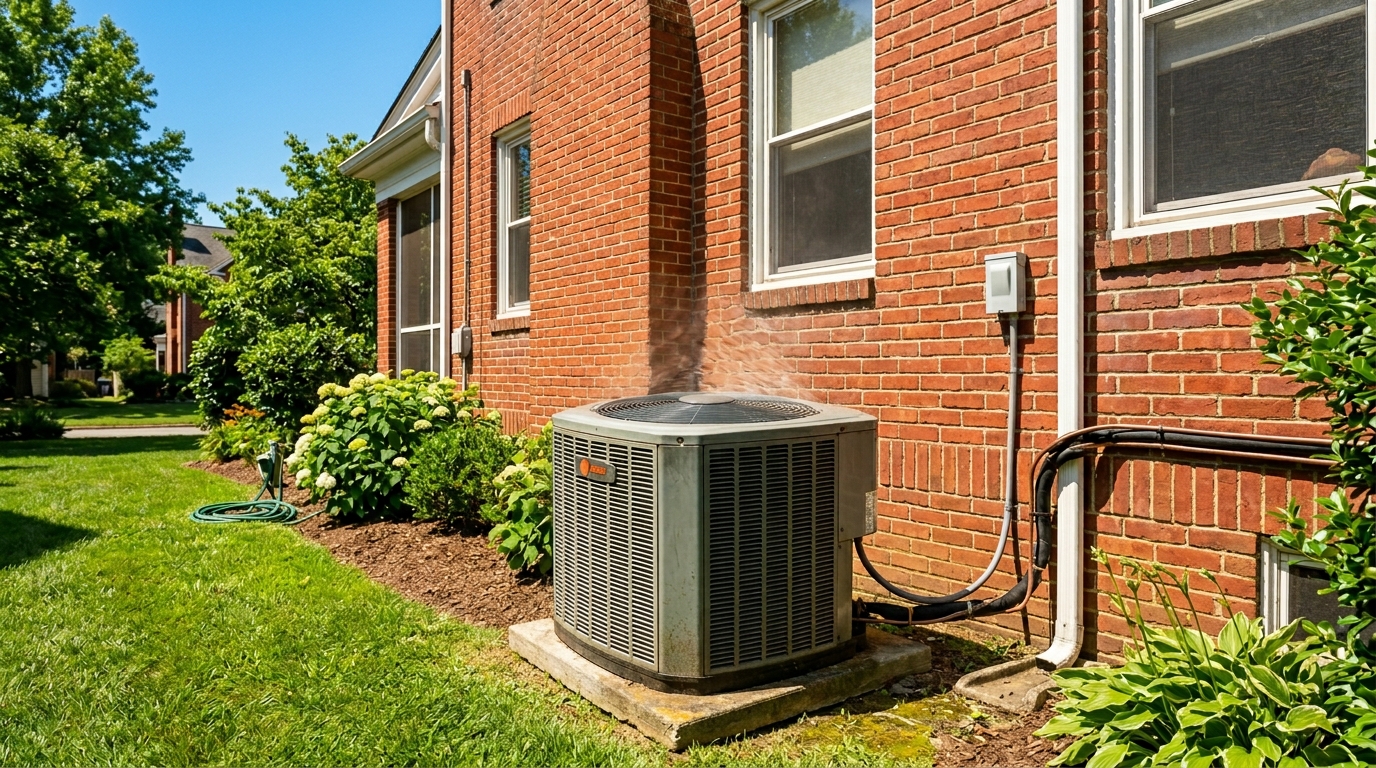
If you live in Richmond VA, you already know how brutal summer gets. And if your AC unit is struggling right now, there is a good chance the summer heat is already doing real damage to it without you even knowing.
Why Richmond’s Summer Heat Is So Hard on AC Systems
The Heat and Humidity Combination That Breaks AC Units
Most people think heat alone is the enemy. But in Richmond, it is actually the heat plus humidity working together that really beats up your air conditioning system.
According to a 2025 report by Axios Richmond, average Richmond summer temperatures between 1970 and 2024 are now 2.7°F hotter than they used to be. That may sound small, but for your AC unit, it means longer run times, harder work, and faster wear on every part inside.
On top of that, summer humidity in Richmond regularly exceeds 70%. The U.S. Department of Energy explains that in humid climates, your AC system has to cool the air AND remove moisture at the same time. That doubles the load on your system.
Your compressor, evaporator coil, and blower motor all feel that extra strain every single day from May through September. And when those parts get pushed too hard for too long, that is when AC damage starts to happen.
How Long Richmond Summers Actually Run Your AC
Here is something a lot of homeowners do not think about. In places with mild summers, an AC might run a few hours a day. In Richmond, it runs almost non-stop during a heat wave.
July highs in Richmond reach around 88 to 90°F and rarely drop below 69°F at night. That means your system gets almost no real rest. It just keeps cycling over and over, and all those moving parts, the fan motor, capacitors, and electrical connections, keep getting hotter with every cycle.
I once had a friend in Henrico who thought his AC was fine all spring. Then the first real heat wave hit in late June, and his compressor died within three days. His technician told him the unit had been struggling for weeks. The heat just pushed it over the edge.
Common Types of AC Damage Caused by Summer Heat
Compressor Failure and Refrigerant Leaks
The compressor is basically the heart of your AC. It pumps the refrigerant through the system so your home can actually get cool. When summer heat forces your system to run non-stop, the compressor can overheat and eventually fail completely.
Refrigerant leaks are also very common during hot Richmond summers. When your system is under heavy load and the internal pressure builds up, small cracks or weak spots in the refrigerant lines can start to leak. Once refrigerant levels drop, your system cannot cool properly, your energy bills go up fast, and your compressor is at serious risk of permanent damage.
Compressor replacement is one of the most expensive AC repairs you can face. Costs can range from a few hundred dollars up to over $2,000 depending on the unit. That is why catching a refrigerant leak early matters so much.
Frozen Coils, Clogged Drains, and Electrical Burnout
This might sound strange, but summer heat can actually freeze your AC coils. Here is how it happens. When airflow gets restricted because of a dirty air filter or blocked ductwork, the evaporator coil gets too cold and ice starts to build up. Once the coil is frozen, no cool air gets through at all.
On top of that, your AC pulls moisture from the air and that water drains out through the condensate drain line. During humid Richmond summers, that line is working overtime. If it gets clogged, water backs up, can leak into your home, and even trigger your system to shut itself off.
Then there is electrical burnout. Running your system under extreme heat puts stress on capacitors, contactors, and wiring. These components can wear out or even burn out completely, especially in systems that are 8 to 10 years old or older.
Warning Signs Your AC Is Being Damaged by the Heat
Signs That Need Immediate Attention
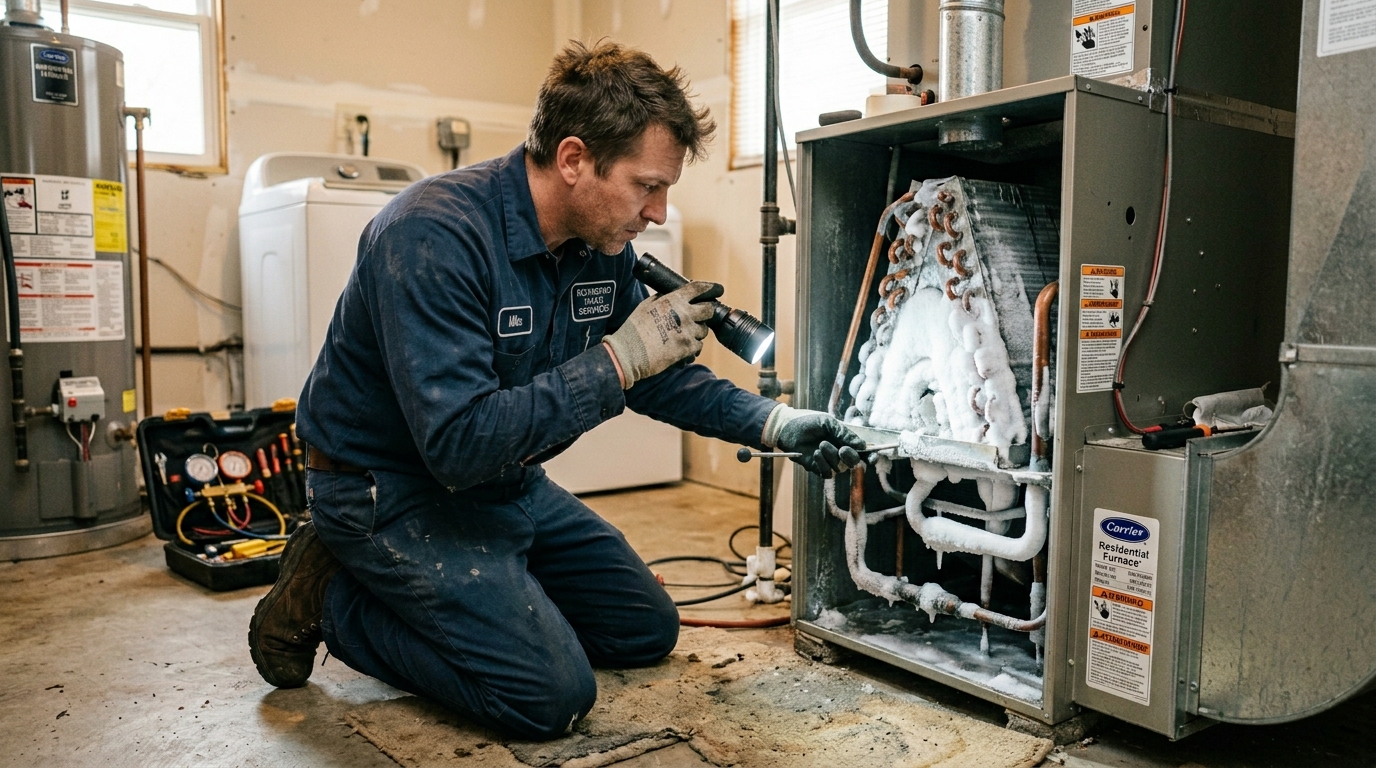
Some AC problems cannot wait. If you see or hear any of these, turn off your system and call a licensed HVAC technician right away.
Your AC is blowing warm air even though it is running. This often points to a refrigerant leak or a failing compressor. Your energy bill has suddenly spiked with no change in how you use the system. This usually means your AC is working way too hard because something is wrong inside. You hear grinding, banging, screeching, or hissing sounds coming from the unit. Those are not normal sounds. Grinding usually means a motor problem. Hissing can mean a refrigerant leak. You see water pooling around the indoor unit or notice ice forming on the outside of the unit or on the refrigerant lines.
These are not warning signs to “watch” for a few more days. These need same-day attention, especially during a Richmond heat wave when temperatures are already dangerous.
Smaller Signs Most Homeowners Ignore
Honestly, the problems that sneak up on people the most are the quiet ones.
Short cycling is a big one. This is when your AC turns on, runs for just a minute or two, then turns off, then turns on again. Most people think the AC is working fine because it keeps coming on. But short cycling causes massive wear on your system over time and usually means something is wrong with the thermostat, refrigerant levels, or electrical parts.
Uneven cooling is another one. If some rooms feel cool and others still feel stuffy and warm, your system is not distributing air properly. It could be clogged filters, leaky ductwork, or a blower motor that is starting to fail.
And do not ignore musty or burning smells from your vents. Musty odors often mean mold or mildew is growing somewhere in your ductwork or on your evaporator coil. Burning smells can point to an electrical problem that could become a safety hazard.
How to Protect Your AC From Summer Heat Damage in Richmond
Simple Maintenance Steps You Can Do Right Now
You do not need to be an HVAC expert to protect your system. A few simple habits can make a real difference.
Change your air filter every 30 to 60 days during summer. A clogged filter is one of the top causes of frozen coils, airflow problems, and overworked systems. It is cheap and takes two minutes.
Keep your outdoor unit clear. Walk outside and look at your condenser unit. Is there grass, leaves, or other debris around it? Clear at least two feet of space around it so it can pull in air properly. A blocked outdoor unit in 90°F Richmond heat is going to overheat fast.
Set your thermostat to 78°F when you are home and raise it a few degrees when you are away. According to the U.S. Department of Energy, keeping the gap between indoor and outdoor temperatures smaller will reduce the load on your system and help it last longer.
Also, keep your blinds or curtains closed on the sunny side of your home during the day. It is a small thing, but it can reduce how hard your AC has to work by a noticeable amount.
When to Call a Professional HVAC Technician
There is a lot you can do yourself. But there are things that absolutely need a licensed professional.
Anything involving refrigerants requires a certified technician by law. You cannot handle refrigerant recharging on your own. Same goes for electrical component replacement, like capacitors or contactors. Getting those wrong can damage your whole system or create a fire risk.
The best move you can make is to schedule a professional AC tune-up every spring, before the heat hits. A technician will inspect your compressor, clean your evaporator and condenser coils, check refrigerant levels, test your electrical connections, and clear your condensate drain line. Catching a small problem in April is much cheaper than an emergency repair in July.
If your AC is already 10 to 15 years old and keeps needing repairs, it may be time to talk about replacement rather than repair. A new energy-efficient system with a high SEER2 rating will actually cost you less to run and will handle Richmond’s brutal summers much better than an aging unit on its last legs.
Conclusion
Summer heat AC damage in Richmond VA is a real problem and it happens every year to homeowners who do not see the warning signs in time. The combination of high temperatures and heavy humidity puts your system under serious stress from May all the way through September.
The good news is that most of this damage is preventable. Change your filter, keep your outdoor unit clear, schedule a spring tune-up, and pay attention to the early warning signs your AC sends you. If something feels off, do not wait. A small repair now is always better than a full compressor replacement or system failure in the middle of a Richmond heat wave.
Have you noticed any of these warning signs in your home this summer? I would love to hear your thoughts in the comments below.
Frequently Asked Questions (FAQs)
Can summer heat actually destroy an AC compressor?
Yes, it can. When your AC runs non-stop during extreme heat without enough refrigerant or proper airflow, the compressor overheats and can burn out completely. In Richmond, where summers run long and hot, this is one of the most common causes of major AC breakdowns.
How often should I service my AC in Richmond VA during summer?
You should schedule a full professional tune-up once a year, ideally in spring before the heat arrives. During summer, check your air filter every 30 days and replace it if it looks dirty. If your system is older or runs heavily, a mid-season checkup is a smart idea.
What temperature should I set my thermostat to during a heat wave?
The U.S. Department of Energy recommends setting your thermostat to around 78°F when you are home. When you leave, raise it by 7 to 10 degrees. This reduces strain on your system and cuts energy costs without sacrificing too much comfort.
Is it better to repair or replace my AC if it breaks down in summer?
It depends on the age and condition of your system. If your AC is under 10 years old and the repair cost is reasonable, fixing it usually makes sense. But if it is 12 to 15 years old, breaks down often, or needs an expensive repair like a compressor replacement, a new energy-efficient system is often the smarter long-term choice.
How do I know if my AC has a refrigerant leak?
Common signs of a refrigerant leak include warm air blowing from your vents, a hissing or bubbling sound near the unit, ice forming on the refrigerant lines or evaporator coil, and a sudden jump in your energy bill. If you notice any of these signs, turn off your system and call a licensed HVAC technician right away.