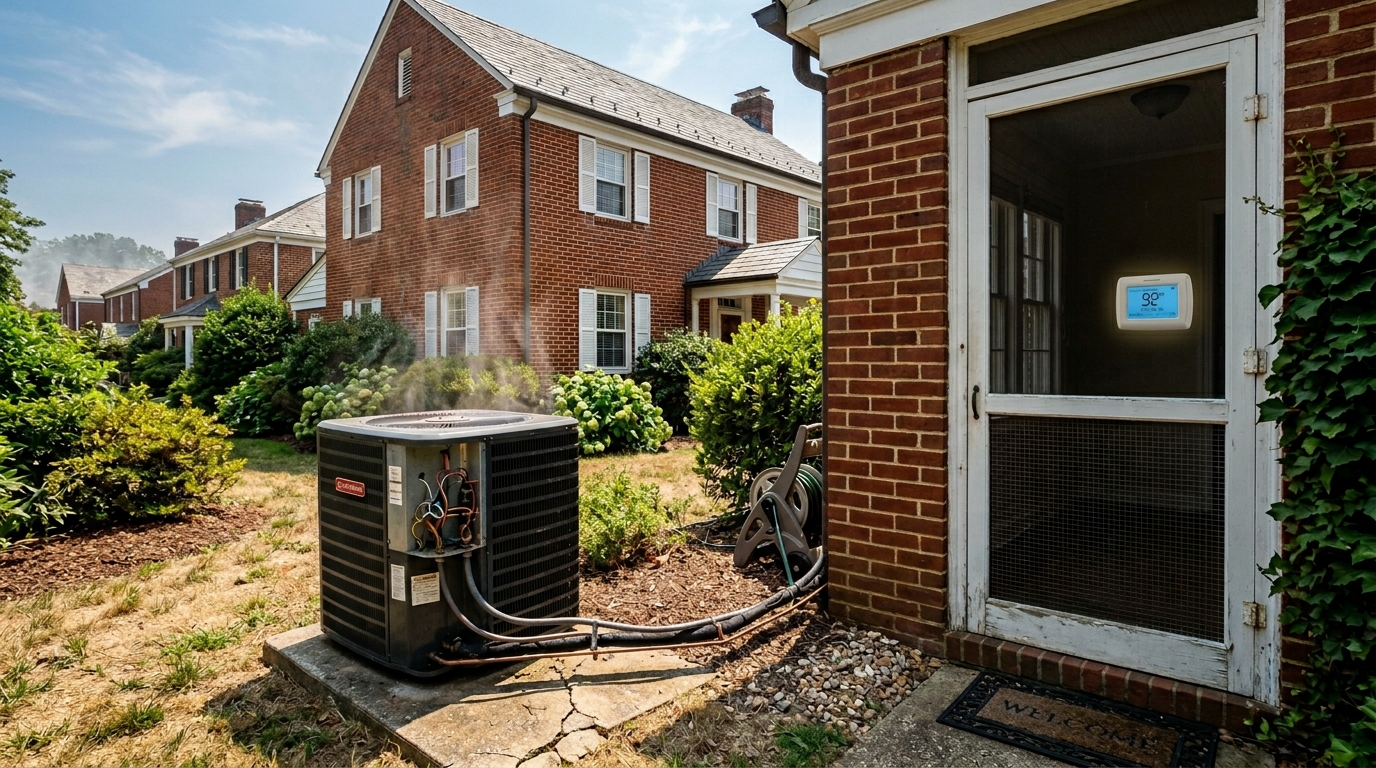
If your AC in Richmond, VA keeps flipping on and off every few minutes without ever cooling your house down, you have a problem. It is called AC short cycling, and it is one of the most frustrating things a homeowner can deal with in a hot Virginia summer. The good news? Once you know why it happens, fixing it becomes a whole lot easier.
What Is AC Short Cycling? (Definition for Richmond Homeowners)
How a Normal Cooling Cycle Should Work
A healthy air conditioner runs for about 10 to 20 minutes per cooling cycle. On a regular hot day here in Richmond, your system goes through around three cooling cycles per hour. It starts up, pulls warm air from your home, cools it down, and then shuts off for a bit. Then it repeats. Simple, steady, and efficient.
Think of it like a steady jog. Your system finds its rhythm and keeps your home comfortable without burning itself out.
When Does Short Cycling Become a Problem?
AC short cycling in Richmond, VA, is when that rhythm gets broken. Instead of running for a full 10 minutes, your unit turns on for just two or three minutes, shuts off, and then kicks back on almost right away. It never finishes a full cycle. Your house never truly cools down.
And honestly, it is not just annoying. Every time your compressor starts up, it uses a burst of energy. The more it starts and stops, the more stress it is under. Left alone, short cycling can destroy your system way before its time.
Top Causes of AC Short Cycling in Richmond, VA
Clogged Air Filter: The Most Common Culprit
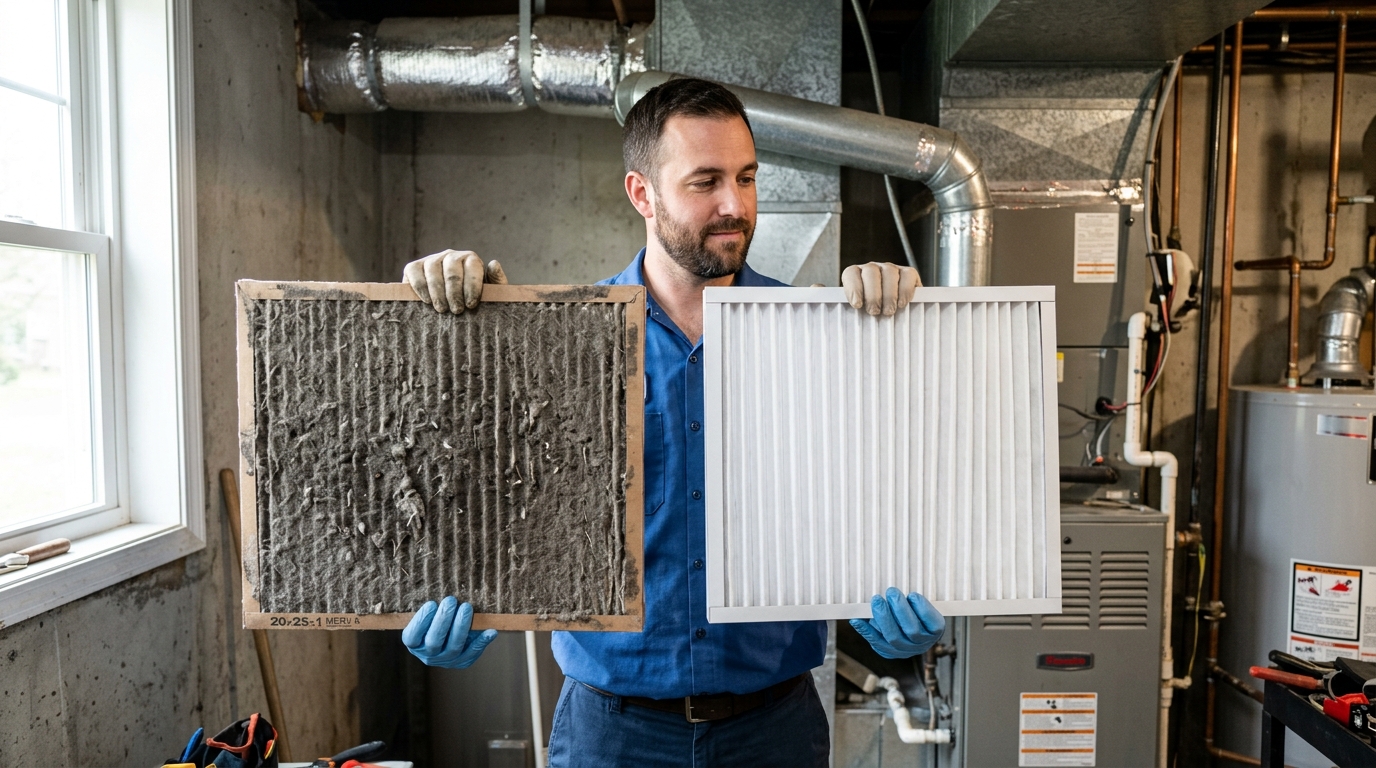
I have talked to so many Richmond homeowners who were shocked to find out that a simple dirty filter was causing their entire system to act up. A clogged air filter blocks the airflow your AC needs to breathe. When airflow gets cut off, the evaporator coil gets too cold and can freeze over. Once frozen, the system shuts down as a safety step.
Then, when things warm up a little, it tries again. And the whole cycle repeats. You get short cycling without ever knowing the filter was the problem.
The fix here is easy. Check your air filter right now. If it looks grey and packed with dust, swap it out. A clean filter every one to three months keeps your system breathing easy and prevents a lot of other problems too.
Low Refrigerant Levels and Leaks
Your AC uses refrigerant to pull heat out of your home and push it outside. When you have a refrigerant leak, the system cannot do its job. Low refrigerant levels cause the evaporator coil to ice up, just like a clogged filter does. Once that happens, the pressure safety switch trips and shuts the compressor down to prevent damage.
Here is something most people do not know: refrigerant does not just “run out” like gas in a car. If your levels are low, that means there is a leak somewhere. A licensed HVAC technician needs to find and fix that leak before adding more refrigerant. You cannot handle refrigerant yourself legally or safely. This one always needs a pro.
According to the U.S. Department of Energy, proper refrigerant charge is essential for efficient cooling. Low refrigerant is a leading cause of coil icing and compressor stress in residential HVAC systems. energy.gov — Maintaining Your Air Conditioner
More Reasons Your AC Keeps Cycling On and Off
Oversized AC Unit: Bigger Is Not Always Better
This one surprises people every time. If your AC unit is too large for your home, it will cool the space too fast. It reaches your set temperature in just a couple of minutes, shuts off, and then the temperature creeps back up almost instantly. So it turns on again. And again.
I once spoke with a homeowner in the Fan neighborhood here in Richmond who had this exact problem. They had replaced their old unit with a bigger one thinking it would cool the house faster. It did — but it also short cycled non-stop and left the house feeling humid and clammy. Why? Because the unit never ran long enough to pull moisture out of the air.
The real fix for an oversized air conditioner is replacement. A proper contractor will do a Manual J load calculation that looks at your square footage, insulation, window types, and local climate before recommending a size. There is no shortcut here.
Thermostat Problems You Should Not Ignore
Your thermostat is the brain of your cooling system. If it is in the wrong place, it gets confused. Place it near a sunny window or a heat-producing appliance and it will think your home is hotter than it actually is. It triggers the AC to run, which cools the air around the thermostat fast, and then it shuts the system off — even though the rest of your house is still warm.
A miscalibrated thermostat or one with dead batteries can send wrong signals constantly. Check the batteries first. Then look at where the thermostat is mounted. It should be on an interior wall, away from direct sunlight, vents, and any heat sources. If it is in a bad spot, a licensed HVAC technician can relocate it for you.
What Short Cycling Does to Your AC System Over Time
Higher Energy Bills and Poor Humidity Control
Every time your AC starts up, it uses the most electricity in that first few seconds. When it starts and stops twenty times instead of three, you are paying for twenty startups. Your energy bills shoot up and you still feel hot and sticky.
Richmond summers are already brutal. The heat island effect in neighborhoods like Jackson Ward or The Fan can push your AC even harder. When your system short cycles, it also fails to run long enough to pull humidity out of the air. So your home ends up cool but clammy. That sticky feeling? That is your AC not finishing its job.
Compressor Damage: The Most Expensive Consequence
Here is the part that really stings. The compressor is the heart of your air conditioner. Every single startup puts a heavy electrical and mechanical load on it. Normal cycling three times per hour is fine. But twenty-plus startups per hour? That wears the compressor down fast.
A new compressor can cost anywhere from $1,500 to $2,500 or more, and in some cases it is cheaper to replace the whole unit. This is why short cycling is never a “wait and see” problem. The longer you let it go, the more it costs you in the end.
According to ENERGY STAR (U.S. Environmental Protection Agency), HVAC compressor failure is one of the top reasons for full system replacement in residential homes. Frequent short cycling accelerates component wear significantly. energystar.gov — Central Air Conditioners
How to Fix AC Short Cycling: DIY Steps First
Check and Replace Your Air Filter
Start here. Always. Pull out your air filter and hold it up to the light. If you cannot see light through it, it is time for a new one. This is the single easiest and cheapest fix for short cycling and it takes about two minutes.
For most Richmond homes, a filter change every one to three months is enough. But if you have pets or live near a busy road, you may need to change it more often. Set a phone reminder if you tend to forget. It is a small habit that saves you big money.
Inspect Your Thermostat Location
Walk over to your thermostat and think about what is around it. Is there a window nearby that gets afternoon sun? Is there a lamp or an oven on the other side of the wall? Is it sitting right next to a supply vent?
If the answer is yes to any of those, your thermostat is reading the wrong temperature and causing your system to short cycle. Move it to an interior wall with no heat sources nearby. If you have a smart thermostat, its app may also show you unusual temperature spikes that confirm bad placement. This is a fix you can often do yourself with a screwdriver and some patience.
When to Call an HVAC Professional in Richmond VA
Signs You Need a Licensed HVAC Technician
If you have changed the filter, checked the thermostat, and your AC is still short cycling, stop guessing. These are the situations where you need a licensed HVAC technician:
You notice ice on the refrigerant lines or the outdoor unit. You hear hissing sounds near the AC, which can mean a refrigerant leak. Your home feels humid even when the AC runs. Your energy bills jumped with no other explanation. The system is more than 10 years old and cycles are getting shorter and shorter.
A trained tech will check your refrigerant levels, test the capacitors and contactors, inspect the evaporator coil, and run a full system diagnostic. Many Richmond HVAC companies offer same-day service, especially during peak summer months.
How Richmond’s Climate Makes Short Cycling Worse
Honestly, living in Richmond VA makes this whole problem worse than it would be in a drier climate. Virginia summers are hot, muggy, and relentless. High humidity means your AC has to work overtime just to manage moisture, on top of keeping you cool.
When a system short cycles in a humid climate like ours, it compounds the problem fast. The system never runs long enough to dehumidify the air. Mold can start growing in your ductwork. Your indoor air quality drops. And your family ends up breathing stale, sticky air all summer long.
This is why catching AC short cycling in Richmond VA early matters so much more here than somewhere dry like Arizona. Our climate does not give your system a break.
Conclusion
AC short cycling in Richmond VA is a real problem, and it does not fix itself. Whether the cause is a dirty filter, a refrigerant leak, a bad thermostat, or a unit that is just the wrong size, the result is always the same: higher bills, less comfort, and a shorter life for your system.
Start with the easy stuff. Check your filter. Look at your thermostat. If those do not fix it, call a licensed HVAC professional in Richmond before the problem turns into a $2,000 compressor job. A quick inspection now is always cheaper than a full system replacement later.
I would love to hear from you — has your AC been short cycling this summer? Drop a comment or reach out to a local HVAC tech you trust. Your home should feel cool and comfortable, not like a sauna.
Frequently Asked Questions
How do I know if my AC is short cycling in Richmond VA?
If your air conditioner turns on and off every two to three minutes without ever cooling your home to the temperature you set, it is short cycling. A normal system runs for 10 to 20 minutes per cycle. Watch the clock next time your AC starts up. If it shuts off in less than 5 minutes and restarts soon after, you have a short cycling problem that needs attention.
Can I fix AC short cycling myself, or do I need a pro?
Some causes, like a dirty air filter or a badly placed thermostat, you can fix yourself in minutes. But causes like refrigerant leaks, frozen evaporator coils, a failing compressor, or an oversized unit always need a licensed HVAC technician. Do not try to add refrigerant yourself because it is illegal and dangerous without proper certification.
How much does it cost to fix AC short cycling in Richmond, VA?
The cost depends on the cause. A filter replacement costs just a few dollars. A thermostat recalibration or relocation may run $75 to $200. Refrigerant recharge after fixing a leak can cost $200 to $500 or more. If the compressor needs replacing, expect $1,500 to $2,500. Getting a diagnosis early is the smartest way to keep the bill low.
Does Richmond’s humidity make AC short cycling worse?
Yes, absolutely. Richmond VA, summers are hot and very humid. Your AC needs to run long enough to pull moisture out of the air. When it has short cycles, it never does that job. The result is a home that feels cool but sticky and damp. Over time, this can lead to mold growth in your ductwork and lower indoor air quality, making the problem much worse for your family’s health.
How often should I have my AC serviced to prevent short cycling?
Most HVAC experts recommend a professional AC tune-up once a year, ideally in spring before the Richmond summer heat hits. During a tune-up, a technician will check refrigerant levels, clean the evaporator coil, test electrical components like capacitors, and inspect your system for anything that could cause short cycling. Combine that with a filter change every one to three months and your system should stay in great shape.