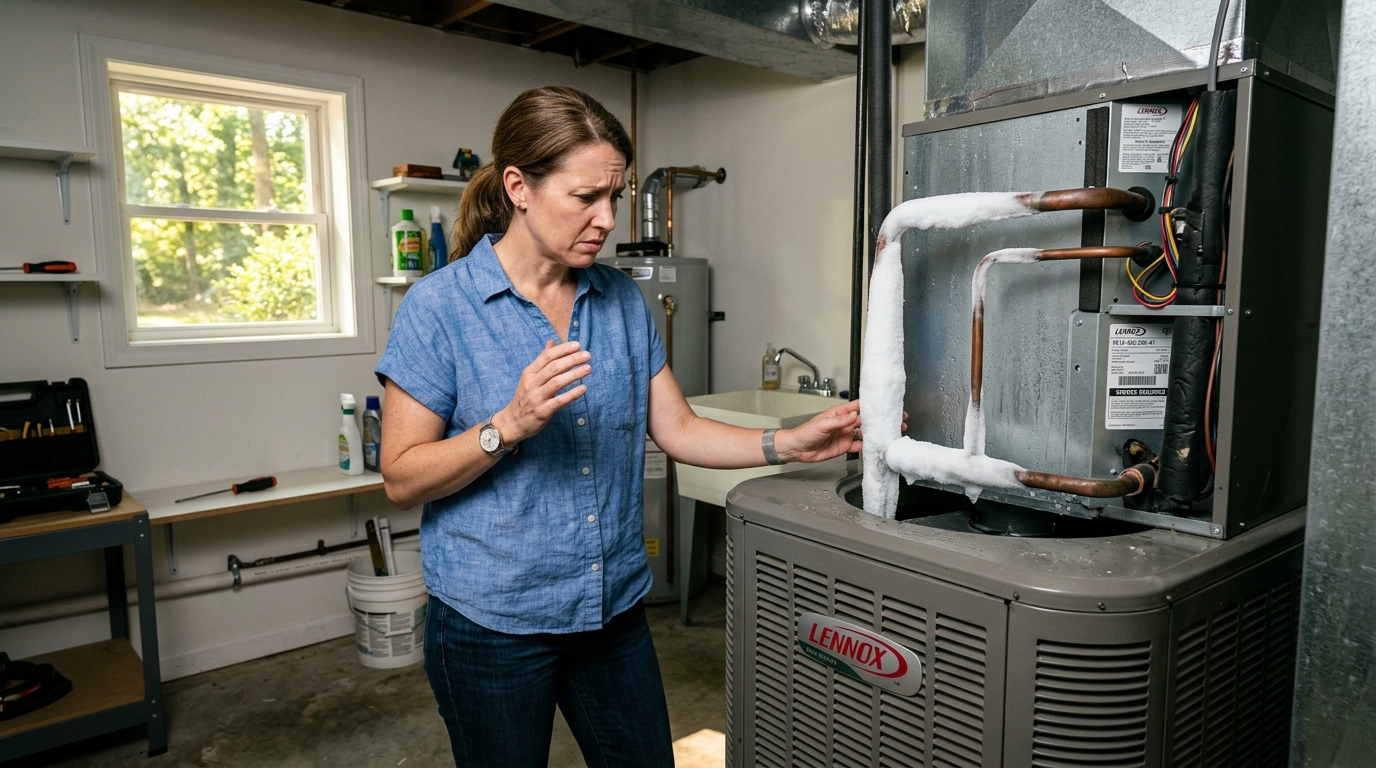
Your AC is running but the house still feels like a sauna. You check the thermostat, lower it a few degrees, and wait — but nothing changes. If this sounds familiar, you might be looking at one of the most frustrating AC refrigerant leak signs Richmond VA, homeowners face every summer.
Here’s the thing — a refrigerant leak doesn’t announce itself. It creeps in quietly, drains your wallet slowly, and can even put your family’s health at risk. I’ve talked to many homeowners in the Richmond area who ignored small signs for weeks, only to end up with a full compressor failure and a repair bill that stings.
In this guide, I’ll show you exactly what to watch for, what causes leaks, and what you should do if you spot them. Let’s keep it simple and clear.
What Is AC Refrigerant and Why Does It Matter?
Refrigerant is the liquid inside your air conditioning system that does the actual cooling. It moves heat from inside your home to the outside. Without the right amount of it, your AC simply cannot cool your home — no matter how long it runs.
You may have heard the brand name Freon. That’s just one type of refrigerant. Newer AC systems use R-410A or other eco-friendly types. Older ones may still use R-22, which is now being phased out. When refrigerant levels drop because of a leak, your whole cooling system starts to struggle.
Think of it like the blood in your body. Less blood, less life. Less refrigerant, less cool.
Why Refrigerant Leaks Are So Common in Richmond VA
Richmond summers are no joke. The heat and humidity here push AC systems hard — sometimes running almost all day. That constant use puts a lot of pressure on copper tubing, hoses, evaporator coils, and connections inside the system.
Honestly, after a few years of that kind of workload, small cracks or loose joints in the system are not unusual at all. Add in older equipment, vibration from the unit, or even poor original installation, and you have a recipe for a slow refrigerant leak.
I’ve seen cases where a unit leaked so slowly that the homeowner didn’t notice for an entire season. By the time they called a technician, the evaporator coils were frozen solid and the compressor was on its last legs.
7 Clear Signs of an AC Refrigerant Leak
Let’s get to the part you actually came here for. These are the real, practical signs that your AC may be leaking refrigerant. Some are obvious. Some are sneaky. All of them matter.
Signs 1–4: The Most Obvious Warning Signals
Sign 1
Your AC Is Blowing Warm Air
This is the big one. If your air vents are pushing out air that feels warm or just not cold enough, that’s a major red flag. You set the thermostat lower, but nothing changes. That’s because without enough refrigerant, the system literally cannot remove heat from your home’s air.
Most people assume it’s a thermostat problem. Sometimes it is. But if the thermostat checks out fine, it’s time to think about a refrigerant leak.
Sign 2
You Hear a Hissing Sound Near the Unit
That soft hissing or bubbling noise near your indoor or outdoor unit? That’s refrigerant escaping through a crack or hole. It sounds a little like air slowly leaking from a tire.
Some people hear it and think nothing of it. But that sound means refrigerant is actively leaving the system right now. Don’t wait — call a certified HVAC technician as soon as you hear it.
Sign 3
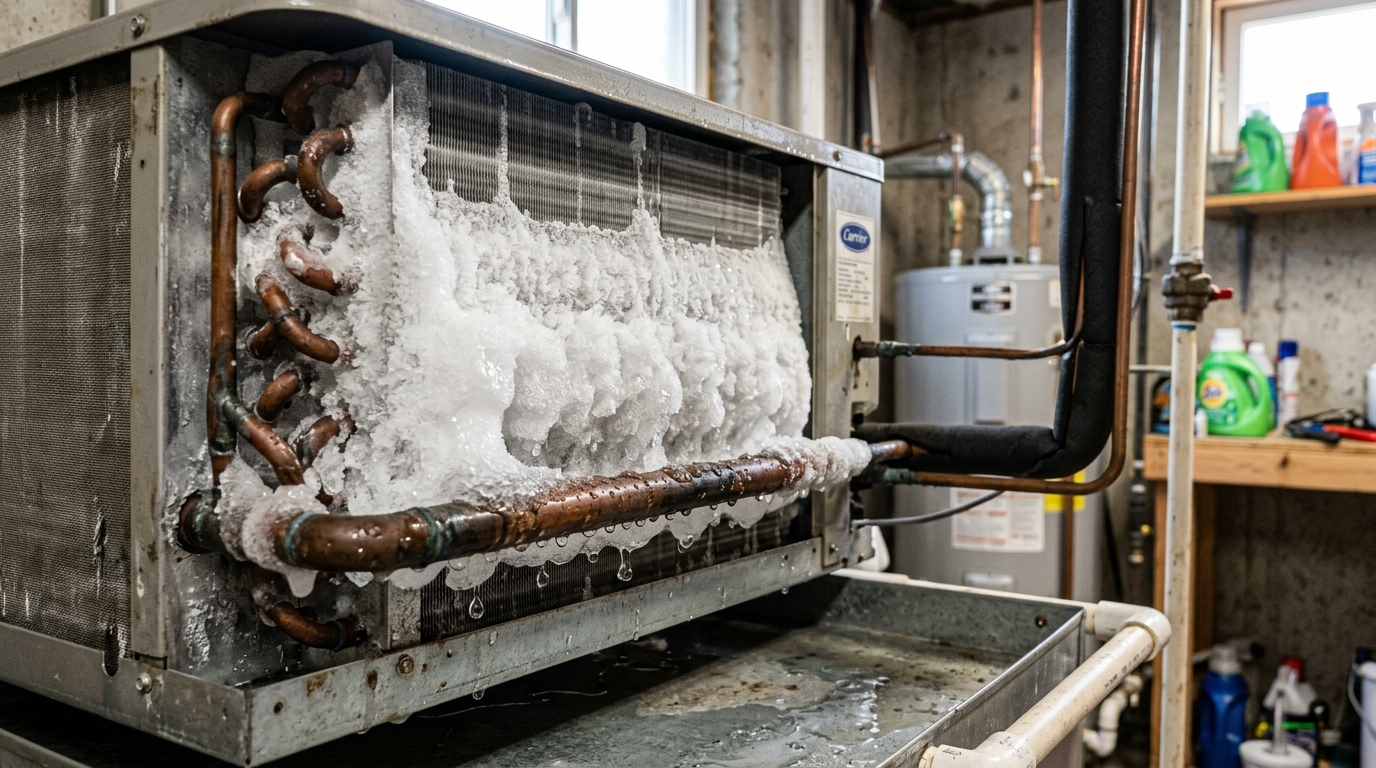
Ice or Frost on the Evaporator Coils
When refrigerant levels drop, the evaporator coils can’t absorb heat the way they should. They get too cold and moisture in the air freezes right onto them. You might see ice forming on the copper pipes near your indoor unit.
This seems harmless, but frozen coils can quickly lead to a total system breakdown. If you see ice anywhere on your AC unit in summer, that’s not normal — turn it off and call someone.
Sign 4
Skyrocketing Energy Bills
Your energy bills don’t lie. When your AC is low on refrigerant, it has to work much harder and run much longer to reach the set temperature. All that extra running costs real money.
I once helped a neighbor figure out why his July electricity bill jumped by almost $80 compared to the year before. Everything pointed to low refrigerant levels causing the system to run nonstop. A recharge and small leak fix brought the bill back down the next month.
Signs 5–7: Sneaky Signs Most Homeowners Miss
Sign 5
A Sweet or Chemical Smell in the Air
Refrigerants has a faint sweet or slightly chemical odor. Some people describe it as smelling a little like chloroform or nail polish remover. If you notice this smell near your AC unit or inside your home, that’s a real concern.
This is also where it becomes a health hazard. Breathing in refrigerant fumes can cause headaches, dizziness, or worse with long exposure. If you smell something odd and your AC isn’t cooling well, open windows and call a pro right away.
Sign 6
Your AC Runs Constantly but the House Stays Warm
A normal AC system reaches the set temperature and shuts off for a while. If you seem to run all day without ever getting your home to the right temperature, that’s called short cycling or continuous running — both signs something is off.
Low refrigerant is one of the top reasons this happens. The system keeps trying but can never quite hit the goal. It wastes energy and it wears the system out fast.
Sign 7
You See an Oily or Greasy Residue Near the Unit
Refrigerant carries a small amount of oil as it moves through the system. When it leaks, it often leaves a greasy film or oily spots near the leak point. You might see it on the copper lines, around the evaporator coil, or near connections and joints.
This is a physical trace of the leak and one that a technician will look for during a visual inspection. If you see unexplained oily residue near your AC, do not ignore it.
According to the U.S. Environmental Protection Agency (EPA), refrigerants like R-22 and R-410A must be handled by certified technicians and improper handling or venting is illegal under Section 608 of the Clean Air Act.
What Causes an AC Refrigerant Leak?
Common Causes You Should Know
Knowing the signs is great, but it also helps to understand why leaks happen in the first place. Here are the most common culprits:
| Cause | What Happens |
| Corrosion on copper tubing | Moisture and chemicals in the air slowly eat through copper lines over time, creating pinholes |
| Loose or worn connections | Vibration from the unit causes fittings and joints to loosen and leak over time |
| Factory defects | Some units leave the factory with small flaws in the coils or lines that leak slowly |
| Physical damage | Yard work accidents, animals, or weather damage can puncture lines |
| Age and wear | Older AC systems naturally develop cracks and weak spots in rubber seals and metal components |
The most common one I hear about in Richmond is corrosion from formicary acid, a type of acid that forms when formic acid from certain household products mixes with copper and moisture. It creates tiny pinholes that are almost invisible but cause real damage over time.
Is a Refrigerant Leak Dangerous?
Short answer: yes, it can be.
For your body, breathing in refrigerant fumes in a small, enclosed space can cause headaches, nausea, or shortness of breath. With longer exposure, it gets more serious. It’s not a gas you want floating around inside your home.
For your AC system, low refrigerant levels put enormous strain on the compressor. The compressor is the most expensive part of the system. When it fails because of low refrigerant, you could be looking at a $1,000 to $2,500 repair — or even full unit replacement.
For the environment, older refrigerants like R-22 (Freon) are known contributors to ozone depletion. That’s why the EPA regulates how refrigerants are handled and why only a certified technician can legally purchase and handle them.
According to a study published by the U.S. Department of Energy, an air conditioner that is low on refrigerant can use significantly more energy than a properly charged system, directly increasing your home energy costs.
What to Do If You Notice AC Refrigerant Leak Signs in Richmond VA
Can You Fix a Refrigerant Leak Yourself?
I get why people ask this. It feels like it should be a simple fix — just “top it off,” right? But here’s the honest truth: no, you cannot legally or safely handle refrigerant yourself.
Under EPA Section 608 regulations, only EPA-certified technicians are allowed to purchase, handle, and recharge refrigerants. Doing it yourself is not just risky — it’s illegal and can result in fines.
More importantly, just recharging the system without finding and fixing the leak is a waste of money. The refrigerant will leak out again in weeks or months. A real fix means finding the leak, repairing it, and then recharging the system properly.
How a Certified HVAC Technician Finds and Fixes the Leak
When a certified HVAC technician comes to your Richmond home, here’s what the process usually looks like:
First, they do a visual inspection of the whole system — looking at the evaporator coils, copper lines, connections, and condenser unit outside. They check for oily residue, frost, and physical damage.
Then they use tools like an electronic leak detector or UV dye to find the exact spot where refrigerant is escaping. UV dye glows under a special light, making even the smallest leaks easy to spot.
Once they find the leak, they repair it — sealing, brazing, or replacing the damaged section. After that, they do a system recharge to bring refrigerant levels back to the right amount. Finally, they check system pressure and vent temperature to make sure everything is working right.
The whole process might take a couple of hours for a simple leak. More serious leaks involving evaporator coil replacement can take longer and require a second visit if a part needs to be ordered.
Conclusion
Spotting AC refrigerant leak signs in Richmond VA early can save you a lot of money, stress, and discomfort. Watch for warm air from vents, ice on the coils, hissing sounds, strange smells, high energy bills, and oily residue near the unit. Any one of these is worth a call to a trusted local HVAC technician.
Don’t try to handle it yourself. Get a certified technician to find the leak, fix it properly, and recharge the system. That’s the only way to know the problem is really solved and not just temporarily patched.
If you’re in Richmond VA and you’ve noticed any of these signs, don’t wait until the middle of a heat wave. The sooner you act, the cheaper and simpler the fix usually is. I’d love to hear if this guide helped you — feel free to share your experience or ask a question in the comments below.
Frequently Asked Questions
How do I know if my AC is low on refrigerant in Richmond VA?
The most common signs include warm air blowing from your vents even when the AC is set low, ice forming on the copper pipes near the unit, a hissing sound near the system, or energy bills that are noticeably higher than normal. If you see any of these signs, call a certified HVAC technician for a proper inspection and diagnosis.
Is it safe to run my AC if it has a refrigerant leak?
It is not recommended. Running your AC with low refrigerant puts serious strain on the compressor, which is the most expensive part of the system. It also causes the unit to work harder, wasting energy and money. In some cases, refrigerant fumes can also affect indoor air quality. Turn the system off and call a pro as soon as possible.
Can I just add more refrigerant myself to fix the leak?
No. Under EPA regulations, only certified HVAC technicians are legally allowed to handle and add refrigerants. More importantly, adding refrigerant without fixing the actual leak will only give you a short-term fix. The refrigerant will leak out again. A proper repair means finding the leak, sealing it, and then recharging the system.
How much does it cost to fix an AC refrigerant leak in Richmond VA?
Costs vary based on the size and location of the leak. A simple recharge and minor seal repair can range from $150 to $400. If the evaporator coil needs replacing, costs can rise to $600 to $2,000 or more. Getting a diagnosis early almost always leads to a smaller, cheaper fix compared to waiting until the compressor fails.
How often should I have my AC checked for refrigerant leaks in Richmond VA?
A good rule is to have a professional AC maintenance check done once a year, ideally before summer starts. A trained technician will check refrigerant levels, inspect coils and connections, and catch small leaks before they become big problems. Regular maintenance is the best way to avoid unexpected breakdowns during Richmond’s hottest months.