
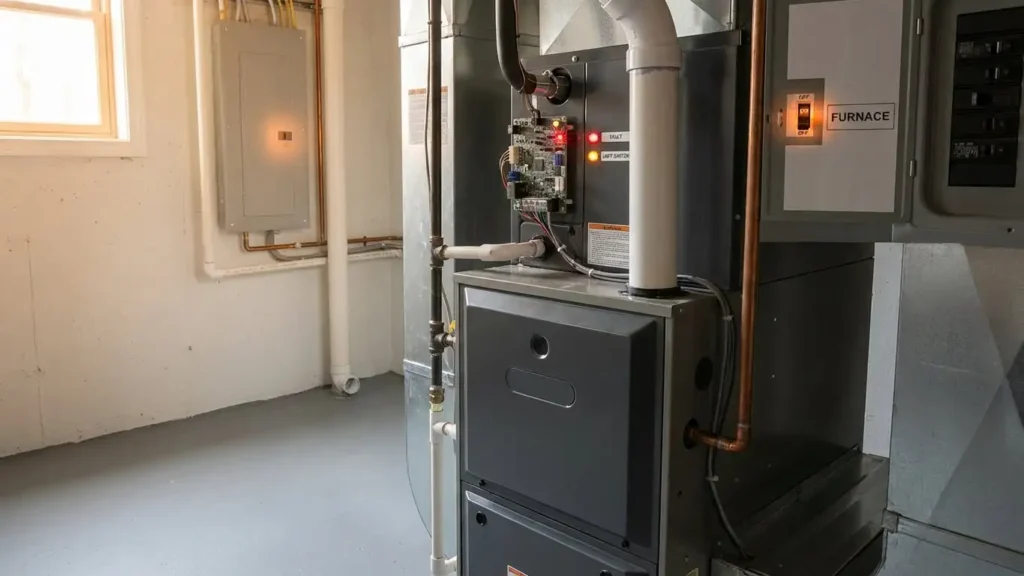
I want to start by painting a simple picture. You’re sitting at home, the heat kicks on, and then everything stops. The breaker trips again. It’s frustrating, a little scary, and honestly, most people aren’t sure what it means. I’ve seen this happen many times, and the truth is, a tripping breaker is your furnace trying to tell you something important. Let’s make this easy to understand so you know what’s really going on and what steps to take next.
Why Does a Furnace Keep Tripping the Breaker?
A furnace usually trips the breaker when something is pulling more power than it should or when a part inside is struggling to work. In many cases, this happens because of airflow problems, failing parts, or simple electrical issues. Understanding the root cause makes it easier to fix the problem safely.
Why Breaker Trips Matter for Your Furnace & Your Safety
When a breaker trips, it may look like a small thing, but it is actually your home saying, “Stop. Something is not right.” A circuit breaker is like a guard. Its job is to cut power the moment your furnace pulls too much electricity or something inside starts acting in a risky way.
This small switch can stop overheating, electrical damage, and even fires. So when it keeps tripping, it is not random. It is a warning that needs real attention.
I still think about a job I had years ago. A family called me because their breaker kept shutting off whenever the blower motor started. At first, they thought the breaker was “weak.” But when I checked, the motor was burning hot, and the wiring around it had started to melt.
The funny part is, the breaker was the only thing stopping a real disaster. If it had not tripped again and again, the damage would have been much worse. That day taught me how important it is to listen when a breaker speaks.
A breaker trip often means your furnace is working harder than it should. Problems like a clogged air filter, blocked airflow, a tired motor, or a short circuit can all push the system too far. When this happens, the breaker steps in to protect your home.
You should never force it to stay on by flipping it back again and again. Each trip is a sign that something inside the furnace needs help.
So when the breaker goes off, treat it with care. It is trying to protect you, your furnace, and your home. Taking the time to understand the cause can save you money, prevent damage, and keep you safe. And if the trips keep happening, it’s time to let a trained eye look inside and find the real problem.
Common Reasons Furnaces Trip Breakers
Airflow Issues That Strain the System
Many times, a furnace trips the breaker because it cannot breathe the way it should. When the airflow is blocked, the blower motor works harder and pulls more power than normal. A simple clogged air filter can cause this. The filter may look harmless, but once it gets packed with dust, the furnace must fight to push air through it. This extra work makes the motor heat up and draw too much electricity, which can trigger the breaker.
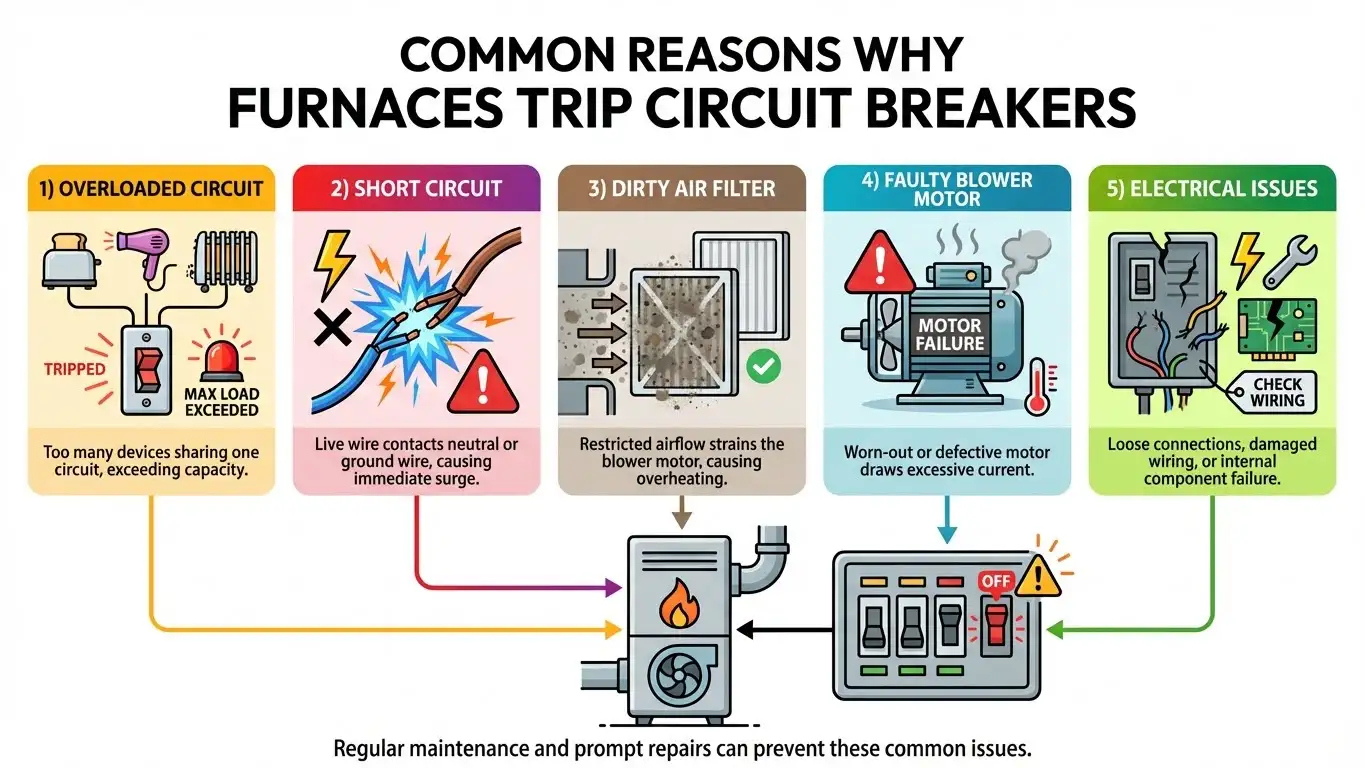
Some people also close vents in rooms they do not use, thinking it saves energy. But that little choice can cut airflow even more and push the furnace past its safe limit. When airflow drops, the system struggles, and the breaker steps in to stop damage.
Motor Problems That Increase Power Draw
Another common reason is a tired or failing blower motor. According to the U.S. Consumer Product Safety Commission, overheating and electrical faults in home heating systems are common triggers for breaker trips and are meant to prevent fire hazards. With age, the motor parts wear out.
When that happens, the motor often spins slower or makes a light rubbing sound, and it tries to pull in more power to make up for its weakness. The funny part is, the furnace does not know the motor is tired. It just keeps asking the motor to push more air.
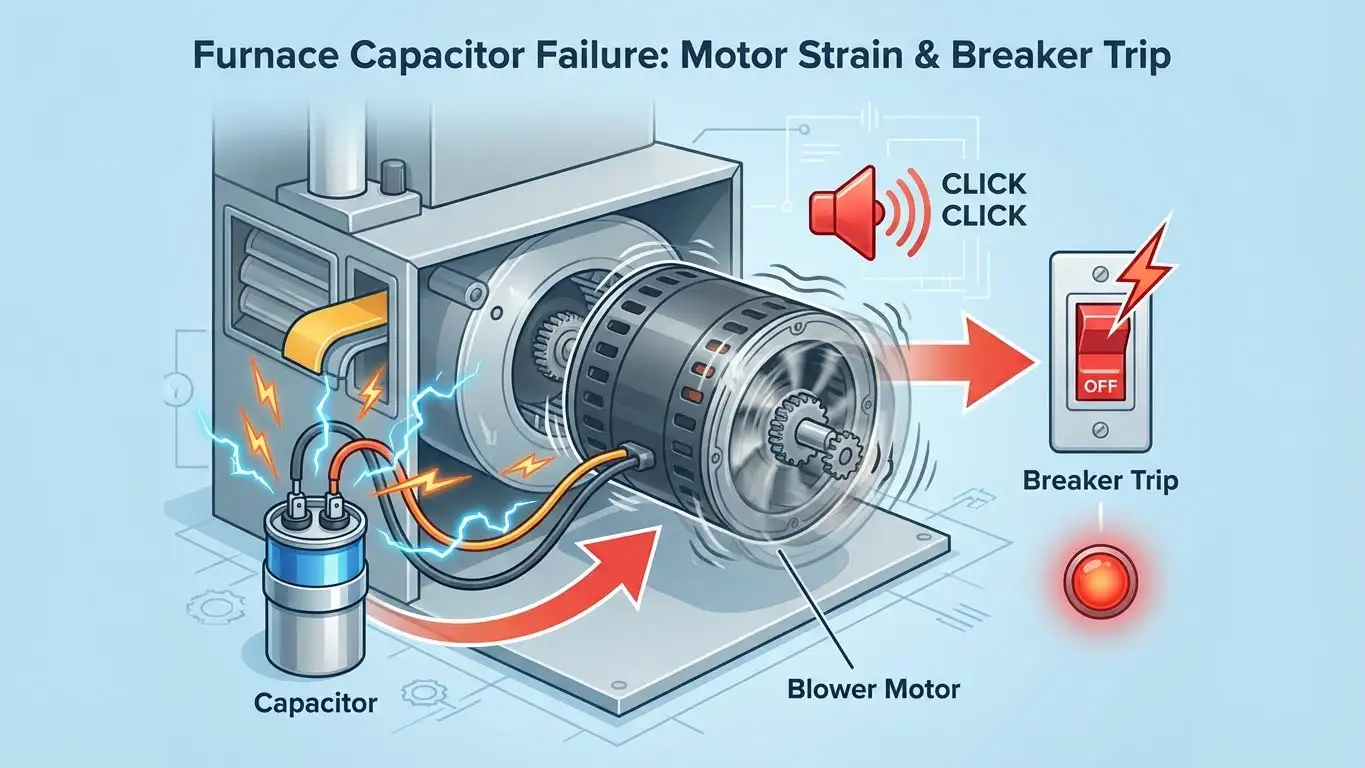
When the motor reaches a point where it cannot keep up, the electrical load spikes, and the breaker reacts fast. Even a bad capacitor, which helps the motor start, can force the motor to pull extra current. These small parts play a big role in keeping the power steady, and when they go weak, breaker trips become more common.
Wiring Faults That Create Unsafe Conditions
Inside every furnace, you will find wiring that carries power to the igniter, control board, blower, and other parts. If any of these wires become loose, bent, or damaged, the furnace may create a short circuit. A short is very serious because it lets electricity move down a path it should not take.
This causes a sharp jump in power, and the breaker trips instantly to prevent overheating or sparks. Even worn connectors or old insulation on a wire can create these problems.
Many people are surprised at how often a simple loose wire can lead to a full furnace shutdown. I always tell folks that electrical issues should never be ignored, because the breaker is often the only thing standing between a small problem and a large one.
Breaker or Panel Issues That Limit Safe Power
Sometimes the furnace is not the guilty one. The circuit breaker or even the home’s electrical panel might be too old, too weak, or simply not made to handle the furnace load. In older homes, the furnace may share a circuit with other large devices.
When everything turns on at the same time, the breaker gets overloaded. Even a healthy furnace will trip a weak breaker. Breakers also wear out over time, and a tired breaker may trip earlier than it should.
When I see repeated trips but cannot find anything wrong with the furnace, I often check the panel next. If the panel is outdated or the circuit is shared, the safest fix is to move the furnace to its own dedicated line.
When the Furnace Runs Too Long or Too Hard
A furnace may trip the breaker when it runs nonstop for long periods. This can happen on very cold days or when the thermostat is set higher than needed.
Long run times push the furnace to work harder, and any small issue inside, a weak motor, blocked airflow, or poor wiring, gets worse with time. Continuous strain raises the temperature of electrical parts and pushes the power draw up. The breaker then steps in to protect the system.
Why These Problems Should Never Be Ignored
Every breaker trip is a sign. It is the furnace asking for help, or the electrical system warning you about a risk. Whether the trip comes from airflow issues, bad wiring, motor failure, or a weak breaker, finding the cause early prevents bigger problems. A tripping breaker is never just “annoying.” It is a clear signal that something needs real attention.
The #1 Culprit: Airflow Problems That Overwork Your Furnace
Why Airflow Matters
Airflow is the first thing I check when someone tells me their furnace keeps tripping the breaker. When air cannot move the way it should, the blower motor works harder, pulls more power, and sometimes trips the breaker to protect itself. Even simple things can block the flow, and most people do not notice the signs until the furnace stops.
Common Airflow Problems
Here are the issues I see most often. Each one may look small, but together they can push your furnace past its safe limit.
- A clogged air filter that blocks air and forces the motor to strain
- Closed or blocked vents that keep warm air trapped inside the system
- Dirty blower wheel that cannot spin as fast as needed
- Duct leaks that make the furnace run longer and harder
- Overloaded blower motor trying to push air through tight spaces
When airflow drops, the motor gets hot, the electrical pull rises, and the breaker steps in to stop damage.
Signs You May Have Airflow Trouble
You can often spot airflow problems early if you know what to look for.
- Rooms stay cold even with the furnace running
- The furnace runs for a long time but does not heat well
- You hear the blower working harder than normal
- The filter gets dirty very fast
- The breaker trips shortly after the furnace starts
These clues show that air is not moving freely, and the system is trying too hard.
Simple Airflow Fixes You Can Try
Some airflow problems are easy to fix at home. Small changes can make a big difference.
- Change the air filter if it looks dusty
- Open vents and move furniture away from them
- Check return vents to make sure nothing is blocking them
- Clean around the furnace so air can move in and out
- Make sure doors inside the home are not shutting off air paths
These steps help the furnace breathe and may stop the breaker from tripping.
Airflow Problem Table
This table shows how each airflow issue affects the furnace and why it leads to breaker trips.
| Airflow Issue | What Happens Inside the Furnace | Why the Breaker Trips |
| Clogged filter | Air slows down, motor works harder | Motor pulls extra power and overheats |
| Closed vents | Pressure builds inside the system | Blower strains and draws too much current |
| Dirty blower wheel | The blower slows down | Power use increases to keep airflow moving |
| Duct leaks | The furnace runs longer | Long run time overheats the motor |
| Blocked return air | Not enough air reaches the blower | Motor overloads trying to pull air in |
When you fix airflow first, you often fix the breaker problem too. It is the simplest area to check, and in many homes, it is the root cause.
When Furnace Parts Start to Fail (Motors, Capacitors, Igniters)
Why Failing Parts Cause Breaker Trips
Inside your furnace, each part has a small but important job. When even one of these parts gets weak, the furnace starts to pull more power than it should. This extra pull can trip the breaker. A bad blower motor, a weak capacitor, or a failing igniter can all make the system work harder than normal.
When this happens, the furnace heats up, the electrical demand climbs, and the breaker steps in to stop things before real damage happens.
Blower Motor Problems
The blower motor is one of the first things I check when a breaker keeps tripping. This motor pushes warm air through your home. When it gets old, dusty, or worn out, it struggles to spin at the right speed. Here is what usually happens:
- The motor slows down and uses more power to keep turning
- The motor starts to overheat after a few minutes
- The furnace may buzz, hum, or make a tight rubbing sound
- The breaker trips when the motor hits its limit
A weak blower motor draws more electricity because it is fighting against its own wear. Many people think the furnace is the problem, but most of the time, the motor is the real cause.
Capacitor Trouble
The capacitor gives the blower motor the boost it needs to start. When the capacitor goes weak, the motor struggles to turn on. It may try again and again, pulling more and more power.
This short burst of extra power often trips the breaker. You might even hear a clicking sound when the furnace tries to start. A bad capacitor is small, but it can shut down the whole system.
Igniter and Control Board Issues
A failing igniter or control board can also lead to breaker trips. These parts control how the furnace lights and runs. When they start to fail, they may pull power in uneven bursts. These bursts make the breaker think there is a problem, and it shuts the furnace off to be safe.
Here are common signs of trouble:
- The furnace starts, but stops too fast
- Burning smell near the furnace
- Clicking that goes on longer than normal
- The breaker trips right when the furnace tries to ignite
These parts may look simple, but when they act up, the whole furnace struggles.
Why Fixing Failing Parts Matters
If failing parts stay inside the furnace too long, they can damage wires, motors, and even the breaker itself. Fixing small issues early saves money and keeps your home safe. Breaker trips are not just a “furnace problem.” They are a sign that something inside needs real attention.
Electrical Issues Inside the Furnace: Shorts, Loose Wires & Ground Faults
Why Electrical Problems Are So Serious
Electrical problems inside a furnace are different from things like airflow or worn parts. These issues can create sudden spikes in power that the breaker must stop right away. A short circuit or a ground fault gives electricity a path it should not take.
When that happens, the power rushes through too fast, and the breaker “cuts the line” to protect your home. This kind of trip happens fast; sometimes, the second the furnace turns on. When I see a breaker flip that quickly, I know there is a strong chance something electrical is going on inside the unit.
How Loose or Damaged Wires Cause Trouble
Inside the furnace, many wires feed the blower motor, the igniter, the control board, and other parts that keep everything working smoothly. If even one wire becomes loose, bent, or starts to break down, the power in that wire becomes unstable.
This can make the furnace start and stop without warning. It may also pull more power than needed, which pushes the breaker to shut off the system. In older furnaces, wire insulation can get stiff or cracked. When this insulation wears out, wires may touch metal inside the furnace, and that contact can cause a short. I have seen small wire problems create big problems in minutes.
What Short Circuits Look Like Inside a Furnace
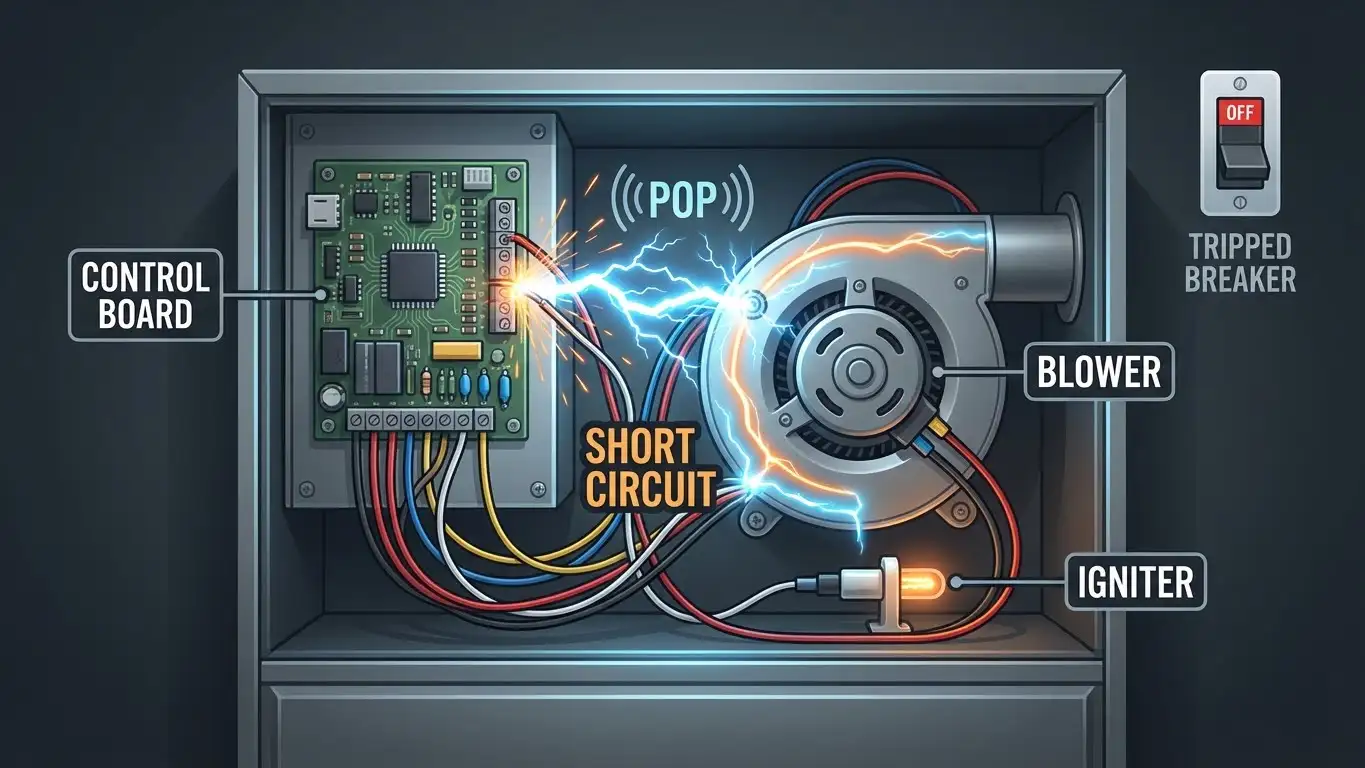
A short circuit is one of the most dangerous electrical issues a furnace can have. It happens when electricity skips its normal path and jumps to another part of the system. This can happen in many places: inside the control board, near the blower, or around the igniter.
When a short happens, the power surges fast, and the breaker must respond right away. The furnace might make a pop sound, or it may not make any noise at all before shutting down. What makes shorts tricky is that they can happen even if everything outside the furnace looks fine.
Why Ground Faults Trip the Breaker
A ground fault is another issue that forces the breaker to act. This happens when electricity slips onto a ground path instead of staying in its normal line.
When this happens, the electrical pull jumps high, and the breaker cuts power to stop a fire or shock risk. Ground faults often happen when wires touch metal or when moisture reaches a part of the furnace wiring. Even a small drip of water or a tiny crack in a wire can create this problem.
Why Electrical Issues Need Fast Action
Electrical problems are not things to push aside. A furnace can keep running with small mechanical issues, but electrical problems can become dangerous without warning. The breaker tripping is a good thing here. It is stopping the furnace from sending too much electricity through a wire that cannot handle it.
When the breaker trips because of a short or a ground fault, it is a sign that the furnace needs professional care right away. Fixing these issues early keeps your home safe and keeps your furnace running properly.
Final Thoughts
When a furnace trips the breaker again and again, it is not trying to bother you. It is trying to keep your home safe. Each trip is a small message telling you something inside needs help. Fixing the problem early protects the furnace, saves money, and keeps the heat steady when you need it most.
If the breaker keeps shutting off, do not ignore it. A quick check or a visit from a trained tech can make everything run smoothly again.
If your furnace keeps tripping the breaker and you want fast, safe, expert help, reach out to a team that knows the job inside and out. Richmond Air is ready to check your system, fix the real problem, and keep your home warm without surprise shutdowns.
You can book a service here: Richmond Air – Furnace Repair.
FAQs
Why does my furnace keep tripping the breaker?
Your furnace trips the breaker when it pulls more power than it should. This happens from things like a clogged air filter, a weak blower motor, short circuits, or problems in the electrical panel. The breaker shuts off the power to keep your home safe.
Is it safe to reset the furnace breaker?
You can reset it once. But if it trips again, stop right away. A repeated trip means something is wrong inside the furnace or the wiring. Forcing it back on can make the problem worse.
Can a dirty filter really cause a breaker to trip?
Yes, it can. A dirty filter blocks airflow. This makes the blower motor work too hard, pull too much power, and trip the breaker. Changing the filter is one of the easiest ways to fix this.
What does a short circuit in a furnace mean?
A short circuit means electricity took the wrong path. This sends a big rush of power through the furnace, and the breaker shuts off to stop damage. Shorts can be caused by loose wires, cracked insulation, or broken parts.
How do I know if my blower motor is failing?
You may hear loud humming, rubbing, or buzzing. You may also feel weak airflow in your home. If the breaker trips after the furnace starts, the blower motor may be pulling too much power.
