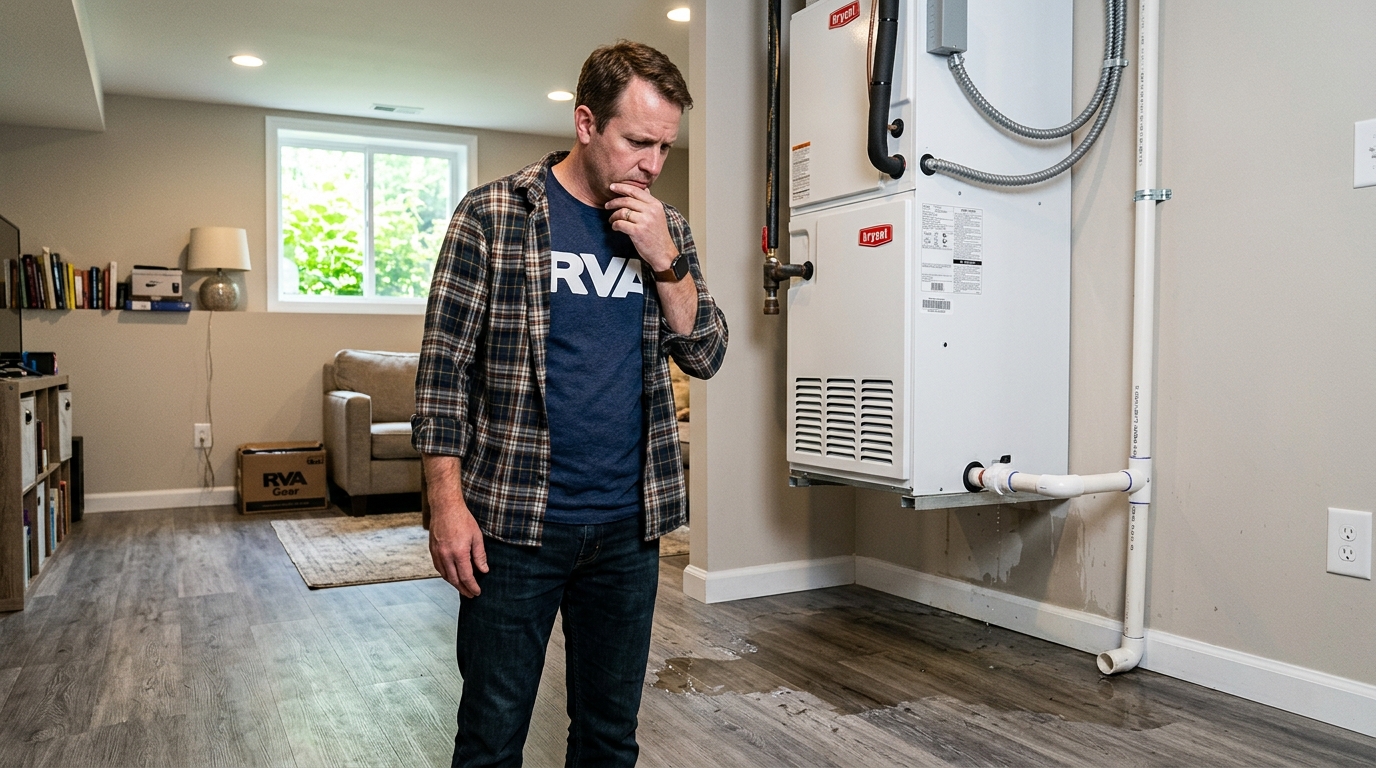
If you live in Richmond VA, you already know how brutal the summer heat gets. But what many homeowners don’t know is that AC drain line problems can quietly cause water damage, mold growth, and even a full system shutdown before you notice anything wrong. I’ve seen this happen more times than I’d like to count, and the worst part is that it’s almost always very easy to catch early if you know what to look for.
What Does the AC Drain Line Actually Do?
Your air conditioner does more than just cool the air. It also pulls moisture out of the air as it runs. As the air passes over the cold evaporator coils, water drips off those coils and falls into a condensate pan sitting below them. From there, that water travels through the AC drain line (also called the condensate drain line) and flows out of your home, usually through a pipe near your outdoor unit or into a plumbing drain.
The whole process is simple. Cool air in, water out. But when that line gets blocked, the water has nowhere to go. And that is when things start going wrong fast.
Why Richmond’s Humidity Makes Drain Line Problems Worse
Here is the thing about living in Central Virginia. Richmond summers are not just hot, they are very humid. When the air is heavy with moisture, your AC system pulls out a lot more water than it would in a drier climate. That means your condensate drain is working overtime every single day from May through September.
More moisture means more chances for algae, mold, and debris to build up inside the drain line. According to the U.S. Environmental Protection Agency, indoor humidity should stay between 30 and 50 percent to prevent mold growth, and your AC is the main tool doing that job. When the drain line gets clogged, it stops doing that job properly.
Richmond homeowners, especially those in older neighborhoods like The Fan or Church Hill with aging ductwork, face this problem more often than people in newer builds.
Common AC Drain Line Problems in Richmond VA
Clogged Condensate Drain Line
A clogged condensate drain line is by far the most common problem. Over time, dirt, dust, algae, mold, and sludge build up inside the drain pipe. It starts small. A thin coating on the pipe walls that slowly gets thicker until the pipe is fully blocked.
When the line is blocked, water backs up into the drain pan. If that pan fills up and overflows, water spills into your ceiling, walls, or floor. I personally had a neighbor in Midlothian who thought she had a roof leak for two weeks. Turned out it was a completely blocked AC drain pipe dripping into her living room ceiling. A quick drain cleaning fixed it in under an hour.
Overflowing Drain Pan and What It Means
The drain pan is like a safety net. It is there to catch water in case the line gets slow or clogged. But the pan itself can become a problem too. If it is cracked, tilted, or sitting in the wrong position, water will overflow even when there is no clog in the line.
Also, standing water sitting in the pan for too long creates the perfect place for mold and bacteria to grow. The EPA notes that condensate drain pans must be kept clean and flowing freely to avoid becoming a source of contamination in your home. If you see water pooling under or around your air handler, do not ignore it. Shut off your AC and check both the drain line and the pan.
Signs Your AC Drain Line Has a Problem
Water Leaks, Musty Smells, and System Shutdowns
There are some signs that are hard to miss once you know what to look for. The most obvious one is water. If you see water leaking around your air handler or furnace, that is a red flag right there.
But sometimes the signs are more subtle. A musty or moldy smell coming from your vents is a strong sign that mold or mildew is growing somewhere in the system, often in or around the drain pan or inside the drain line itself. That smell is not just unpleasant. It can affect your indoor air quality and cause health issues, especially for people with allergies or breathing problems.
Another sign is your AC just shutting off on its own. Many modern AC units have a float switch or safety shutoff that detects when the drain pan is full. The system turns off to stop water from overflowing. So if your AC keeps cutting out and you cannot figure out why, a clogged drain line might be the reason.
Other signs to watch for:
- Water stains on walls or ceilings near the air handler
- Visible mold around the drain line opening
- Overflowing drain pan
- Increased indoor humidity that makes the air feel sticky even with the AC running
- Frequent cycling or strange sounds from the unit
Higher Energy Bills and Weak Cooling Output
This one surprises a lot of people. When your AC drain line is clogged, your system has to work much harder to keep up with cooling and dehumidifying. The extra strain causes it to run longer cycles, use more electricity, and still not cool your home as well as it should.
So if your energy bills are suddenly higher than normal and your home does not feel as cool as it used to, do not just assume the AC is getting old. Check the drain line first. It could be something as simple as a partial clog slowing down drainage and putting stress on the whole system.
Weak airflow, rooms that feel stuffy, and that heavy humid feeling inside your house are all signs that something is off with your system’s ability to manage moisture.
What Causes AC Drain Line Clogs in Richmond Homes
Algae, Mold, and Debris Buildup
The inside of your condensate drain line stays dark and damp basically all summer long. That is exactly the kind of place where algae and mold love to grow. Over time, a greenish or brownish sludge builds up on the pipe walls. If you do not clean it out, it gets thicker until it blocks the pipe completely.
Dirt and dust from your home’s air also play a role. Your AC pulls air across the evaporator coil, and tiny particles in the air can get carried along with the water into the drain line. Add that to algae growth and you have a messy clog waiting to happen.
Anti-algae tablets dropped into the drain pan can help slow this down between cleanings, but they are not a replacement for actual maintenance.
Rust, Corrosion, and Aging HVAC Systems
Homes in Richmond with older HVAC systems deal with another layer of problems. Metal parts in and around the condensate pan and drain pipe can rust over time. Small flakes of rust and corroded metal break off and travel into the drain line, adding to the buildup and making clogs more likely.
Honestly, if your system is more than 10 to 15 years old and you have never had the drain line cleaned, there is a good chance it is partially blocked right now. An older air handler in an old Henrico or Chesterfield home is more likely to have rust issues just because of age and the high moisture levels it deals with every summer.
How to Fix a Clogged AC Drain Line: DIY Methods
Using Vinegar, a Wet/Dry Vacuum, and Pan Tablets

If you catch the problem early and the clog is not too bad, you may be able to clear it yourself. Here are some methods that actually work:
The easiest one is flushing the line with distilled white vinegar. Find the drain line access point (usually a T-shaped PVC pipe near your air handler) and slowly pour about a cup of vinegar in. Let it sit for 30 minutes, then flush with water. The vinegar helps dissolve algae and mold buildup that is not yet a full blockage.
A wet/dry vacuum is great for clearing clogs that are closer to the exit point of the drain line. Take the vacuum outside where the drain line exits the house, seal it tightly around the pipe end, and run it for a minute or two. This creates suction that pulls the clog out from the outside end.
If the clog is further in, a drain snake can physically break it up and pull it out. And once the line is clear, dropping anti-algae tablets or pan tablets into the drain pan can help keep it clear longer between cleanings.
When DIY Is Not Enough
Most guides will tell you to always try DIY first, but from what I’ve seen, that’s not always true. If you have already tried vinegar and a wet/dry vacuum and the drain is still slow or blocked, that clog is stubborn and probably deep. Pushing harder with DIY methods at that point can sometimes push the clog further in or even damage the pipe.
If your drain pan is already overflowing, if you see water stains on your ceiling, or if your AC has already shut off due to a full pan, call a licensed HVAC technician. At that point, the damage may already be starting and you want a professional to check the whole system, not just the drain. Professional drain clearing for an AC system typically costs between $100 and $150 according to industry averages, which is a lot cheaper than fixing water damage to your ceiling or walls.
How to Prevent AC Drain Line Problems All Year
Regular Maintenance and Air Filter Changes
The single best thing you can do to keep your AC drain line clear is change your air filter on time. A dirty filter lets more dust and particles into the system, which means more debris ends up in the drain line. For most Richmond homes running their AC hard all summer, changing the filter every 30 to 60 days is a smart habit.
You should also check your drain pan every few weeks during peak summer. Just a quick look to see if water is sitting in there longer than it should be. If you see standing water, that is a sign the drain is slowing down.
Pouring a small amount of diluted bleach or distilled vinegar into the drain line once a month during summer can keep algae from getting a foothold. It takes two minutes and can save you a much bigger headache later.
Annual HVAC Tune-Ups in Richmond VA
Having a licensed HVAC technician inspect and service your system once a year is the most reliable way to stay ahead of drain line problems. A good tune-up includes checking the condensate drain, cleaning the evaporator coils, inspecting the drain pan, and making sure everything is flowing the way it should.
Professional maintenance can reduce energy consumption by 10 to 25 percent according to industry data, and it catches small issues before they become big ones. In Richmond, where AC systems work extremely hard from late spring all the way through early fall, that yearly checkup is not optional. It is just good home care.
I’d love to hear from you. Have you ever dealt with a clogged drain line in your Richmond home? What worked for you? Drop your experience in the comments below.
Conclusion
AC drain line problems in Richmond VA are very common, especially given the region’s hot and humid summers. The good news is that most drain line issues are easy to spot and fix when you catch them early. Watch for water leaks, musty smells, and higher-than-normal energy bills. Clean the line regularly with vinegar and keep your air filter fresh. And if things get worse before you catch them, a licensed HVAC professional can clear the line and check your whole system quickly and affordably. A little attention now can save you from a very soggy surprise later.
Frequently Asked Questions
How do I know if my AC drain line is clogged in Richmond VA?
The most common signs are water pooling around your air handler, a musty smell coming from your vents, your AC shutting off on its own, or water stains on your walls or ceiling. If you see any of these signs during Richmond’s humid summer, check your condensate drain line right away.
How much does it cost to fix an AC drain line problem in Richmond VA?
For a simple professional drain clearing, most homeowners pay between $100 and $150. If the clog has caused water damage or your system needs more repairs, the cost can go higher. Catching the problem early is always cheaper.
Can I unclog my AC drain line myself?
Yes, for mild clogs, pouring distilled vinegar into the drain access point or using a wet/dry vacuum at the outside drain exit are both effective DIY methods. However, if the clog is stubborn or water has already overflowed, call a professional.
How often should I clean my AC drain line?
In Richmond VA, where summers are long and humid, flushing your drain line with vinegar once a month during the cooling season is a good habit. A full professional cleaning during your annual HVAC tune-up is also strongly recommended.
Why does Richmond’s humidity cause more AC drain line problems?
Because your AC removes a large amount of moisture from the air every time it runs. In Richmond’s high-humidity summers, the system pulls out significantly more water than in drier climates. More water flowing through the drain line means more chances for algae, mold, and debris to build up and cause a clog.