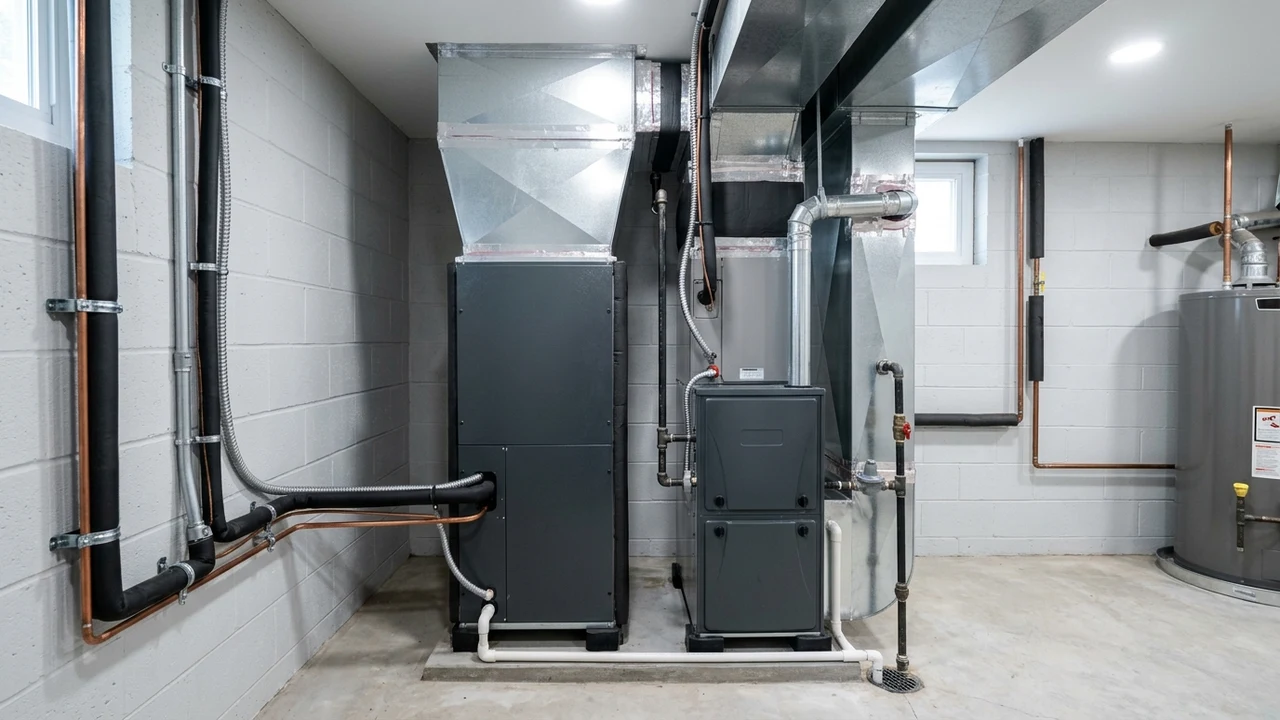
A dual-fuel hybrid system pairs an electric heat pump with a gas furnace. Smart technology picks the cheaper fuel for the outside air temperature. The heat pump warms your home on mild days, and the furnace takes over on cold ones. You get steady comfort, lower bills, and better efficiency.
Richmond weather can’t make up its mind. One winter week feels almost warm. The next brings a hard freeze that ices your windshield by morning. That back-and-forth is rough on a heating system, and it’s rough on your wallet too. A dual-fuel hybrid setup was built for this exact kind of up-and-down weather, and it may be the smartest heating choice a Richmond homeowner can make.
What Is a Heat Pump Plus Gas Furnace System?
A heat pump plus gas furnace setup is two heating tools that work as one team. Most people call it a dual fuel system or a hybrid heat system. The heat pump runs on electricity and moves warm air into your home. The gas furnace burns fuel to make strong heat when it gets truly cold outside. A smart thermostat is the brain that decides which one runs, and when.
Think of it like a car with two engines. One engine is cheap to run but weak in extreme cold. The other is powerful but costs more per hour to use. The control system flips between them based on the weather. That way your home always leans on the cheaper option first. This is the core reason a hybrid setup saves money over a single heat source.
In our years serving homes around Richmond, we’ve found this pairing fits the local climate almost perfectly. Richmond winters bounce between mild 50°F afternoons and cold nights that dip near or below freezing. A single heat pump struggles on the coldest nights. A furnace-only home wastes gas on mild days. The hybrid heat system covers both ends, so you’re never paying too much for warmth.
The Simple Idea Behind Hybrid Heating
Here’s the part most folks miss. A heat pump does not make heat the way a furnace does. It moves heat. In winter, it pulls warmth out of the outdoor air and carries it inside. That sounds strange, but there’s warmth in the air even when it feels cold to you. This “move it, don’t make it” trick is why a heat pump is so cheap to run in mild weather.
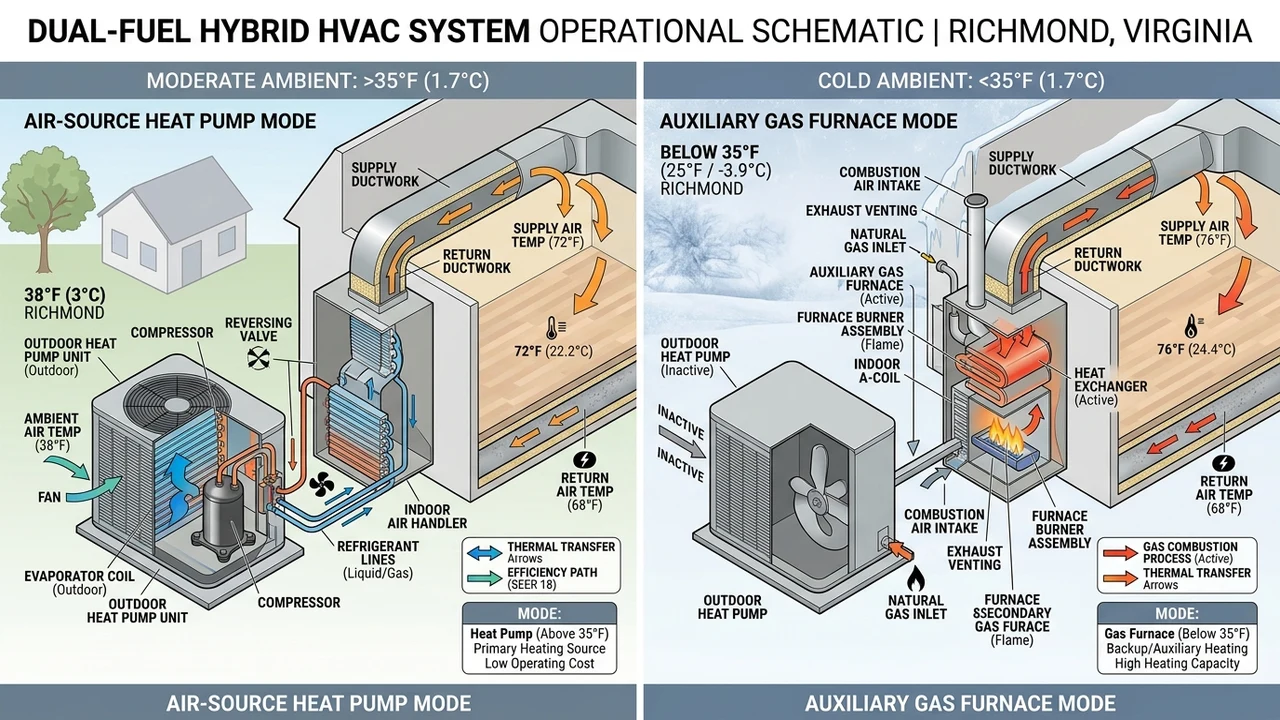
But this trick has a limit. As the outdoor temperature drops, there’s less warmth in the air to grab. The heat pump has to work harder for less result. Its cooling efficiency and heating efficiency both fade near the edges. Around the point where it starts to struggle, the gas furnace wakes up. The furnace makes fast, strong heat by burning fuel, so your rooms warm up quickly.
That switch point has a name. We call it the balance point or the switchover temperature. It’s often set somewhere between 35°F and 40°F for many Richmond homes, though a technician tunes it to your house. Above that line, the heat pump wins on cost. Below it, the gas furnace wins on both cost and speed. The whole fuel system exists to find that sweet spot for you, automatically.
Words You’ll Hear and What They Mean
HVAC talk is full of odd terms. Let me keep these simple, the way I’d explain them to a neighbor over the fence. You’ll hear these words from any contractor who works on dual fuel systems, so a quick read here saves you confusion later.
- Heat pump – an electric unit that moves heat in and out of your home. It cools in summer and heats in mild winter weather.
- Gas furnace – burns natural gas or propane to make strong heat for very cold days.
- Heat exchanger – the metal part inside the furnace that passes heat to your air without mixing in the fumes. It keeps warm air safe to breathe.
- Balance point – the outdoor temperature where your system switches from the heat pump to the furnace.
- Air handler – the indoor blower that pushes warm or cool air through your ducts.
- AFUE – a score that shows how much fuel a furnace turns into heat. Higher is better.
- SEER2 and HSPF2 – scores for how well a heat pump cools and heats. Higher means more energy efficiency.
- Dual fuel – the plain name for a heat pump and furnace working together.
Knowing these terms helps you ask better questions. It also helps you spot a fair quote from a padded one. If you want a fuller plain-English rundown of how these parts fit together, this guide on what heating, ventilation, and air conditioning really means breaks it all down for a first-time buyer.
Why a Dual-Fuel Hybrid System Matters for Richmond Homes
I’ve handled cases exactly like this before. A Richmond family called us one January because their all-electric heat pump ran nonstop, yet the house still felt cool. Their power bill had nearly doubled. The unit wasn’t broken. It was just fighting weather it couldn’t beat alone, and it was burning through backup electric heat strips to keep up.
That story points to why this setup matters so much here. Richmond sees real temperature swings in a single week. A heat pump alone can handle 80% to 90% of our winter days with ease. It’s those handful of bitter-cold nights that wreck an all-electric bill. Adding a gas furnace as the backup means the expensive electric heat strips almost never turn on. That one change is where most of the savings live.
There’s also the comfort side, which people feel before they ever see a bill. When a lone heat pump struggles in the cold, it blows air that feels lukewarm, around 90°F to 95°F at the vent. A furnace pushes air closer to 120°F to 130°F. That warmer air feels cozy, not clammy. So a hybrid home stays comfortable on the worst nights, not just cheaper.
Lower Bills and Better Efficiency Right Away
The savings show up the first cold month. Since the heat pump handles most mild days for pennies, and the furnace only fires on the coldest ones, you use each fuel where it’s strongest. Many homeowners we work with see winter heating costs drop by 20% to 30% after moving to a hybrid setup from electric-only heat. Your exact number depends on your home and habits.
Here’s a quick look at how the two heat sources compare, so you can see why splitting the work pays off.
| Feature | Heat Pump | Gas Furnace |
|---|---|---|
| Best weather | Mild days above ~40°F | Cold days below ~35°F |
| How it heats | Moves outdoor heat inside | Burns fuel to make heat |
| Running cost in mild weather | Low | Higher |
| Running cost in deep cold | Higher | Low |
| Air temperature at vent | ~90 – 95°F | ~120 – 130°F |
If you’re struggling with sky-high winter bills, we can help you take a look together. Richmond Air can run the numbers on your current setup and show you what a dual fuel heat pump upgrade would actually save. No pressure, just a clear picture.
Long-Term Savings and Home Value
The good news keeps going past year one. Because the two units share the load, neither one wears out as fast. Your heat pump isn’t grinding through freezing nights. Your gas furnace isn’t cycling on mild afternoons. Spreading the work like this can add years to both machines, which matters when a full HVAC replacement runs into the thousands.
A well-matched hybrid heat setup also helps at resale time. Buyers in the Richmond market notice low utility bills and modern, efficient equipment. A home with a smart dual fuel system and a good efficiency rating can stand out on a listing. That’s real value you get back even if you never planned to move. To me, that peace of mind is worth as much as the monthly savings.
How a Dual-Fuel Heat Pump System Works
The magic is really about timing. Your outdoor heat pump and your indoor gas furnace never both run at full blast at the same moment. Instead, the thermostat watches the outdoor temperature and switches control between them. This is what people mean when they say the technology “manages the fuel source.” It’s picking the right tool for the weather, minute by minute.
On a mild day, the heat pump runs. It sips electricity and keeps your home at a precise temperature without much cost. When a cold front rolls in and the outdoor air drops past your balance point, the thermostat shuts off the heat pump and lights the furnace. Warm air floods the ducts. Once the weather warms back up, it flips again. You never touch a thing.
Older single-stage units were clumsy about this. Today’s single speed systems are being replaced by variable-speed models with smarter chips inside. These modern models make the handoff smooth, so you rarely notice the switch. The result is reduced room temperature fluctuation and steadier warmth. A modern smart thermostat makes all of this even sharper, and picking the right smart thermostat for a Richmond home is a bigger deal than most people think.
Here’s a simple map of what runs at different outdoor temperatures. Your technician sets the exact numbers for your house, but this shows the idea.
| Outdoor Temperature | What Runs | Why |
|---|---|---|
| Above 45°F | Heat pump only | Cheapest heat, plenty of warmth in the air |
| 35°F to 45°F | Heat pump (main) | Still efficient, furnace stays off |
| Below 35°F | Gas furnace | Faster, cheaper heat when air turns bitter |
| Very cold snap | Gas furnace | Strong, steady warmth the heat pump can’t match |
The whole point of this heat pump system design is to keep you out of the expensive middle ground. You skip the pricey electric backup heat, and you skip burning gas when you don’t need to. Good temperature control like this is the heart of why hybrid setups beat single-fuel homes on cost.
Step-by-Step: Getting a Hybrid Heat System Set Up in Richmond
In my professional experience, I’ve found that a good install matters more than the brand on the box. I’ve seen top-tier equipment run poorly because the switchover was set wrong, and I’ve seen mid-range gear run beautifully because a tech took the time to tune it. So the steps below are less about shopping and more about getting the setup right for your home.
The U.S. Department of Energy notes that a properly matched heat pump can cut the electricity used for heating by about 50% compared with standard electric resistance heat, according to its Energy Saver guidance on heat pump systems. That’s a big reason getting the pairing right is worth the effort. A rushed job leaves that saving on the table.
Phase 1: Home Check and Planning
Everything starts with a real look at your home. A good contractor measures your square footage, checks your ductwork, and looks at your insulation. This step is called a load calculation, and it decides the size of your equipment. Skipping it is the number one cause of a system that short-cycles or runs forever. Roughly 8 out of 10 comfort complaints we see trace back to bad sizing, not a bad unit.
Next comes matching the parts. Your gas furnace and your heat pump must be sized and paired to work together, along with the right air handler and controls. Many trusted brands sell dual fuel heat pump models built for this, so there are plenty of good options. This is also when you’ll talk fuel type, since Richmond homes run on either natural gas or propane.
Picking the right pro is the make-or-break step here. Ask about their experience with hybrid setups specifically, not just any furnace swap. Our guide on how to choose a heating and air conditioning contractor walks you through the exact questions to ask. If you’d rather skip the guesswork, Richmond Air handles dual-fuel planning start to finish, and we’re glad to explain every choice along the way.
Phase 2: Install, Set Up, and Fine-Tune
Install day is where the plan becomes real. The crew sets the outdoor heat pump, connects it to the indoor furnace and blower, and wires the smart thermostat that runs the show. A clean install includes sealed duct connections and a tight electrical hookup. The Department of Energy points out that a gas furnace with a strong AFUE rating, often 90% to 98.5% on high-efficiency models, wastes very little of the fuel it burns. That efficiency only shows up with a proper setup.
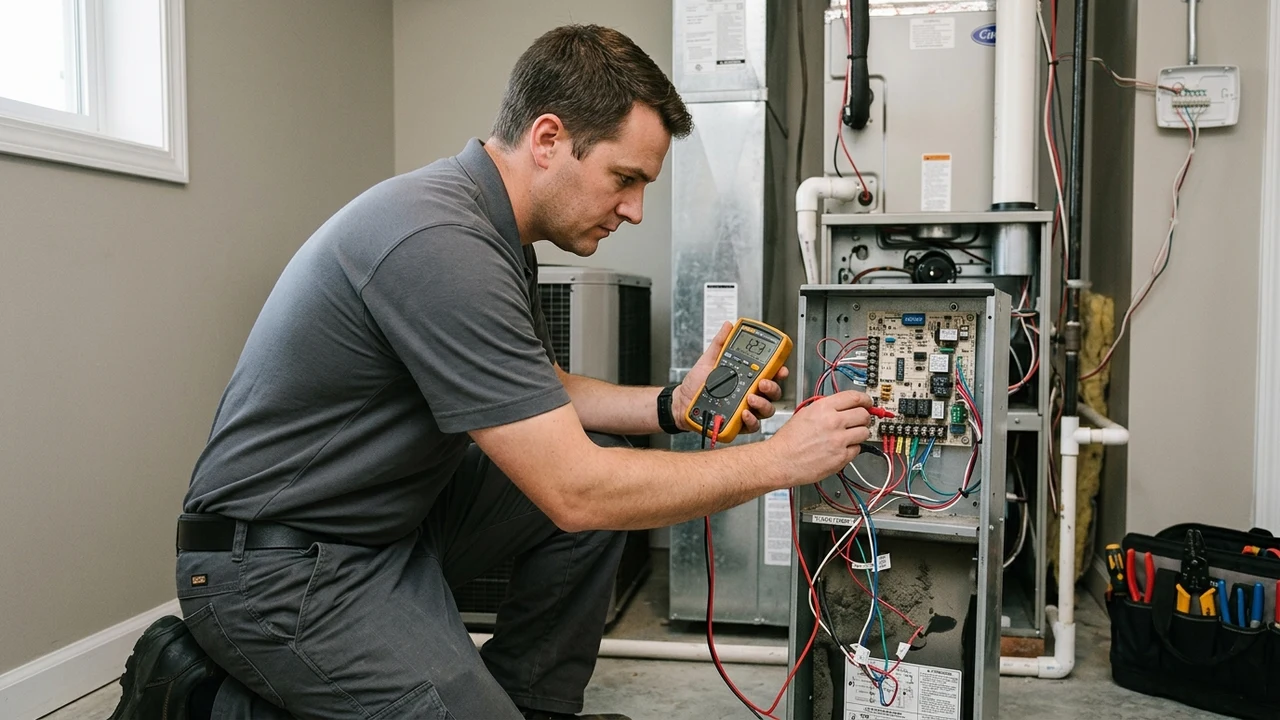
Then comes the part too many installers rush: setting the balance point. This is the outdoor temperature where your system switches from heat pump to furnace. Set it too high and you burn gas you don’t need. Set it too low and you waste electricity. A careful tech tests the switch, checks the airflow, and confirms both units cycle cleanly.
Once it’s dialed in, the technology takes over and you can mostly forget about it. Still, a yearly checkup keeps both units sharp. If the furnace side ever acts up, like tripping the breaker when it starts, that’s a sign to call before the cold hits. And if the heat pump struggles, our heat pump repair team can sort out low refrigerant, sensor faults, or a bad switchover setting fast.
Common Mistakes and Myths About Dual-Fuel Systems
Plenty of bad advice floats around about hybrid heating. Some of it comes from folks who’ve only known furnaces. Some comes from online forums repeating old info. Let me clear up the ones I hear most, because these myths cost people money and comfort every winter here in Richmond.
| Myth | The Real Story |
|---|---|
| “A heat pump can’t work in cold weather.” | It works fine down to its balance point, then the furnace takes over. That’s the whole design. |
| “Dual fuel is too complex and breaks often.” | It’s two proven machines with one smart control. Sharing the load can make both last longer. |
| “Bigger equipment heats better.” | Oversized units short-cycle, waste energy, and wear out faster. Right-sized wins. |
| “I should pick the cheapest brand.” | Install quality matters more than the badge. A great model set up wrong still runs poorly. |
The biggest real mistake I see is a wrong balance point. When it’s set poorly, the furnace runs on mild days, or the heat pump grinds through cold it can’t handle. Homeowners then blame the equipment. ENERGY STAR, run by the EPA, stresses that certified products meet strict efficiency rules, but those savings depend on correct sizing and setup. The unit is only as smart as the person who tuned it.
Another slip is ignoring maintenance until something dies. A hybrid setup has more parts working together, so a small issue in one spot can drag down the whole system efficiency. A clogged filter, a weak sensor, or low refrigerant can push the switchover off track. Deciding whether to fix or upgrade an aging unit gets easier once you understand the repair versus replacement math for Richmond homes. Honestly, most problems are cheap to prevent and pricey to ignore.
One more myth worth killing: that a dual fuel heat pump always saves everyone money. It usually does here, but not always. If your home has cheap gas and terrible insulation, a furnace-heavy plan might fit better. The right answer depends on your house, your rates, and your comfort goals. That’s why a real home assessment beats any online rule of thumb.
How to Know Your System Is Working Well
I’ve seen this pattern many times in my work: a homeowner assumes their new system is fine because the house feels warm, then gets shocked by the bill. Warmth alone isn’t proof of good efficiency. You want warm air and a fair bill. So it helps to track a few simple signs through the season.
Your first clue is the electric heat strip. In a healthy dual fuel system, the backup electric heat almost never runs, because the gas furnace covers the cold. If your bill spikes hard in winter, that backup heat may be firing when it shouldn’t. A well-tuned setup should keep that expensive strip heat down to a tiny fraction of your total winter runtime, often near 5% or less.
Watch your comfort, too. The air should feel warm at the vents, and rooms should hold a steady temperature without big swings. If you feel cold drafts or hear the system flip back and forth every few minutes, that’s short-cycling. Good temperature control means long, calm cycles, not frantic ones. These simple signs tell you more than any spec sheet.
Here’s a quick cheat sheet for reading your own system’s health.
| What to Check | Good Sign | Warning Sign |
|---|---|---|
| Winter electric bill | Small, steady rise | Sudden big jump |
| Air at the vents | Warm on cold days | Lukewarm or cool |
| Cycle length | Long, calm runs | Frequent on/off |
| Switchover behavior | Smooth, unnoticed | Loud or constant flipping |
| Room temperature | Steady in every room | Hot and cold spots |
If a few of those warning signs sound familiar, don’t wait for a breakdown. We can run a full check, test the switchover, and confirm your balance point is set for Richmond’s weather. Richmond Air is happy to look things over and give you a straight answer about what, if anything, needs fixing.
Frequently Asked Questions
Is a dual fuel heat pump worth it?
For most Richmond homes, yes. Our climate has exactly the kind of temperature swings these systems are built for. You get cheap heat-pump warmth on mild days and strong gas furnace heat on cold ones. Many homeowners see winter costs fall by 20% to 30% versus electric-only heat. The upfront cost is higher than a plain furnace, but the monthly savings and steadier comfort usually pay it back over time. If your home has old, single-fuel equipment, it’s well worth pricing out a hybrid upgrade.
What is the 20 degree rule for heat pumps?
The 20 degree rule is a simple guide about how hard a heat pump can work in cold. It says a heat pump heats best when the outdoor air stays within about 20 degrees of your target indoor temperature. So if you want 68°F inside, the heat pump is happy down to roughly the high 40s. Once it gets much colder than that gap, the unit strains and efficiency drops. In a dual fuel home, that’s exactly when your gas furnace takes over, so you never feel the pinch.
Why is my electric bill so high with a heat pump?
The usual reason is backup electric heat. When a heat pump can’t keep up in the cold, many systems switch on electric resistance strips, and those strips are power-hungry. If they run often, your bill climbs fast. Bad sizing, a wrong balance point, low refrigerant, or a dirty filter can all force that backup to run more than it should. The fix in a dual fuel system is letting the gas furnace cover the cold instead. A quick tune-up often finds the cause.
Which heat pump brands should I avoid?
I won’t trash specific names, because the real answer surprises people: install quality beats brand almost every time. I’d steer clear of unknown off-brands with no local parts, no service network, and no ENERGY STAR listing, since you can get stranded when something breaks. Stick with established makers that offer dual fuel heat pump models and have techs in your area who know them. Then focus your energy on hiring a careful installer who sizes the unit right and tunes the switchover. A great model set up badly still runs badly.
At what temperature does a dual-fuel system switch to gas?
It depends on your home, but many Richmond setups switch around 35°F. Above that, the heat pump runs because it’s cheaper. Below it, the gas furnace kicks in because it’s both cheaper and faster in the cold. This switch point is the balance point, and a technician sets it based on your gas rates, electric rates, and how well your home holds heat. It’s a setting you can fine-tune, and getting it right is where a lot of the savings come from.
Final Thoughts
Richmond’s stop-and-start winters ask a lot of a heating system. A heat pump alone gets tired in the cold. A gas furnace alone wastes money on mild days. Put them together in a smart dual fuel setup, and each one does what it’s best at. You end up with lower bills, warmer air on the worst nights, and equipment that lasts longer because it never overworks.
The two things that decide your results are simple: right sizing and a well-tuned balance point. Get those right, and the technology quietly handles the rest all season. Get them wrong, and even great gear disappoints. That’s why the installer matters as much as the equipment itself.
If you’re weighing a hybrid upgrade or just want to know if your current system is set up for our local weather, Richmond Air can help you find the right heating solution for your home. We’ll walk your setup, check the numbers, and give you honest options. Have you noticed your winter bills creeping up lately? That’s usually the first sign it’s worth a closer look.