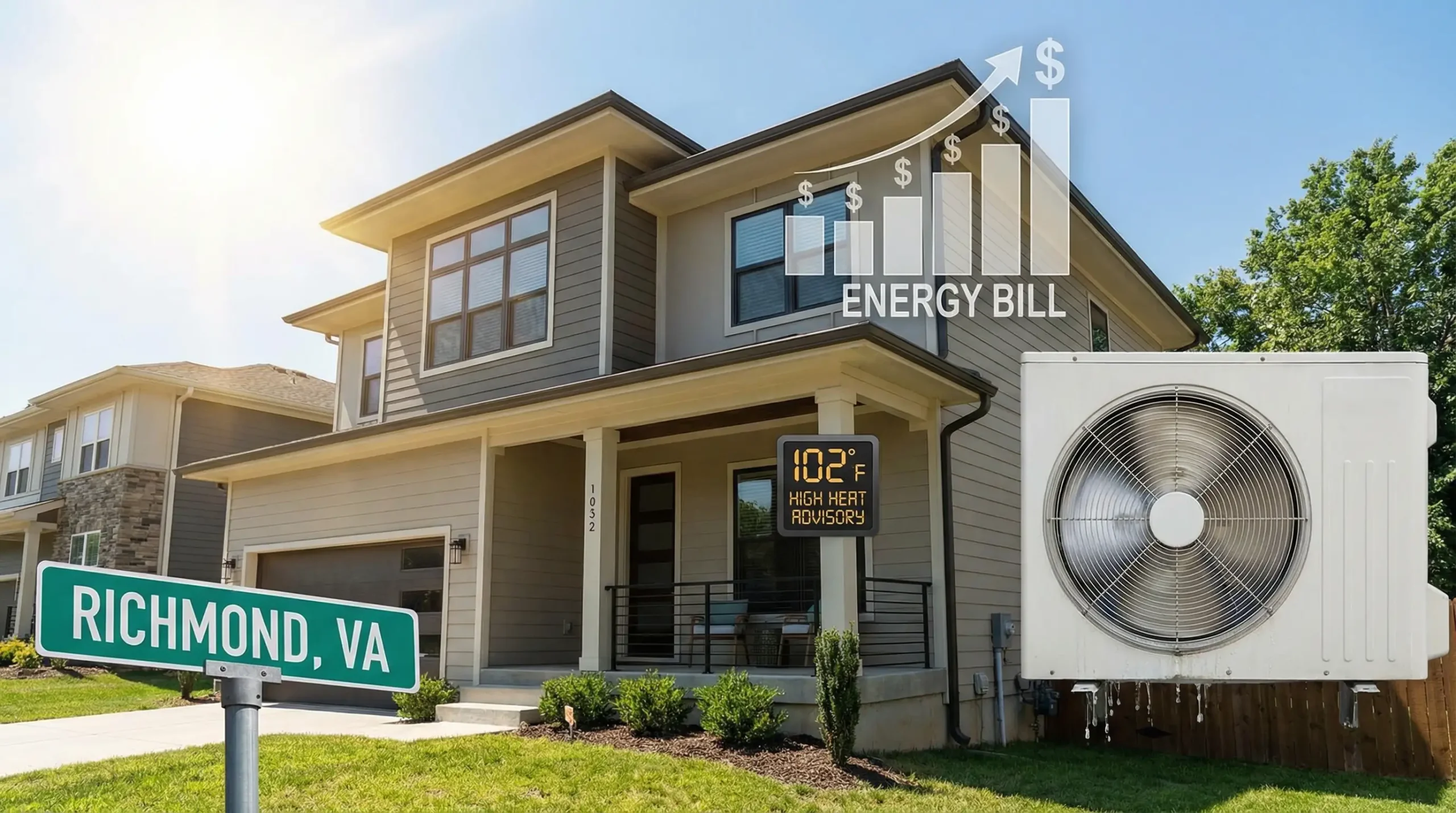
Summer in Richmond feels different these days. You step outside in July and the air hits you like a wall. It’s thick, heavy, and seems to wrap around you. The heat doesn’t just warm you up anymore. It makes you uncomfortable fast.
I remember when my neighbor, Mrs. Chen, opened her Dominion Energy bill last August and nearly dropped her coffee. The number was almost double what she paid the year before. She wasn’t alone. Thousands of Richmond families are watching their cooling costs climb higher each summer.
Why Richmond Summers Are Getting Hotter
Richmond’s Temperature Trends: The Numbers Don’t Lie
Richmond’s summer temperatures have changed a lot over the past few decades. We’re not imagining it. The data backs it up.
According to a study published by Climate Central, Richmond summers between 1970 and 2024 are now 2.7°F hotter on average. That might not sound like much, but when you’re talking about an entire season, it adds up fast. The National Weather Service shows that a typical summer day in Richmond hits about 90°F, with overnight lows around 70°F. But here’s the catch. That’s just the actual temperature.
When you add in the humidity that Richmond is famous for, the “feels like” temperature can rocket up to 105-110°F. Your body feels the heat more intensely. Your AC has to work much harder to keep up.
The summer of 2025 brought new warnings. The National Weather Service Climate Prediction Center gave Richmond a 40-50% chance of experiencing hotter-than-average temperatures. That prediction came true for many neighborhoods. July and August felt brutal. Many residents ran their air conditioners non-stop just to keep indoor spaces comfortable.
How Climate Change Is Reshaping Virginia Summers
Climate change isn’t some distant problem anymore. It’s showing up in our monthly utility bills.
Richmond sits in a vulnerable spot. The city has what experts call “heat islands.” These are areas where roads, parking lots, and buildings trap extra heat. During summer, these spots can be 10-15 degrees hotter than nearby areas with more trees and green spaces.
Research shows these heat islands often show up in low-income neighborhoods. Areas like the East End, Southside, Jackson Ward, and Gilpin Court face the worst heat. Many of these neighborhoods were historically redlined. They received less investment in infrastructure. The buildings are older. The trees are fewer. The heat gets trapped more easily.
When temperatures climb, AC units in these areas run constantly. They struggle to cool homes that weren’t built with modern insulation. The result? Higher energy bills for families who can least afford them.
The Direct Connection Between Heat and Your Energy Bills
Why Your AC Works Harder When It’s Hot Outside
Your air conditioner has one job. Remove heat from inside your home and push it outside. But when it’s already blazing hot outside, this job becomes much harder.
Think of it like this. If you’re carrying a heavy box upstairs, you use more energy than walking on flat ground. Your AC faces the same challenge. When outdoor temperatures hit 95°F or higher, your system has to work overtime to create a 20-25 degree difference between inside and outside.
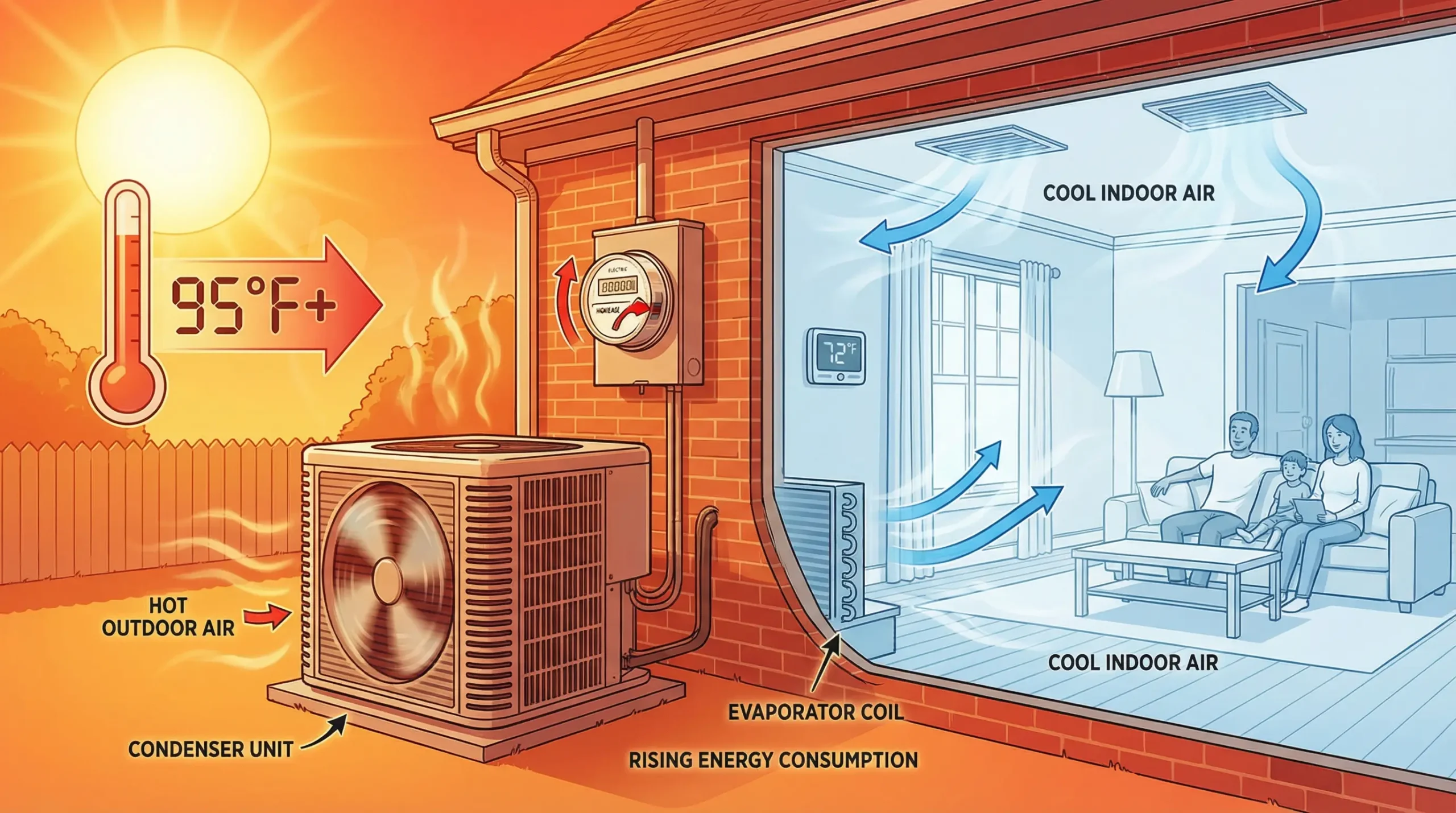
The compressor runs longer. The fan spins more. Everything uses more electricity. According to the U.S. Department of Energy, cooling costs can go up by 5-10% for each degree you lower your thermostat. When temperatures outside keep climbing, that percentage adds up fast on your monthly bill.
I talked to a technician last summer who said he saw systems running 18-20 hours a day during heat waves. That’s not normal. A well-maintained system in moderate weather should cycle on and off throughout the day. But extreme heat forces it into constant operation mode.
The Humidity Factor: Richmond’s Double Challenge
Temperature alone doesn’t tell the full story. Richmond’s humidity makes everything worse.
High humidity means there’s more moisture in the air. Your AC doesn’t just cool the air. It also removes moisture. This dehumidification process uses a lot of energy. When humidity levels stay between 60-80% during the summer months, your system works double duty.
You might set your thermostat to 75°F. But if the humidity is high, it still feels sticky and uncomfortable inside. So you lower the temperature even more. The cycle continues. Your AC runs longer. Your energy use climbs higher.
Most experts agree that indoor humidity should stay between 30-50% for comfort. When Richmond’s outdoor humidity regularly exceeds 70%, your AC struggles to hit that target. The longer it runs, the more you pay.
What Rising Temps Mean for Your Monthly Costs
Average AC Bills in Richmond: Before and After
Let me share some real numbers. An average Richmond home using a 3-ton central AC system might have paid around $150-180 per month for cooling five years ago. Today, that same home often sees bills between $200-250 during peak summer months.
That’s a 30-40% increase. Some of it comes from rate increases. But most of it comes from longer run times caused by hotter weather.
For a family on a tight budget, an extra $50-70 per month can mean tough choices. Do you keep the house comfortable or cut back on groceries? Do you let the temperature rise or skip other bills?
A study from the Virginia Community Climate Collaborative found that more than 28,000 Richmond households now spend more on energy than what’s considered affordable. Over 20,000 households face a “very high” energy burden. That means 10% or more of their monthly income goes to heating and cooling costs.
These aren’t just statistics. They’re real families facing real struggles.
Energy Burden: When Cooling Becomes Unaffordable
Energy burden hits hardest in neighborhoods that were already struggling. Low-income households in Richmond face an average energy burden of 17%. That’s nearly double what’s considered manageable.
When temperatures spike, these families face an impossible situation. They can’t afford to run the AC as much as they need. Their homes get dangerously hot. Children, elderly family members, and people with health conditions suffer the most.
Older buildings make the problem worse. Poor insulation lets cool air escape. Single-pane windows let heat pour in. Outdated AC systems run inefficiently. Small air leaks around doors and windows add up to big losses.
Even small temperature fluctuations can push a family into financial instability. A week of 100-degree days can add $50-75 to a monthly bill. For someone living paycheck to paycheck, that’s devastating.
Smart Ways to Lower Your AC Bills This Summer
Thermostat Settings That Actually Save Money
Your thermostat gives you the most control over your cooling costs. Use it wisely.
The Department of Energy recommends setting your thermostat to 78°F when you’re home and awake. I know that sounds warm. But your body adjusts faster than you think. Wear lighter clothing. Use fans to circulate air. You’ll feel comfortable.
When you leave for work, raise the temperature to 85°F or higher. Don’t turn the AC completely off. That makes your system work too hard to cool a super-hot house later. Just reduce the cooling while you’re away.
At night, you can lower the temperature slightly. Many people sleep better in cooler rooms. Set it to 72-75°F during sleeping hours.
For every degree you raise your thermostat for 8 hours, you save about 1% on cooling costs. That adds up over a full summer.
Smart thermostats make this even easier. They learn your schedule. They adjust automatically. You can control them from your phone. Many Richmond families report saving 10-25% on cooling costs after installing a smart thermostat.
The Power of Proper Maintenance
Regular maintenance keeps your AC running efficiently. It’s like getting an oil change for your car. Skip it, and you’ll pay more later.
A professional tune-up includes several important steps. Technicians clean the coils. Dirty coils can’t transfer heat well. They check refrigerant levels. Low refrigerant forces your compressor to work harder. They inspect electrical connections. Loose connections waste energy and create safety risks.
They also clean or replace air filters. A clogged filter restricts airflow. Your system has to run longer to cool your home. Change your filter every 1-3 months during heavy use. If you have pets or allergies, check it monthly.
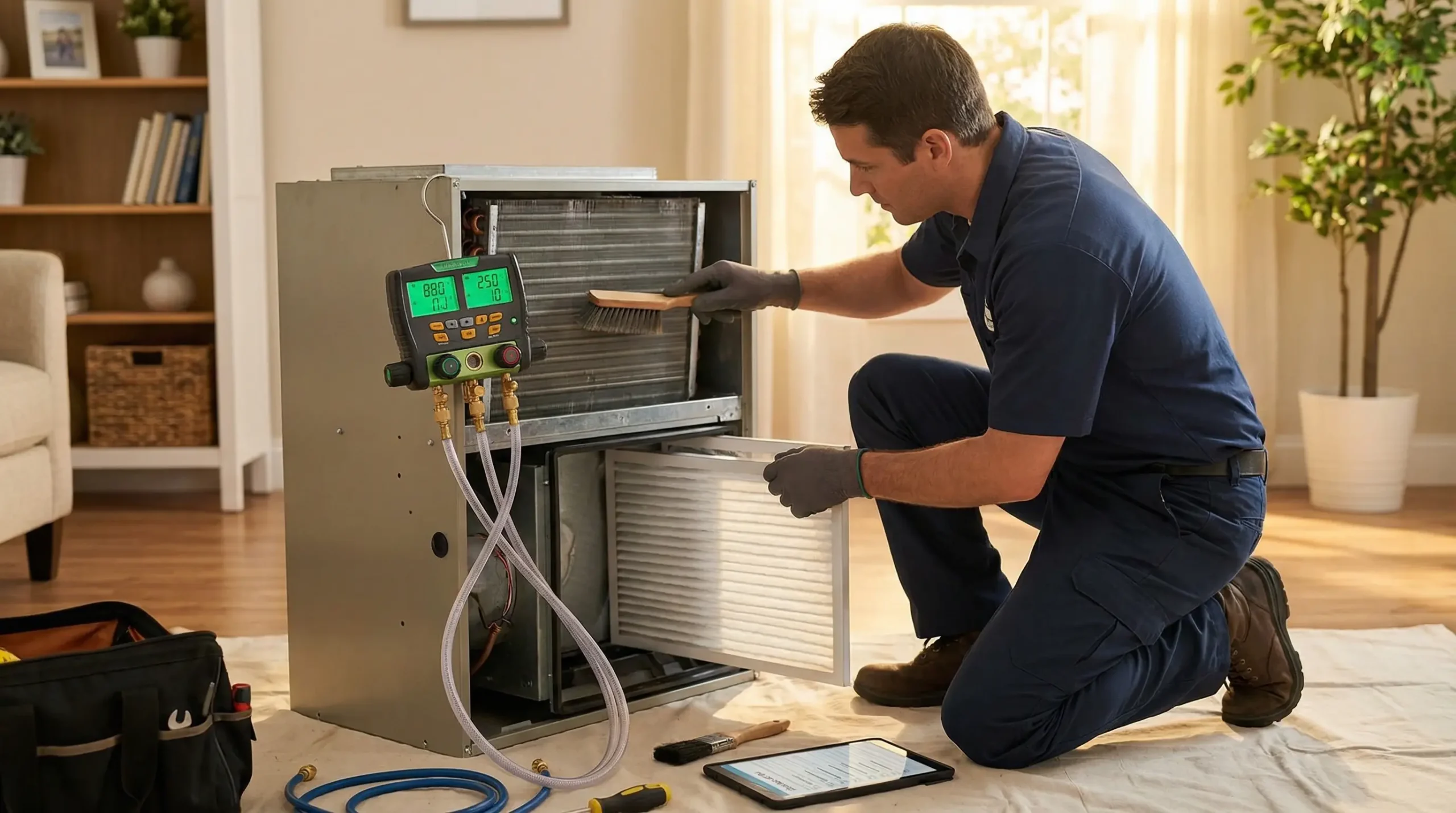
According to research published by the U.S. Department of Energy, regular maintenance can improve your AC’s efficiency by 10-25%. That translates directly to lower bills.
I recommend scheduling maintenance in the spring before the heat arrives. Catch small problems early. Avoid emergency breakdowns during heat waves.
Keep your outdoor unit clean, too. Remove leaves, grass clippings, and debris. Make sure there’s at least 2 feet of clear space around it. Trim back bushes and plants. A clean unit breathes better and works more efficiently.
When to Upgrade Your AC System
Signs Your Old Unit Can’t Keep Up
Sometimes maintenance isn’t enough. Old AC systems eventually can’t handle Richmond’s intense heat.
Watch for these warning signs. Your system runs constantly but never reaches the set temperature. Some rooms stay hot while others get too cold. You hear strange noises like grinding, squealing, or banging. Your energy bills keep climbing even though you haven’t changed your usage patterns.
If your AC is 10-15 years old and needs frequent repairs, replacement often makes more sense than fixing it again. Older units use R-22 refrigerant, which is being phased out. Repairs become more expensive as parts get harder to find.
Calculate the cost carefully. If a repair costs more than half the price of a new system, and your unit is aging, replacement usually saves money in the long run.
Modern Efficiency: What New Systems Offer
New AC systems offer impressive efficiency improvements. They use much less energy to produce the same cooling.
SEER ratings measure efficiency. Older systems might have a SEER of 8-10. Modern Energy Star-certified units start at SEER 14.5 or higher. Some reach SEER 20 or more. Higher SEER means lower operating costs.
A new high-efficiency system can cut your cooling costs by 20-40% compared to an old unit. For a Richmond family paying $250 monthly in summer, that’s $50-100 in savings every month.
New systems also handle humidity better. They provide more consistent temperatures. They run quieter. Many come with smart features built in.
The Inflation Reduction Act offers rebates for high-efficiency systems. Some Richmond residents can get tax credits covering up to 30% of installation costs. Utility companies also offer rebates for Energy Star equipment.
According to data from Richmond Air, most homeowners pay between $5,000 and $12,500 for a new central AC system. The average runs about $7,500 for a properly sized 3-4 ton unit. Factor in rebates and long-term energy savings. The investment often pays for itself within 5-7 years.
Conclusion
Richmond’s summers aren’t getting easier. Temperatures keep climbing. Humidity stays high. Your AC works harder every year.
But you’re not helpless. Smart thermostat settings save real money. Regular maintenance keeps systems running efficiently. Clean filters and outdoor units make a big difference. When the time comes, upgrading to a modern high-efficiency system can cut your cooling costs significantly.
Rising temperatures are a challenge we all face together. Some neighborhoods feel it more than others. But everyone can take steps to manage their energy use and lower their bills.
Start with the simple things. Adjust your thermostat. Change your filter. Schedule maintenance. These small actions add up to big savings over a full summer.
Stay cool. Stay smart. Take control of your cooling costs.
FAQs
How much hotter has Richmond gotten in recent years?
Richmond’s average summer temperatures have increased by 2.7°F between 1970 and 2024. The “feels like” temperature often reaches 105-110°F when you factor in humidity. This extra heat forces AC systems to work much harder and run much longer.
What is energy burden, and why does it matter?
Energy burden means the percentage of your income that goes toward energy costs. Anything over 6% is considered high. In Richmond, over 20,000 households spend 10% or more of their income on heating and cooling. That leaves less money for food, medicine, and other needs.
What’s the best thermostat setting to save money in Richmond summers?
Set your thermostat to 78°F when you’re home. Raise it to 85°F when you’re away. Lower it to 72-75°F at night if needed. Every degree you raise the thermostat saves about 1% on cooling costs over an 8-hour period.
How often should I change my air filter during the summer?
Check your filter monthly during heavy AC use. Most filters need replacement every 1-3 months. If you have pets, allergies, or run your AC constantly, change it monthly. A dirty filter can increase your energy use by 15% or more.
When should I replace my AC instead of repairing it?
Consider replacement if your unit is 10-15 years old, needs frequent repairs, uses old R-22 refrigerant, or if repair costs exceed half the price of a new system. New units with high SEER ratings can cut your cooling costs by 20-40%.