If you want to know how to prevent AC freeze-ups in Richmond summers, you are not alone. Richmond summers are no joke. Temperatures in July can hit 90°F or higher, and the humidity makes it feel even worse. The last thing you need on a hot August afternoon is to find ice on your AC unit and a house that feels like a sauna. I have been there myself. My evaporator coil froze solid one summer, and it took almost two days to fix. Trust me, a little care upfront saves a lot of stress later.
Why Does Your AC Freeze Up in Summer?
The Real Reason Ice Forms on Your AC
This might sound strange. Why would your AC freeze up when it is hot outside? The answer is about how your system works. Your AC uses refrigerant to pull heat out of your home. When something goes wrong with airflow or refrigerant levels, the evaporator coil gets too cold. It drops below 32°F. Water vapor in the air then turns to ice right on the coil.
Once ice forms, it blocks even more airflow. It gets worse fast. The whole system can stop cooling your home even though it is still running. That is the sneaky part. You think it is working, but it is not.
Common Causes Richmond Homeowners Face
In Richmond, the most common causes of AC freeze-ups are dirty filters, low refrigerant, blocked air ducts, and wrong thermostat settings. The humid subtropical climate here puts extra stress on your system because it runs almost non-stop during peak months. More run time means more chances for small problems to turn into big ones.
Honestly, most Richmond homeowners do not think about their AC until something goes wrong. I get it. But knowing these causes puts you way ahead of the game.
Change Your Air Filter Regularly
How a Dirty Filter Causes Freeze-Ups
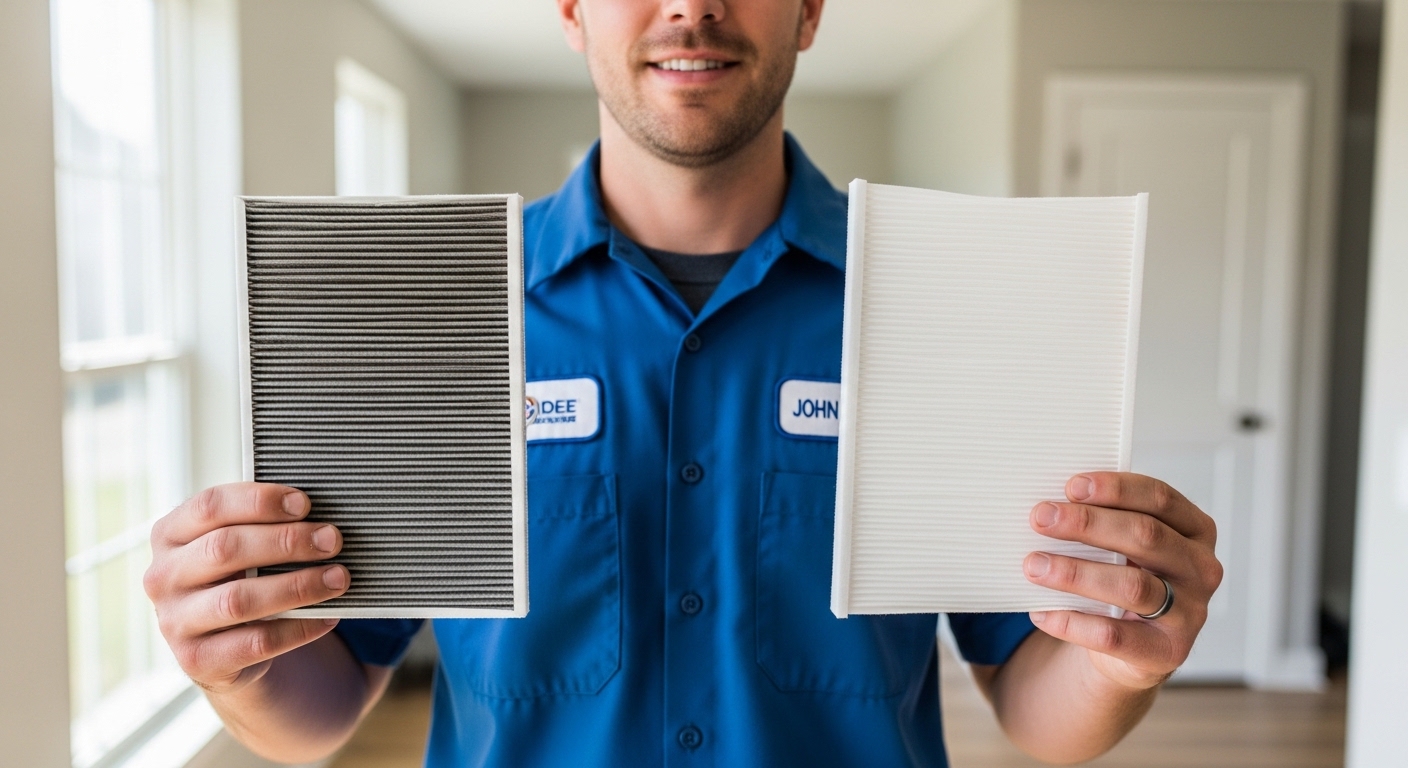
A clogged air filter is the number one cause of frozen coils. Here is why. Your AC needs warm air from inside your home to flow over the evaporator coil. If the filter is full of dust and debris, that air cannot get through. The coil gets no heat. It keeps getting colder and colder. Ice forms.
This is also totally preventable. It costs almost nothing to fix and takes five minutes.
How Often You Should Replace It
During summer, change your air filter every 30 to 60 days. If you have pets, do it every 30 days or even sooner. Pet dander clogs filters much faster than regular dust. I learned this the hard way after adopting a dog. My filter was black within three weeks.
A quick tip: mark it on your phone calendar. Set a repeating reminder. It takes 30 seconds to set up and could save you hundreds in repair bills.
According to the U.S. Department of Energy, simply replacing a dirty air filter can reduce your AC’s energy consumption by 5% to 15%.
Keep Airflow Moving Through Your Home
Why Blocked Vents Are a Hidden Problem
Even with a clean filter, restricted airflow can still cause a freeze-up. Many people close vents in rooms they do not use. They think it saves energy. It actually does the opposite. Closing vents adds pressure to your duct system. This slows down airflow across the evaporator coil and can cause it to freeze.
Walk through your home and make sure all vents are open and not blocked by furniture, curtains, or rugs. It is a simple fix that makes a real difference.
Check Your Ductwork for Leaks
Leaky air ducts are another sneaky cause of poor airflow. If your ducts have holes or gaps, cooled air leaks into walls and attics before it ever reaches your rooms. Your system works harder and your evaporator coil can freeze because it never gets enough warm return air.
A good HVAC technician can check your ductwork during a spring tune-up. The U.S. Department of Energy says duct sealing can cut your cooling costs by up to 20%. That is not a small number.
Watch Your Thermostat Settings
The 68°F Rule You Should Know
I see this mistake all the time. People crank the thermostat down to 68°F or lower because they think it cools the house faster. It does not. Your AC runs at the same speed no matter what temperature you set. Setting it too low just forces it to run longer. The longer it runs without a break, the colder the refrigerant lines get. That is a direct path to coil freezing.
Try to keep your thermostat at 72 to 76°F during Richmond summers. Your system will run in shorter, healthier cycles. Your energy bill will also thank you.
Consider a Smart Thermostat
A programmable thermostat or a smart thermostat can help a lot. You can set it to let the temperature rise slightly when you are out and cool back down before you return. This prevents the system from running non-stop all day. Non-stop running is a major factor in AC freeze-ups during the hottest Richmond weeks.
Most smart thermostats pay for themselves in energy savings within one summer season. That is a win in my book.
Check Your Refrigerant Levels
Why Low Refrigerant Causes Freezing
Here is something most people do not know. Low refrigerant does not mean your AC just cools less. It actually causes the pressure in your system to drop. When pressure drops, the remaining refrigerant gets much colder as it expands. The evaporator coil temperature can fall way below 32°F, and ice forms fast.
If your AC is blowing warm air and you see ice on the lines, low refrigerant is likely the cause. This is not a DIY fix. You need a licensed HVAC technician to check the refrigerant charge and find any leaks.
Signs You Have a Refrigerant Leak
Watch for these warning signs: your home never feels fully cool even when the AC runs all day, your energy bills suddenly go up, or you hear a faint hissing sound near the unit. These can all point to a refrigerant leak. Left unchecked, low refrigerant levels can damage your compressor, which is one of the most expensive parts to replace.
Most Richmond HVAC companies check refrigerant levels as part of a standard AC tune-up. I recommend asking for this every year before summer starts.
Schedule a Spring AC Tune-Up Before Richmond Heat Hits
What a Professional Tune-Up Does [Competitor Heading]
The best time to catch problems is before Richmond’s heat kicks in hard, usually in April or early May. A professional AC tune-up covers things you simply cannot do yourself at home. Technicians clean the evaporator coils and condenser coils, test the blower motor, check electrical connections, measure refrigerant charge, clear the condensate drain line, and calibrate the thermostat.
Every one of these steps directly prevents coil freezing. When they are all done together, your system runs smoothly and reliably through even the hottest summer days.
How Often to Schedule Maintenance
For most homes, once a year is enough. If your system is older than 10 years, twice a year is smarter. Richmond’s long cooling season puts a lot of hours on AC systems. More hours means more wear. More wear means a higher chance of freeze-ups and breakdowns right when you need your system most.
According to the U.S. Department of Energy, regular HVAC maintenance can reduce energy consumption by 5% to 15%.
Keep Your Outdoor Condenser Unit Clear
Why Vegetation Is a Real Summer Threat
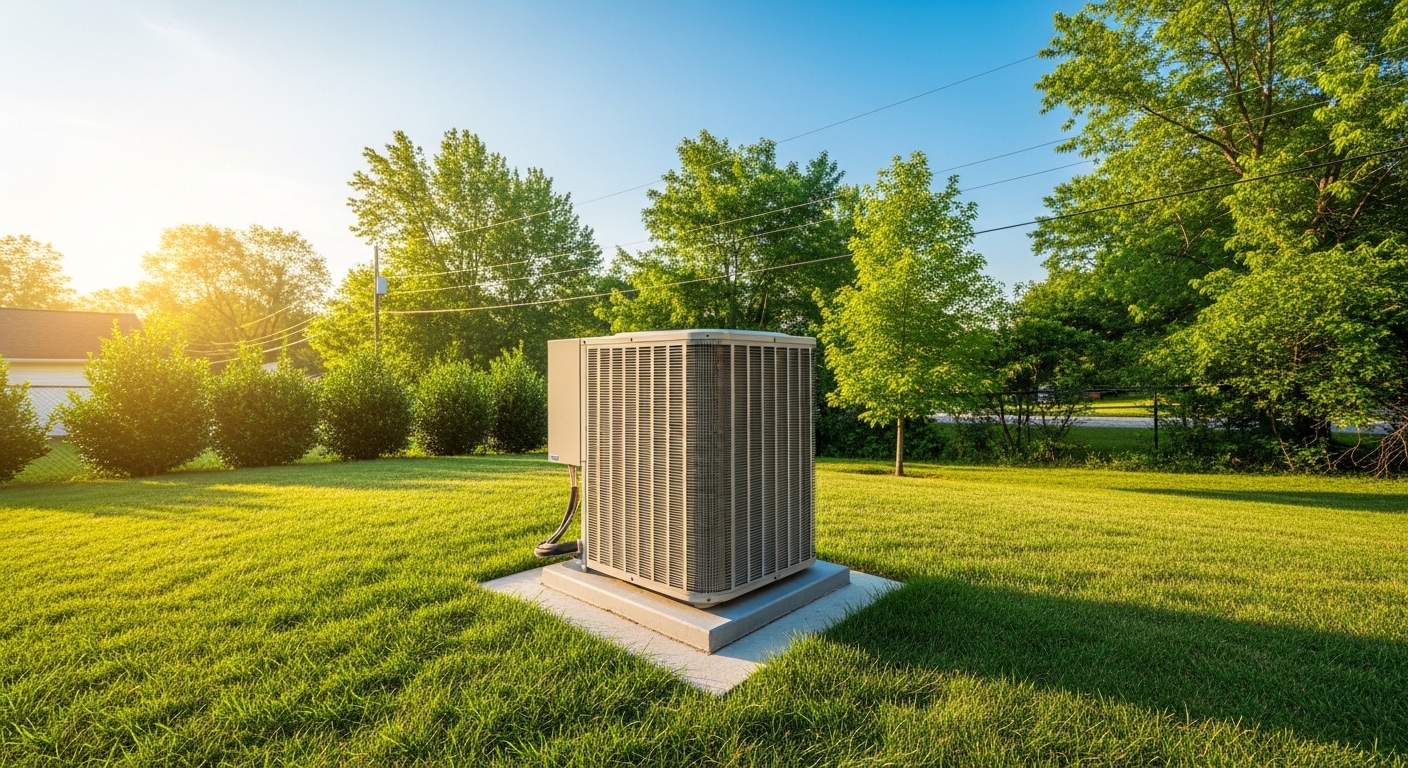
Richmond’s summer is also growing season. Grass, weeds, and shrubs can grow fast around your outdoor condenser unit. When plants get too close, they block the airflow the condenser needs to push heat outside. The whole system works under more strain. That extra strain can cause pressure problems that lead to AC freeze-ups inside.
Keep at least two feet of clearance on all sides of your outdoor unit. Trim back plants monthly during summer. It takes ten minutes and makes a real difference.
What Else to Remove Around the Unit
Also clear away any leaves, grass clippings, or debris that pile up around the base of the unit. Never stack things against or on top of it. I once saw a garden hose coiled right against an outdoor condenser. The homeowner could not figure out why their AC kept struggling. Once we cleared the area, the system ran fine.
Check the unit after any heavy storms too. Rain and wind can push debris right up against it overnight.
What to Do If Your AC Is Already Frozen
Steps to Safely Thaw Your System
If you come home and find ice on your AC lines or the unit, do not panic. First, turn the system off right away. Running it while frozen can damage the compressor. Switch the fan to “on” only if your system allows it. This helps move warm air over the coil to speed up thawing.
You can also use a hairdryer on low heat to melt the ice gently. Or you can just turn everything off and wait up to 24 hours for it to thaw on its own. Once thawed, check your filter first. If it is dirty, replace it before turning the system back on.
When to Call a Professional
If your AC freezes up again within 24 hours of restarting, do not keep trying to thaw it yourself. This usually means a refrigerant leak or a blower motor problem. These need professional tools and skills. Calling a NATE-certified Richmond technician quickly will save you money compared to letting the problem get worse.
Most people I talk to wait too long to call. A freeze-up that gets ignored for days can turn a $200 repair into a $1,500 compressor replacement. Act fast.
Conclusion
Learning how to prevent AC freeze-ups in Richmond summers is really about staying ahead of small problems before they grow. Change your filter regularly, keep vents open, watch your thermostat settings, clear your outdoor unit, and book a spring tune-up each year. These simple habits protect your system through Richmond’s long, hot summers.
The humid subtropical climate here means your AC works harder than in most other parts of the country. Give it a little love and it will keep your home cool all season long without any surprise breakdowns. Have you dealt with a frozen AC before? I would love to hear what worked for you in the comments.
Frequently Asked Questions
Why does my AC freeze up in hot summer weather?
Your AC can freeze even in hot weather because the problem is inside the system, not outside. When airflow is blocked by a dirty filter or the refrigerant level is too low, the evaporator coil drops below 32°F. Moisture in the air then freezes right on the coil. The outside temperature has nothing to do with it.
How often should I change my air filter in Richmond summers?
During Richmond’s hot summer months, change your air filter every 30 to 60 days. If you have pets or anyone in your home has allergies, change it every 30 days. A clean filter keeps airflow strong and is the single easiest way to prevent a freeze-up.
Can I fix a frozen AC myself or do I need a professional?
You can thaw a frozen AC yourself by turning the system off and waiting up to 24 hours. Replace the filter after it thaws. But if the AC freezes again quickly, call a licensed HVAC technician. Repeat freeze-ups usually mean a refrigerant leak or blower motor problem that needs professional tools to fix.
What thermostat setting is best to prevent AC freeze-ups in Richmond?
Keep your thermostat between 72°F and 76°F during summer. Setting it below 68°F forces the system to run for very long cycles, which can cause the evaporator coil to freeze. Short, regular cooling cycles are much healthier for your system than long continuous runs.
How does a spring AC tune-up prevent summer freeze-ups?
A spring AC tune-up checks all the things that lead to freeze-ups: refrigerant levels, dirty coils, weak blower motors, and blocked drain lines. When a technician catches and fixes these problems in April or May, your system runs cleanly and safely through all of Richmond’s hot summer months without a breakdown.