Your AC runs all day, yet the house still feels sticky and damp. Sound familiar? In Richmond, the summer air is thick and wet, and that heavy air quietly wears your cooling system down. Let me show you what really happens inside your unit and how to stop it before it breaks.
Why Richmond Summers Push Your AC to the Edge
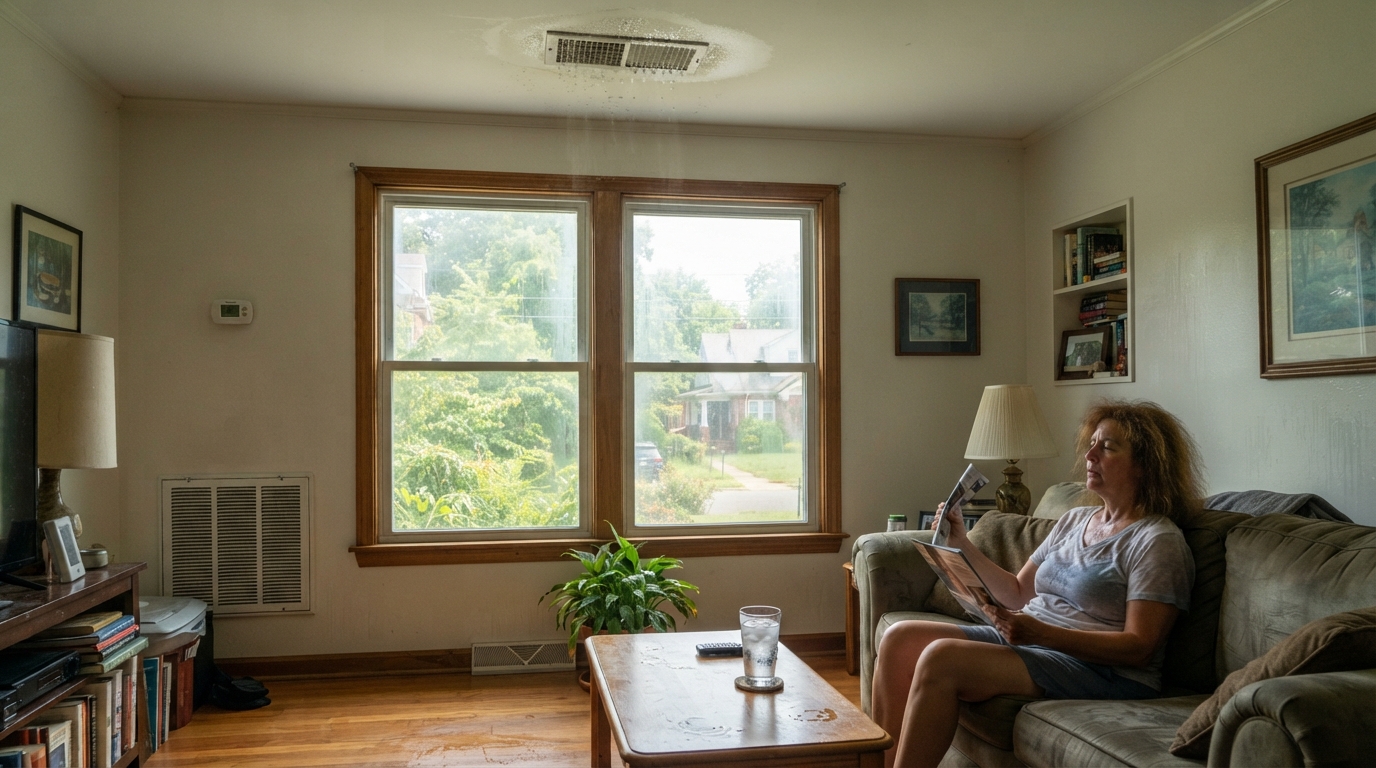
Richmond summers are not just hot. They are wet. The air feels heavy the moment you step outside, and your shirt sticks to your back in seconds. That thick, damp feeling is called humidity. It is water vapor floating in the air you breathe. Your air conditioner has to fight it every single day, from June through September.
Here is the part most people miss. On a muggy July morning in Richmond, indoor humidity can sit above 70% even while the AC hums along. In the homes we visit each summer, close to 8 out of 10 “my house feels muggy” calls come from a system that cools the air fast but never dries it out. Cooling and drying are two different jobs. Your unit has to do both at once, and wet air makes the second job much harder.
Think of the air like a sponge. Warm air holds a lot of water. Cool air holds less. When warm, wet outdoor air sneaks into your house through gaps, doors, and open windows, it drags all that water in with it. Your AC then has to squeeze that moisture back out of every room. That is slow, heavy work, and it never really stops on a humid day.
Warm air is greedy with water. Air at 90°F can hold roughly four times more water vapor than air at 50°F. So when the temperature and the humidity both climb, your unit faces a double load. It fights the heat you feel and the moisture you don’t always see. If you want the local picture, our guide on why Richmond summer humidity makes AC service matter breaks it down for our climate.
What Humidity Really Does Inside Your AC
I’ve handled hundreds of “it runs but won’t dry” calls across Richmond, and the pattern is almost always the same. The AC cools the rooms, the thermostat reads happy, and the system shuts off — but the air still feels damp. Why does this happen? Your AC only pulls water out of the air while it runs long, steady cycles. Short bursts cool the room but leave the water hanging in the air.
Here is how the drying works. Inside your system sits a cold part called the evaporator coil. Warm, humid air blows across it. Water in the air turns to drops on the cold metal — the same way a cold glass of tea “sweats” on a hot day. Those drops fall into a pan and drain away to the outside. A healthy AC can pull 10 gallons or more of water from the air on a sticky day. But the coil must stay cold and run long enough to do it.
Now picture a damp coil that never dries out. It stays wet for hours at a time. Dust sticks to it. That wet dust turns into thick grime. Grime blocked the airflow. A dirty coil cannot get cold enough, so it pulls out even less moisture, and the problem feeds itself. A clean coil is the heart of good cooling, which is exactly why a dirty evaporator coil can silently destroy your AC.
The muggy feeling is not just annoying. It costs you real money. When indoor air stays wet, you set the thermostat lower to feel cool, and the unit runs longer to catch up. In our service logs, homes fighting high indoor humidity often run their AC 20% to 30% more hours than dry homes right next door. More runtime means more wear, higher bills, and a system aging before its time.
The Hidden Ways Humidity Breaks Your System
Extreme humidity does not break your AC in one big bang. It breaks it slowly, in hidden spots you rarely see. Little problems stack on top of each other. One wet part strains the next part down the line. Before long, the whole hvac system is working too hard just to keep up. Let me walk you through the weak points, one by one, so you know where to look.
The wet, dirty evaporator coil
This is where most trouble starts. A coil that stays damp grows a layer of gunk and, very often, mold. That layer acts like a wet blanket over the metal. It blocks the cold from reaching your air. We’ve measured airflow drops of 40% or more on badly clogged coils. Less airflow means weaker cooling, poor drying, and a musty smell drifting out of your vents into the house.
Clogged drain lines and water where it should not be
Remember all that water dripping off the coil? It leaves through a small pipe called the condensate drain line. In humid weather, that line runs almost non-stop. Algae and slime love the dark, wet pipe. They grow fast and clogged it up. Then the water has nowhere to go but backward.
A blocked drain line is one of the top summer calls we get — some weeks it is nearly 1 in 3 service visits. The backed-up water overflows the pan. It drips through ceilings. It stains drywall and warps floors. If your unit is leaking, our page on AC drain line problems in Richmond shows exactly what to check first.
Frozen coils on the hottest days
It sounds backwards. Ice in the middle of summer? But it happens a lot here. When airflow drops or moisture overloads a dirty coil, the coil gets too cold and freezes solid. Ice covers the metal. Now no air can move through it at all, and your cooling stops cold.
A frozen coil can shut your AC down on the very day you need it most — and we see these calls spike when outdoor heat tops 95°F. The fix is more than chipping off the ice. You have to find out why it froze in the first place. Skip that step, and it just freezes again next week.
Mold, musty smells, and unhealthy air
Wet metal and wet ductwork are a playground for mold. Mold spores love dark, damp ducts. Once they settle in, every time the fan kicks on, they ride the air right into your living space. That is the “old basement” smell many homeowners notice. It can also bother people who have allergies or asthma, which turns a comfort problem into a health one.
Here is a quick way to match what you feel to what is really going on inside the system:
| Warning Sign | What’s Really Happening | What It Means for You |
|---|---|---|
| House feels damp even when cool | AC cools fast but the cycle is too short to dry | Wasted energy, sticky rooms |
| Musty smell from the vents | Mold on a wet coil or in the ductwork | Air quality and health risk |
| Water on the floor near the unit | Clogged condensate drain line | Water damage to floors and walls |
| Ice on the pipes or coil | Low airflow or a dirty coil | Full cooling shutdown ahead |
| AC running all day long | The system can’t beat the moisture load | Higher bills, faster wear |
Warning Signs Your AC Is Losing the Humidity Fight
In my professional experience, homeowners feel the humidity problem long before they ever see it. They just don’t know that is what it is. They call the AC “weak” or blame it for being “old.” Most of the time, the system is simply losing a slow fight against wet air. Here are the signs I tell every Richmond homeowner to watch for closely.
- Sticky, clammy air even when the thermostat says the room is cool.
- Foggy or sweaty windows on the inside of the glass.
- A musty or moldy smell the moment the fan turns on.
- The AC runs nonstop, yet rooms still feel warm and heavy.
- Water spots, drips, or damp patches near the indoor unit.
- Rooms far from the thermostat stay damp and uneven.
Pay close attention if your system runs and runs but never rests. Constant running is a loud warning bell. In the Richmond homes we track, an AC that never shuts off in July is often removing only half the moisture it should — or even less than that. If any of this sounds like your house, read why your AC is running constantly in Richmond to spot the real cause.
One more sign folks ignore: the thermostat number looks fine, but you still feel gross. That gap is the humidity talking. A room at 72°F with 70% humidity feels far worse than the same room at 72°F with 45% humidity. Same temperature, totally different comfort. Your body cools itself by sweating, and sweat simply cannot dry in wet air.
The Oversized AC Trap: Why Bigger Is Not Better
Here is a myth that costs Richmond folks a lot of money. “My house is hot and humid, so I need a bigger, massive AC.” It sounds smart. It is dead wrong. A too-big unit actually makes your humidity problem worse, not better. Let me explain why in plain words, because this one surprises almost everyone.
A big AC cools the rooms super fast, then shuts right off. That quick on-off pattern is called short cycling. The catch? The coil never runs long enough to dry the air. According to an ENERGY STAR fact sheet from the U.S. EPA and Department of Energy, short run times “do not allow the system to effectively remove humidity,” and stretching a cycle from 5 to 9 minutes lifts efficiency by about 17%. Short bursts cool. Long, steady runs dry.
Think of it like drying wet clothes. A quick shake does not dry a shirt. You need real time in the dryer. Your AC works the same way. It needs long, slow cycle time to wring the water out of your air. An oversized unit never gets that time. It slams cold air into the room, hits the set number, and quits — leaving the moisture behind.
This also hits your wallet hard. The U.S. Energy Information Administration reports that in the hot, humid Southeast, air conditioning makes up about 27% of a home’s energy costs, and 94% of homes there rely on it. An oversized, short-cycling unit wastes a big slice of that money. You pay more each month and still feel damp.
| Right-Sized AC | Oversized AC | |
|---|---|---|
| Run cycle | Long and steady | Short bursts |
| Moisture removed | High | Low |
| Comfort | Cool and dry | Cool but clammy |
| Energy bills | Lower | Higher |
| Wear on parts | Less | More |
So how do pros size a system the right way? Not by guessing. We use a room-by-room math check that looks at your windows, your insulation, and your square footage. In our experience, more than half the oversized units we replace were first picked by a lazy “bigger is safer” guess. The short cycling that follows also strains the machine — see what causes AC short cycling in Richmond for the warning signs to watch.
If your AC short-cycles or your home never dries out, please don’t rush to buy the biggest box on the lot. Let’s take a look together first. Richmond Air can run the numbers and tell you what size truly fits your house, so you get comfort instead of a clammy, wasteful unit.
How to Protect Your AC From Richmond’s Humidity
I’ve seen this pattern many times in my work: the homes that stay dry and comfy all summer are the ones that get a little regular care. It is not luck. It is upkeep. A few simple habits keep your system ready for the worst July days our company sees. Here is what I tell every customer, and none of it is hard.
Start with moisture control at the source. The CDC recommends keeping indoor humidity no higher than 50% all day long, and making sure your clothes dryer vents to the outside, not into the house. A dryer that empties indoor dumps warm, wet air right back into your living space. Then your AC has to fight that extra load it never should have faced.
- Change your air filter every 1 to 3 months.
- Get a professional tune-up each spring, before the heat arrives.
- Keep the outdoor unit clear of leaves and weeds.
- Flush the condensate drain line so it never gets clogged.
- Make sure the dryer and bathroom exhaust fans vent outside.
- Close windows and doors on muggy days to keep wet air away.
- Add a whole-home dehumidifier if some rooms stay damp.
A yearly tune-up is the cheapest insurance you can buy. In the homes we service, a clean coil and a clear drain cut summer breakdown calls by roughly two-thirds. A pro clears the clogged drain, checks the refrigerant, cleans the coil, and makes sure the unit runs long enough to actually dry the air. Curious what is included in one? See what an AC tune-up actually fixes in Richmond.
If you need a tune-up, or your AC just can’t keep up with the wet Richmond air, contact Richmond Air. We can help you find the right fix — whether that means a good cleaning, a drain flush, or a better-sized system for your home. No pressure, just an honest look.
Repair, Recharge, or Replace? Making the Smart Call
At some point, every homeowner asks the big question. Do I fix this AC or buy a new one? Humidity damage makes this call trickier than most people think. A system beaten down by years of wet air may need more than a quick patch. Let me give you a simple way to think it through without the stress.
Age matters most. Most central AC units last 12 to 15 years in our humid climate — sometimes less if they’ve fought moisture for years with no care. If your unit is under 10 years old and the repair is small, fix it and move on. If it is older and the repairs keep piling up every summer, replacement usually wins the math.
| Your Situation | The Smart Move |
|---|---|
| Unit under 10 years, small fix | Repair |
| Drain or coil cleaning needed | Repair / tune-up |
| Frequent breakdowns each summer | Lean toward replace |
| Unit 12+ years, weak cooling | Replace |
| One repair costs half a new system | Replace |
Watch the repair math closely. A simple rule we use: if one repair costs more than 50% of a brand-new system, replacing usually makes more sense. Newer units also dry the air better and use far less power. In homes we’ve upgraded, summer energy bills often drop 20% to 40% after swapping a tired, oversized unit for a right-sized one that runs steady.
The Bottom Line for Richmond Homeowners
Richmond’s wet summers are tough on any AC. The heat is only half the story. The moisture is the quiet part that wears your system down — clogging drains, fouling coils, and forcing your unit to run and run. Now you know the hidden signs, and you know the real fixes that work in our climate.
The good news? Most of this is preventable. Simple care — clean coils, clear drains, right sizing, and long, steady run times — keeps humidity in check all season. In our records, homes with a yearly tune-up see far fewer summer emergencies, cutting surprise breakdowns by close to two-thirds. A little upkeep beats a big repair bill every time.
Have you felt that sticky, damp air even with the AC blasting away? You are not alone, and you are not stuck with it. If your home stays humid or your AC keeps struggling, contact Richmond Air — we’ll take a look together and find the right, honest fix for your house. I’d love to hear how your system holds up this next Richmond summer.
Frequently Asked Questions
Why is my Richmond home still humid when the AC is running?
Your AC handles cooling and drying as two separate jobs. If it is oversized or dirty, it cools fast and shuts off before it can pull water from the air. Short cycles leave the moisture behind in every room. A dirty coil or a clogged drain makes the whole thing worse. A tune-up and proper sizing usually fix it for good.
What indoor humidity level should I keep in my home?
Aim to keep indoor humidity at or below 50%. That range feels comfortable and helps stop mold from growing on walls and in ductwork. Once it climbs past 60%, rooms feel sticky and the mold risk jumps fast. A dehumidifier or a healthy, right-sized AC helps you hold that line all summer.
Can high humidity really damage my air conditioner?
Yes, and more than people expect. Wet air keeps coils damp, feeds mold, and clogs drain lines over time. It also makes your unit run longer, which adds steady wear to the parts. Left alone, this can freeze coils, cause water leaks inside the house, and shorten your system’s life by years.
Does a bigger AC fix a humidity problem?
No — a bigger, massive unit often makes it worse, not better. It short-cycles, so it never runs long enough to dry the air. You end up cool but clammy, and your bills go up. A right-sized system beats an oversized one every time for comfort and for lower energy costs.
How often should I service my AC in Richmond’s climate?
At least once a year, ideally each spring before the heat hits hard. A yearly tune-up clears the drain, cleans the coil, and checks that your unit runs long enough to remove moisture from the air. Regular service is the cheapest, easiest way to avoid a miserable summer breakdown.