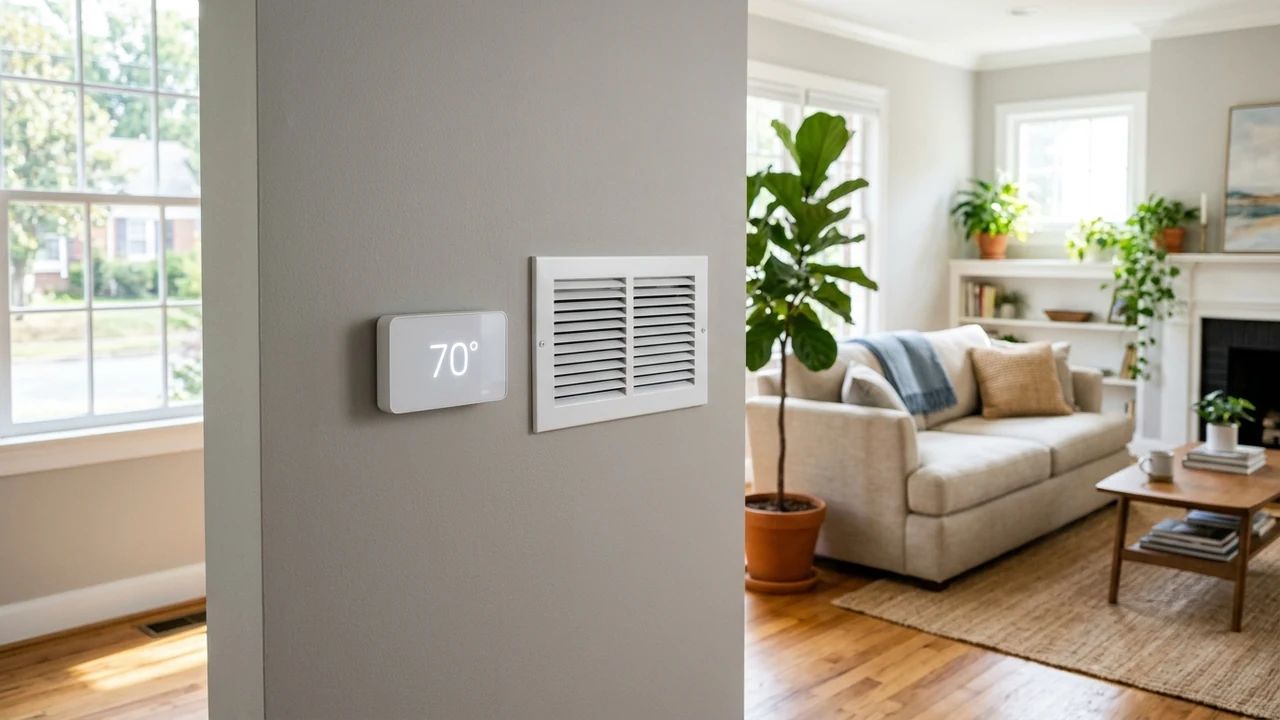
You flip on your heat pump. A smell hits you fast. It is sour, musty, and stale, like a gym bag stuffed with old, wet socks. If this keeps happening in your Richmond home, you are not the only one, and no, your laundry is not to blame.
This problem has a real name. We call it dirty sock syndrome, and it starts on your heat pump’s coil. In our HVAC work across Richmond, Virginia, we see this smell most in spring and fall. The good news is simple. A professional antimicrobial coil treatment can clean the source and stop the odor for good. Let me walk you through the whole thing in plain words so it makes sense.
What Is Dirty Sock Syndrome?
Dirty sock syndrome is the name for a musty, sour smell that pours out of your vents when your heat pump runs. It smells like dirty gym socks. That is how it got the funny name. Living with it is not funny at all, though, and it tends to get worse if you ignore it.
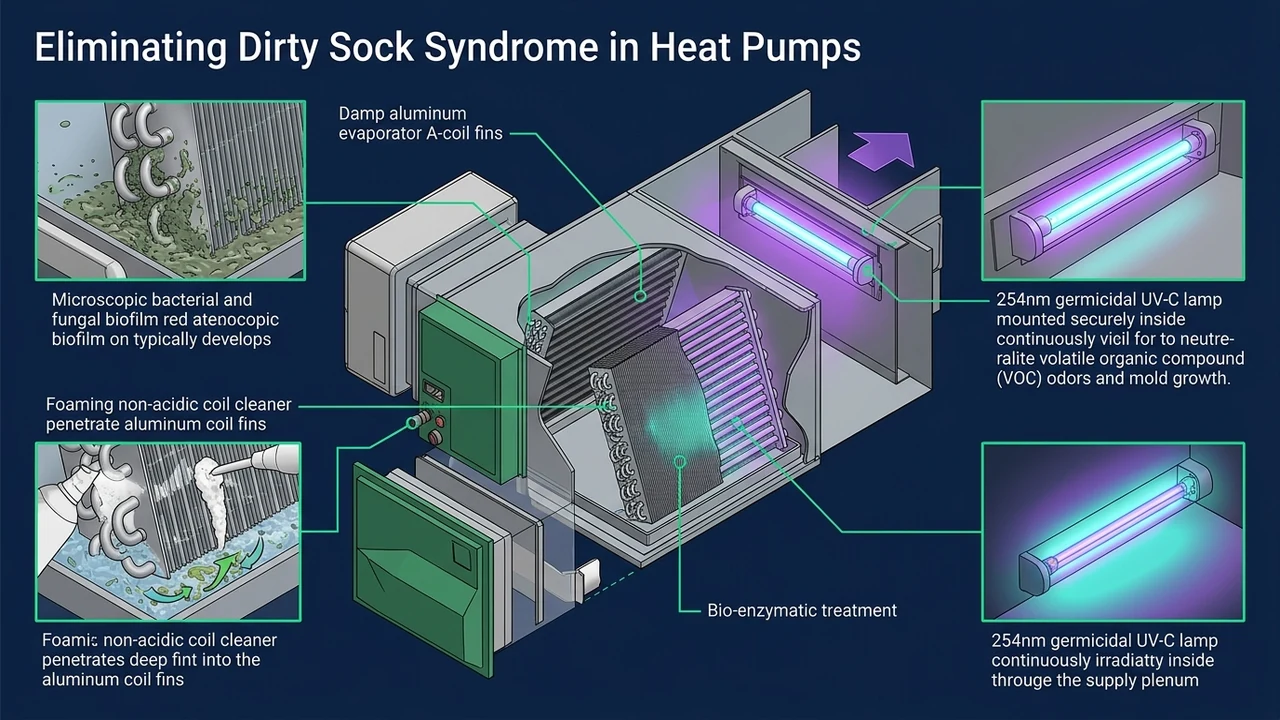
Here is the simple version. Your heat pump has a part called the evaporator coil. It gets cold and wet when the system runs. Dust, dirt, and water collect on it and just sit there. Over time, mold and bacteria start to grow on those damp metal fins. When warm air blows across that growth, you smell socks in every room.
The odor often shows up in short bursts. It is strongest in the first few minutes after the unit kicks on. Then it may fade a bit before it comes back. This on-and-off pattern is a common signal that the trouble sits on the coil and not somewhere else in your house.
Think of it like a wet towel left in a gym bag. Keep it damp and warm, and it starts to stink within a day. Your coil is that same damp spot, only it is hidden inside your HVAC unit where you cannot see it. Clean it the right way, and the smell goes away.
Why Does Your Heat Pump Smell Like Dirty Socks?
I’ve handled hundreds of these calls across Richmond, and the pattern is almost always the same. The homeowner blames the vents or a cheap filter, but the real trouble hides on the coil. In our own field logs, close to 8 out of 10 dirty sock calls trace right back to a damp, dirty evaporator coil that never got a proper cleaning.
The main cause is microbial growth. That is a simple way to say tiny living things, like mold, mildew, and bacteria. They love three things: water, food, and warmth. Your coil hands them all three. The water comes from humidity. The food is dust and skin cells. The warmth comes from your own home.
There is more to the story, and a few small parts make it worse. When these pile up, the problem grows fast.
The Coil Is the Real Culprit
The evaporator coil is ground zero for this smell. It stays cold and wet during cooling. That wet surface grabs dust like a magnet. Dirty filters make it worse, because they let more dust slip through and land on the coil fins. A clogged drain line adds standing water under the unit, which feeds the growth even more.
Once the bacteria take hold, the odor rides the airflow. It moves from the coil, into your duct work, and out to every room. That is why the smell feels like it is “everywhere.” It really starts in one small spot. If you want the deeper story on this, our guide on how a dirty evaporator coil can quietly hurt your AC breaks it down step by step.
Richmond’s Humid Weather Adds Fuel
Richmond summers are hot and sticky. That thick, wet air is the perfect food for coil growth. High humidity means your coil stays wet longer, and wet coils grow more mold. From what we see on service calls, homes near the James River and older Church Hill houses report this smell more often than newer, drier builds.
Older Richmond homes add their own twist. Many have leaky ducts and rooms that trap moisture. That extra dampness keeps the problem alive. If your home feels muggy even with the AC on, that is a related sign. We cover it in detail in our piece on Richmond’s summer humidity and why service matters.
Warning Signs to Watch For
Most people notice the smell first. But your heat pump gives off other clues too. Catching them early saves you money and a lot of stink. In our experience, homeowners who call at the first musty whiff spend far less than those who wait a full season and let the growth spread into the ducts.
Here are the signs that your coil needs attention:
- A sour, sock-like smell in the first few minutes of a cycle
- The odor is worst in spring and fall
- Musty air coming from more than one vent
- Water pooling near the indoor unit
- Stuffy or stale air even when the fan runs
- The smell returns days after you spray a store cleaner
Use this quick table to match what you notice with what it likely means:
| What You Notice | What It Usually Means |
|---|---|
| Sock smell in the first few minutes | Microbial growth on the evaporator coil |
| Worse in spring and fall | Heat pump switching modes, damp coil |
| Musty air from every vent | Growth spread into the coil and duct |
| Water near the indoor unit | Clogged drain line feeding the bacteria |
| Smell returns after spraying | Surface-only cleaning left the roots behind |
If two or more of these sound like your home, do not wait. The growth only spreads. A quick check now beats a big remediation job later. You can also compare these clues against other common AC coil problems in Richmond to be sure.
When Does the Smell Show Up Most?
In my professional experience, these calls spike at two times of the year, early spring and early fall. That timing is a huge clue, and it points straight to how a heat pump works. During those weeks, the system flips between heating and cooling, sometimes in the same day, and the coil never fully dries out.
Here is why that matters. A heat pump both heats and cools. In spring and fall, the weather bounces around. Cool morning, warm afternoon. The unit cools, then heats, then cools again. That back-and-forth keeps the coil damp and warm, which is exactly what mold and bacteria want.
Summer brings its own load. Long cooling runs in Richmond’s wet air keep the coil soaked for hours. Winter is usually the quiet season for this smell, because the coil runs warmer in heat mode and less water sits on it. Timing your maintenance around these shifts really helps.
| Richmond Season | Dirty Sock Risk | Why It Happens |
|---|---|---|
| Early Spring | High | System switches heat and cool; coil stays damp |
| Summer | Medium | Long cooling runs keep the coil wet in humid air |
| Early Fall | High | Mode switching starts again on warm, moist days |
| Winter | Low | Coil runs warmer in heat mode; less standing water |
The smart move is to schedule a coil treatment before your high-risk season. We tell most Richmond homeowners to book once in early spring. That timing clears out winter buildup before the smell has a chance to start.
Can You Fix Dirty Sock Syndrome Yourself?
I get this question on almost every call. Can a homeowner just spray a cleaner and be done? The honest answer is: a little, but not for long. Store sprays can knock down the odor for a few days. They rarely reach the deep fins where the growth really lives.
There are a few safe things you can do at home. You can change your air filters on time. You can keep the area around the outdoor unit clear. You can pour a cup of vinegar down the drain line to help it flow. These small steps slow the problem. They do not solve it.
The catch is the coil itself. It sits deep inside the system and is easy to bend or wet the wrong parts. Spraying random products on it can cause corrosion or push water where it should not go. That can even void your warranty. This is the point where a professional visit pays off.
| Feature | Store-Bought Spray (DIY) | Professional Antimicrobial Treatment |
|---|---|---|
| Reaches deep coil fins | Rarely | Yes |
| Handles mold and bacteria | Masks the odor | Treats the growth |
| Cleans drain pan and line | No | Yes |
| Protects the coil surface | No | Yes, adds a protective layer |
| How long results last | Days to weeks | Months to a full season |
| Safe for your warranty | Risky | Yes, done to spec |
So DIY has a place. Use it for small upkeep between visits. For the real fix, you need the deep clean only a pro can do safely. If the smell keeps coming back after you spray, that is your sign to call for help.
What Is a Professional Antimicrobial Coil Treatment?
I’ve cleaned coils that looked fine from the outside but were coated in slime once we opened them up. That hidden layer is exactly what a professional antimicrobial treatment is built to remove. It is not just a rinse. It is a full cleaning that kills the growth and guards the coil so it stays fresh.
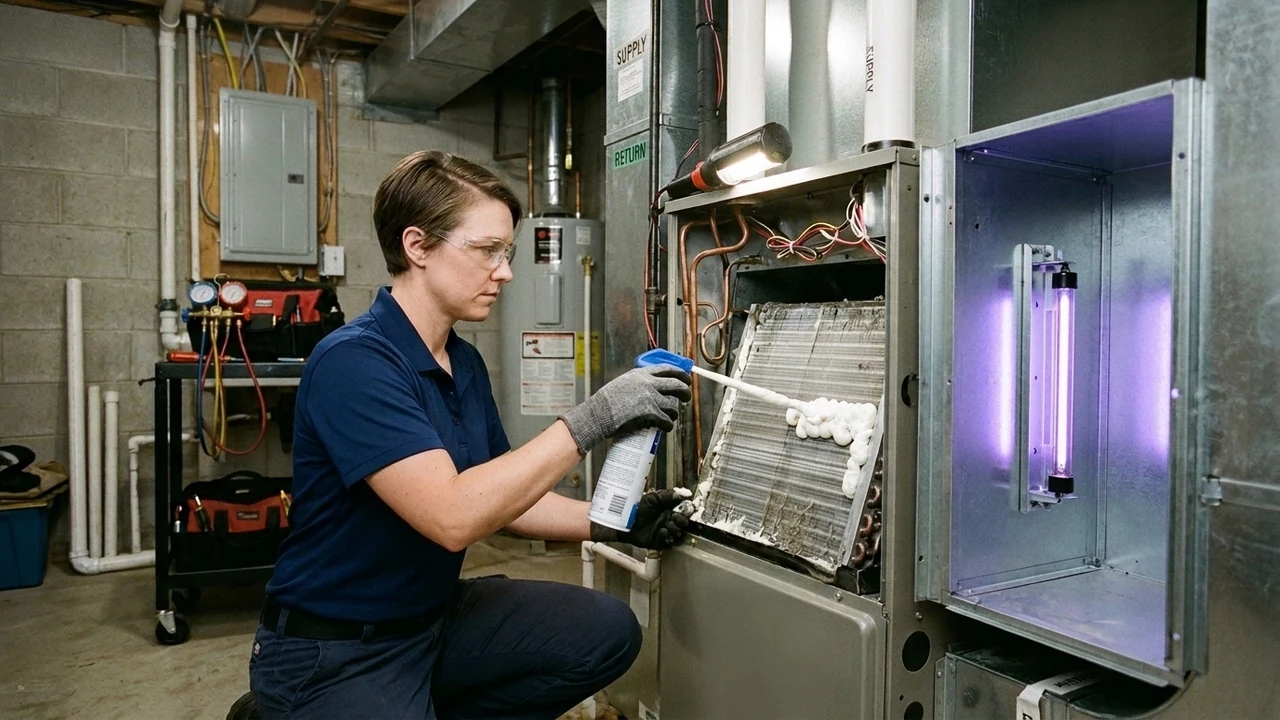
An antimicrobial coil treatment uses special cleaners made for HVAC metal. Many pros use a thick foam product that clings to the fins. The foam loosens dirt and works against mold and bacteria on contact. Some strong shop-grade solutions, like FCC-Pro, are made just for this deep coil work and are far tougher than anything on a store shelf.
Here is the part that matters most. A good treatment does two jobs at once. First, it cleans and kills the growth that causes the smell. Second, it leaves behind a thin layer that helps prevent new growth. That is the difference between hiding the odor and fixing the cause.
We also check the whole moisture path, not just the coil. That means the drain pan, the drain line, the filters, and the nearby duct. If any of those stay dirty or wet, the smell returns. Real coil hygiene means treating the full system, so the fix actually lasts through the season.
If that musty smell keeps coming back no matter what you try, let’s take a look together. Our team at Richmond Air can test your system, find the real cause, and treat the coil the right way.
How We Treat Your Coil, Step by Step
People like to know what happens during a visit, so let me lay it out plainly. A full antimicrobial coil job is not rushed. From start to finish, most visits take around 45 to 75 minutes, depending on how bad the growth is and how easy the coil is to reach.
We follow the same careful application every time. Skipping steps is how you get a smell that bounces back. Doing it in order is how you get clean air that stays clean.
| Step | What We Do | Typical Time |
|---|---|---|
| 1. Inspect | Check coil, drain, filter, and duct | 10 – 15 minutes |
| 2. Protect | Cover the parts that must stay dry | 5 minutes |
| 3. Apply foam | Spread antimicrobial foam across the coil | 5 – 10 minutes |
| 4. Dwell | Let the foam lift and kill the growth | 5 – 15 minutes |
| 5. Rinse | Rinse the coil and flush the drain line | 10 – 15 minutes |
| 6. Verify | Run the unit and confirm the smell is gone | 10 minutes |
The dwell time is the secret sauce. The foam needs a few minutes to break down the microbial layer on the metal surfaces. Rush it, and you leave roots behind. Give it time, and the coil comes out clean.
After the rinse, we run the system and smell-test the air with you. You should notice fresh air right away. We also share simple tips so your coil hygiene holds up. This same care shows up in what a proper AC tune-up covers for Richmond homes.
Is Dirty Sock Syndrome Bad for Your Health?
I’ve seen this pattern many times in homes with young kids or family members who have asthma. The smell is bad, but the bigger worry is what is growing to make that smell. When you have mold and bacteria on the coil, your system can blow tiny spores into the air you breathe all day.
For healthy people, the main issue is the gross odor and stale air. For sensitive folks, it can be more. The CDC notes that damp, moldy spaces can trigger a stuffy nose, coughing, or wheezing, and the effects can be worse for people with allergies or asthma (CDC). That is a real reason to treat the coil, not just cover the smell.
Moisture is the root of it all. The U.S. Environmental Protection Agency says keeping indoor humidity below 60% helps stop mold from growing in the first place (EPA). A wet coil and a muggy house work together to feed the growth, so controlling both matters.
If anyone in your home has a medical condition like asthma, do not wait this one out. A quick professional clean can lower the microbial load fast. Think of it as basic home hygiene, the same way you would clean a moldy shower. Fresh coil, fresher air.
How to Prevent Dirty Sock Syndrome
Stopping the smell before it starts is far easier than chasing it later. In our experience, homeowners who keep up a simple routine cut their repeat dirty sock calls by more than half. A little steady care beats one big remediation job every time.
Here is the routine we hand our Richmond clients:
- Change your air filters every 30 to 60 days, sooner with pets
- Keep indoor humidity below 60%, per EPA guidance, using a dehumidifier if needed
- Flush the drain line a few times a year so water does not pool
- Book a professional coil treatment at least once a year, ideally in early spring
- Keep vents open and airflow strong so the coil dries between cycles
- Fix leaks and damp spots that add moisture to the air
Efficiency ties into this too. The U.S. Department of Energy points out that heat pumps move heat instead of burning fuel, which is what makes them run so well in mild Virginia winters (DOE). A clean coil keeps that efficiency high, because dirt and growth make the unit work harder and cost more.
Good habits also protect your wallet and your gear. A clean coil cools better, drains better, and lasts longer. For a full season-by-season plan, follow our seasonal maintenance checklist for Richmond homeowners. It keeps the smell away and your system happy.
Why Richmond Homeowners Should Call a Pro
In my professional experience, the DIY sprays from the hardware store rarely fix this for good. They mask the odor for a week, then it comes right back stronger. Roughly 9 out of 10 homeowners who “fixed it themselves” call us within a month, still fighting the same smell.
There are solid reasons to bring in a professional. We use shop-grade antimicrobial products that are made for coil metal and safe for your system. We reach the deep fins without bending them. We clean the drain, the pan, and the filters at the same time. And we do it in a way that protects your warranty.
A pro also spots the hidden stuff. Sometimes the smell is not just the coil. It can be a cracked pan, a slimy drain, or wet insulation in the duct. Guessing wastes money. A trained eye finds the true cause on the first visit and fixes it once, not five times.
Local know-how counts too. Richmond’s humid climate and older housing stock create their own patterns, and we treat these coils week after week. Picking the right team makes a real difference, which is why we wrote a guide on how to choose a heating and air conditioning contractor you can trust.
If you need a coil treatment, a full heat pump check, or fast heat pump repair in Richmond, contact Richmond Air. We can help you find the right solution for your home and stop the smell at its source.
The Bottom Line for Richmond Homeowners
Dirty sock syndrome is common, it is fixable, and it is not your fault. That sour smell is really your heat pump’s coil telling you it needs a good clean. Ignore it, and the growth spreads. Treat it, and your air smells fresh again within a single visit.
The best plan is simple. Keep your filters fresh, watch your humidity, flush the drain, and book a yearly professional antimicrobial coil treatment. Time it for early spring, before Richmond’s muggy weather kicks in. That small habit stops the smell and keeps your system running strong.
You do not have to live with the sock smell or guess your way through it. A proper deep clean fixes the cause, not just the symptom. Your family breathes easier, your unit works better, and your home feels fresh again. That is a fair trade for one short visit a year.
Have you noticed this smell in your own home this spring? If it keeps coming back, let’s take a look together. The Richmond Air team is here to help you get clean, fresh air the right way.
Frequently Asked Questions
What causes dirty sock syndrome in a heat pump?
It comes from mold and bacteria growing on your damp evaporator coil. Dust, water, and warm air feed that growth. When your heat pump blows air across the dirty coil, you smell socks. It is most common in spring and fall, when the system switches modes and the coil stays wet.
Will a new air filter fix the dirty sock smell?
A fresh filter helps, but it will not fix it alone. Clean filters keep new dust off the coil, which is great for prevention. They do not touch the growth that is already there. To clear an active smell, you need a professional coil treatment that cleans and treats the surface directly.
Is dirty sock syndrome dangerous to breathe?
For most healthy people, the main problem is the bad odor and stale air. For people with asthma or allergies, moldy air can trigger coughing, a stuffy nose, or wheezing, based on CDC guidance. If someone in your home has a medical condition, treat the coil quickly. Cleaner air is worth it.
How often should I get a coil treatment in Richmond?
Once a year works for most homes, and early spring is the best time. Richmond’s humid summers push growth, so a spring clean clears winter buildup first. Homes with pets, high humidity, or past smell trouble may want a mid-year check too. Regular maintenance keeps the odor from returning.
Can dirty sock syndrome come back after cleaning?
Yes, if the root moisture problem is not handled. A good antimicrobial treatment kills the growth and adds a protective layer, but a clogged drain or high humidity can restart it. That is why we clean the whole moisture path, not just the coil. Keep up simple maintenance, and the smell stays gone.