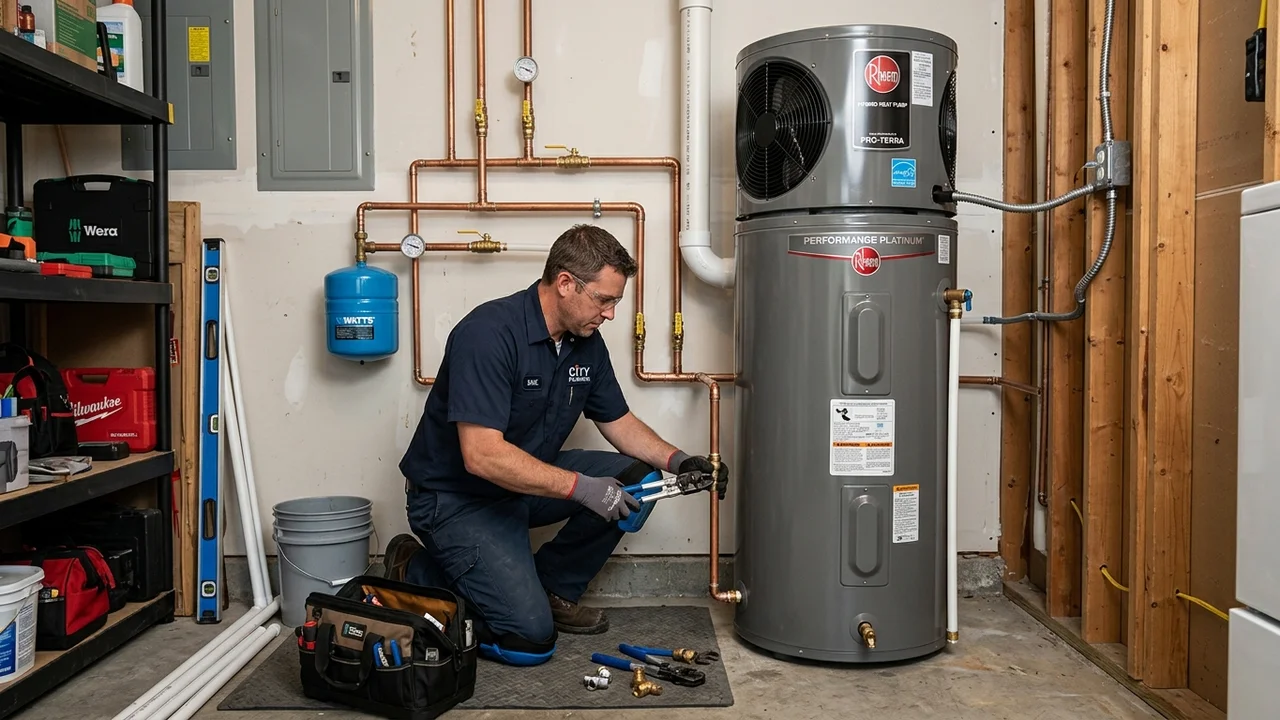
That deep, metal-on-metal grinding coming from your air conditioner? It’s not something to shrug off. A healthy AC hums. A sick one grinds. In most cases we see, that ugly sound points straight to worn motor bearings, small parts that are failing fast. Turn the system off, keep reading, and I’ll walk you through exactly what’s happening and what to do next.
What That Grinding Sound From Your AC Really Means
A grinding sound almost always means metal is rubbing on metal somewhere inside your unit. The most common source is a motor with worn bearings. When those tiny parts wear down, the spinning shaft no longer turns smooth. It scrapes. That scraping is the grinding you hear.
Think of it like a bike wheel with rusty parts. When the little balls inside the wheel hub go bad, the wheel wobbles and makes noise. Your AC motor works the same way. The bearings let the shaft spin freely, and when they fail, everything starts to grind.
Here’s the short version: grinding is a warning, not background noise. In our service calls across Richmond, roughly 8 out of 10 grinding complaints trace back to a failing blower or fan motor. The longer it runs, the more damage it does. So the safest move is to stop the system and get it checked before a cheap fix turns into a big one.

What Worn Motor Bearings Are (And Why They Grind)
I’ve handled cases exactly like this for years, and the pattern almost never changes. When a homeowner says “grinding,” I already know we’re likely looking at bearings before I even open the panel. It’s that predictable.
So what is a bearing? Simple: it’s a small ring packed with tiny metal balls that sits around the motor shaft. Its whole job is to let that shaft spin fast and smooth. Little friction. Little heat. When the bearings are healthy, you barely hear the motor at all.
Over time, the smooth surface inside wears down. Grease dries up. Metal starts touching metal. Now the shaft grinds every time it turns. That grinding heat speeds up the wear, so a small problem grows fast. What starts as a faint rumble can turn into a loud grind in a week or two.
The tricky part? A worn bearing rarely fixes itself. It only gets worse. And a seized motor can burn out completely, sometimes tripping your breaker or leaving your home with no cooling at all on a hot day.
What Bearings Actually Do Inside Your AC Motor
Your AC has more than one motor, and each one rides on bearings. The indoor blower motor pushes cool air through your vents. The outdoor fan motor pulls heat out of your home. Both spin thousands of times a minute, all summer long.
That’s a lot of turning. In our field checks, a hard-working AC motor can rack up over 2,000 hours of run time in a single Richmond cooling season. Every one of those hours puts stress on the bearings. No wonder they wear out.
Where the Grinding Sound Is Coming From: Indoor vs Outdoor
Finding the noise source is step one. Grinding from inside the house usually points to the indoor blower motor. Grinding from the big box outside points to the condenser fan motor or, in worse cases, the compressor. Where you hear it tells you a lot.
Stand near your indoor air handler first. If the grinding is loud there, the blower wheel or its motor bearings are likely worn. Then walk to the outdoor unit. If the sound is stronger outside, the fan motor or compressor is the more likely cause.

Getting the location right saves time and money. A technician who knows the source can skip guesswork and check the right component first. If you’d rather not track it down yourself, our team can pinpoint the exact spot fast, you can read more on our guide to an AC making loud noise in Richmond, VA and reach out if the sound matches yours.
The Indoor Blower Motor
The blower motor lives inside your air handler. It spins a fan wheel that moves air across the coil and out your vents. When its bearings wear, you hear grinding right through the indoor vents. Sometimes the blower wheel also gets loose or packs up with debris, which adds a rattling grind on top.
A weak or grinding blower also hurts your airflow. Less air over the coil means poor cooling and higher bills. If your fan sounds rough or barely moves air, our notes on an AC fan not working in Richmond, VA break down what to check.
The Outdoor Condenser Fan Motor
The outdoor condenser fan motor sits in the big unit outside. It spins a blade that throws heat away from your home. When its bearings fail, the grinding comes from outside, often louder at startup. You might also hear a banging noise if the blade is bent or hitting something.
Sometimes the sound isn’t bearings at all. Sticks, leaves, or debris can fall into the outdoor unit and jam the blade. That’s an easy check. Cut the power, look inside, and clear anything stuck. If the grinding stays after that, the motor itself is the likely problem.
Here’s a quick way to match the sound to the part:
| Where you hear it | Likely part | What it usually means |
|---|---|---|
| Inside, through the vents | Indoor blower motor | Worn bearings or loose fan wheel |
| Outside, big unit | Condenser fan motor | Worn bearings or bent blade |
| Outside, deep and low | Compressor | Serious mechanical or electrical problem |
| Either side, with rattle | Fan wheel / debris | Loose part or trapped debris |
Grinding vs Other AC Noises: What Each Sound Means
In our field work, homeowners often mix up their AC noises, and that mix-up can be costly. I’ve seen folks ignore a grind because it “sounded kind of like the normal hum.” It wasn’t. Each sound your system makes tells a different story.
A grind is deep and rough, like a coffee grinder. A squealing sound is high and sharp, often a worn belt or dry bearing in the early stage. A banging noise is loud and sudden, usually a loose or broken component knocking around inside. Knowing the difference helps you act fast.
Not every sound is an emergency, but grinding almost always is. In our call logs, grinding and banging together are the two noises most likely to end in a full motor replacement if ignored, we see this in about 7 of 10 delayed repairs. The homeowners who called early usually paid far less.
Some sounds are normal, to be fair. A soft click when the system starts or stops is fine. A gentle hum while it runs is fine too. It’s the harsh, new, or growing sounds you need to watch. If you’re not sure what you’re hearing, our page on troubleshooting noisy air conditioning units lays out each sound side by side.
| Sound | What it points to | How urgent |
|---|---|---|
| Grinding | Worn motor bearings | High, shut it off |
| Squealing | Dry bearing or worn belt | Medium, check soon |
| Banging | Loose or broken component | High, stop the unit |
| Buzzing | Electrical issue | Medium to high |
| Clicking (nonstop) | Relay or control problem | Medium |
| Soft click at start/stop | Normal operation | Low, no worry |
Is It Safe to Keep Running Your AC With a Grinding Noise?
No. If your AC is grinding, turn it off. Running a motor with bad bearings is like driving a car with no oil. The parts keep rubbing, heat builds, and the damage spreads to parts that were still fine.
A grinding motor can seize up and stop cold. When that happens, it can pull too much power and trip your breaker. In some cases the strain even harms the compressor, which is the most costly part in the whole system. Keeping it running to “save the cool air” often trades a small repair for a big one.
What Makes Motor Bearings Wear Out and Fail
I’ve solved this exact problem hundreds of times, and the causes usually fall into a short list. Age, heat, dirt, and poor airflow do most of the harm. Once you know them, you can slow them down and get years more life from your equipment.
Bearing failure isn’t rare, either. Research from Missouri University of Science and Technology notes that bearing failure is the most common failure mode in electric motors, accounting for over 40% of all machine failures. So if your AC motor is the part that goes bad, you’re in very common company. The good news: most of these failures build slowly and give you warning sounds first.
Age and Everyday Wear
Nothing lasts forever. Every time the motor spins, the bearings wear a tiny bit. Older units feel this most. In our Richmond service work, we see grinding bearings show up most often on systems past the 10-year mark. That’s just normal aging.
If your unit is old and grinding, it may be time to weigh a fix against a new system. There’s no single right answer, it depends on the unit’s age, cost, and shape. Our breakdown on AC repair vs. replacement in Richmond, VA can help you think it through before you spend a dime.
Heat and Richmond Summers
Heat is hard on bearings. It dries out the grease that keeps them smooth. And Richmond summers bring plenty of it. NOAA’s 1991 – 2020 climate normals for Richmond show an average July high near 89.5°F, with the unit running long, hot hours to keep up.
Long run times plus high heat speed up wear. The motor stays warm, the grease thins, and the bearings grind sooner. This is why a system that ran fine last spring can start grinding by mid-July. Our overview of summer heat and AC damage in Richmond, VA shows how our hot, sticky season wears units down faster than many owners expect.
Dirt, Debris, and Poor Airflow
Dirt is a quiet killer. When debris builds up around the motor or blade, it adds strain and heat. A dirty filter chokes airflow, so the blower works harder and runs hotter. Over time that extra stress wears the bearings down.
Poor airflow hurts more than the motor, too. It can freeze the coil, raise your bills, and shorten the life of nearly every component. Keeping air moving freely is one of the simplest ways to protect the whole system, more on that below.
How a Technician Finds the Problem
Diagnosing a grind is part listening, part hands-on testing. A good technician won’t just guess. First, we cut the power and check for debris or a loose blade. Then we spin the motor shaft by hand. A rough, gritty feel with resistance points straight to worn bearings.
Next comes power testing. We check the motor’s draw with a meter. A motor pulling too many amps is straining, often because the bearings are dragging. In our shop data, a grinding motor that draws more than 10 – 15% over its rated amps is almost always on its way out.
We also look at the whole picture. Is the compressor okay? Is refrigerant at the right level? Is the breaker tripping? A grind can hide other problems, so a full check protects you from paying twice. If you want a pro to run this exact test, contact Richmond Air, we can find the source fast and tell you straight whether it’s a small fix or a bigger job.
Repair or Replace: What a Bad Motor Costs You
I’ve walked hundreds of families through this choice, and the smartest ones look past the sticker price to the age of the whole system. A cheap motor in a dying unit is money down the drain. A fair repair in a young unit is a great deal.
Motor and bearing work usually costs less than a full replacement, based on what we see in the field. Swapping a single motor on a newer system is often the clear winner. But when the unit is old and other parts are worn too, a new system can save more over time. Efficiency matters here: heating and cooling already make up a huge slice of home energy use, the U.S. Department of Energy reports it’s around 35% of all energy consumption in buildings, so an old, straining unit costs you every month.
Here’s a rough guide from our own Richmond service calls. Prices shift with the part, brand, and system, so treat these as ballpark, not a quote:
| Situation | Best choice usually | Rough field range |
|---|---|---|
| Young unit, single bad motor | Repair the motor | Lower cost, quick fix |
| Blower motor on a mid-age unit | Repair, weigh replacement | Mid cost |
| Older unit (10+ years), grinding + other faults | Lean toward replacement | Higher, but saves long term |
| Compressor damage from ignored grind | Often full replacement | Highest cost |
The pattern is clear. Catch the grind early and you usually just replace a motor. Wait too long and the damage can spread to the compressor, which pushes you toward a whole new system. Early action is almost always the cheaper road.
How to Stop Bearing Failure Before It Starts
Good news: most bearing failures are slow and preventable. You can’t stop aging, but you can slow wear a lot with a few simple habits. This is where a little care pays off big.
The single easiest win is your filter. A clean filter keeps airflow strong and the motor cool. The Department of Energy notes that replacing a dirty filter with a clean one can lower an air conditioner’s energy use by 5% to 15%. Less strain means the blower motor runs cooler and its bearings last longer.
Simple Maintenance That Protects Your Motor
A yearly tune-up is your best defense. During a tune-up, a technician cleans the components, checks the motor, oils parts that need it, and clears debris from the outdoor unit. Small problems get caught while they’re still small. Our page on what an AC tune-up fixes in Richmond, VA shows exactly what’s included.
You can handle plenty on your own between visits. Change the filter every 30 to 90 days. Keep two feet of clear space around the outdoor unit. Rinse off dust and clear leaves. Listen for new sounds each time the system starts. These few minutes protect the motor and the whole unit.
- Change the air filter every 30 to 90 days to protect airflow
- Keep the outdoor unit clear of leaves, grass, and debris
- Book one professional tune-up each year, before summer
- Listen at startup for grinding, squealing, or banging
- Turn the system off right away if you hear metal grinding
Want a full seasonal plan you can follow? Our AC maintenance checklist for Richmond, VA homeowners puts every task in order so nothing slips.
When to Call a Professional in Richmond
Here’s the honest truth I share with every caller: some AC noises are safe to watch, but grinding isn’t one of them. In my years on the job, the folks who call at the first grind almost always pay less than those who wait. Metal grinding on metal only gets worse.
Call a professional the moment you hear a steady grind, a banging clunk, or a squealing that won’t quit. Call too if your breaker keeps tripping or your cooling drops off with the noise. These are signs the motor or another component needs real attention, not a guess.
If you’re in Richmond and your AC is grinding, don’t wait it out. Turn it off and reach out to Richmond Air. We’ll run a full check, find the source, and give you a clear, fair plan, repair or replacement, whatever truly serves your home best. Fast help now often saves the pricey parts later.
Don’t Ignore That Grinding Sound
A grinding AC is your system asking for help. Nine times out of ten in our work, it’s a motor with worn bearings, a problem that starts small and grows fast if you let it run. The sound tells you where to look, and quick action keeps the damage from reaching the compressor.
Turn the unit off. Check for debris. Then get a professional set of eyes on it. A simple motor or bearing fix today beats a full replacement tomorrow. Take care of the small stuff, keep up with easy maintenance, and your AC will thank you with quiet, steady cooling all summer.
Frequently Asked Questions
Why is my AC making a grinding noise?
Most of the time, a grinding noise means the bearings inside a motor are worn out. Metal is rubbing on metal as the shaft spins. It can be the indoor blower motor or the outdoor fan motor. Sometimes debris stuck in the blade causes it too, so check for that first.
Is it safe to run my AC while it’s grinding?
No. Turn it off. A grinding motor builds heat and can seize up fast. If it keeps running, the damage can spread to costly parts like the compressor, and it may trip your breaker. Shutting it down early protects the rest of the system and saves you money.
Can I fix a grinding AC motor myself?
You can do the easy checks. Cut the power, look for debris, and clear any leaves or sticks jamming the blade. But bearing and motor work needs a trained technician with the right tools and testing. If the grind stays after clearing debris, it’s time to call a professional.
How much does it cost to fix a bad AC motor bearing?
It depends on the part, the motor, and your system’s age. A single motor repair on a newer unit usually costs far less than a full replacement. On an older unit with other worn parts, a new system may be the smarter spend. A technician can give you a clear number after a check.
How can I stop my AC bearings from failing early?
Keep up with simple care. Change the filter every 30 to 90 days, keep the outdoor unit clear of debris, and book one professional tune-up each year. Clean airflow keeps the motor cool, and a cool motor means bearings that last much longer.