Your AC is blowing warm air on a 95-degree July afternoon, and you have a choice to make. Do you book a quick AC tune-up, or pay more for a full system service? Most Richmond homeowners guess. They pick the cheaper option and hope for the best. That guess can cost you a comfortable summer, or a surprise breakdown at the worst time.
Here is the good news. This choice is not that hard once you know what each service really does. I will walk you through it in plain words, the same way I explain it to homeowners at the curb before we start work. By the end, you will know exactly which one your home needs and why.
What Is an AC Tune-Up, Really?
A tune-up is a checkup for your air conditioner. Think of it like a yearly dentist visit. The technician cleans the important parts, checks that things are working, and catches small problems early. It is fast, it is affordable, and it keeps a healthy system healthy.
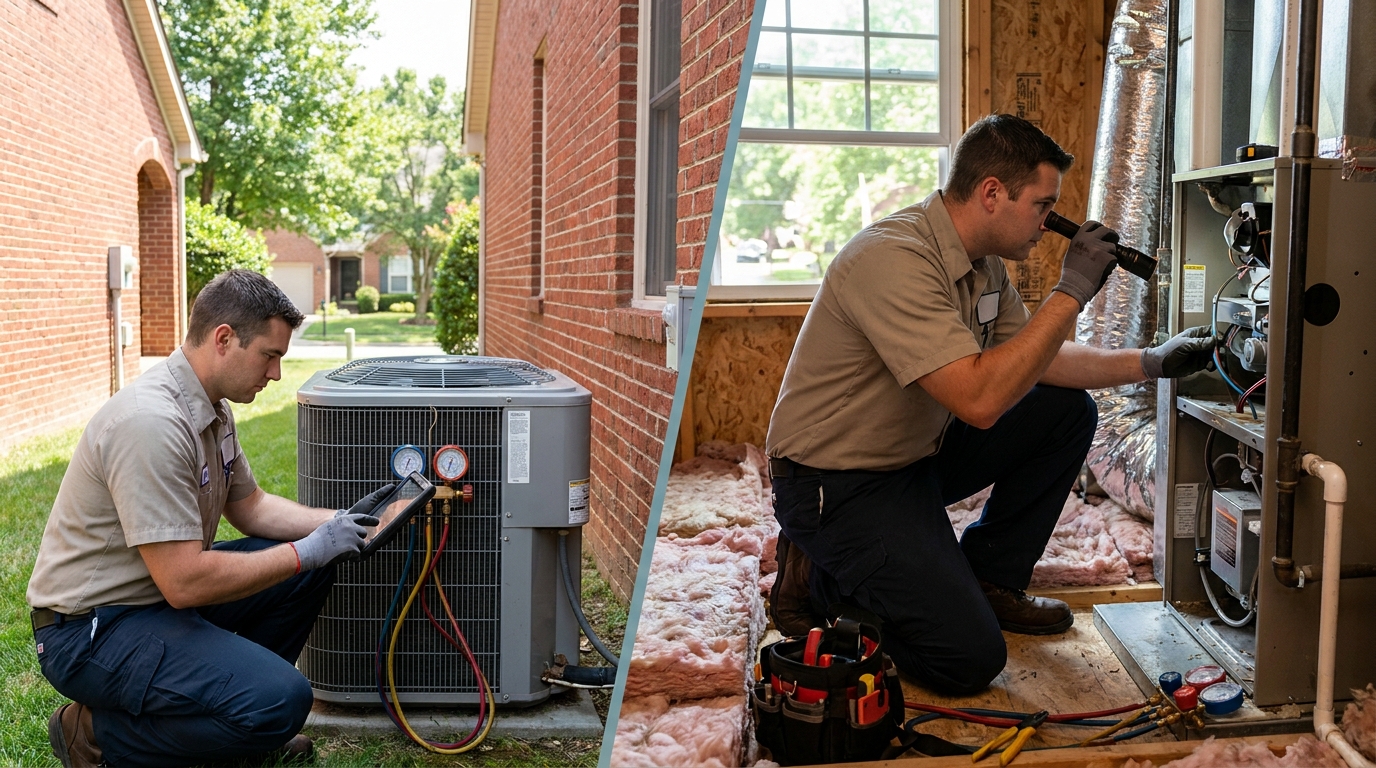
During a tune-up we clean the condenser coil, check the air filter, test the refrigerant level, and look at the thermostat. We tighten loose wires. We check the capacitor, which is the little part that gives your compressor the jolt it needs to start. In our shop, a standard tune-up takes about 60 to 90 minutes for one system.
A tune-up is not a repair. It is preventive maintenance. The goal is to keep your cooling strong and your energy bill low before anything breaks. If your AC already runs okay and you just want to keep it that way, a tune-up is usually the right call. Want the full list of what gets checked? Our breakdown of what an AC tune-up actually fixes lays it all out step by step.
What a Full System Service Covers
In my professional experience, the homeowners who wait too long to book a full service are the same ones who call me during a heat wave with a dead unit. A full service goes deeper than a tune-up. Much deeper. It is what you want when your system is older, struggling, or throwing warning signs.
A full HVAC system service checks the whole machine, top to bottom. We test the blower motor, flush the drain line, inspect the evaporator coil inside your home, measure airflow through the ductwork, and run a full refrigerant pressure test. We check electrical parts under load. We look for wear that a basic tune-up would skip. In our records, a full service uncovers a hidden issue in about 6 out of 10 older systems.
The difference is simple. A tune-up keeps things running. A full service finds out why things are not running well. If your AC leaks water, freezes up, or cools unevenly, the full service is built to find the root cause. A clogged drain line or a dirty coil can quietly wreck your comfort, and our guide on how a dirty evaporator coil silently destroys your AC shows just how sneaky that damage can be.
Tune-Up vs Full System Service: A Side-by-Side Look
Sometimes a table says it faster than I can. Here is the plain difference between the two services, so you can see what you get with each. Read it once and the choice starts to make sense on its own.
| What Gets Done | AC Tune-Up | Full System Service |
|---|---|---|
| Clean condenser coil | Yes | Yes |
| Check & change air filter | Yes | Yes |
| Test refrigerant level | Basic check | Full pressure test |
| Inspect evaporator coil | Quick look | Deep inspection |
| Flush the drain line | Sometimes | Always |
| Test blower motor & airflow | No | Yes |
| Check electrical parts under load | No | Yes |
| Measure ductwork performance | No | Yes |
| Best for | Healthy systems | Older or struggling systems |
| Time needed | 60–90 minutes | 2–3 hours |
Look at the bottom two rows. That is the heart of it. A tune-up is for a system that already works. A full service is for one that needs answers. Most homeowners we see fall clearly into one group or the other once they look at this list.
Why Richmond’s Summers Make This Choice Harder
I remember a service call in Church Hill last August. The homeowner had skipped maintenance for three years because his AC “seemed fine.” Then the humidity hit, and his system just could not keep up. Richmond summers are not gentle on air conditioners, and that changes how you should think about this decision.
Our summers bring heat and heavy humidity. Your AC does two jobs here. It cools the air, and it pulls water out of it. That double duty puts extra strain on the evaporator coil and drain line. In our local service data, we see roughly 40% more drain and coil problems in Virginia homes during July and August than in the milder months.
Damp air also feeds mold and clogs. A small blockage that would sit quietly in a dry climate turns into a wet, dripping mess here fast. This is why I tell Richmond homeowners not to treat AC care like folks do up north. If your home feels sticky even with the AC running, that is a real warning sign, and our article on why Richmond summer humidity makes AC service matter explains what is going on inside your system.
Signs You Only Need a Tune-Up
Not every home needs the big service. Honestly, most homes with newer units just need a yearly tune-up and nothing more. Here is how to tell if that is you. If you check most of these boxes, save your money and book the basic visit.
- Your AC is under 8 years old and has been well cared for.
- It cools your whole home evenly, with no warm rooms.
- You have not skipped maintenance for more than a year.
- Your energy bill looks normal for the season.
- You hear no strange noises, smells, or dripping.
- The unit starts right up every time, no delay.
When your system shows these signs, a tune-up is enough. You are just keeping a good thing good. In our experience, about 7 out of 10 homes with units under eight years old need nothing more than this yearly cleanup to sail through summer.
Think of it as cheap insurance. A little care now stops the big bills later. You keep your cooling strong, your air filter fresh, and your system ready for the next hot stretch.
Signs You Need a Full System Service
I have handled cases exactly like this many times, and the pattern is always the same. The homeowner ignored small signs until they became big ones. Your AC talks to you before it quits. When you see these signs, a tune-up will not be enough. You need the deeper look.
- Your AC is 10 years or older.
- Some rooms stay warm while others feel cold.
- You see water leaking or ice on the unit.
- Your energy bill jumped for no clear reason.
- You hear loud noises, or smell something burning.
- The system runs all day but never really cools.
These are not small quirks. They point to deeper trouble like low refrigerant, a failing blower motor, or a coil problem. A tune-up cleans the surface. A full service digs for the cause. If your unit keeps freezing or your bill keeps climbing, the signs your central AC needs a refrigerant recharge are worth reading before you decide.
Here is my honest take. Most guides tell you to always start cheap. I disagree. If your system is old and showing three or more of these signs, the tune-up is often wasted money. You will just end up paying for the full service anyway.
Does the Age of Your AC Change the Answer?
Age matters more than almost anything else. It is the first thing I ask about on the phone. A young system and an old system need very different care, even if they show the same small problem. This simple table matches your AC’s age to the service that usually fits best.

| AC Age | Condition | Usually Best Choice |
|---|---|---|
| 0–5 years | Running well | Yearly tune-up |
| 6–9 years | Minor issues | Tune-up, watch closely |
| 10–12 years | Any warning signs | Full system service |
| 13+ years | Weak or costly | Full service + replace talk |
Why does age push the choice? Because cooling equipment gets less efficient as it ages, and running it costs real money. Space heating and air conditioning make up 52% of the average U.S. household’s yearly energy use, according to the U.S. Energy Information Administration. That is more than half your energy dollars tied to one system. An old, dirty AC wastes a big chunk of that.
So an older unit is not just a repair question. It is a money question. A full service on a 12-year-old system tells you if it is worth keeping or if it is time to plan ahead. When the numbers get close, our guide on AC repair versus replacement in Richmond helps you run the math without the pressure.
What Each Option Costs, and What You Save
Let me be straight about money, because that is what most people really want to know. A tune-up costs less up front. A full service costs more but finds more. The smart question is not “which is cheaper,” it is “which one saves me more over the summer.”
A well-tuned system runs cleaner and uses less power. The ENERGY STAR program from the EPA reports that replacing old heating and cooling equipment with certified models can cut your annual energy bill by nearly $140, and it recommends a yearly tune-up plus changing your air filter every 3 months to keep any system efficient. You can read their guidance on the ENERGY STAR heating and cooling page. Small habits, real savings.
| Factor | AC Tune-Up | Full System Service |
|---|---|---|
| Up-front cost | Lower | Higher |
| Time on site | 60–90 min | 2–3 hours |
| Finds hidden problems | Rarely | Often |
| Best return | Newer systems | Older systems |
| Peace of mind | Good | Best |
Here is the part people miss. A cheap tune-up on a failing system is not a deal. You pay, the unit still breaks, and you pay again. In our records, homeowners who match the right service to their system the first time avoid a repeat visit about 8 times out of 10. Spend once, spend right.
How to Decide in 5 Simple Steps
You do not need to be an expert to make a smart call. You just need a simple order to think in. Follow these five steps and the answer will come to you. I use this same order with homeowners every week.
- Step 1: Check your AC’s age. Under 8 years and healthy leans tune-up.
- Step 2: Count your warning signs. Three or more points to full service.
- Step 3: Look at your last two energy bills. A big jump means dig deeper.
- Step 4: Notice your comfort. Sticky, uneven, or weak cooling means full service.
- Step 5: Think about timing. Before peak summer, go deeper to be safe.
Run through these in order. Most homeowners land on a clear answer by Step 3. And this matters here more than most places, because the South leads the country in AC use. The EIA reports that 92% to 93% of households in the Southern region run air conditioning, the highest in the nation. In Richmond, your AC is not a luxury. It is survival gear.
If you are stuck between two steps, that is normal. That is the exact moment to get a second opinion. If you are not sure which service fits your home, we can take a look together and match the right service to your system, no pressure to buy more than you need.
Mistakes I See Richmond Homeowners Make
In my professional experience, the most costly mistakes are not the dramatic ones. They are the quiet, everyday habits that add up. I have seen these same three slip-ups hundreds of times, and every one of them is easy to avoid once you know it.
The first mistake is skipping care to save money. It backfires. A skipped tune-up leads to a big repair, and repairs cost far more than upkeep. The second is picking a tune-up when the signs clearly call for a full service. That is throwing good money at the wrong problem. The third is waiting until the AC fully dies before calling anyone.
- Skipping yearly maintenance to “save” money.
- Choosing the cheap fix when signs say otherwise.
- Waiting for a total breakdown before booking.
- Ignoring a rising energy bill as normal.
- Forgetting to change the air filter on time.
That last one is bigger than it sounds. A clogged filter chokes airflow and strains the whole system. Change it on schedule and you protect everything downstream. Picking the right pro matters too, and our tips on how to choose a heating and air conditioning contractor help you avoid the folks who upsell you on service you do not need. Honesty should come standard.
Final Thoughts
So, tune-up or full system service? Here is the short version. If your AC is young, healthy, and quiet, book the tune-up and enjoy your summer. If it is old, loud, leaking, or costing you more each month, go with the full service and get real answers. Match the service to the system, not to the lowest price tag.
Richmond’s heat and humidity do not wait, and neither should you. The smartest homeowners handle this in spring, before the first heat wave. A little planning now saves you a sweaty, stressful breakdown later. You know your home better than anyone, and now you know how to read the signs. If you want a second set of eyes before you decide, reach out and we will help you find the right fit for your home and budget. Have you checked your AC’s age yet this year? That one number is the best place to start.
Frequently Asked Questions
How often should I get an AC tune-up in Richmond?
Once a year, ideally in spring before the heat hits. Our humid summers work AC systems hard, so yearly care is the baseline here. Some older units do better with a spring and fall check. Keeping up with a simple Richmond maintenance checklist makes this easy to track and helps you catch small problems early.
Can a tune-up fix an AC that is not cooling?
Sometimes, but not always. A tune-up can fix small issues like a dirty coil or clogged filter that block cooling. But if the problem is low refrigerant, a bad blower motor, or an electrical fault, you need a full service to find and fix it. If your AC blows warm air after a tune-up, that is your sign to go deeper.
Is a full system service worth it for a 10-year-old AC?
Usually, yes. At 10 years or older, an AC often hides wear a tune-up cannot catch. A full service tells you if the unit is worth keeping or if replacement is smarter. Think of it as a health report for an aging system. It saves you from pouring money into a unit that is near the end.
How much can good maintenance save me?
More than most people expect. Since heating and air conditioning make up about 52% of home energy use, a clean, efficient system directly lowers your bills. ENERGY STAR notes that efficient equipment and a yearly tune-up keep costs down and comfort up. Skipping care does the opposite, quietly raising your bill month after month.
What if I still cannot decide between the two?
Then start with the five steps above: check age, count signs, review bills, judge comfort, and mind the timing. If you are still on the fence, that is the perfect time to ask a pro. We can look at your system together and tell you honestly which service fits, so you never pay for more than you truly need.