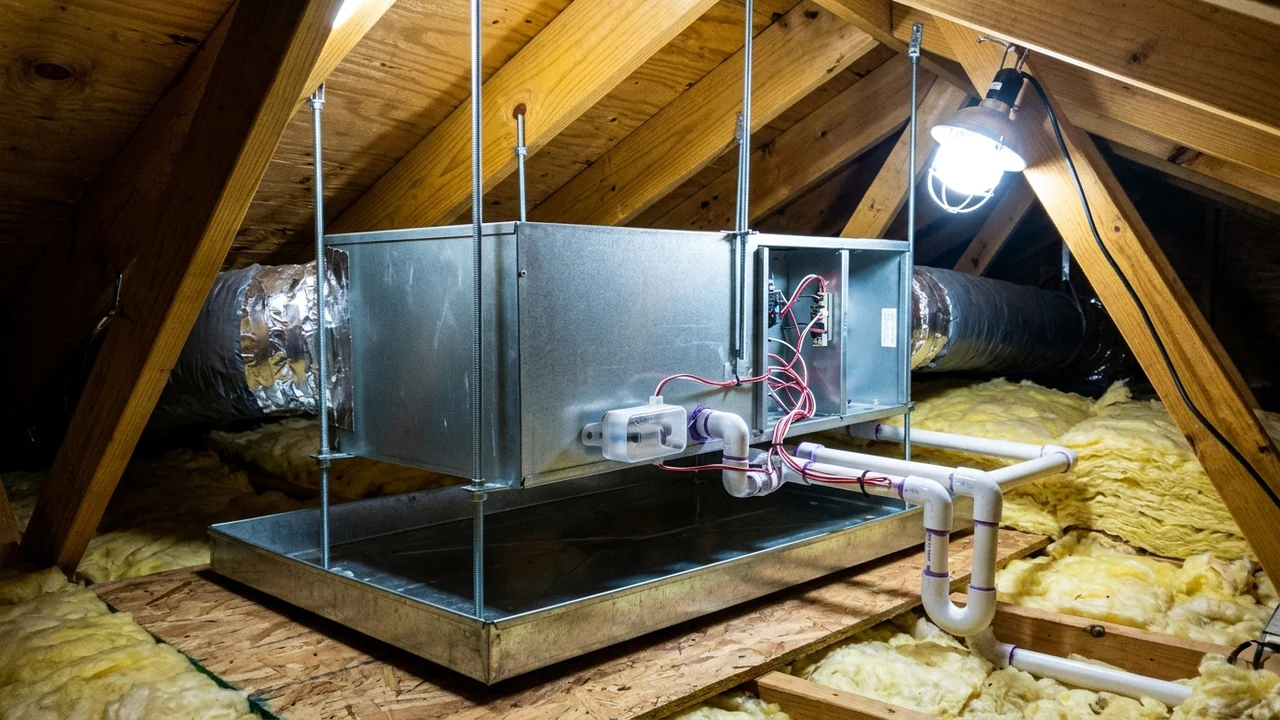
Your AC safety float switch keeps tripping because water is backing up in the drain pan. When the condensate drain line clogs, water rises around the indoor unit, and the float switch shuts the air conditioner off. This stops an overflow before it stains or soaks your ceiling.
What a Safety Float Switch Does Inside Your Indoor Unit
Think of the float switch as a tiny lifeguard. It sits right by the drain pan and watches the water level all day. When the water climbs too high, it flips off. Your AC stops cooling, but your ceiling stays dry. That trade-off is on purpose, and it is a good one.
Most indoor units in Richmond sit up in the attic or in a tight closet. The air handler cools your home, and cooling pulls moisture out of the air. That moisture drips into the pan and flows out through the drain line. When the line clogs, the pan fills up fast, and the little switch does its one job. It cuts the power so no water ever reaches the living space below.
Honestly, a tripping float switch is not your enemy. It is a warning light doing exactly what it should. The real trouble almost always lives in the drain, not the switch itself. In our field work around the Richmond area, close to 8 out of 10 of these service calls trace back to a slow or blocked condensate drain line.
The Simple Job of the Float and Switch
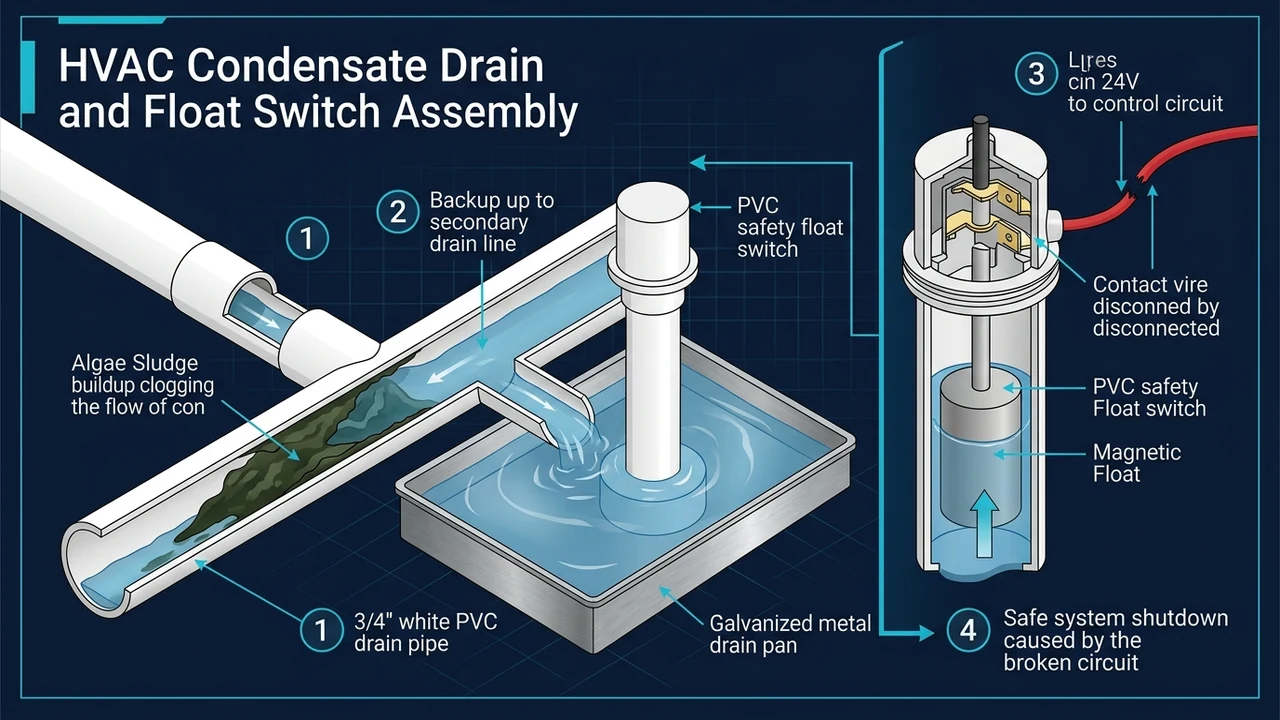
The float is a small part that rises along with the water. As the level climbs inside the pan, the float lifts up with it. Lift it far enough, and the switch opens the circuit. That tiny break tells your system to shut down and wait. Simple. Safe. Smart.
Some switches sit right in the main drain pan under the coil. Others sit in the secondary pan below the whole unit. Plenty of Richmond attics have both, stacked as a two-layer defense. The goal never changes: catch rising water early and keep the indoor rooms below it clean and dry.
Key Parts: Drain Pan, Drain Line, and Condensate
Let me explain the three main parts in plain words. Condensate is just the water your AC squeezes out of the humid air. The drain pan catches all of that water as it drips down. Then the drain line carries the water away, usually to a spot outside or to a nearby floor drain.
When all three parts work together, you never think about them once. When even one part fails, you get water in a place you never wanted it. A slow drip today can turn into a brown ceiling stain by next week. Catch the problem now and you skip a messy, costly repair later on.
Why a Tripping Float Switch Matters for Richmond Homes
I’ve handled cases exactly like this many times, and the pattern hardly ever changes. The homeowner ignores the first shut-off, flips the breaker back on, and two days later there is a dark ring spreading across the ceiling. A float switch tripping is a cheap, easy fix. Water damage to drywall, paint, and insulation is not.
Here is why this matters so much in our area. Richmond summers run hot and sticky. July highs sit near 90°F, and the muggy air keeps your AC running for long stretches. More run time means more condensate. More condensate means the drain line has to keep up, hour after hour, day after day.
That heavy workload is why local drain clogs show up so often. The line stays wet all season, and wet lines grow slime and algae inside. You can read more about that pattern in our breakdown of common AC drain line problems in Richmond. The switch is simply the last guard standing between a small clog and a soaked ceiling.
What Catching It Early Saves You
Catch this early and you usually pay for one short service visit. Catch it late and you may pay for drywall, paint, and mold cleanup too. In many Richmond homes we see, an early fix costs a tiny fraction of a full ceiling repair. That gap is the whole reason the safety switch exists.
Water also does quiet harm you cannot see at first. It soaks into attic insulation and drips onto stored boxes. It can rot wood framing over time. The float switch stops that chain of damage before it starts, which is why a switch tripping should always get your attention fast.
The Long-Term Payoff of Clean Drainage
Good drainage keeps your whole cooling system healthier. When water drains freely, the pan stays clean and the coil stays happy. When water backs up, moisture hangs around the indoor unit and feeds mold and rust. Over the years, that difference adds up in real money and comfort.
A clear condensate path also helps your AC hold steady humidity inside. Damp air makes rooms feel warmer than the thermostat says. Keep the drain line open and your home feels cooler at the same setting. That is comfort and lower run time working together.
How Attic Drain Pan Backups Happen: From Clog to Shut Off
Let me walk you through the exact chain of events, step by step. Your AC pulls water out of the warm air all day long. That condensate drips into the drain pan below the coil. From there it should slide down the drain line and out of the house. When the line is clear, this loop runs quietly in the background.
Now add a clog. Slime, dust, and algae build up inside the line over the season. The water slows, then stops. The pan fills to the brim and the level rises fast. The float lifts, the switch opens, and your AC shuts off before the water spills over the edge.
A backed-up pan rarely comes alone. Often a dirty evaporator coil drips extra grime into the drain and speeds up the clog. Sometimes the drain line has a sag that traps water. Either way, the float switch tripping is the symptom, and the blocked drain is the true cause you must clear.
Here are the warning signs I tell every Richmond homeowner to watch for:
- Your AC shuts off by itself, then won’t restart normally.
- You see a water spot or ceiling stain near a vent or the attic hatch.
- A musty smell drifts out from near the indoor unit.
- You spot standing water sitting in the drain pan.
| Warning sign | What it usually means |
|---|---|
| AC shuts off on its own | Float switch tripped from high water in the pan |
| Water stain near a vent or ceiling | Pan overflowed or drain line is leaking |
| Musty smell near the indoor unit | Standing water and early mold in the drain |
| Full or standing water in the pan | Clogged condensate drain line |
| AC runs but blows warm air | System locked out by the safety switch |
Richmond Humidity and Why Drain Pans Fill Up Fast
In my professional experience, the single biggest reason a Richmond drain pan fills up is our sticky, humid climate. On the muggiest afternoons, I’ve watched a single system drain more than 10 gallons of water in a day. That is a lot of condensate for one small line to move.
Damp air is the fuel here. When your AC works hard to dry the house, it makes more water, not less. That is why the switch tripping so often lines up with our hottest, stickiest days. The pan simply fills faster than a half-clogged drain line can empty it.
Indoor moisture matters for your health and your home. If your rooms still feel damp with the AC running, the drain may be part of the story. Our guide on Richmond’s summer humidity and why AC service matters digs into that link. A slow drain and high humidity often ride together in local homes.
Older Richmond houses add their own twist. Tight attics, long drain runs, and aging units all make clogs more likely. If you’d rather not crawl into a hot attic to check yours, we can help. Schedule an AC visit with Richmond Air and we’ll clear the line and test the float switch for you.
Step-by-Step: Diagnosing a Tripping Float Switch
You can safely check several things yourself before you call anyone. Work slowly, keep your hands dry, and never rush around live wires. If anything feels unsafe, stop and get a pro. The goal is to find the clog, not to force the system back on.
Phase 1: Find the Problem
Start by cutting power to the indoor unit at the switch or breaker. Then climb up and look at the drain pan. Is there standing water? A full pan tells you the drain line is blocked. Note whether the float is stuck in the raised position too.
- Turn off power to the air handler first, every time.
- Look for water sitting in the drain pan or the secondary pan.
- Follow the drain line and find its exit point outside.
- Check your air filter, since a dirty one can push the coil to drip more.
If the pan is dry but the switch still trips, the switch itself may be faulty or stuck. That is less common, but it happens with older parts. A quick test with the power off will tell you if the float moves freely. When in doubt, mark down what you see and move to the next step.
Phase 2: Clear the Line and Keep It Clear
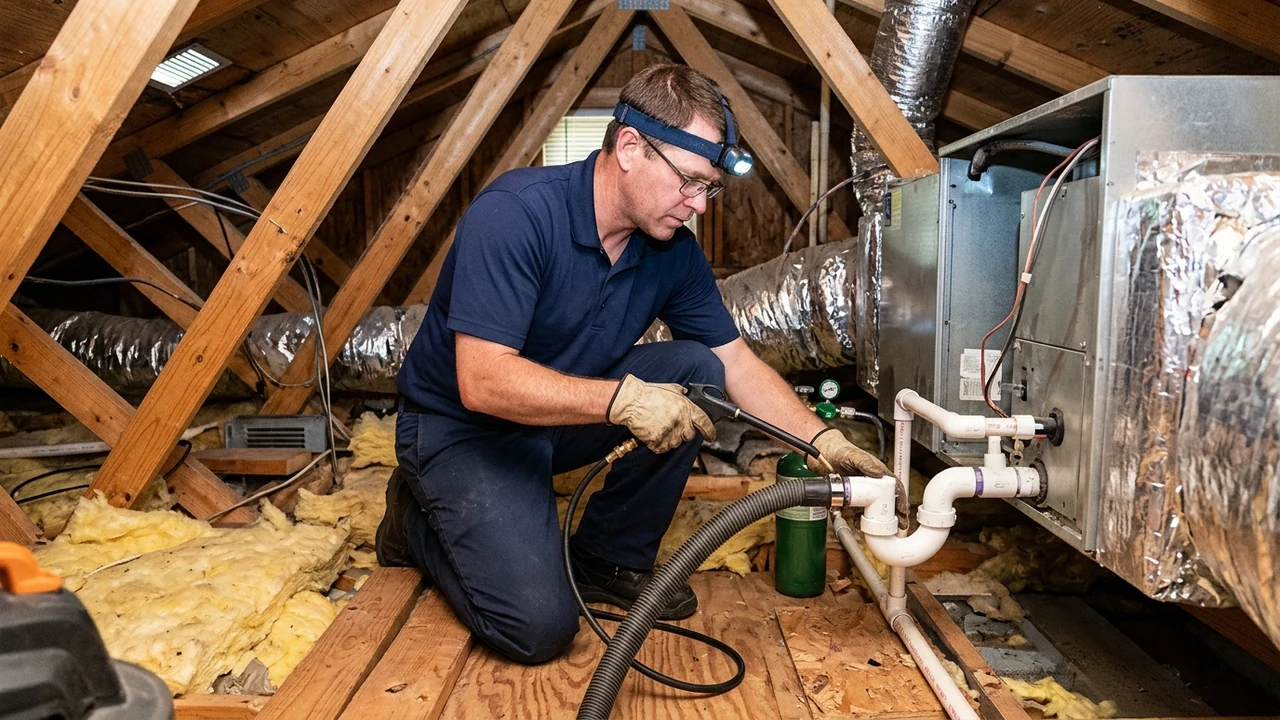
Once you find a full pan, the fix is usually the drain line. Many people attach a wet/dry vacuum to the outdoor end of the line and pull the clog out. You can also flush the line with a gentle mix of water and a little vinegar. Then watch to see if the water drains and the float drops back down.
- Vacuum the drain line from the outside exit for about a minute.
- Flush the line with water to confirm it flows freely again.
- Empty and wipe out the drain pan so it starts clean.
- Reset power and watch that the switch stays closed and the AC runs.
If the switch trips again right after you clean the line, there is a deeper clog or a bigger issue. That is your cue to stop guessing. This is also when a sudden AC leaking water inside the house needs fast, pro attention before the ceiling pays the price.
| You can usually do this | Call a Richmond pro for this |
|---|---|
| Turn off power to the unit | Water already in the attic or on the ceiling |
| Check and empty the drain pan | Rusted or cracked drain pan |
| Vacuum the drain line outside | Float switch that keeps tripping after cleaning |
| Change a dirty air filter | Coil, refrigerant, or wiring problems |
Common Mistakes That Keep the Water Coming Back
I’ve seen this pattern many times in my work: people fix the symptom and skip the cause. They reset the breaker, get cold air for a day, then the water keeps rising and the switch tripping starts all over. Clearing the pan without clearing the drain line almost never holds.
The bigger risk is standing water you leave behind. According to the U.S. Environmental Protection Agency, mold can begin to grow on a wet surface in as little as 24 to 48 hours (EPA). A pan that keeps refilling gives mold a steady home. That is why “just reset it” is such a costly habit in humid Richmond attics.
Another mistake is bypassing the safety switch to keep the AC on during a heat wave. Please don’t. That single choice removes the only guard between a clog and a soaked ceiling. The EPA also recommends keeping indoor humidity between 30% and 50% to slow mold, and a leaking drain works against that goal every hour.
The last common miss is skipping filter changes. ENERGY STAR advises checking your air filter monthly and replacing it about every 90 days (ENERGY STAR). A clogged filter chills the coil, drips more condensate, and floods the pan faster. Small habit, big payoff. You can pair it with our seasonal AC maintenance checklist to stay ahead of clogs.
How to Check That the Fix Really Worked
Once the line is clear, don’t just walk away. Run the AC and watch the drain pan for a few minutes. The water should flow out steadily, and the float should sit low and still. If the pan stays empty during normal running, you are in good shape.
Then keep an eye on it for the next few days. Check the outdoor drain exit and look for a slow, steady trickle when the AC runs hard. No trickle on a hot day can mean the clog is creeping back. A quick daily peek during that first week tells you if the fix is holding.
Watch the ceiling and the area near the indoor unit too. No fresh stains and no musty smell are both good signs. The U.S. Department of Energy recommends regular professional maintenance to keep AC systems running efficiently and to catch small problems early (Department of Energy). A clean drain is a big part of that healthy, normal operation.
When to Schedule a Professional AC Visit in Richmond
In my professional experience, there is a clear line between a quick DIY win and a job for a technician. If the switch trips again after you clean the line, if you see rust in the pan, or if water already touched the ceiling, it is time to call. Those signs point to a deeper problem than a simple clog.
A pro can also spot causes you cannot see from a ladder. A cracked drain pan, a sagging line, or a slow coil leak all mimic a basic clog. Learning what a professional AC tune-up fixes shows how a full check-up protects the whole system, not just the float switch.
Here is my honest take. In our humid Richmond climate, one yearly service visit prevents most of these attic backups before they ever start. If your switch keeps tripping, let’s take a look together. Schedule AC service with Richmond Air, and we’ll clear the drain, test the safety switch, and make sure your ceiling stays dry all summer.
Frequently Asked Questions
What should I do if my AC float switch keeps tripping?
First, turn off the unit and check the drain pan for standing water. A full pan means your condensate drain line is clogged. Clear the line with a wet/dry vacuum, empty the pan, and restart. If the switch trips again, stop and call a pro, because the clog or damage runs deeper.
Can you run AC without a float switch?
You can, but you really shouldn’t. The float switch is the only safety part stopping a backed-up pan from soaking your ceiling. Bypass it and one clog can cause thousands in water damage. Fix the drain, not the switch. Keeping the switch active is the smart, cheap way to protect your home.
How long do AC float switches last?
Most float switches last many years, often as long as the air handler itself. They are simple parts with little to wear out. Still, dust, rust, and stuck floats can cause early trouble. If yours trips with a dry pan, the switch may be faulty and worth replacing during your next service visit.
How much does it cost to replace an AC float switch?
The switch part itself is cheap. Most of your cost is the service call and labor. Here is a general, ballpark view for planning only. Always ask a local pro for an exact quote on your home.
| What you’re paying for | Typical ballpark |
|---|---|
| Float switch part alone | Often $10 to $30 |
| Professional drain cleaning + switch check | Varies by home; ask for a quote |
| Ceiling and water damage repair | Far higher – the cost you want to avoid |
How can I stop my AC float switch from tripping again?
Keep the drain path clean and the pan empty. A few simple habits go a long way:
- Change your air filter about every 90 days.
- Flush the condensate drain line each cooling season.
- Book one yearly AC tune-up before Richmond’s hot months.
- Watch for early stains near the indoor unit and act fast.
Final Thoughts
A tripping float switch is not bad news. It is your AC telling you the drain pan is backing up before your ceiling ever finds out. Listen to it. Clear the condensate drain line, keep the pan clean, and don’t ever bypass the safety switch to buy a cooler day.
In our humid Richmond summers, a clogged drain is one of the most common and most preventable AC problems around. A little care keeps the water moving and your rooms comfortable. Have you checked your drain line this season yet? If the switch keeps returning to that tripped spot, Richmond Air is here to clear it and keep your home dry.