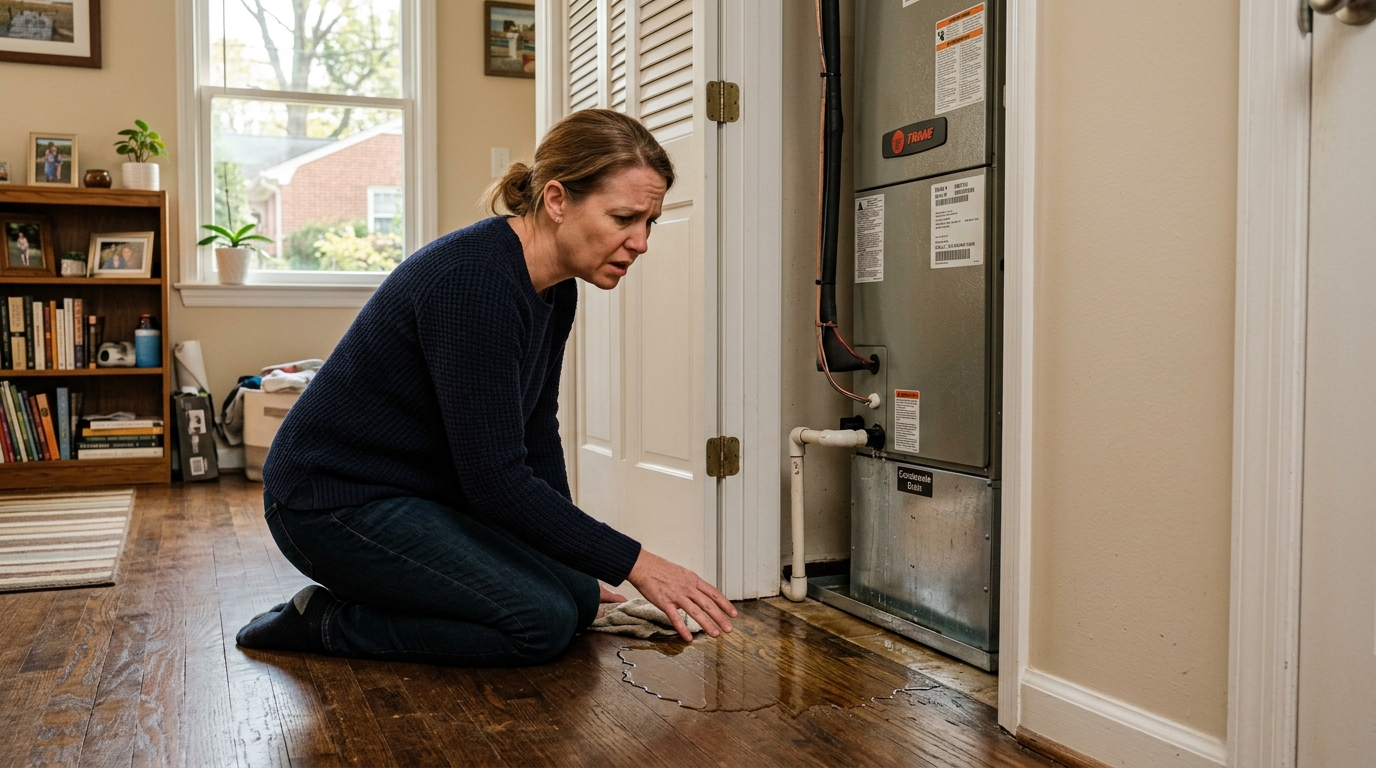
If your AC is leaking water inside your house in Richmond, VA, stop what you are doing and pay attention. That drip on your floor or ceiling is not just annoying. It can hurt your walls, grow mold, and cost you a lot of money if you wait too long. I know because I have seen it happen in a neighbor’s home right here in Richmond during a hot July week. What started as a small puddle under the air handler turned into a full ceiling repair job. So yes, this is something you need to fix fast.
Richmond summers are no joke. When your AC unit is running all day in 90-degree heat, it works extra hard. And the more it works, the more condensation it makes. When the system that drains that water has a problem, the water ends up inside your home instead of outside.
Common Reasons Your AC Is Leaking Water Inside Your Richmond Home
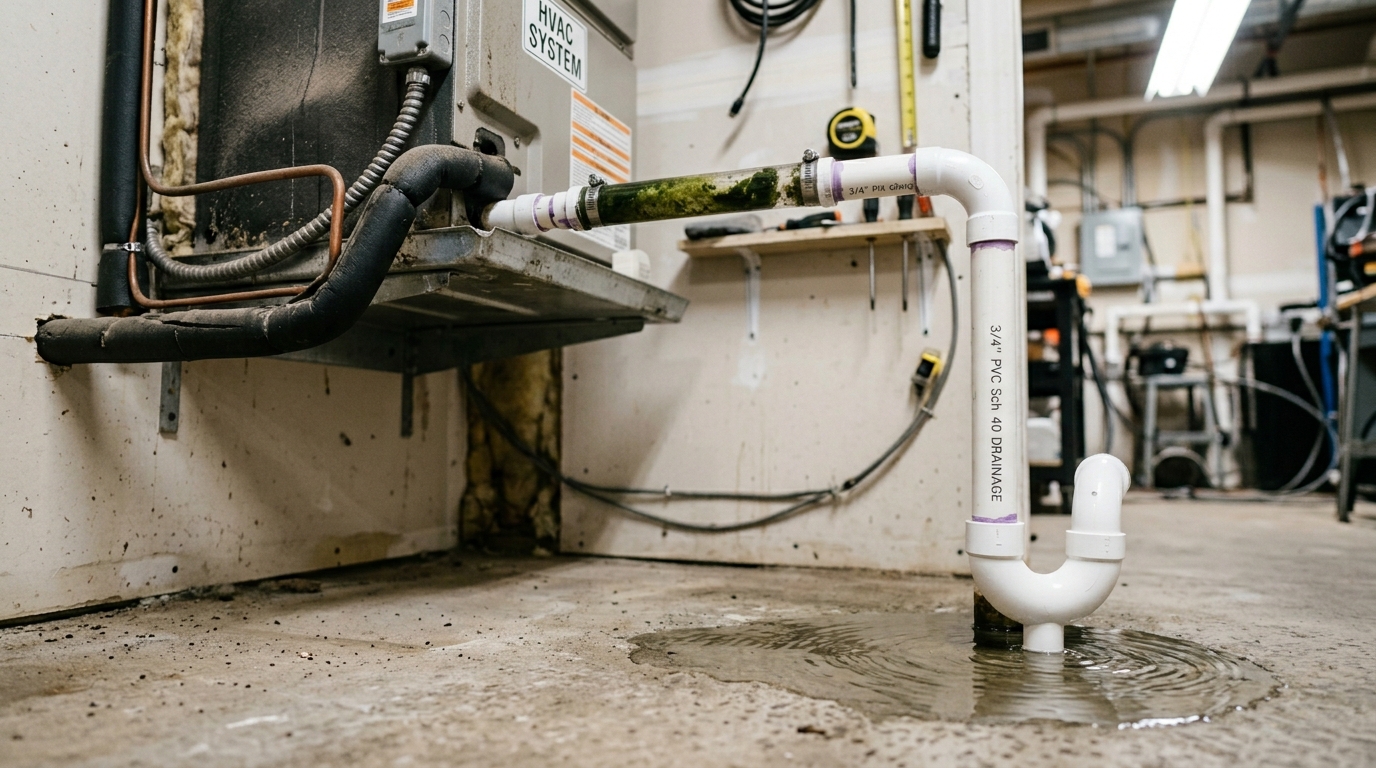
Clogged Condensate Drain Line
This is the number one reason for an AC leaking water in any home. Your condensate drain line is a small PVC pipe that carries water from your indoor unit to the outside. Over time, algae, dirt, and debris build up inside it. When it gets blocked, the water has nowhere to go. It backs up and spills out.
In Richmond, the hot and humid summers make this problem even worse. More humidity means more water your AC pulls out of the air, and more chance of a clogged line. You might notice water pooling near your air handler or see water stains on your ceiling if your unit is in the attic.
Quick test: Pour a cup of water slowly into your AC’s drain pan. If it drains right away, the line is clear. If it sits there, you likely have a clog.
Dirty or Clogged Air Filter
Honestly, this one surprises a lot of people. A dirty air filter does not just make your air dusty. It cuts off airflow to your evaporator coil. When that coil does not get enough warm air moving over it, it gets too cold and freezes. Then, when the system shuts off, all that ice melts fast. The drain pan fills up and overflows.
I always say changing your filter is the cheapest thing you can do to keep your AC healthy. A clean filter every 30 to 60 days can save you from a much bigger repair bill. According to the U.S. Department of Energy, a clogged filter can reduce your AC’s efficiency by up to 15 percent and cause serious system problems.
Source: U.S. Department of Energy, Maintaining Your Air Conditioner
More Causes of AC Water Leaks You Should Know About
Cracked or Rusted Drain Pan
Your drain pan (also called a drip pan) sits right under your evaporator coil. It catches the water that drips off the coil. But older pans made of metal can rust and crack over time. When that happens, water leaks right out of the pan instead of going into the drain line.
If you have an older HVAC system, this is worth checking. You might see rust stains around the unit or a puddle that forms even after you just cleaned the drain line. A cracked pan needs to be replaced, not patched. Most newer systems use plastic pans that last much longer, but older Richmond homes with aging units can still have the metal ones.
Frozen Evaporator Coils
When your evaporator coil freezes, it is almost always because of one of three things: a dirty filter, low refrigerant levels, or a blocked vent. All of these stop warm air from moving over the coil the right way. The coil gets too cold. Ice builds up. Then, when the system stops or cycles off, that ice melts quickly and floods the drain pan.
Signs of a frozen coil include warm air coming out of your vents, frost on the indoor unit, or a hissing or bubbling sound near the refrigerant line. If you hear those sounds, it could mean a refrigerant leak, which is not a DIY fix. You need a licensed HVAC technician for that.
Do not try to fix a refrigerant leak yourself. Refrigerant is dangerous to breathe. Always call a certified HVAC professional in Richmond, VA.
Less Common But Real Causes of AC Leaks in Richmond Homes
Broken Condensate Pump
If your AC unit is in a basement or a low area, it likely uses a condensate pump to push the water up and out of the house. When that pump breaks or dies, the water just sits and builds up. Eventually, it overflows and leaks onto your floor.
You can test the pump by pouring water into the pan. If the pump does not turn on and push the water out, the pump is the problem. Condensate pumps are not super expensive, but you want a pro to replace one to make sure it is wired and connected right.
Disconnected or Loose Drain Line
Sometimes the drain line comes loose. This can happen after a repair was done incorrectly or just over time as the unit vibrates. If the line is not connected, water pours straight out instead of going where it should. You might see water pooling on the floor directly under the unit or dripping through the ceiling if the unit is above a living space.
I once helped a friend in Richmond’s West End who had this exact problem. The technician who had come out a year earlier had not re-attached the drain line tightly. A whole summer went by before we noticed the water damage inside the wall. The fix itself took 10 minutes. The wall repair took two weeks. The lesson was to check the connections after any HVAC service call.
What to Do When Your AC Is Leaking Water Inside Your House
Steps You Can Take Right Now
First, turn off your AC at the thermostat. You do not want more water coming in while you figure out the problem. Next, use towels or a bucket to stop the water from spreading. Then check the air filter. If it is gray and covered in dust, replace it right away.
After that, look at the drain line access point. Most homes have a small PVC pipe near the indoor unit with a cap you can remove. You can use a wet/dry vacuum at the end of the outdoor drain line to suck out any blockage. Run the vac for two to three minutes and then check if water flows freely. According to the U.S. Environmental Protection Agency, mold can begin growing on wet surfaces within 24 to 48 hours, so acting fast matters.
Source: U.S. EPA, Mold and Indoor Air Quality
When to Call a Professional HVAC Technician in Richmond, VA
Some problems you just cannot fix yourself. If you see ice on the coil, hear hissing sounds, or the leak keeps coming back after you clean the drain, it is time to call a pro. A certified HVAC technician can check your refrigerant levels, inspect the float switch, test the condensate pump, and make sure everything is draining right.
If you also see water stains on your ceiling, drywall, or floors, you may need a water damage restoration company as well. Richmond has several 24/7 emergency services that handle both the HVAC repair and the cleanup together. Do not ignore the structural damage side of things.
How to Prevent AC Water Leaks in Richmond VA
Simple Maintenance Tasks That Make a Big Difference
The best fix is not having the problem at all. Here is what I do every season to keep my AC from leaking:
| Task | How Often | Why It Matters |
| Replace air filter | Every 30–60 days | Prevents frozen coils and poor airflow |
| Pour vinegar or bleach in drain line | Every 6 months | Kills algae and clears buildup |
| Inspect drain pan for cracks or rust | Once a year | Catches damage before it leaks |
| Test condensate pump | Each cooling season | Makes sure water can leave the system |
| Schedule HVAC tune-up | Once a year (spring) | Catches problems before summer heat hits |
Pour a small amount of diluted bleach (about one cup mixed with water) into the drain line every six months. This stops algae and slime from building up. But do not do it more often than that, as too much bleach can cause corrosion in older pipes.
Pro tip for Richmond homeowners: Schedule your annual HVAC tune-up in March or April, before the summer heat kicks in. You will have time to fix any problems before your AC has to work its hardest.
Check Your Float Switch and Drain Pan Together
A float switch is a small device attached to your drain pan. When the water level gets too high, the switch floats up and shuts the AC off before water can overflow. If the float switch stops working, the system keeps running even when water is about to spill.
Ask your HVAC tech to test this switch during your yearly maintenance visit. It is a small part, but it has saved a lot of Richmond homes from water damage. If your AC is shutting off on its own for no clear reason, a tripped float switch might actually be it working correctly to protect you.
Conclusion
An AC leaking water inside your house in Richmond, VA is a real problem that needs a fast response. The most common causes are a clogged condensate drain line, a dirty air filter, a cracked drain pan, frozen evaporator coils, or a broken condensate pump. Most of these are totally preventable with a little regular care.
Start with the simple stuff: change your filter, pour some diluted bleach into the drain line twice a year, and get a pro to look at your system before Richmond summers get too hot to handle. If the leak is already bad or you see signs of water damage or mold, do not wait. Call a certified HVAC technician and a restoration service right away.
Have you dealt with an AC leak at your Richmond home? I would love to hear what worked for you. Drop a comment or share this with someone who might need it.
Frequently Asked Questions
Why is my AC leaking water inside my house in Richmond, VA?
The most common reasons are a clogged condensate drain line, a dirty air filter, a cracked or rusty drain pan, or frozen evaporator coils. Richmond’s hot and humid summers put extra stress on AC systems, making these problems more common here than in cooler climates.
Is it safe to run my AC if it is leaking water?
No. Turn off your AC at the thermostat as soon as you notice a water leak. Running it while it is leaking can cause more water damage, lead to mold growth, and even damage the HVAC unit itself. Fix the problem first, then restart the system.
Can I fix an AC water leak myself?
Some things you can do yourself, like replacing the air filter, clearing the drain line with a wet/dry vacuum, or pouring diluted bleach down the drain. But for frozen coils, refrigerant leaks, or a broken condensate pump, always call a certified HVAC professional in Richmond, VA.
How often should I clean my AC drain line in Richmond, VA?
Twice a year is a good rule. Pour about one cup of diluted bleach into the condensate drain line once in spring before cooling season and once in fall. This keeps algae and slime from building up and causing a clog.
How much does it cost to fix an AC leak in Richmond, VA?
It depends on the cause. Clearing a clogged drain line might cost between $75 and $250. Replacing a drain pan or condensate pump<span style=”font-weight: 400;”> can run $150 to $500. If there is also water damage to your home, restoration costs can be much higher. Getting a pro out fast is always cheaper than waiting.