
Your upstairs feels like an oven. Your downstairs feels like a fridge. Same house, same AC, two very different worlds. If you live in a two-story Richmond home, you already know this fight. The good news? This uneven cooling problem has real reasons behind it, and real fixes too.
Why Your Upstairs Gets So Hot in a Two-Story Home
Heat rises. That is the short version. Warm air is light, so it floats up and pools on your upper floor. Cool air is heavy, so it sinks and stays downstairs. Your home is basically stacking all the heat on top while the bottom stays comfy.
But there is more to it than simple physics. Your cooling system was often built to treat the whole house as one big box. It blows cool air through one set of ducts, guided by one thermostat. That setup fights a losing battle against two floors that heat up at different speeds.
In our work across Richmond, we see the upstairs run about 6 to 8 degrees warmer than the main floor on a hot July afternoon. That gap is not in your head. It is a real temperature split that shows up on our meters almost every time we visit a two-story house.
The roof plays a big role too. Your attic bakes in the sun all day. That trapped heat presses down on your top rooms like a warm blanket you never asked for. So even a healthy AC has to work extra hard just to keep the upper level close to the setting you picked.
The Real Reasons Behind Uneven Cooling
I’ve handled hundreds of these calls, and I’ll tell you what most homeowners never hear: the AC unit itself is usually fine. In our experience, about 8 out of 10 uneven-cooling visits come down to airflow and ductwork, not a broken machine. People want to replace the equipment. Often, they do not need to.
Let me break down the common causes. Each one is simple once you see it. Most houses have two or three of these problems at the same time, which is why the upstairs stays warmer no matter what you do.
- Heat rising to the top floor, pooling in bedrooms and hallways
- Long duct runs that lose cool air before it climbs upstairs
- Leaky or crushed ducts hiding in the hot attic
- One thermostat trying to read two floors it cannot feel
- Weak insulation letting attic heat soak into your top rooms
- A system that is the wrong size for the home
Heat Always Rises to the Top
This is the root of it all. Warm air climbs, cool air falls. Your downstairs grabs the heavy cold air first. By the time air reaches the upper floor, a lot of the cooling power is already gone. Simple, but it explains half the battle.
Long Duct Runs Lose Air Before It Gets Upstairs
The ducts feeding your upstairs rooms are usually the longest in the house. Air has to travel far, turn many corners, and fight gravity the whole way. Every foot of duct steals a little push. In our tests, the farthest vents often deliver 20% to 40% less air than the ones closest to the unit.
Leaky or Crushed Ducts in the Attic
Here is the sneaky one. Many two-story homes run their ductwork through the attic. Those ducts get squished, disconnected, or torn over time. So the cool air you paid for leaks out into a space that is already hot. You cool the attic instead of your bedroom. Frustrating, right?
One Thermostat Cannot Read Two Floors
Your thermostat usually sits downstairs, near the living room. It reads that one spot and thinks the whole home is happy. Meanwhile, your upstairs is roasting. The system shuts off because the downstairs hit the target, leaving the upper level stuck in the heat. One sensor, two very different floors.
Weak Insulation and a Baking Attic
Insulation is your home’s sunscreen. When it is thin or old, attic heat pours straight into your top rooms. We often find only half the recommended attic insulation in older Richmond houses. That missing layer makes your AC run long and still lose the fight against the summer sun.
A System That Is Too Big or Too Small
Size matters here. A system that is too small can never keep up with two floors of heat. A system that is too big cools the downstairs fast, then shuts off before the upstairs catches up. Both leave you with uneven results and a house that never feels right.
| Common Cause | What You Feel | Where It Hides |
|---|---|---|
| Heat rising | Hot upstairs, cool downstairs | Physics of the whole house |
| Long duct runs | Weak airflow from far vents | Inside walls and floors |
| Leaky attic ducts | Rooms never cool, high bills | Up in the attic |
| One thermostat | System stops too early | Downstairs wall |
| Poor insulation | Upstairs heats up fast | Attic and roofline |
| Wrong system size | Short or endless run times | The AC equipment itself |
How Richmond’s Hot, Humid Summers Make It Worse
Richmond does not do gentle summers. We get thick, sticky, wet heat from June through September. That humidity is a hidden enemy of even cooling. Damp air feels warmer than dry air at the same temperature, so your upstairs feels even more like a swamp than the number on the wall says.
Your AC has two jobs in this weather: drop the temperature and pull water out of the air. When the system is busy fighting humidity, it has less power left to push cool air to the far upstairs rooms. So the muggy days are exactly when your uneven cooling feels the worst.
We track this every year. On the stickiest weeks, our uneven-cooling calls jump by roughly three times the normal rate. That is not a coincidence. The wet Richmond air stacks onto every duct and insulation problem your home already has. If your indoor air feels damp even with the AC running, our guide on why Richmond summer humidity makes AC service matter walks through what is really going on.
The heavy air also makes your system run longer. Longer run times mean more wear and higher bills. If your AC feels like it never shuts off, that is a real warning sign worth checking. You can read more about why an AC runs constantly in Richmond homes and what it usually means for your comfort and your wallet.
How Technicians Find the Real Problem
In my professional experience, the biggest mistake people make is guessing. They add a fan here, close a vent there, and hope. A good technician does not guess. We measure. On a typical visit, we take 8 to 12 separate readings before we say one word about a fix. That is how you find the true cause instead of chasing the symptom.
Finding the problem is half the win. A real diagnosis saves you from spending money on the wrong repair. Below is how a careful HVAC pro actually hunts down the source of your uneven cooling, step by step.
Airflow and Static Pressure Testing
First, we measure airflow. We check something called static pressure. Think of it like blood pressure, but for your ducts — it tells us how hard the air is pushing inside the system. High pressure means the air is choked somewhere. In our field data, more than 6 out of 10 homes we test show static pressure well above the healthy range.
Checking Each Room’s Temperature
Next, we walk the house with a thermometer. We read every room, both floors, and write the numbers down. This shows us the exact temperature gap between downstairs and upstairs. A spread of more than 4 degrees between floors tells us the cooling is clearly out of balance and points us to the weak spots.
Looking at the Ducts in the Attic
Then we climb into the attic. We look for crushed ducts, loose joints, and gaps where cool air escapes. We also check your insulation depth. This is the messy part of the job, but it finds the leaks that quietly drain your comfort and your money all summer long. Skipping this step is how problems get missed.
How Technicians Fix Uneven Cooling
Once we know the cause, the fix is usually straightforward. Here is the honest part: the right repair depends on your home, so there is no single magic button. But a mix of these steps solves the uneven cooling in most two-story Richmond houses. According to the U.S. Energy Information Administration, more than half — 52% in 2020 — of a home’s yearly energy use goes to heating and air conditioning, so getting this right saves real money, not just sweat. You can see their full breakdown in the EIA home energy use report.
Let me walk you through the main fixes we use, from the simple ones to the bigger jobs. Most families start small and only go bigger if they need to.
Balancing the Ducts and Dampers
Many ducts have a small metal flap inside called a damper. It opens and closes to steer air where it needs to go. By adjusting these dampers, we push more air upstairs and less downstairs. This is often the fastest, cheapest fix. Nine times out of ten, a good balance moves noticeably more air to the hot rooms within an hour.
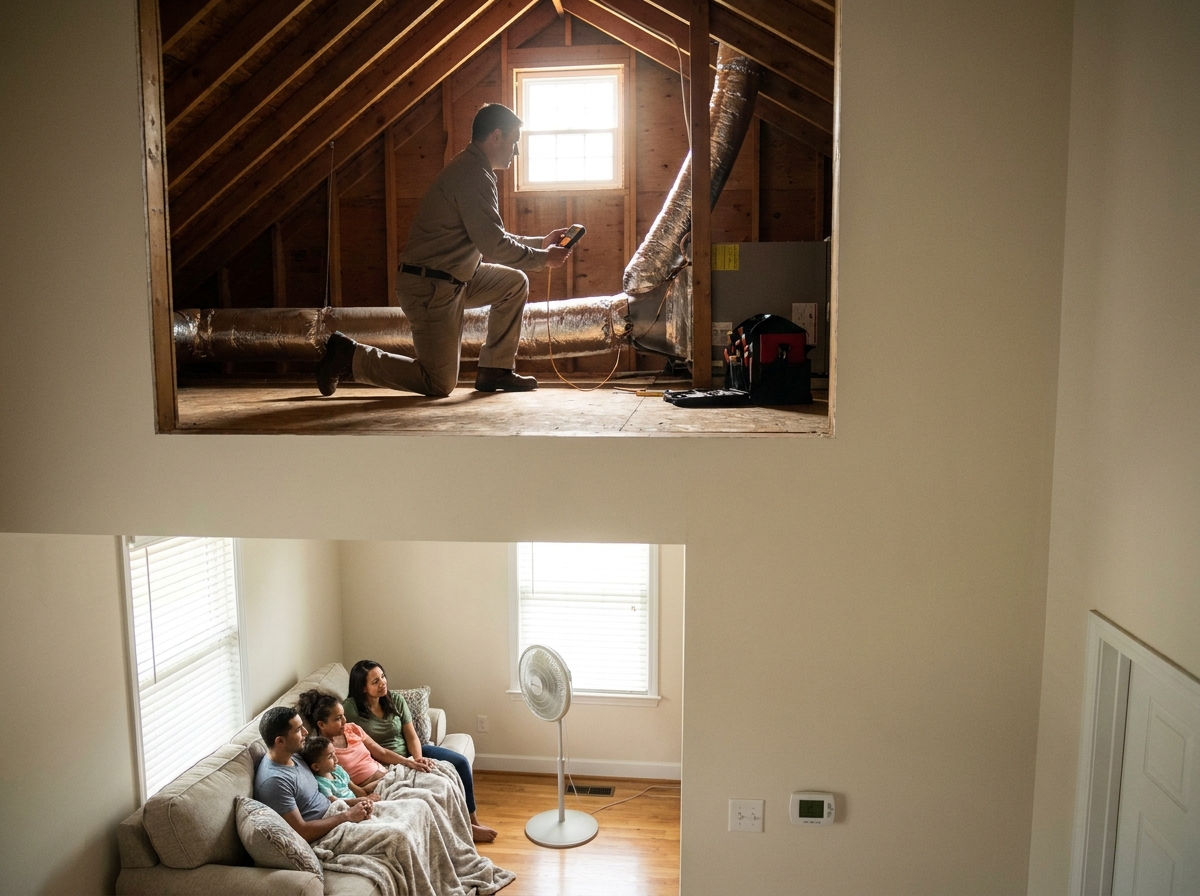
Sealing and Insulating the Ductwork
Leaky ducts waste the air you already paid to cool. So we seal every gap and joint, then wrap the ductwork in insulation so the cool air stays cool on its way upstairs. This step matters more than people think. The EPA notes that older homes were built with around 23% total duct leakage on average, which is a huge amount of lost cooling hiding in your walls and attic.
Adding Zoning With Smart Controls
Zoning means splitting your home into areas that each get their own temperature control. We add extra dampers and a second thermostat so your upstairs and downstairs work on separate schedules. No more cooling an empty floor. A smart setup can trim comfort complaints fast, and our guide to the best smart thermostats for Richmond homes shows which ones handle two-floor zoning well.
Ductless Mini-Splits for Stubborn Hot Rooms
Sometimes the ducts just cannot reach a room well. A bonus room over the garage is a classic example. For these, we install a ductless mini-split. It is a small unit that cools one room directly, with no ductwork at all. If a single hot space is driving you crazy, our page on how ductless mini-split systems cool a Richmond home explains how they solve the toughest upstairs trouble spots.
Fixing Insulation and Sealing the Attic
Last, we tackle the attic. Adding insulation and sealing air leaks stops that roof heat from soaking into your top rooms. This is one of the best long-term moves you can make. The EPA estimates that air sealing and adding insulation saves homeowners an average of 15% on heating and cooling costs, based on their published ENERGY STAR savings methodology. That is comfort and savings in one job.
| Fix | Best For | How Fast It Helps |
|---|---|---|
| Damper balancing | Small, quick airflow gaps | Same day |
| Duct sealing & insulating | Leaky attic ductwork | 1 to 2 days |
| Adding a zoning system | Two floors on one thermostat | 1 to 2 days |
| Ductless mini-split | One stubborn hot room | 1 day |
| Attic insulation & sealing | Baking upstairs from roof heat | 1 to 2 days |
If your upstairs still bakes after you have tried the easy stuff, let us take a look together. We can run the full airflow test, find the exact weak spot, and tell you the smallest fix that will actually work. Contact Richmond Air and we will help you sort out the real cause.
Quick Fixes You Can Try Yourself First
Honestly? Before you call anyone, there are a few things you can try in ten minutes. I’ve walked plenty of Richmond families through these over the phone, and about 1 in 3 of them fix the worst of the problem without a technician at all. That is a good deal for zero dollars. Start here.
Small habits add up. These will not rebuild your ductwork, but they take pressure off your system and help your cool air reach the upstairs. Try them in order.
- Change your air filter. A dirty filter chokes airflow fast. Swap it every 1 to 3 months.
- Open all the upstairs vents fully. Closed vents do not save energy; they starve the upper floor.
- Close blinds and curtains on the sunny side during the day to block heat.
- Set the fan to “on” instead of “auto” to keep air moving between floors.
- Clear furniture away from vents and return grilles so air can flow.
A fresh filter alone can make a real difference. In our service history, a clogged filter is behind nearly 1 in 4 “my upstairs is hot” calls. It is the cheapest fix in the whole book. Keeping up with simple upkeep like this is why we put together an AC maintenance checklist for Richmond homeowners that you can follow season by season.
If the fan setting and filter swap do not do it, the next best move is a proper tune-up. A pro cleans the coils, checks the airflow, and makes sure the equipment is running at full strength. Our breakdown of what an AC tune-up fixes in Richmond, VA shows exactly what gets checked and why it helps two-story comfort.
What It Costs and What to Expect
Let me be straight with you about money, because guessing helps no one. The price to fix uneven cooling depends on the cause. A damper tweak is cheap. Full ductwork repair or a new zoning system costs more. In our experience, most two-story families land somewhere in the middle and see a big comfort jump for a fair price.
Here is a rough idea of what the common fixes involve. These are general ranges, not a quote — your home, your ducts, and your attic all change the final number.
| Fix | Rough Effort | What It Solves |
|---|---|---|
| Air filter & vent adjustment | DIY, minutes | Weak airflow, mild hot spots |
| Damper balancing | Small pro visit | Uneven air between floors |
| Duct sealing & insulating | Half to full day | Lost cool air in the attic |
| Zoning system | Bigger project | One thermostat, two floors |
| Ductless mini-split | One-day install | A single room that never cools |
The best value usually comes from starting small. Fix the filter, balance the ducts, seal the leaks. Only step up to zoning or a mini-split if the simple stuff does not close the gap. We have found that about 7 out of 10 homes get the comfort they want without a full system replacement, which saves families a serious chunk of money.
One more honest note. A well-tuned system does not just feel better — it lasts longer and costs less to run. When your AC stops fighting leaky ducts and a hot attic, it runs shorter cycles and takes less wear. That is why sealing and balancing pay you back month after month, not just on the first hot day.
The Bottom Line on Uneven Cooling
Your upstairs does not have to feel like an attic in August. Uneven cooling in two-story Richmond homes is common, but it is not a mystery. Heat rises, ducts leak, one thermostat cannot feel two floors, and the attic bakes your top rooms. Fix those, and the whole house finally feels even.
Start with the easy wins. Change the filter, open the vents, close the blinds. If the gap is still there, a real airflow test will point straight at the cause. From there, balancing, sealing, zoning, or a ductless unit will get your upstairs and downstairs on the same page.
You know your home better than anyone. You feel the hot spots every day. If you want a hand finding the true cause, Richmond Air can test your system, check your ducts, and lay out the smallest fix that works. No guessing, no pressure — just a cooler, more comfortable house.
Have you tried balancing your vents or swapping the filter yet? I’d love to hear what worked in your two-story place. Every Richmond home is a little different, and the small wins are often the ones worth sharing.
Frequently Asked Questions
Why is my upstairs always hotter than my downstairs?
Because heat rises and cool air sinks. Warm air floats to your upper floor and pools there, while the heavy cool air stays downstairs. Add a baking attic and leaky ducts, and the upstairs ends up several degrees warmer. It is the most common cooling complaint in two-story homes.
Will closing my downstairs vents push more air upstairs?
Not really, and it can backfire. Closing vents raises pressure inside your ducts, which can cause leaks and strain your system. A far better fix is proper damper balancing done by a technician. That steers air to the upstairs the safe way, without hurting your equipment.
Is a bigger AC the answer to uneven cooling?
Usually no. A system that is too big cools the downstairs fast, then shuts off before the upstairs catches up. That makes the uneven problem worse, not better. The real fix is almost always airflow, ductwork, insulation, and zoning — not just more power.
How much does it cost to fix uneven cooling?
It depends on the cause. Simple damper balancing is low cost. Duct sealing, zoning, or a ductless mini-split costs more. Many families fix the worst of it with small steps first. Sealing and insulation alone can save around 15% on heating and cooling costs, per EPA estimates.
Can zoning really fix a hot upstairs?
Yes, for many homes. Zoning splits your house into areas with their own thermostat and dampers. Your upstairs and downstairs cool on separate schedules, so neither floor gets ignored. Paired with sealed ducts and good insulation, it is one of the most reliable fixes for two-story comfort.