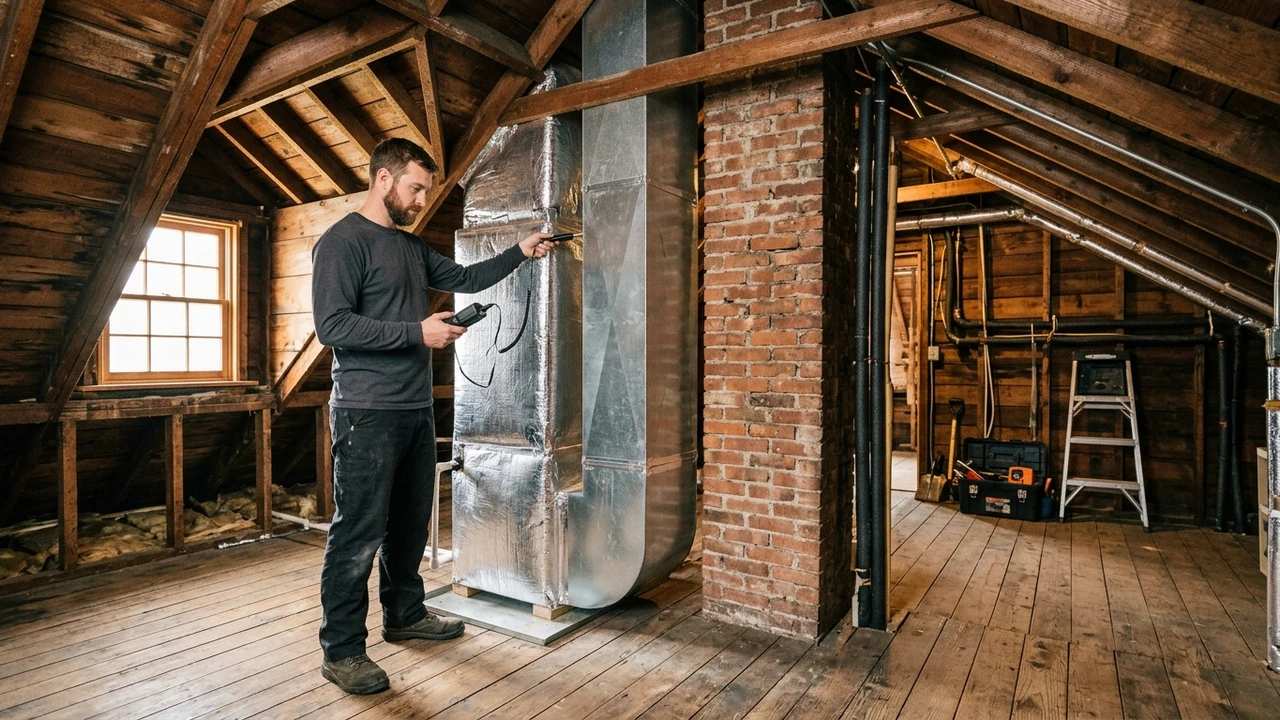
Old houses keep secrets. In Church Hill, The Fan, and Jackson Ward, the walls are beautiful and the AC systems are tired. I have opened up units in these homes that were older than the technician standing next to me. What we find inside tells a story. This guide walks you through the real problems we see, why they happen, and what you can do about them.
What Does an “Aging” AC System Really Mean?
An aging AC system is not just an old box outside your house. It is a system that has slowly lost its strength. The parts wear down. The refrigerant may leak a little each year. The evaporator coil gets coated in grime. Most home cooling systems are built to last around 10 to 15 years, and after that, small problems start to stack up fast.
Age shows up in many small ways. Your compressor works harder to do less. Your capacitor weakens. Your energy bills creep up while your rooms feel less cool. In our shop, roughly 7 out of 10 service calls on homes over 40 years old involve a system that is well past its prime and running on borrowed time.
Here is the tricky part. An old AC can still turn on and blow air. That fools people. It looks alive, but it is limping. The system might be losing 20% to 30% of its cooling power and you would barely notice until the hottest week of July hits and the house just will not cool down.
So “aging” means worn, tired, and slowly failing. It does not always mean broken. That gap between “still working” and “working well” is exactly where a good technician earns their keep. We find the weak spots before they turn into a full breakdown on the worst possible day.
Why Richmond’s Historic Homes Are So Hard on AC Units
I have handled cases exactly like this for years, and I can tell you the house itself is often the real problem, not just the machine. Historic Richmond homes were built long before central air was a thing. Thick brick walls, plaster ceilings, and tight little closets were never designed to hold modern equipment. We squeeze systems into spaces that fight us every step of the way.
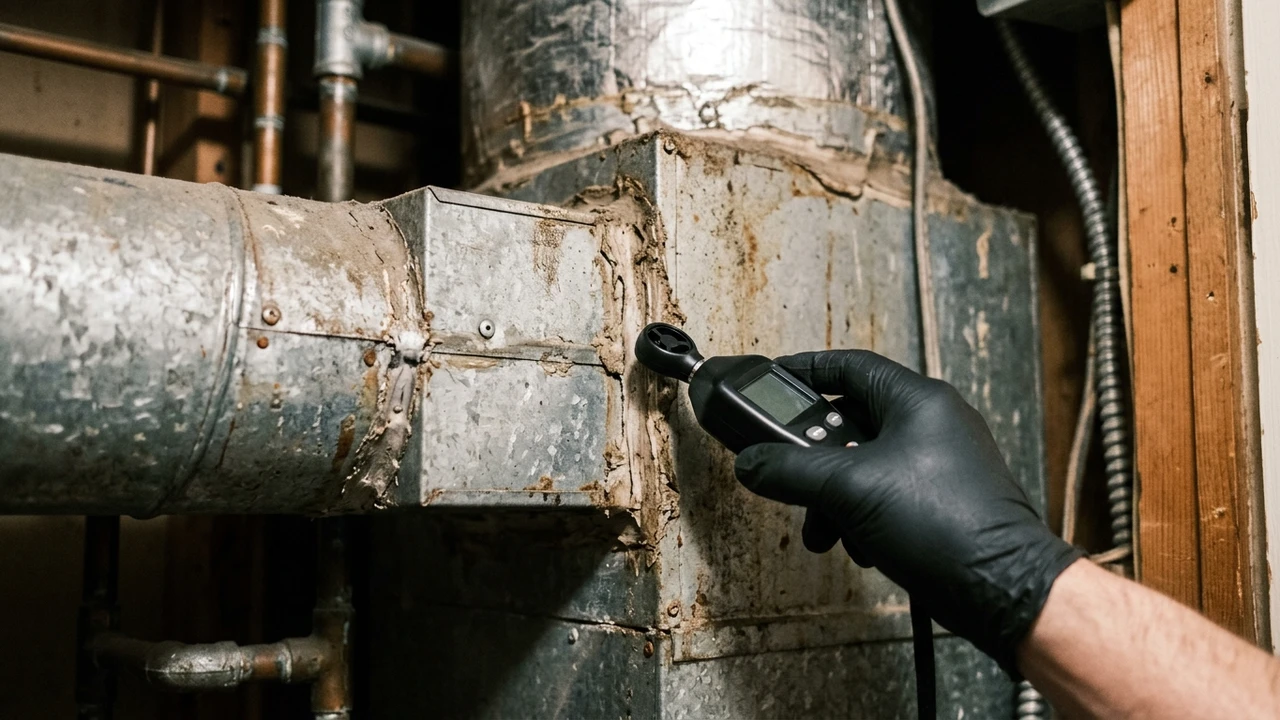
The ductwork is a huge one. Many of these homes had ducts added decades after they were built. The channels are narrow, twisty, and often leaky. Studies of typical homes show that duct problems can waste around 20% to 30% of the air your system moves, and in old Richmond houses that number often runs even higher.
Then there is the heat. Richmond summers are hot and sticky. Brick soaks up sun all day and slowly releases heat all night. Your AC never gets a real break. That constant load wears parts out faster, which is a big reason summer humidity makes AC service matter so much here for older equipment.
Neighborhood rules add another twist. In protected historic districts, you often cannot just slap a big new condenser on the front porch. Placement matters. Looks matter. If you own an older home in one of these areas, our team offers expert HVAC help built for Church Hill homes and other historic pockets, so the fix respects both the house and the rules.
Space is the last headache. Attics are cramped. Basements are damp. Crawl spaces are tight. When a technician can barely reach the air handler, service takes longer and costs more. About 8 out of 10 old homes we visit have at least one access problem that slows the whole job down.
The Most Common Problems Technicians Find
When we open up an old system, the same faces keep showing up. These are not rare, scary surprises. They are the usual suspects. Knowing them helps you spot trouble early and ask smart questions when a technician gives you the news.
Here is a quick look at what we find most and what it means for you.
| What We Find | What It Means | How Common in Old Homes |
|---|---|---|
| Low or leaking refrigerant | Weak cooling, higher bills | Very common |
| Dirty or corroded coils | Poor airflow, freezing | Very common |
| Clogged drain line | Water leaks, mold risk | Common |
| Weak compressor or capacitor | Hard starts, no cooling | Common |
| Leaky or undersized ducts | Hot rooms, wasted air | Very common |
Let me break down the big ones so you know what you are dealing with.
Old R-22 Refrigerant and Slow Leaks
Many older systems still use a refrigerant called R-22. Think of refrigerant as the blood of your AC. It carries heat out of your home. When it leaks, your system cannot cool well. Old units often lose a little R-22 each season through tiny cracks in the coils and connections.
The problem is bigger than just cooling. R-22 is being phased out, so it is now hard to find and very costly. When we spot the warning signs of a refrigerant leak, we know the clock is ticking on that system. Roughly 6 out of 10 old units we test are low on refrigerant, and a recharge on an R-22 system is often just a bandage.
Dirty and Corroded Evaporator Coils
The evaporator coil is the part that actually pulls heat and moisture from your indoor air. Over the years, it collects dust, pet hair, and grime. That coating acts like a blanket. It blocks the coil from doing its job, and a coated coil can cut efficiency by a large margin.
A dirty coil can also freeze into a block of ice, which stops cooling completely. This sneaks up on people because it happens slowly. A dirty evaporator coil can quietly destroy your AC over a season or two. We find dirty or rusted coils in the majority of aging systems, and cleaning them is one of the fastest wins we get.
Clogged Drain Lines and Water Damage
Your AC pulls water out of the air. That water needs a clear path to drain away. In old homes, the condensate drain line gets clogged with slime and gunk. When it backs up, water spills out. That water can stain ceilings, warp floors, and feed mold.
I have seen a single clogged drain line cause thousands of dollars in damage to old plaster and hardwood. It is a cheap fix that turns into a big bill when ignored. In our experience, clogged drains cause about 1 in 4 of the water leak calls we get from historic neighborhoods.
Tired Compressors and Weak Capacitors
The compressor is the heart of the system. The capacitor is the small part that gives it a jolt to start. Both wear out with age. A weak capacitor makes your AC struggle to turn on, click, or hum without starting. A failing compressor means the end is near.
These parts take a beating in Richmond heat. When your system runs almost non-stop through a July heat wave, the strain adds up. We test these parts on every service call because a $20 capacitor left unchecked can lead to a compressor burnout that costs far more.
Leaky, Undersized, or Missing Ductwork
Ducts are the hidden highways for your cool air. In historic homes, they are often patched, poorly sealed, or too small for the job. Air escapes into attics and walls instead of your rooms. You pay to cool space you never use.
Some grand old homes have no real ductwork at all, just old radiators from a heating era. That makes central air a real puzzle. This is exactly where we start talking about creative fixes, which I will cover a bit later.
The Humidity Problem in Old Richmond Homes
In our field work, humidity is the silent villain that most homeowners never think about. They focus on temperature. They set the thermostat to 72 and wonder why the house still feels sticky and gross. The truth is that a tired AC does a poor job of pulling moisture out of the air, and that damp feeling is a warning sign.
Old, oversized, or short-cycling systems are the worst at this. They cool the air fast, shut off, and never run long enough to wring out the water. The EPA advises keeping indoor humidity below 60 percent, and ideally between 30 and 50 percent relative humidity, according to its guide on mold and moisture (EPA, A Brief Guide to Mold, Moisture and Your Home). Many old Richmond homes sit well above that line all summer.
High humidity is not just uncomfortable. It feeds mold and dust mites. It warps wood floors and peels old wallpaper. In homes with plaster walls and antique trim, that moisture does real, lasting harm. Damp air also makes 75 degrees feel like 80, so you crank the AC harder and burn more power.
A good technician checks how well your system removes moisture, not just how cold it blows. Fixing airflow, sealing ducts, and sizing the system right all help. If your home feels clammy even when the AC runs, that is a clear sign your aging system needs a real look, not just a new filter.
Repair or Replace? How We Help You Decide
This is the question every homeowner asks. There is no single right answer. It depends on the age of your system, the cost of the fix, and how the numbers stack up over time. We walk through it with you honestly, because a repair that buys one summer is not always the smart buy.
Cooling is a big share of your energy costs, so an inefficient old unit hurts every month. The U.S. Energy Information Administration reports that space heating and air conditioning make up about 52% of the average home’s energy use (EIA, Use of Energy in Homes). When an aging AC runs poorly, that big slice of your bill grows even bigger.
Refrigerant type is a deciding factor too. The EPA ended production and import of HCFC-22, known as R-22, in 2020 as part of the ozone phaseout (EPA, Phaseout of Class II Ozone-Depleting Substances). So if your old system runs on R-22 and springs a leak, refills are scarce and pricey. That single fact pushes many old units toward replacement.
Here is the simple way we frame the choice for our customers.
| Situation | Lean Toward Repair | Lean Toward Replace |
|---|---|---|
| System age | Under 10 years | Over 12 to 15 years |
| Refrigerant | Modern R-410 A | Old R-22 |
| Repair cost | Small, one part | Half the price of new |
| Breakdown history | First real issue | Breaks every summer |
| Energy bills | Steady | Climbing each year |
A handy rule many technicians use is the $5,000 rule: multiply the repair cost by the unit’s age, and if you pass 5,000, replacement usually wins. If you are stuck on this call, we can help you weigh AC repair against replacement with real numbers for your home. No pressure, just a clear breakdown so you can pick what fits your budget.
What Careful Service on an Old System Looks Like
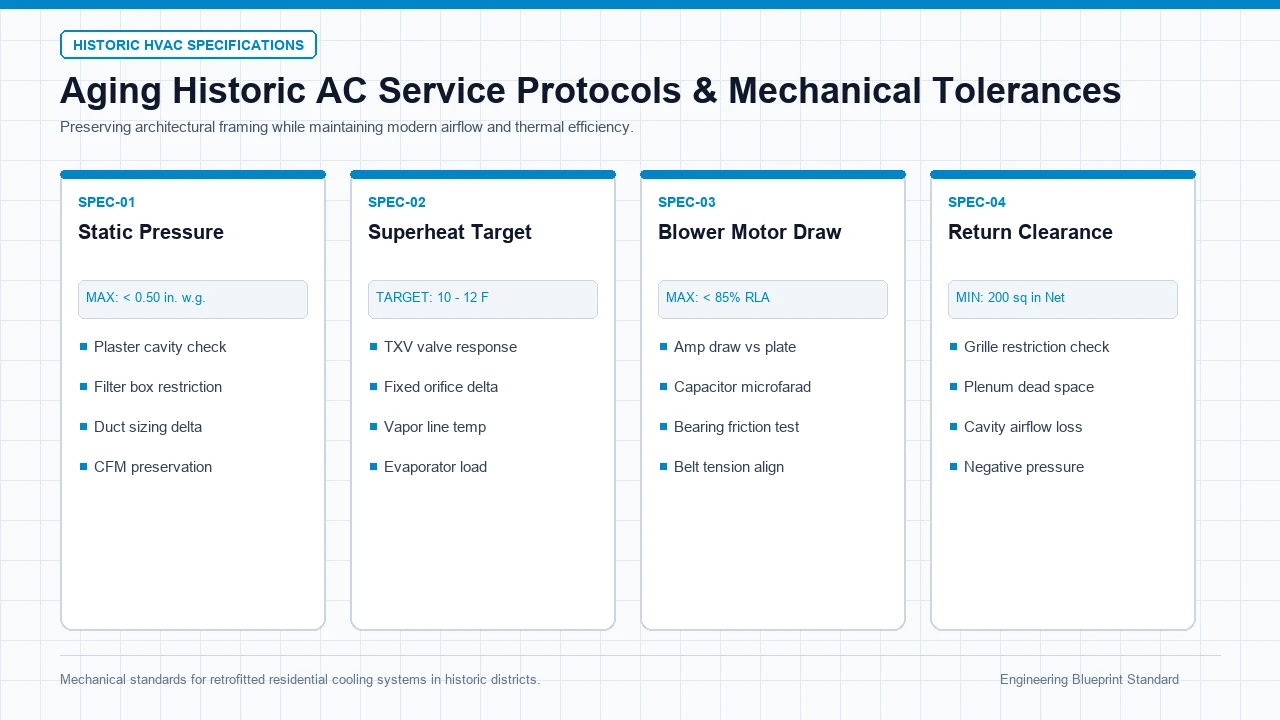
I have seen too many rushed service calls where a technician just tops off the refrigerant and leaves. That is not service. That is a band-aid. Real work on an aging system means checking the whole thing, top to bottom, because old units have problems that hide behind other problems.
Here is what a thorough visit should include on an older unit:
- A full check of refrigerant levels and a leak search, not just a quick refill
- Cleaning the evaporator coil and condenser coil so air moves freely
- Flushing the condensate drain line to stop water backups
- Testing the capacitor, compressor, and electrical connections
- Checking ductwork for leaks, gaps, and weak spots
- Measuring temperature drop and humidity removal across the system
Each step matters more on an old system. On a new unit, you might skip a few. On a 20-year-old system, skipping steps means missing the exact thing that will fail next month. We treat old units like patients who need a full check-up, not a quick glance.
Timing matters too. A careful tune-up on an aging system takes longer than on a new one. We budget extra time because rushing an old unit is how small issues get missed. About 9 out of 10 repeat breakdowns we see could have been caught with one thorough visit instead of a fast one.
The goal is simple. Find the weak links before they snap. When you know a capacitor is fading or a coil is near frozen, you can plan the fix on your terms. That beats a surprise failure during a heat wave when every HVAC company in town is booked solid.
Smart Upgrades That Actually Fit Old Houses
Old homes need smart solutions, not just bigger boxes. The good news is that modern gear fits historic homes better than the clunky systems of the past. You do not have to tear up plaster walls or ruin your home’s character to stay cool.
The biggest game-changer is the ductless mini-split. This system uses small indoor units and thin lines instead of big ducts. That makes it perfect for homes with no ductwork or with walls too precious to open up. If ducts are your problem, learn how ductless mini-split systems cool Richmond homes without a major remodel. They also run quietly and let you cool one room at a time.
A variable-speed system is another strong pick. Instead of blasting on and off, it runs low and slow. That steady run pulls out far more moisture, which matters a lot in our humid summers. These units can trim energy use by a solid margin compared to old single-speed clunkers.
Here is how the main upgrade paths compare for older homes.
| Upgrade Option | Best For | Why It Helps |
|---|---|---|
| Ductless mini-split | Homes with no or bad ducts | No ductwork needed, room-by-room control |
| Variable-speed AC | Humid, hard-to-cool homes | Runs steady, removes more moisture |
| Smart thermostat | Any home wanting savings | Learns your schedule, cuts waste |
| High-efficiency heat pump | Year-round comfort | Heats and cools in one system |
A smart thermostat is the cheapest upgrade with a quick payback. It learns when you are home and stops cooling an empty house. Small change, real savings. Pair it with a well-serviced system and you get comfort without the guilt of a huge bill.
How to Keep Your Aging AC Running Longer
In our field work, the difference between a system that dies at 12 years and one that reaches 18 comes down to care. The neglected units fail early, every time. The ones with steady upkeep just keep going. Old does not have to mean doomed if you treat the system right.
The single easiest task is your air filter. A dirty filter chokes airflow and strains every part. Change it every 1 to 3 months, especially in peak summer. This one habit prevents a shocking number of breakdowns and it costs just a few dollars each time.
Keep the outdoor condenser clear too. Cut back plants, pull out leaves, and give it a couple of feet of open space on all sides. In historic yards packed with old shrubs and gardens, we often find condensers half-buried in growth, working way too hard to breathe.
Here is a simple upkeep schedule that keeps old systems healthy:
- Monthly: Check and change the air filter as needed
- Seasonally: Clear debris around the outdoor unit
- Spring: Book a professional tune-up before the heat hits
- Summer: Watch for weak cooling, odd noises, or water leaks
- Fall: Clean up and prep the system for its winter rest
Booking service in spring is the smart move. Everyone calls in July when their AC dies, and wait times stretch for days. Get ahead of the rush and your old system gets the calm, careful attention it needs. If you want a full plan, our team follows a detailed AC maintenance checklist made for Richmond homeowners that catches problems while they are still small and cheap.
Conclusion
Old AC systems in Richmond’s historic homes are full of surprises, but none of them have to be scary. Worn coils, slow leaks, clogged drains, and tired compressors are all things a good technician can find and fix. The house fights us with brick, plaster, and tight spaces, yet the right care keeps these systems cool and steady.
The key is not waiting for a total breakdown. Watch for the warning signs. Change your filter. Book a spring tune-up. Ask honest questions about repair versus replacement. When you stay ahead of the problems, you save money and dodge those miserable no-AC days in the peak of summer.
Your historic home deserves comfort that matches its charm. Whether you need a quick fix, a full check-up, or advice on a smart upgrade, the right help makes all the difference. Have you noticed any of these warning signs in your own home this summer? If your aging system is acting up, a careful look now beats an emergency call later.
Frequently Asked Questions
How long should an AC system last in an older Richmond home?
Most systems last about 10 to 15 years. In historic homes with hard-working units and humid summers, the lower end is more common. Good upkeep can stretch that lifespan, while neglect can cut it short. If your system is past 12 years and struggling, it is smart to start planning ahead.
My old AC uses R-22 refrigerant. Is that a problem?
Yes, it can be. The EPA ended R-22 production and import in 2020, so it is now scarce and costly. If your R-22 system leaks, refills are expensive and hard to find. A small leak is manageable, but a big one usually means it is time to talk about replacement with a modern refrigerant.
Why does my house feel humid even when the AC runs?
Your aging system may be cooling the air without removing enough moisture. Short-cycling, dirty coils, and poor sizing all cause this. The EPA suggests keeping indoor humidity below 60 percent. If your home feels sticky at a normal temperature, have a technician check how well your system pulls out water, not just how cold it blows.
Is a ductless mini-split really better for a historic home?
Often, yes. Many old homes have bad ducts or none at all. A ductless mini-split skips the ductwork entirely, so you avoid tearing into precious plaster walls. It cools room by room, runs quietly, and fits tight historic spaces well. It is one of the best modern fixes for a hard-to-cool old house.
When is the best time to service my aging AC?
Spring is the sweet spot. You beat the summer rush, when wait times stretch for days after the first heat wave. A calm spring tune-up lets a technician find weak parts before they fail. Booking early means your old system gets careful attention and you head into summer with peace of mind.